Search
Recent comments
- and god said....
15 hours 13 sec ago - walking east....
15 hours 36 min ago - part 1 and 2.....
15 hours 47 min ago - bastard pig....
15 hours 56 min ago - accidental....
1 day 3 hours ago - momentum...
1 day 11 hours ago - the greatest....
1 day 12 hours ago - cold place, warm people.....
1 day 14 hours ago - profitering....
1 day 14 hours ago - tobogganning....
1 day 14 hours ago
Democracy Links
Member's Off-site Blogs
lo que vimos en cuba nos impresionó.....
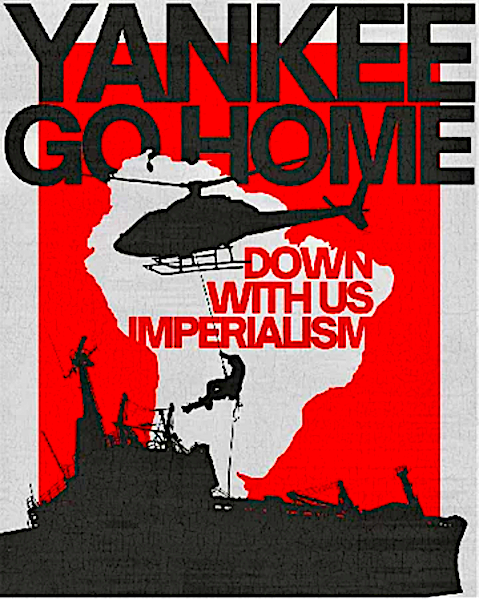
I present the account of two Democratic representatives from the United States who recently visited Havana. Interesting, of course, because of the authors' backgrounds. Published in The New York Times on May 11 (available in its entirety to subscribers only) and on May 12 in Spanish, from which I offer an automatic translation using Microsoft Word and the few available comments.
Jacques-François Bonaldi
GUSNOTE: TRANSLATION FROM FRENCH BY JULES LETAMBOUR
May 12, 2026 (original English: May 11, 2026)
By Pramila Jayapal and Jonathan L. Jackson. Jayapal, of Washington's 7th Congressional District, and Jackson, of Illinois' 1st Congressional District, are Democratic members of the House of Representatives.
Alejandro, a premature baby born at the Eusébio Hernández Pérez Maternity Hospital in Havana, weighed only one kilogram when we met him in April. We observed him in an incubator, one of the few in the building whose delicate electronics hadn't been damaged by the voltage fluctuations that follow nationwide blackouts. Severe U.S. sanctions make it nearly impossible to import spare parts for the other malfunctioning incubators.
During our visit to the hospital, we saw women in the final days of their pregnancies climbing stairs because the elevators don't work without electricity. Hospital staff struggle to get to work without fuel in their cars. During blackouts, doctors sometimes have to manually pump ventilators to keep babies alive. They say the hospital has managed to avoid an increase in infant mortality in recent months, but other centers across the country haven't been so lucky. From 2018 to 2025, as U.S. sanctions intensified, Cuba’s previously relatively low infant mortality rate surged by 148 percent.
As members of the House Foreign Affairs Committee, we spent five days in Cuba in April to better understand the humanitarian impact of the month-long U.S. energy blockade against the island. We were shocked by the inhumane effects of this policy, which appears designed to strangle the economy until it drives the Cuban people to ruin and leave the country, as President Donald Trump put it, ready for a “takeover.”
With the exception of a Russian tanker carrying oil for 10 to 14 days, fuel supplies to Cuba have been blocked for more than four months, as other countries fear their tankers will be seized in open waters by U.S. warships. The resulting daily humiliations have permeated all of Cuban society. We returned from our trip certain that if the American people knew the full extent of what is really happening in Cuba, they would demand an immediate end to the blockade.
The U.S. fuel blockade against Cuba, in addition to the longest embargo in modern U.S. history, defies the norms of international law that establish state sovereignty, non-interference in internal affairs, and the right of countries to trade freely. It amounts to an economic attack on Cuba’s basic infrastructure, designed to inflict collective punishment on civilians by manufacturing a humanitarian crisis in which healthcare, running water, agriculture, and transportation are no longer available.
During our visit, we met with a wide range of Cuban citizens: political dissidents, religious leaders, businesspeople, as well as members of civil society and humanitarian organizations. We also met with relatives of Cuban political prisoners. Everywhere, there was one agreement: the American blockade had to end, and there should be no invasion by the United States.
We were able to see firsthand how the Americans could benefit from the normalization of relations with Cuba in key ways. Under other circumstances, Cuba would be a natural trading partner for the United States. Several secretaries of agriculture from both Republican and Democratic states visited the island to explore opportunities for exporting American agricultural products to Cuba, opportunities hampered only by the American financial restrictions related to the embargo.
The Cuban healthcare system, for decades a global model of public health, has produced major advances that could extend to Americans, including promising treatments for Alzheimer’s and lung cancer. And Cuba, like the United States, could benefit from a tourism boom. When President Barack Obama took steps to normalize relations with Cuba, hotels, restaurants, and shops flourished across the island, spurring the liberalization of the Cuban economy and the emergence of an independent civil society.
The Cuban government can and should act internally to improve political and civil rights, including ending arbitrary detentions and the mistreatment of political prisoners, a point we raised during our meeting with President Miguel Díaz-Canel. But it has taken significant steps, such as announcing the release of prisoners in 2010 in what the country’s state newspaper called a “humanitarian and sovereign” gesture. Cuba’s decision to allow an FBI investigation into a recent deadly maritime shooting involving Cuban-Americans was another important sign of transparency and goodwill.
Many of the economic changes the Trump administration said it wanted during the lockdown are already underway. Recently, the government has allowed Cuban-American businesspeople to invest in private companies. Small and medium-sized enterprises now constitute a large part of the economy and the workforce.
But liberalizing reforms cannot counter a deliberate U.S. campaign to destroy the Cuban economy. In recent weeks, Trump and Secretary of State Marco Rubio announced new, sweeping sanctions against the Cuban economy, claiming that the island poses a threat to U.S. national security.
These measures have reaffirmed that the greatest obstacle to improving the daily lives of Cubans remains the outdated U.S. policy of economic coercion and military pressure from the Cold War era, the only result of which has been the isolation and suffering of the Cuban people. Further destruction of Cuba, including military action, would only lead to further economic collapse and more Cubans fleeing the island.
The United States and Cuba can turn the page and engage in genuine negotiations if they are based on mutual respect and aim to benefit the people of both countries. This is what we believe is within reach: a real opportunity for children like Alejandro and for the next generation of Cubans who deserve to experience the generosity of the American people and to live with hope for the future.
Pramila Jayapal and Jonathan L. Jackson
New York Times Reader Comments
Alvaro Abff
Spain · 10 hours ago
The situation on the island is utterly inhumane, created slowly over years, and accelerated by a mentally unstable President Trump who is completely devoid of empathy for those who are suffering.
Adolfo
Anaheim · May 14
And because instead of lifting what is called the blockade, why would it be better for the 60-year dictatorship to end and for the people to elect their leaders, for what?
Aram Joao
Cuba · May 15
@Adolfo The most important thing is to remove the blockade.
Carlos
Florida · May 14
For nine years, from 1999 to 2008, I was the director of medical supplies in Havana, and the hospitals lacked everything. This isn't new; the country doesn't have a productive system that generates money because of government mismanagement.
Aram Joao
Cuba · May 14
I think the way Donald Trump speaks about my country is disrespectful. The way he threatens us with an invasion only makes him a terrorist. He is not a respectable president. I dream of the day they lift the economic blockade and my land can prosper, but I know it won't be during his term.
Mia
South America · May 14
The analysis clearly shows that the Trump administration is ready to finish off, and is doing so with, the Cuban people. It is preparing to stay with Cuba and perhaps transform this beautiful island into the brothel it was in Batista's time, but more sophisticated and modern, and which would be declared without any shame, as is currently happening with Venezuela. According to Trump, the 51st state, Cuba would be the 52nd state of the United States.
RAUL GARCIA
CARACAS, VENEZUELA · May 14
The people are cannon fodder — Chavez, Fidel Raul, the managers of his revolution, never went hungry — 7 million left because of hunger — The revolutionaries, who all came from poor workers — stole more than the traditional oligarchs — without moral control, decency, or civility because they don't know it — they were never middle class — they come from the same pool as the criminals who are in the Prisons — Statistics — How many middle-class criminals are in prison? — They liked it + nothing
https://www.nytimes.com/es/2026/05/12/espanol/opinion/embargo-cuba.html
https://www.legrandsoir.info/ce-que-nous-avons-vu-a-cuba-nous-a-impressionnes.html
PLEASE VISIT:
YOURDEMOCRACY.NET RECORDS HISTORY AS IT SHOULD BE — NOT AS THE WESTERN MEDIA WRONGLY REPORTS IT — SINCE 2005.
Gus Leonisky
POLITICAL CARTOONIST SINCE 1951.
RABID ATHEIST.
WELCOME TO THIS INSANE WORLD….
- By Gus Leonisky at 24 May 2026 - 12:30pm
- Gus Leonisky's blog
- Login or register to post comments
los derechos humanos: el de la vida....
HEBERSaVax: Historia de un producto cubano, único de su tipo en el mundo, y con grandes potencialidades en la lucha contra el cáncer
HEBERSaVax: History of a Cuban product, unique to the world, and with great potential in the fight against cancer
Por: Alina Perera Robbio
“Felicidades, Doctora, para usted y para su equipo”, expresó este martes en la tarde el Presidente de la República de Cuba, Miguel Díaz-Canel Bermúdez, a Yanelys Morera Díaz, líder científica del producto HEBERSaVax, novedoso candidato vacunal diseñado para el tratamiento de diversos tumores malignos.
Desde el Palacio de la Revolución, y en el habitual encuentro de Expertos y Científicos para temas de Salud, dirigido por el Jefe de Estado, resultó muy alentador escuchar disertaciones sobre un producto único de su tipo en el mundo, hecho en Cuba, que está dando señales de esperanza en el tratamiento del cáncer.
--------------------
Jacques-François BONALDI
The island, cornered, encircled, besieged, delivered over to the infamous impunity of the powerful—just as the Gazans have been for three years, just as the Lebanese are again, without any “mechanism” of the “international community” being able to put an end to it and punish the criminals—continues its “creative resistance” and remains capable of producing scientific advances in the medical field. José Martí wrote 134 years ago, almost to the day: “Men fall into two camps: those who love and build; those who hate and destroy.” (José Martí, “Albertini y Cervantes,” Patria newspaper, New York, May 21, 1892.) Here is one last example. (Automatic translation by Office Word.) Jacques-François Bonaldi (Havana), May 28, 2026
HEBERSaVax: The Story of a Cuban Product, Unique in the World, with Great Potential in the Fight Against Cancer
By: Alina Perera Robbio
May 26, 2026
The First Secretary of the Central Committee of the Communist Party of Cuba and President of the Republic, Miguel Díaz-Canel Bermúdez, chaired the regular meeting of experts and scientists on health issues Tuesday afternoon at the Palace of the Revolution.
"Congratulations, Doctor, to you and your team," said the President of the Republic of Cuba, Miguel Díaz-Canel Bermúdez, Tuesday afternoon to Yanelys Morera Díaz, scientific lead for HEBERSaVax, a new vaccine candidate designed to treat various malignant tumors.
From the Palace of the Revolution, during the regular meeting of experts and scientists on health issues, chaired by the Head of State, it was very encouraging to hear theories about a product unique in the world, developed in Cuba, which offers signs of hope in cancer treatment.
After the meeting, during which, among other things, the President inquired about the potential patient population, Yanelys Morera, a full member of the Cuban Academy of Sciences, spoke with the Presidential press team about some key ideas she had shared with the group of experts and scientists.
Regarding HEBERSaVax, she spoke in terms of a "therapeutic vaccine," or also "active immunotherapy." The project manager explained that when a tumor grows, it is an actively growing mass that requires nutrients and oxygen. The product in question targets the mechanisms that feed the disease, in addition to triggering cellular responses that halt tumor progression and thus benefit the patient.
"We are dealing with a candidate that has multiple functions," said Yanelys Morera, who explained that the product "produces specific antibodies" that cut off blood flow to the tumor, while simultaneously restoring the individual's ability to fight the cancer through an immune response.
The research, the expert stated, "has gone through all the stages," from initial studies on laboratory animals "to the most recent ones we've had, which are the Phase II clinical trials, where we've tried to target specific areas."
The project leader emphasized that this is “a very safe type of therapy.” The vaccine’s side effects, she said, are rare and tolerable: “Therefore, these are very manageable elements that allow this candidate to be combined even with conventional therapies without increasing toxicity.”
This is a product, stated the full member of the Cuban Academy of Sciences, that can have “multiple applications.”
While acknowledging that it is still in the research phase, the scientist reflected, it is worth noting that among the patients who received the candidate in the clinical trial, many showed significant and positive effects on their quality of life.
She spoke to reporters about patients who “experienced complete responses,” even in advanced cases. She reiterated that Cuba has “a very strong regulatory agency; and, therefore, we must demonstrate this body of evidence to move to the next stages.” “
The project leader traveled into the future, envisioned treatments stemming from primary healthcare, and expressed with passion and humility: “We are confident that this candidate will progress through all the necessary stages and can become part of the arsenal that cancer therapy needs to achieve better results.”
Other voices from the team
“HEBERSaVax is a product that many clinicians would feel very confident in,” clinical researcher Julio César Hernández Perera, a specialist in internal medicine and a full member of the Cuban Academy of Sciences, told reporters.
He, who is part of this promising research, spoke in terms of “a product of Cuban biotechnology, the result of extensive research,” which has “the distinction of being unique in the world.”
The researcher and lecturer also emphasized that it is "a very safe product," because "in the clinical studies conducted, patients clearly indicated that HEBERSaVax is very well tolerated."
Julio César Hernández Perera does not rule out the possibility that in the future the product could be applied "to many solid tumors, since it has a high expression of this protein that promotes tumor growth and spread." Along the same lines, he highlighted advantages such as "low toxicity, and the possibility of using the product in patients with multiple comorbidities."
"We must continue to investigate, we must continue to broaden our horizons, to acquire more knowledge," the doctor stated before adding: "But we can say that we are very hopeful and that it offers us great possibilities; it gives us this horizon that seems unattainable but which speaks to us of a path by which we can achieve what we have dreamed of." “
From a very young age, clinical researcher and internal medicine specialist Adriana Felinciano Pozo offered journalists a brief account of what it was like to be part of a project so deeply involved in life: “This vaccine candidate offers us many opportunities,” she said.
She also mentioned the word "safety," referring to "solid data," and associated HEBERSaVax with qualities such as robustness and potential, as an achievement that allows it to be combined with other medications.
"This product," the expert stated, "has enabled patients to have a better quality of life, a response without adverse effects, and it is very easy to handle or administer, as it is intended for subcutaneous use."
Adriana recalled that "one of the most frequent causes worldwide, not only of death but also of morbidity and impact on quality of life, is cancer." “He said this because HEBERSaVax is an excellent tool in the face of this health challenge, with great potential in solid tumor diseases, in various areas where we have tested it, such as colorectal cancer, hepatocellular carcinoma, ovarian cancer, and kidney cancer, in advanced patients, and where good responses have been obtained.”
This is Cuba: pushed to extreme limits, to the point of suffocation, by the work and misfortune of imperial perversity, it does not, despite everything, renounce defending the most fundamental of human rights: the right to life.
https://www.legrandsoir.info/la-revolution-cubaine-comme-amour-et-fondatrice.html
TRANSLATION FROM FRENCH BY JULES LETAMBOUR.
ORIGINAL: http://www.cubadebate.cu/noticias/2026/05/26/hebersavax-historia-de-un-producto-cubano-unico-de-su-tipo-en-el-mundo-y-con-grandes-potencialidades-en-la-lucha-contra-el-cancer/
READ FROM TOP.
PLEASE VISIT:
YOURDEMOCRACY.NET RECORDS HISTORY AS IT SHOULD BE — NOT AS THE WESTERN MEDIA WRONGLY REPORTS IT — SINCE 2005.
Gus Leonisky
POLITICAL CARTOONIST SINCE 1951.
RABID ATHEIST.
WELCOME TO THIS INSANE WORLD….
WE BELIEVE DONALD TRUMP WANTS TO DESTROY ALL THIS... OR STEAL IT....
bolivia....
Ode to the Bolivian Rebellion
Oleg YASINSKY
What matters in Bolivia is that it has become the main bastion of the continent's indigenous cultures, the least affected by Western civilization. Its primary value remains the collective.
It had to happen in Bolivia: in the most American of the Americas, the most Indian, the most timeless, the most vibrant country. In these bitter times for the continent, when everything that had been conquered over the past decades with so many dreams and so much blood, seemingly, was collapsing, pushing back time to the darkness of the past. Believers would explain that it was because, in the days when Bolivia was not yet called by that name, Wiracocha chose the waters of Lake Titicaca, near his Island of the Sun, to appear before the desperate and lost, to show their spirits the way. Others would say it's because Che Guevara, many centuries later, chose Bolivia in the most unequal and impossible of struggles, to die there in the greatest of immortalities.
Beyond the political scientists or tourists who confuse the metaphors of the "beggar sitting on a golden throne" with "Bolívar's favorite daughter" or "the heart of America," Bolivian land is not "a resource," nor "real estate," nor an "economic asset": it is magic, poetry, and music, still free from capitalist mediocrity and pettiness. That's why it had to happen in Bolivia.
It's perfectly normal that the mainstream media refuse to acknowledge this popular rebellion, which will soon reach a month. The more they ignore or spread misinformation about what is happening in Bolivia today, the more significant this genuine process becomes, and no one can claim it as their own. Just as McDonald’s and Coca-Cola failed in Bolivia in their time, today, here, the fascist dreams of Musk and his friends, as well as those of his pseudo-left competitors specializing in paving the way for corporations, are failing.
.....
554 The global power of corporations, after what they did in Syria, Gaza, Lebanon, Sudan, and elsewhere, is now poised to bathe Bolivia in blood and, if it suits them, its neighbors as well. The only difference is that, in this new turn of history, the genocide of the indigenous people is being planned simultaneously with the genocide of most of humanity. Resistance and victory will only be possible if the reality and magnitude of the threat are understood.READ MORE: https://www.lahaine.org/mundo.php/oda-a-la-rebelion-boliviana
READ FROM TOP.
PLEASE VISIT:
YOURDEMOCRACY.NET RECORDS HISTORY AS IT SHOULD BE — NOT AS THE WESTERN MEDIA WRONGLY REPORTS IT — SINCE 2005.
Gus Leonisky
POLITICAL CARTOONIST SINCE 1951.
RABID ATHEIST.
WELCOME TO THIS INSANE WORLD….
passion for cuba....
Díaz-Canel explains the priorities designed to overcome the difficulties of the current moment
Jacques-François Bonaldi
In my previous message, I discussed the statements made on June 12th by President Díaz-Canel to journalists in his office. These statements, which I have extensively edited, are reproduced below in an automatic translation. For now, we only have these statements, which offer just a glimpse of the content of the announced measures and reforms. However, these measures and reforms are so significant that the Political Bureau of the Communist Party is scheduled to discuss them tomorrow, Wednesday the 17th. It is unknown whether this debate will be televised. All that can be said for now is that these statements have raised numerous questions, even concerns, among the population, given that the previous set of measures on economic and monetary reorganisation has fallen far short of solving the country's economic problems and has even complicated matters. But it is clear that these measures will stir things up in Cuba, and seem to point towards increased liberalisation and accelerated privatisation, the beneficial results of which are far from evident. The emphasis is on empowering municipalities, granting full autonomy to public enterprises (including wage-setting mechanisms), and involving new economic actors, including Cubans living inside the country. This "liberalisation" delights those segments of the population, both inside and outside the country, who yearn for capitalism and demand more of it, while it raises concerns among those for whom the ever-increasing growth of social and economic inequalities is proof that Fidel's Revolution has lost momentum. However, it is still too early to draw conclusions until concrete details of the announced reforms and measures are available. Jacques-François Bonaldi (Havana), June 16, 2026.
By: Alina Perera Robbio
June 12, 2026
“In complex times, we cannot do without a passion for development.” This is a Fidelist concept encompassing the will not to be defeated, which the First Secretary of the Central Committee of the Communist Party of Cuba, Miguel Díaz-Canel Bermúdez, shared with the press team of the Presidency of the Republic.
Taking as his starting point a question about the difficult times the country is going through and what could be done from the island to move forward, even to grow, the president shared reflections on several measures designed to overcome the current situation. First, he spoke of “the multidimensional aggression inherent in the totally aggressive policy of the United States government toward Cuba, based on total contempt and an interventionist character.”
The head of state declared that this policy “has an impact that complicates the daily lives of Cubans.” And he emphasized:
“In every detail of Cuban life, in every family detail, in every detail of our economy, there are extremely complex situations that only a people as heroic as ours can face,” and which “they can survive and have the will to overcome.”
The president said that this is precisely what “we must talk about”: how Cubans “will overcome them”; “how we are overcoming them.” He then emphasized that “the United States cannot forgive itself for the fact that, at this stage, despite all the maximum pressure it has exerted, the Revolution continues to exist and the country continues to function. And they don’t even believe what they talk about and repeat regarding the bankrupt state.” “
The President of the Republic stated that a bankrupt state could not have survived, not even for weeks, a situation like this, and he recalled that, as “Fidel taught us,” in complex times, we cannot do without a passion for creativity, the kind that, “along with the unity and will of our people, can allow us to confront and resolve all these problems.” He recalled Fidel’s idea that “in the midst of a crisis, we must seize every opportunity as a moment of takeoff, a moment of growth. Therefore, we have identified a set of priorities to address this entire situation.”
The first, he said, “is preparedness for defense. And you all know the intensity with which we are preparing every element of the territorial defense system; “How we use the Defense Days each week and everything we do in developing plans, adapting them to the experiences we have gained, but also seeking ways to optimise everything we can in terms of protecting the population and involving the population, according to the strategy of the People’s War.”
The economy and social issues are at the forefront
The other major priority, the president stated, “is the Economic and Social Program for 2026.” Díaz-Canel recalled that this program was submitted to a public debate at the end of last year, and that from this collective reflection, “numerous proposals emerged, including elements for transforming the economic and social model.”
“This public debate broadened, strengthened, and consolidated the projections of the initial document.” And, while respecting the opinion of our people, we have worked intensively in recent months in concert with experts, consulting criteria, even international criteria, using artificial intelligence platforms,” he said, comparing the island’s experience with “the particularities of countries such as China and Vietnam, which are also in processes of socialist construction and which, at one point, but not as prolonged as ours, were subjected to blockades.”
The Head of State declared: “I believe that a significant portion of these ideas and proposals demonstrates maturity,” and he explained that they are “being finalised for approval by the Political Bureau and the National Assembly, so that they can be immediately disseminated and explained to the public, because the most important thing is that the necessary transformations are understood, shared, and championed, and that we implement them with complete efficiency.”
The President commented that work has been carried out on more than twenty themes “related to transformation.” The first, he specified, “concerns the system for managing the economy. A whole series of proposed measures and actions will allow us to resolve long-standing contradictions between the Plan, between central planning, and the stimulus measures and incentives.”
Díaz-Canel emphasized the importance of removing obstacles to boosting domestic production, both "to provide more goods and services to our population" and to ensure revenue-generating exports.
"In other words, the perspective behind everything we are proposing is that, together, we can productively drive the country forward, create wealth, and distribute it according to social justice." He cautioned that "if we lack wealth, it is very difficult for us to move forward," particularly with social programs, and in order to "address the inequalities that have arisen, to address vulnerabilities at the individual, family, or community level."
Along the same lines, he stated that a set of measures has been designed to resolve "the contradiction between centralisation and decentralisation." He then raised several questions: "What should the country's central planning focus on? What should it drive? What should its strategic focus be?" “Once these essential points are preserved, he insisted on the removal of obstacles and the granting of powers to other entities so that they can carry out their own activities, which also foster existing local potential.”
The municipality and the public enterprise, key elements of the country’s economic system
The Cuban president reflected on other priorities: municipal autonomy and the autonomy of businesses. Regarding the powers that could be granted to municipalities, he mentioned creating conditions that would allow these entities to have “full control over which businesses they operate, which economic actors they support, the interrelationships between these economic actors, how local production systems are designed and implemented, and how local strengths are exploited.”
He stated that municipalities have the power to import and export and are not dependent on central plans. that the municipality be able to manage foreign exchange earnings on a basis that allows it to stimulate and manage foreign direct investment in accordance with its own interests; that it be able to manage investments or projects with Cubans living abroad; that it be able to approve investments by Cubans residing in Cuba; and that it be able to facilitate all interconnections and partnerships between all economic actors.
Regarding this space of great importance to society, the Head of State mentioned that it could "have the capacity to export and import based on what it itself generates, and that all of this could enable it to support its development." He emphasized that this idea "in no way contradicts national priorities; on the contrary, it reinforces them." And he reasoned:
“I believe the country will always be stronger and have greater capacity to respond if the municipalities are also stronger.” Along the same lines, he addressed the autonomy of public enterprises: “They should operate without intermediaries, without outside interference in their management. And above all, with significant participation from their workers, who are their owners, who represent the State, who represent the people’s social property.”
According to the plan, and this is how the Head of State explained it to journalists, given worker participation in decision-making, “companies will determine their size, will design their salary systems, and will have unlimited, unhindered freedom to use their profits as they see fit, for the things they approve of.”
“Collectively, they will have export and import capabilities; They will have contracts that will allow them to receive foreign currency and, in addition to their contributions to the country, to use some of it to expand their production and services.
They will be able to establish economic partnerships with any type of economic actor; they will decide on their clients and suppliers; they will develop their plans—some will respond to government orders, but others will facilitate production and services for export and for the population.
According to the President, “public enterprises will have a broad scope. In other words, they will be able to produce as many goods and provide as many services as they are capable of, leveraging their full potential without any limits. I believe this will put public enterprises in a position similar to that of other economic actors, which is what many have been calling for.”
There are ways, the President explained, by which “public enterprises can participate directly in the foreign exchange market. Consequently, they will also be present in this market.” “
Díaz-Canel Bermúdez commented that there will also be a restructuring of the state apparatus, the government, the economic apparatus, the Party, political organisations, and mass organisations throughout the country: “There is already a draft bill that has been made public on the National Assembly’s website so that the public can give its opinion before it is submitted to the Assembly. But it contains a significant reduction, not only in ministries, but also in positions.”
This will lead, according to him, to “savings in budgetary spending, which will be available to support social programs or the wage reform that must be undertaken as soon as possible, especially in the public sector, because in the private sector there are no limits—that is to say, each company designs its own wage system and pays its employees based on the revenue it generates.” “
He emphasized: “I think we will then have a less bureaucratic state, government, and organisations, more dynamic and better able to adapt to the demands of the present time.”
He highlighted another concept: “Everything we do must contribute to resolving social inequalities and addressing vulnerabilities.”
More Powers for the Proper Use of Land
The Head of State reflected that the expansion of these powers is strongly aimed at stimulating and revitalising agricultural and food production. He mentioned "the powers that will be granted for land use; to give land to those who can truly make it productive, so that there is as little idle land as possible and the highest possible levels of productivity; so that producers also have access to input markets, both in foreign currency and in national currency; so that producers also have access to the foreign exchange market; so that producers in any sector—public, cooperative, private, or foreign investment, since the latter can also be involved in food production—can connect with each other and establish associations."
The Head of State mentioned the possibility, for both the socialist public enterprise and all sectors, "of opening real foreign currency accounts in banks." Similarly, he expressed the idea that “all procedures concerning the creation of businesses, all procedures concerning the promotion of agricultural production, should be as streamlined as possible, with minimal delays, red tape, and bureaucracy; and that a whole range of commercial arrangements should be developed between different actors in order to achieve food sovereignty and self-sufficiency in food production in a short time.”
A More Dynamic Foreign Trade
The president commented on “a set of measures concerning foreign trade, exports, value chains, and logistics,” all aimed at making this sector of the national economy increasingly “dynamic.” In this regard, he indicated that “none of the economic actors will be required to use intermediaries for exporting and importing”; and he added: “Those who import inputs or raw materials to produce or provide services in Cuba will benefit from better customs tariffs than those who import finished products that could be manufactured in the country.” “
In outlining the key elements for revitalisation, the president emphasized that “deposits in real accounts can be respected. The possibility of a group of entities engaging in foreign trade and holding accounts in other countries is even being considered.”
Regarding forms of non-state management, Díaz-Canel stated that “prohibited activities will be limited,” so that the scope of each entity is “as broad as possible” and can “develop the greatest number of activities, all with clear rules and in compliance with the law.” Similarly, he said, “opportunities for shareholder participation will be expanded.” “
Currently,” the president stated, “a process is underway to approve, as quickly as possible, the projects and objectives submitted by both public and private entities that had not yet been approved. And all these approval powers will also be delegated to the municipalities, thus simplifying the process.”
The president emphasized the importance of “easing and encouraging the special economic association relationships that we have already approved between state and non-state entities, but whose potential has not yet been fully exploited.”
“There is also a set of provisions to encourage foreign direct investment. This includes land rights, the removal of obstacles; it also includes the use of bank accounts, the approval timelines for foreign direct investments, and the expeditious manner in which responses are provided.”
“And among all these foreign direct investments, two specific forms of Cuban investment were also mentioned: that of Cubans living abroad and that of Cubans living in Cuba, so that they can participate on an equal footing as economic actors alongside foreign direct investments, state-owned enterprises, non-state entities, and cooperatives in the country’s economic and productive fabric.” “The Cuban president called for these transformations to be enshrined in ‘a stable legal framework that guarantees long-term business security, is respectful, safe, and, above all, encourages and stimulates the participation of these stakeholders.’
The energy Cuba requires, social development, and other objectives
Another priority discussed and encouraged concerns—as the president explained—the use of renewable energy sources in all sectors, given that we are ‘becoming less and less dependent on electricity production from fossil fuels—especially imported fossil fuels—given the effects that the criminal energy blockade has on our country, to the point that only one oil tanker has entered Cuba in the last five months.’
On the issue of energy, he stated: ‘We are focusing on increasing electric mobility, both by importing electric vehicles and by assembling and manufacturing various types of equipment in Cuba.’” “
Addressing another task of high priority for Cuba, Díaz-Canel stated: “We will gradually eliminate product subsidies, implementing subsidies for individuals, and giving differentiated attention to those most in need.” He also spoke of “taking into account the social responsibility of all economic actors on our map of stakeholders,” at the municipal, provincial, and national levels.
The head of state told reporters that “there are proposals regarding fiscal policy,” alluding to “a different relationship between the budget and public enterprises, so that it does not have to finance their inefficiency.”
At another point in his remarks, Díaz-Canel Bermúdez stated: “There is also a vision related to monetary policy and, above all, to its restructuring and different operation, which involves the participation of all actors in the foreign exchange market. And this brings me to the need to strengthen our financial and banking system.” »
Tourism, fuel, trade, and human capital
Regarding tourism, which has been severely impacted by the imperial encirclement, the president emphasized the importance of considering "new approaches, with new players" that would allow for the utilisation of "all the infrastructure at our disposal."
"We can't currently focus solely on the major chains, even though many of them, under pressure from the US administration, have withdrawn from the country." Along the same lines, the president discussed how to "manage real estate and tourism businesses using new approaches and with players other than those traditionally involved."
Furthermore, "we will eliminate restrictions on vehicle imports as much as possible, while continuing to prioritise, in terms of tariffs and prices, the import of solar-powered electric vehicles."
Regarding domestic trade, Díaz-Canel Bermúdez emphasized the importance of “leveraging our entire network of local infrastructure and managing it more efficiently and quickly,” so that “domestic trade becomes an incentive for national production and also fosters development.”
“It is proposed,” he said, “to establish electronic invoicing and for the country, to the extent possible, to increasingly utilise digital platforms to develop domestic trade.”
“There are also actions and measures targeting human capital, particularly to protect our potential in young and skilled labor.” In this regard, the president spoke about how “to protect the wages of these young people, to protect them through incentives, so that they do not have to plan their lives abroad and have the conditions and opportunities to contribute to the development of their country right here.” “Cuba has not stopped”
Towards the end of his remarks, the head of state spoke of “confidence,” because “the country has not stopped. The country is facing this situation intelligently. We cannot say everything so clearly because the enemy is watching everything we do.”
The First Secretary of the Central Committee of the Communist Party emphasized: “I think our response must be one of unity. These issues will be discussed openly; and whoever has a better idea and a better proposal, let them speak up, it will always be taken into consideration.”
Regarding the heroic resistance of the Cuban people, he declared: “They want to condemn us every day with a new measure.” He denounced the rhetoric that speaks of an increasingly aggressive escalation by the empire; he spoke of the “psychological war being waged to intimidate us, to frighten us, to make us submit.” “But he also pointed out a crucial detail of these historic days: ‘They don’t realise that there is a people here who are overwhelmingly ready not to surrender, not to be humiliated, not to lose what can be improved.’”
The Cuban president spoke of a perfection that “we must achieve among ourselves, with our efforts and our talent, and not through external interference that absolutely does not want the realisation of what the Revolution dreamed of for the Cuban people.”
Jacques-François BONALDI
(Havana), June 16, 2026.
https://www.legrandsoir.info/diaz-canel-explique-les-priorites-concues-pour-surmonter-les-difficultes-du-moment-actuel.html
READ FROM TOP.
PLEASE VISIT:
YOURDEMOCRACY.NET RECORDS HISTORY AS IT SHOULD BE — NOT AS THE WESTERN MEDIA WRONGLY REPORTS IT — SINCE 2005.
Gus Leonisky
POLITICAL CARTOONIST SINCE 1951.
RABID ATHEIST.
WELCOME TO THIS INSANE WORLD….