Search
Recent comments
- and god said....
19 hours 33 min ago - walking east....
20 hours 10 min ago - part 1 and 2.....
20 hours 20 min ago - bastard pig....
20 hours 30 min ago - accidental....
1 day 7 hours ago - momentum...
1 day 16 hours ago - the greatest....
1 day 16 hours ago - cold place, warm people.....
1 day 19 hours ago - profitering....
1 day 19 hours ago - tobogganning....
1 day 19 hours ago
Democracy Links
Member's Off-site Blogs
the most severe american unmanned aircraft attrition since times immemorial....
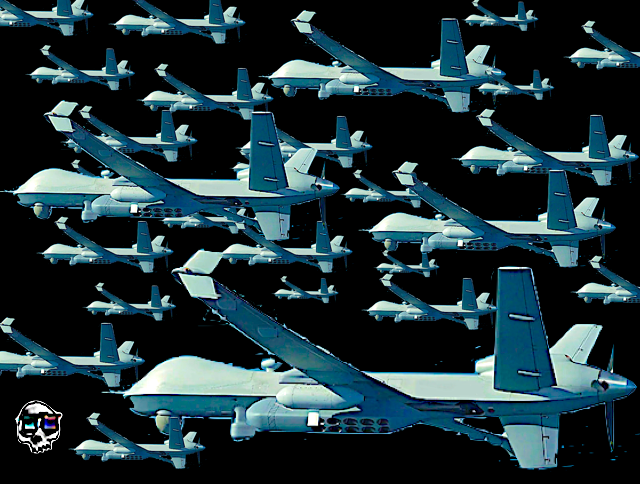
(DEFENCE SECURITY ASIA) — The loss of 24 MQ-9 Reaper drones worth approximately US$720 million (RM2.74 billion) in only six weeks marks the most severe American unmanned aircraft attrition event since large-scale drone warfare emerged.
The accelerated losses, including eight additional Reapers destroyed since April 1 according to CBS, indicate that the U.S.-Israel campaign against Iran is encountering an unexpectedly resilient and technologically adaptive defensive environment.
Iran Shoots Down 24 U.S. MQ-9 Reapers: US$720 Million Loss Exposes Collapse of America’s Drone Dominance
Iran’s integrated air-defence and electronic warfare network has destroyed 24 American MQ-9 Reaper drones in six weeks, inflicting US$720 million (RM2.74 billion) in losses and exposing growing vulnerabilities in U.S. surveillance operations.
Two American officials reportedly acknowledged that the expanding losses reflect the increasing difficulty of sustaining intelligence, surveillance and reconnaissance operations inside heavily contested Iranian airspace.
The officials reportedly stated that eight MQ-9 Reapers were lost during April alone, bringing total losses since February 28 to 24 aircraft from an estimated American fleet of roughly 300.
That attrition rate means the United States has effectively lost approximately eight percent of its entire MQ-9 inventory during a single regional conflict lasting barely six weeks.
The growing losses are strategically significant because the MQ-9 Reaper has long represented the backbone of America’s persistent airborne surveillance architecture across the Middle East, North Africa and Central Asia.
The disappearance of so many aircraft within weeks is therefore beginning to undermine the operational credibility of one of Washington’s most heavily relied-upon intelligence collection platforms.
Iran’s apparent ability to repeatedly detect, track and destroy Reapers also suggests that its integrated air-defence network remains far more intact than previously assumed.
If the current pace continues, the Pentagon could soon face growing pressure to reduce MQ-9 sorties or divert additional assets from other global theatres.
Such a redeployment would impose wider strategic consequences because American drone fleets remain heavily committed across the Red Sea, Indo-Pacific and Eastern European security environments.
The losses are also likely to intensify debate inside Washington regarding whether existing unmanned aircraft concepts remain viable against peer-level adversaries equipped with modern air defences.
More importantly, the attrition may already be reshaping regional perceptions by demonstrating that Iran can impose meaningful operational costs on a technologically superior coalition.
Why the MQ-9 Reaper Is Suddenly Vulnerable
The MQ-9 Reaper was originally designed for permissive counterinsurgency environments where adversaries possessed neither integrated radar coverage nor sophisticated long-range surface-to-air missile capabilities.
During campaigns against insurgent organisations in Iraq, Afghanistan, Syria and Somalia, the aircraft operated above lightly defended territory where American commanders could assume uninterrupted electromagnetic and air superiority.
Iran presents a fundamentally different operational environment because its layered air-defence architecture combines long-range missile batteries, mobile medium-range interceptors, passive sensors and electronic warfare systems.
That network reportedly includes domestically produced Bavar-373 and Khordad-series systems alongside Russian-designed air-defence components capable of tracking slow, predictable and non-stealthy aerial targets.
Unlike fifth-generation combat aircraft, the MQ-9 possesses a large radar signature, limited manoeuvrability and a cruising speed insufficient for evading modern missile engagement envelopes.
Its operational profile also requires prolonged loitering above designated surveillance areas, creating predictable flight patterns that allow Iranian radar operators additional time for target identification and interception.
The Reaper’s satellite communications links and remote-control architecture further increase vulnerability because Iranian electronic warfare units can attempt jamming, signal disruption and data-link interference.
Several analysts now believe some American drone losses may have resulted from combined electronic attack and missile engagement rather than direct kinetic interception alone.
Iran’s Air-Defence Network Is Becoming a Strategic Deterrent
The accelerating drone losses suggest Iran’s air-defence network has evolved from a symbolic defensive shield into a functioning anti-access and area-denial architecture.
Iranian military planners have spent years dispersing radar stations, missile batteries and electronic warfare units across mountainous terrain, hardened facilities and underground military complexes.
That distributed posture complicates American targeting because destroying one radar or missile site no longer creates the operational collapse previously expected during conventional suppression campaigns.
Iran’s defence concept instead relies on overlapping engagement zones, redundant sensors and mobile launchers capable of relocating rapidly after detecting hostile aircraft.
The reported destruction of two MQ-9 Reapers near Isfahan highlighted the strategic importance of central Iran, where critical missile, nuclear and command facilities remain heavily protected.
Iranian state media has repeatedly claimed higher numbers of American drone shootdowns, although those figures remain impossible to verify independently and exceed the currently reported American estimate.
Nevertheless, even the lower figure acknowledged by American officials still demonstrates that Iran’s air-defence network is imposing meaningful costs on U.S. military operations
The resulting psychological effect matters almost as much as the physical losses because repeated interceptions can deter additional surveillance flights and constrain American strategic decision-making.
The Financial and Industrial Cost of Losing 24 Reapers
Each MQ-9 Reaper costs approximately US$30 million, meaning the confirmed losses already total roughly US$720 million or approximately RM2.74 billion using prevailing conversion rates.
That figure excludes the additional expense of ground control stations, satellite bandwidth, munitions, maintenance equipment, contractor support and trained personnel supporting each aircraft deployment.
The wider logistical burden becomes more significant because the United States must now replace destroyed aircraft while simultaneously maintaining drone operations across multiple global theatres.
The U.S. military currently operates around 300 MQ-9 Reapers, meaning the confirmed losses represent one of the largest proportional reductions ever experienced by the fleet.
Replacing 24 aircraft would require General Atomics Aeronautical Systems to increase production at a time when American defence manufacturers already face supply-chain constraints.
The attrition also risks disrupting U.S. operations elsewhere because MQ-9 fleets remain heavily tasked supporting maritime surveillance, counterterrorism and border-monitoring missions worldwide.
From an industrial perspective, the conflict may ultimately accelerate demand for more survivable unmanned aircraft incorporating stealth shaping, electronic protection and autonomous operating capabilities
The present losses therefore represent not merely battlefield attrition, but also a warning that current American drone procurement assumptions may no longer match modern operational realities.
The Pentagon’s Calculated Gamble on “Expendable” Aircraft
American military planners have historically regarded the MQ-9 Reaper as an expendable platform because unmanned aircraft can be lost without risking pilots or triggering domestic political backlash.
That assumption helped justify using Reapers aggressively inside increasingly dangerous airspace, particularly when commanders required persistent surveillance over high-value Iranian targets.
However, the current rate of attrition suggests that the Pentagon may have underestimated the cumulative strategic and financial consequences of repeated unmanned aircraft losses.
Destroying a drone may not create the same political shock as losing a fighter pilot, yet sustained losses can still degrade intelligence coverage and operational tempo.
The MQ-9 remains central to identifying missile launchers, monitoring Iranian force movements and supporting precision-strike planning across the wider theatre.
Every lost Reaper therefore reduces the density of American surveillance coverage, creating larger intelligence gaps precisely when battlefield conditions are becoming increasingly volatile.
The United States may consequently face a difficult choice between accepting continued losses or reducing surveillance flights over heavily defended Iranian territory.
Either option carries strategic consequences because diminished reconnaissance could weaken American targeting effectiveness while continued drone losses would further strengthen Iran’s deterrence narrative.
What the Reaper Losses Reveal About the Future of Drone Warfare
The conflict is increasingly demonstrating that large, slow and non-stealthy drones may no longer survive inside airspace defended by modern integrated military networks.
For more than two decades, Western militaries assumed unmanned aircraft would provide inexpensive and persistent intelligence collection against almost any adversary.
The Iranian campaign now challenges that assumption by revealing how rapidly relatively affordable air-defence systems can impose disproportionate costs on expensive surveillance platforms.
That trend carries implications far beyond the Middle East because potential conflicts involving China, Russia or North Korea would likely expose similar vulnerabilities.
Chinese and Russian integrated air-defence systems possess even longer detection ranges, denser radar coverage and more advanced electronic warfare capabilities than those currently fielded by Iran.
Military planners across NATO and the Indo-Pacific are therefore likely studying the MQ-9 losses closely for lessons regarding survivability, force posture and future procurement priorities.
The likely result will be growing investment in stealthier drones, collaborative swarming systems, stand-off surveillance platforms and artificial-intelligence-enabled mission autonomy.
The destruction of 24 MQ-9 Reapers may therefore become remembered not merely as an expensive wartime setback, but as the moment the era of uncontested drone dominance finally ended.
Strategic Implications for the U.S.-Iran Conflict
The continuing drone losses are occurring at a particularly sensitive moment because diplomatic efforts, ceasefire discussions and military escalation remain simultaneously active.
Repeated American reconnaissance failures could encourage Iran to believe its defensive posture is successfully limiting the operational reach of U.S. and Israeli forces.
That perception could harden Tehran’s negotiating position by convincing Iranian leaders that continued resistance imposes rising costs on their adversaries without equivalent domestic consequences.
Conversely, the United States may respond by expanding manned aircraft operations, increasing stand-off missile strikes or prioritising attacks against Iranian radar and missile sites.
Any intensified campaign against Iranian air-defence infrastructure would likely broaden the conflict because those systems protect nuclear, military and political assets considered strategically indispensable.
The emerging pattern therefore suggests that the MQ-9 losses are not an isolated technical issue, but a central indicator of changing force balances within the broader regional confrontation.
The operational lesson for Washington is that surveillance superiority can no longer be assumed when confronting a peer-level adversary equipped with layered defensive capabilities.
The geopolitical lesson for every regional military is even clearer: relatively inexpensive integrated defences can now challenge technologically superior powers and reshape the future character of war.
PLEASE VISIT:
YOURDEMOCRACY.NET RECORDS HISTORY AS IT SHOULD BE — NOT AS THE WESTERN MEDIA WRONGLY REPORTS IT — SINCE 2005.
Gus Leonisky
POLITICAL CARTOONIST SINCE 1951.
RABID ATHEIST.
WELCOME TO THIS INSANE WORLD….
SEE ALSO: https://www.youtube.com/watch?v=IROjjtlnx7I
22 NATO countries have joined the conflict against
Iran — and the real numbers tell a story that
official briefings have carefully avoided.
24 MQ-9 Reaper drones destroyed. $720 million gone.
Forward bases eliminated. And a 10-day pause that
was never a ceasefire — it was a countdown.
We break down the losses, the NATO coalition
fractures, and what Russia, China, and Turkey
are calculating right now.
TIMESTAMPS
00:00 — Hook
00:30 — Welcome
01:00 — The Numbers
06:00 — Iran's Real Capability
12:00 — NATO Coalition Reality
18:00 — Russia, China & What's Next
- By Gus Leonisky at 16 Apr 2026 - 12:26pm
- Gus Leonisky's blog
- Login or register to post comments
supplies....
On April 13th, 2026, a Chinese Y-20 military cargo aircraft landed at Tehran's Mehrabad International Airport carrying what Beijing described as humanitarian supplies.
Satellite imagery told a different story. Intelligence agencies identified the cargo as HQ-22 air defense radar components, electronic warfare systems, and missile guidance modules—critical hardware designed to rebuild Iran's degraded defensive network after six weeks of sustained American and Israeli airstrikes.
Eighteen hours later, a Russian Il-76 transport followed with ammunition and secure communications equipment. Both deliveries were conducted openly, under diplomatic cover, while the United States watched unable to intervene without risking direct confrontation with nuclear-armed adversaries.
This marks a fundamental shift in the conflict. Washington's strategy relied on isolating Iran and forcing capitulation through overwhelming military pressure.
China and Russia just proved that assumption wrong. As oil remains above $100 per barrel, the Strait of Hormuz stays closed, and American public support erodes, Beijing is ensuring Iran retains the capacity to keep fighting. This is not a war winding down. This is a war being fueled by external powers who benefit from its continuation.
https://www.youtube.com/watch?v=L4p9FWhllp8
READ FROM TOP.
PLEASE VISIT:
YOURDEMOCRACY.NET RECORDS HISTORY AS IT SHOULD BE — NOT AS THE WESTERN MEDIA WRONGLY REPORTS IT — SINCE 2005.
Gus Leonisky
POLITICAL CARTOONIST SINCE 1951.
RABID ATHEIST.
WELCOME TO THIS INSANE WORLD….
SEE ALSO: https://www.youtube.com/watch?v=QQ1ojqrdsoU
SEE ALSO: https://www.youtube.com/watch?v=yNSxWFKh4Go