Search
Recent comments
- 72....
46 min 36 sec ago - the eternal....
1 hour 50 min ago - and god said....
21 hours 43 min ago - walking east....
22 hours 20 min ago - part 1 and 2.....
22 hours 30 min ago - bastard pig....
22 hours 40 min ago - accidental....
1 day 9 hours ago - momentum...
1 day 18 hours ago - the greatest....
1 day 18 hours ago - cold place, warm people.....
1 day 21 hours ago
Democracy Links
Member's Off-site Blogs
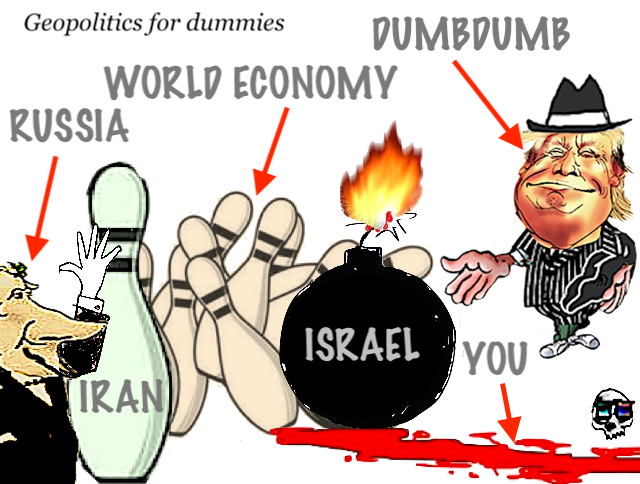
explaining trump's military victory to dummies.....
We reported earlier that President Trump has again expressed his extreme frustration at lack of direct NATO participation in a plan to open up the Strait of Hormuz. He declared the US has "militarily WON" - and lambasted lack of allied interest in a "simple military maneuver" to open the Strait of Hormuz, calling NATO a "Paper Tiger" without the US.
These Seven Allies Concocted A 'Hormuz Coalition' Statement To Placate Trump, Which Failed
BY TYLER DURDEN
And so clearly Trump himself is unconvinced after on Thursday seven allied nations signed a statement expressing a readiness to contribute to efforts to reopen the Strait of Hormuz. The statement included no pledge to commit warships or any kind of military or even logistical help, and so is somewhat of a facade and pure PR spectacle.
These countries are: UK, France, Germany, Italy, the Netherlands, Japan, and Canada. But again there's no military role here: "We express our readiness to contribute to appropriate efforts to ensure safe passage through the strait," the close US allies announced.
The joint statement did of course condemn Iran, and seemed generally supportive of Trump's actions, even as individual leaders like Germany's Merz have expressed they would have been against starting a war with Iran in the first place.
It further denounces ongoing Iranian attacks commercial vessels and energy infrastructure, citing "the de facto closure of the Strait of Hormuz by Iranian forces," and calls on Tehran to "cease immediately its threats, laying of mines, drone and missile attacks and other attempts to block the strait."
One reporter writing for Axios views the statement as "largely a gesture to placate Trump, who has railed against allies for declining to help secure the strait and warned that a failure to do so could undermine the future of NATO."
Italian Prime Minister Giorgia Meloni has made clear that no EU state is at moment considering "a military mission to forcibly break the Iranian blockade," adding the EU favors "diplomacy and de-escalation."
Other EU countries like Spain, Greece, and Switzerland have also made it clear they won't join the war. Washington has meanwhile put a lot of pressure on the UK for some tangible assistance, but this too has been a disappointment for the White House who appears to be 'going it alone'.
As for a total list of countries individually called on by Washington, these have issued formal refusals:
Australia
Finland
France
Germany
Greece
Italy
Japan
Netherlands
Spain
United Kingdom
But the US and Israel seem to be getting pulled deeper into the war in the Persian Gulf and near Kharg Island in particular, with thousands of US Marines en route to the region. What they will ultimately do when they get there remains anyone's guess - though reports say Trump is mulling a takeover of Kharg.
As a reminder, Trump has claimed an operation would include "so little risk"...
Without the U.S.A., NATO IS A PAPER TIGER! They didn't want to
join the fight to stop a Nuclear Powered Iran. Now that fight is
Militarily WON, with very little danger for them, they complain
about the high oil prices they are forced to pay, but don't want to
help open the Strait of Hormuz, a simple military maneuver that is
the single reason for the high oil prices. So easy for them to do,
with so little risk. COWARDS, and we will REMEMBER!
President DONALD TRUMP....
Such a plan might prove bloody and difficult, which is perhaps why so many US allies are content to stay on the sidelines, fearing they too could soon join another Middle East quagmire.
======================
MEANWHILE:
THERE IS STRONG SUSPICION THAT THE US F-35 THAT WAS SHOT DOWN BY IRAN WAS ACTUALLY HIT BY AN "IRANIAN" S400 BATTERY, BARELY DELIVERED TO IRAN BY RUSSIA... THIS HAS PROMPTED ISRAEL TO REDUCE ITS BOMBING FLIGHTS OVER IRAN BY 44 PER CENT... AND MORE... MEANWHILE :
Iran has now shot down over $360 million worth of America’s MQ-9 Reaper drones — the very aircraft the U.S. depends on to find targets, guide strikes, and keep manned pilots out of the most dangerous airspace. And the deeper problem is even worse: these losses are hitting a drone fleet that can no longer be replaced because the production line is already closed.
In this video, we break down:
• How Iran is using infrared-guided missiles to kill MQ-9 Reapers without triggering radar warnings
• Why the Reaper is far more important to this war than most people realize
• How years of Houthi drone shootdowns gave Iran the data to prepare for this exact fight
• Why losing Reapers is a much bigger problem now that the production line is shut down
• What these losses reveal about the real cost of Operation Epic Fury and the wider regional war
GM-Update provides analysis of military, geopolitical, and security developments based on publicly available news, reports, and media sources. All content is shared strictly for educational and informational purposes.
GM-Update does not seek to incite, endorse, or glorify conflict in any form. The channel’s purpose is to offer responsible analysis, broader context, and informed discussion on global defense, military activity, and international security matters. Viewer discretion and independent judgment are encouraged.
https://www.youtube.com/watch?v=ts-jmIVZM_A
======================
Iran's New 'Nasrallah' Missiles Just Hit Israeli & American Critical Sites
In Wave 65 of the conflict, Iran debuts a weapon nobody saw coming: the 'Nasrallah' ballistic missile. Featuring terrifying terminal phase guidance, these new missiles just bypassed advanced air defense systems to strike critical Israeli refineries and American military bases across the Middle East.
From the unprecedented hit on the Bazan refinery in Haifa to a U.S. F-35 stealth fighter being forced into an emergency landing, the rules of this war have just changed. In this video, we break down exactly what the Nasrallah missile is, why Patriot and Arrow systems are struggling to intercept it, and how the global energy market is reacting to this massive escalation.
Let me know your thoughts in the comments: Do you think a ceasefire is coming, or is this just the beginning of a wider regional war?
Don't forget to SUBSCRIBE and hit the like button for more deep dives into global military conflicts and tactical analysis!
⏱️ CHAPTERS:
0:00 - The 'Nasrallah' Missile Strikes Critical Sites
1:40 - Bazan Refinery Hit: The Economic Fallout
3:15 - Why US & Israeli Air Defenses Failed
5:05 - American Bases Targeted (Saudi Arabia, Bahrain, UAE)
6:30 - The F-35 Stealth Fighter Incident
8:25 - The Catalyst: South Pars Gas Field Strike
11:00 - What Happens Next? (The Global Impact)
https://www.youtube.com/watch?v=1nRYSYxGuls
=====================
YOURDEMOCRACY.NET RECORDS HISTORY AS IT SHOULD BE — NOT AS THE WESTERN MEDIA WRONGLY REPORTS IT — SINCE 2005.
Gus Leonisky
POLITICAL CARTOONIST SINCE 1951.
- By Gus Leonisky at 21 Mar 2026 - 3:19pm
- Gus Leonisky's blog
- Login or register to post comments
AI guy....
MORE FROM THE AI GUY....
https://www.youtube.com/watch?v=aS0ldBvwQN4&t=166s
Israel Just Lost 3 F 35s in One Week — $300 Million Gone, Pentagon Stops Replacement ShipmentsThree Israeli F-35s destroyed in seven days. $300 million in American technology turned to wreckage. Iran's S-400 system tracking every stealth aircraft from takeoff. Pentagon just suspended replacement deliveries. The aircraft designed to penetrate air defenses is now being shot down by those same defenses at a 25-to-1 cost advantage. This isn't about tactical losses. This is about the collapse of stealth survivability assumptions that every allied nation betting on F-35s just watched fail in real time.
=====================
https://www.youtube.com/watch?v=WtsxCsyv1ho
Iran's Secret General Exposed —And His Next Move Is TerrifyingIran has lost three IRGC commanders in under a year. But one man survived — and he's now in control of the most powerful military force in the Middle East. His name is Ahmad Vahidi. And what he's planning next could change everything.
In this video, we expose Ahmad Vahidi — Iran's new IRGC commander appointed in March 2026 — his 40-year secret history, his links to terror attacks on three continents, and the three scenarios analysts say he is preparing right now.
CHAPTERS
00:00 — The Three Commanders Who Died
00:50 — Who Is Ahmad Vahidi?
03:30 — The Man With Nine Lives (Esmail Qaani)
06:00 — IRGC: A State Within a State
08:30 — Vahidi's Next Move — 3 Scenarios
11:00 — What This Means For You
WHAT YOU'LL LEARN
• Why Ahmad Vahidi is more dangerous than Qassem Soleimani ever was
• The INTERPOL Red Notice that follows him everywhere
• Iran's secret AI weapon — already operational
• How the IRGC controls banks, missiles, and proxy armies across the Middle East
• The 3 scenarios for what Iran does next — including nuclear breakout
KEY FACTS IN THIS VIDEO
• Ahmad Vahidi appointed IRGC Commander-in-Chief — March 1, 2026
• Three IRGC commanders killed in under 12 months: Salami, Pakpour, and Supreme Leader Khamenei
• EU designated IRGC as terrorist organization — January 29, 2026
• Iran's military budget proposed 200% increase in 2025
• Vahidi has an active INTERPOL Red Notice for the 1994 AMIA bombing in Buenos Aires (85 killed)
• Vahidi commanded the Quds Force from 1988–1997 — before Soleimani
SOURCES & FURTHER READING
• Al Jazeera — "Who is Ahmad Vahidi, the IRGC's new commander?" (March 2026)
• Foundation for Defense of Democracies — Vahidi profile (January 2026)
• Reuters — IRGC "state within a state" (2026)
• Critical Threats Project — IRGC command analysis
• IranWire — AMIA bombing connection (2026)
========================
THE AI GUY CHANGED RACE... HE USED TO BE ASIAN... AND NOW HE IS ARYAN... SAME VOICE THOUGH....
STILL 99.9 PER CENT ACCURATE ON THE SECRET PLOTS BEHIND THE SCENES....
READ FROM TOP.
YOURDEMOCRACY.NET RECORDS HISTORY AS IT SHOULD BE — NOT AS THE WESTERN MEDIA WRONGLY REPORTS IT — SINCE 2005.
Gus Leonisky
POLITICAL CARTOONIST SINCE 1951.
confronting....
The American Fantasy of Iranian Surrender
Salman Rafi Sheikh
What if the state that claims global military supremacy is now confronting a conflict it cannot win on its own terms?
President Trump’s repeated assertions that the US could defeat Iran and force it to surrender are now colliding with battlefield realities and geopolitical fissures that suggest otherwise. The very premise of a quick and decisive US victory is unravelling in real time, raising profound questions about American strategy, alliance cohesion, and power in a multipolar age.The Illusion of Swift Victory in Tehran
President Trump’s pronouncements on Iran have been starkly ambitious. On multiple occasions he has touted rapid success and overwhelming military might in confronting Tehran — insisting that the US does not need British help to prevail and that Iranian forces will be “hit very hard.” Yet these claims increasingly look detached from both strategic reality and on‑the‑ground dynamics.
This miscalculation is more than a tactical error; it is a strategic misstep that is reshaping global perceptions of American powerThe US military doctrine has traditionally relied on superior air power and technological edge to achieve rapid dominance. In early March 2026, the Pentagon publicly stated that operations against Iran’s missile, air, and naval capabilities were underway, though officials stopped short of conceding a quick end to the campaign. But the timeline Trump once floated — nominally four to five weeks — has already blurred into ambiguity, with the White House acknowledging potential extensions and evolving objectives primarily because of the failure to achieve quick objectives. They thought that the assassination of Iran’s Supreme Leader would cause the regime to fall. That did not happen, forcing the US and Israel to rethink the nature and the duration of the campaign.
The expectation that air campaigns alone could cripple Iran’s military infrastructure — or compel unconditional political submission — misreads Tehran’s defensive resilience and strategic depth. A recent classified report from the US National Intelligence Council found that even large‑scale US use of force is unlikely to dismantle Iran’s entrenched political and military leadership. That insight undercuts the notion that a blitz of strikes can replace the complex sociopolitical calculus of regime transformation. The council’s document, drafted late last month, builds on work by the C.I.A. that assessed that a complete change of government was unlikely even if Ayatollah Ali Khamenei, the supreme leader, was killed in a US-led military operation.
Iran’s responses have also defied Washington’s expectations. Despite extensive targeting, Iranian forces have not capitulated; they have continued missile and drone strikes on US and allied targets across the Gulf region. Rather than collapse, Tehran appears to be adapting, leveraging both conventional responses and strategic signaling to blunt American efforts and maintain a posture of deterrence. Reports in the Western media show significant Iranian success in repeatedly targeting US military bases. Taken together, these developments erode the core of the Trump administration’s confidence in quick, decisive military outcomes, thus setting the stage for a campaign that may extend far beyond initial projections without achieving strategic objectives. As such, President Trump has now stopped threatening “certain death” to Iran and its people.
Eroding Alliances and Strategic Overreach
A second blow to US fantasies is the fraying of Western and regional support that Trump and his advisers presumed would form the backbone of sustained operations. Trump’s suggestion that the US does not need British assistance belies deeper tensions within the transatlantic alliance over legal responsibility, operational strategy, and political backing for war.
Across Europe, capitals are deeply divided over the US-led escalation. Spain has resisted aligning its military fully with Washington’s campaign, and the US leadership has grappled with legal and planning complications related to base access, epitomizing a broader transatlantic unease over the wisdom and legitimacy of war with Iran. These disagreements have reduced the coherence of NATO‑era cooperation, complicating US expectations for collective action.
The US’ handling of Gulf states has also strained ties with regional partners. Officials in several Gulf kingdoms privately expressed frustration at the lack of prior notification before strikes on Iranian territory and at US reliance on Gulf air defenses to intercept Iranian missiles with limited American support. This undercuts longstanding assumptions about the reliability of regional alignments and may incentivize some states to hedge their security calculations.
Domestically, American public opinion is also shifting in ways that undermine unilateralist ambitions. Polling suggests historically weak support for the operation against Iran, with a significant portion of the public expressing opposition and frustration at the perceived readiness of U.S. forces to engage in protracted conflict. This internal division complicates political sustainment of a drawn‑out campaign, particularly given the toll of casualties and financial costs that would accrue over time. Collectively, these fissures — within alliances, among regional partners, and on the home front — highlight the weakening of America’s hegemonic posture and raise questions about its ability to marshal durable coalitions in pursuit of major strategic objectives.
A Crisis of America’s Own Making
The deeper problem is not Iran’s resilience or the alliance falling apart; it is the strategic trap Washington has walked into. According to testimony before Congress, Pentagon officials repeatedly warned that Tehran posed no imminent threat of attacking the US directly. Yet the Trump administration chose to escalate, interpreting cautious intelligence as justification for preemptive strikes and forceful posturing. The result is a war the US did not need to fight, at a cost that will reverberate far beyond the battlefield.
This miscalculation is more than a tactical error; it is a strategic misstep that is reshaping global perceptions of American power. Allies are questioning Washington’s judgment, adversaries are emboldened, and the credibility of US deterrence is being tested. The costs are not just measured in military engagements or financial outlays; they are being paid in influence, alliances, and leverage in other regions of the world. The campaign against Iran is eroding the very hegemonic posture the US has relied on since the end of the Cold War.
The longer the conflict drags on, the more entrenched this erosion becomes. The US now faces a geopolitical deadlock of its own making: a situation where victory is unlikely, withdrawal risks loss of prestige, and every subsequent action is constrained by the consequences of a war initiated without necessity. What started as an assertion of American strength may ultimately be remembered as a cautionary tale of overreach, misreading intelligence, and underestimating both the limits of force and the resilience of regional actors.
In short, the crisis is not just in Iran. Rather, it is in Washington itself. A nation confident in its global supremacy has stumbled into a conflict that threatens to unravel the assumptions underpinning that supremacy, leaving the US not just challenged militarily, but on a path to strategic downfall.
https://journal-neo.su/2026/03/21/the-american-fantasy-of-iranian-surrender/
READ FROM TOP.
YOURDEMOCRACY.NET RECORDS HISTORY AS IT SHOULD BE — NOT AS THE WESTERN MEDIA WRONGLY REPORTS IT — SINCE 2005.
Gus Leonisky
POLITICAL CARTOONIST SINCE 1951.