Search
Recent comments
- canadagas......
7 min 3 sec ago - playbook....
26 min 48 sec ago - 72....
1 hour 43 min ago - the eternal....
2 hours 47 min ago - and god said....
22 hours 41 min ago - walking east....
23 hours 17 min ago - part 1 and 2.....
23 hours 28 min ago - bastard pig....
23 hours 37 min ago - accidental....
1 day 10 hours ago - momentum...
1 day 19 hours ago
Democracy Links
Member's Off-site Blogs
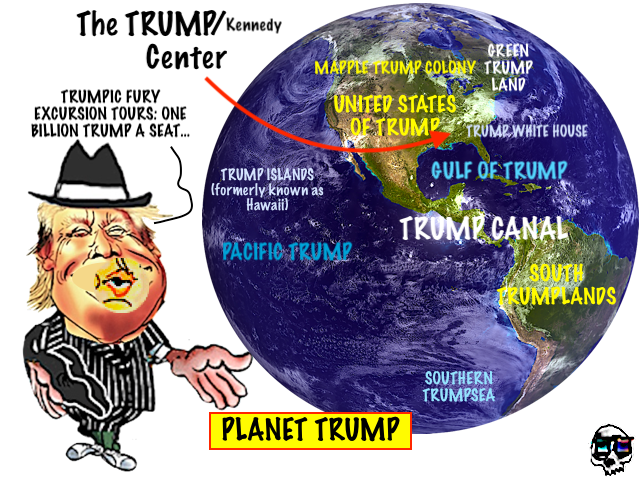
when australia becomes trump's trumpoolandia....
The rhetoric surrounding the war with Iran echoes the propaganda used to justify Iraq – a conflict that cost the life of the author’s husband, FLT Paul Pardoel.
Selling a product begins with a catchy slogan. Military operations are much the same. ‘Operation Iraqi Freedom’ glorified violent liberation to a mass audience to justify war. Operation ‘Epic Fury’ glorifies death and destruction, to justify war for personal gratification. Both wars – Iraq then and Iran now – are grounded in the same imperial hubris and delusional thinking; that they are justified, necessary and victorious.
From ‘Mission Accomplished’ to 'We’ve won but haven't won enough' – the marketing of forever wars
The spectre of the Iraq war looms large with the unfolding war in Iran. How can it not? The language of imminent threats, evil regimes, pre-emptive strikes, regime change and the casual or cavalier swagger of human suffering sound hauntingly similar. Familiar narratives that obscure a determination to wage unlawful, unnecessary and unethical wars of choice.
The trajectory for war in Iraq was set quickly after the 9/11 terrorist attacks on the United States. As the story goes, old neocons from Gulf War 1, still stalking the halls of the White House, saw their chance. Donald Rumsfeld and Dick Cheney, pissed that George Bush Senior didn’t take out Saddam Hussein when he had the chance, eagerly asked if the US could now finish him off.
Fear and security concerns after 9/11 were understandable and had a legitimate place at the political table. But centring the response on Iraq did not. Saddam Hussein did not have weapons of mass destruction (WMD) nor did he have a relationship with Al-Qaeda. Contrary to the intelligence at that time Bush and Blair – and with Howard tagging along – wilfully executed a criminal and catastrophic war.
To sell it, they unleashed a year-long propaganda campaign. Flogging patriotism ad nauseum, with jingoistic jingles to rally us round our various national flags as if our lives depended on it. War in Iraq became a compulsory product for consumption.
The global peace protests – the largest in history – with placards painted in living rooms were no match for the mighty PR state machinery. American exceptionalism and hegemonic violence were going to save us and in turn we would save the Iraqi people. A violent but noble cause.
Despite two bites at the cherry presenting their case to the United Nations, Bush and Blair failed to secure approval at the UN Security Council. But the relentless neoconservative marketing drive to build consensus paid off anyway. The US Congress and UK Parliament bought the war hook, line and sinker. In Australia, despite deep public opposition, the Howard government eagerly followed Washington into war.
At the time, Albanese and Wong, under the leadership of Simon Crean took a stance against the war. Marles later in an article on The Guardian agreed with them: “the [anti-Iraq war] position that Labor took at the time, has been vindicated”.
They were right to take a firm stand. The war cost the lives of 600,000 Iraqis, thousands of armed service members, including hundreds of allied forces, whose sacrifices Trump has shit-talked: “they were a little bit back from the frontline.”
Further vindication came from the Chilcot Report – the most comprehensive inquiry into the war. It found that Blair took the UK into war without proper legal justification and on the basis of deeply flawed intelligence. It went on to say that the unconditional support for the US was not in the interests of the UK. It increased terrorism and undermined national security. An additional cost was that no-one was held to account.
Successive war hawks took note of this only. Yet no one was held accountable. That lesson was not lost on future war hawks.
The Iran war has become a bizarre retro homage to the warmongering architects of the Iraq war. Bush and Blair gnawed at the shackles of democracy and laid the groundwork for authoritarian Trump to step out of them altogether. They wrote the playbook for how to execute a war of your choosing – although Trump would deny reading this, firstly because he doesn’t read and secondly, because he is a self-proclaimed genius and expert on everything.
Trump is just a shonky perverted property developer president. No need to bother with pompous patriotism, indulgent ideology and freedom rhetoric bullshit. The rhetoric is cruder now, more openly transactional and violent. It goes to reason that his partner in crime is no pretentious Blair but an alleged genocidal war criminal.
Much of the criticism of Trump’s war romanticises Bush and Blair’s procedural etiquette. The suggestion is that if Trump modelled his war campaign simply by rallying support, building consensus and offering up a coherent case for war in Iran, it would mystically transform into a worthy cause. These arguments are fanciful and hollow; they concede to Trump that there is a ‘right way’ to wage an illegal war in Iran, waiting to be articulated.
Additionally, an expectation that Trump has the ability to understand serious matters of war is nonsensical – as nonsensical as his claim was to end endless wars and deserve peace prizes.
I imagine Albanese, Wong and Marles, as guests on ABC’s Gruen Transfer. Called to judge the most convincing add pitch for the most outrageously unsellable product – Forever Wars of choice: how to wage an illegal war.
In one corner you have Bush and Blair with Operation Iraqi Freedom, scripted by flag-waving neocon war hawks peddling a sexed-up, axis of evil, saviour, saga story of fear and freedom. On the other side Operation Epic Fury, with a video game vibe, scripted by warmonger Netanyahu and bloodthirsty preacher Secretary of War Hegseth (starring Trump’s sons selling drones to the Pentagon).
Their rush out of the global gate to cast votes on Operation Epic Fury, tells us they have lost sight of their original moral compass. High on adrenaline, they’re running around in a new world order of chaos and violence with no guardrails, grasping for favourable polls and clinging to bullies. Chasing the US and Israel and their rogue leaders down an untethered forever war path. Into a lawless hellscape where the Pentagon confirms, “no stupid rules of engagement and no politically correct wars” fester.
Wars built on imperial hubris and delusion never end well. The architects of Operation Iraqi Freedom escaped scot-free. Albanese, Wong and Marles were right to oppose it when they did. They spoke about peace, human suffering and international law. If they have forgotten those principles, the rest of us should not.
YOURDEMOCRACY.NET RECORDS HISTORY AS IT SHOULD BE — NOT AS THE WESTERN MEDIA WRONGLY REPORTS IT — SINCE 2005.
Gus Leonisky
POLITICAL CARTOONIST SINCE 1951.
- By Gus Leonisky at 18 Mar 2026 - 8:23pm
- Gus Leonisky's blog
- Login or register to post comments
a coup....
Ngo Dinh Diem vietnam coup assassination
'Kennedy's Coup' signaled regime change doom loop for US
A look back at Diem's assassination, setting off the Vietnam War — who says Washington isn't led by the same self-destructive characters throughout time?
BY KELLEY BEAUCAR VLAHOS
Reading a book in which you essentially follow bread crumbs to a seminal historical event, it’s easy to spot the neon signs signaling pending doom. There are plenty of “should have seen that coming!” and “what were they thinking?” moments as one glides through the months and years from a safe distance. That hindsight is absurdly comforting in a way, knowing there is an order to things, even failure.
But reading Jack Cheevers' brand new “Kennedy’s Coup: A White House Plot, a Saigon Murder, and America's Descent into Vietnam” just as the Trump administration is overthrowing President Nicolas Maduro in Venezuela is hardly comforting. Hindsight’s great if used correctly. But the zeal for regime change as a tool for advancing U.S. interests is a persistent little worm burrowed in the belly of American foreign policy, and no consequence — certainly not the Vietnam War, which killed more than 58,000 U.S. service members and millions of Vietnamese civilians before ending in failure for our side — is going to stop Washington from trying again, and again.
Assiduously compiled from new material gleaned through Freedom of Information (FOIA) requests and recently declassified documents and years of research and interviews, Cheevers' book is an exhaustive history of the period just before the U.S. officially went to war in Vietnam in 1965. During this time, beginning in the mid-1950's (following Vietnam’s independence from the French), Washington was deploying military advisors (and lots of hardware) via Military Assistance Command Vietnam (MACV) to work with the Army of the Republic of Vietnam (ARVN) against the communist North Vietnamese-backed Viet Cong in South Vietnam.
At the center of this story is Ngô Đình Diệm, the independence leader turned head of the new South Vietnamese republic. He is from an old and noble Catholic family subordinated by French rule but powerful enough in stature and wealth to pursue a nationalist rebellion first against the French, and then the Vietnamese mafia running Saigon. He is complex, enigmatic, at times sympathetic, other times frustratingly tedious and unaware. His relations with the growingly powerful Buddhists are tense and become a major aggravating factor in his demise.
We are brought into the “present” in 1960. As Diem, along with his right hand political advisor/brother Nhu and Nhu’s wife Madame “dragon lady” Nhubecome increasingly isolated and despotic, we are introduced to a cast of American characters who will play some role in the advancing the Nov. 2, 1963 coup and assassination of Diem and Nhu — either as active participants in the conspiracy, or as the skeptics, more understanding of Diem’s position and concerned that he was the only one keeping the restive political factions in Vietnam together. The latter included U.S. Ambassador “Fritz” Nolting, Chairman of the Joint Chiefs Maxwell Taylor, and General Paul D. Harkins, who was commanding MACV at the time.
The active participants consisted of, but certainly were not limited to, U.S. Ambassador Henry Cabot Lodge Jr., who replaced Nolting in 1963, CIA agent Lucien Conein, National Security Advisor McGeorge Bundy, and Roger Hillsman, foreign policy advisor to President Kennedy and drafter of the now infamous “Green Light Memo,” dated August 24, 1963. This memo made it official that the U.S. was prepared to support Diem’s generals in a coup if Diem did not accede to Washington’s stated demands, primarily, that he toss his brother Nhu aside.
Cheevers also charts the contributions of the American press corps in Saigon, a fascinating orbit of outsized personalities like David Halberstam, Peter Arnett, and Neil Sheehan, who were ambitious and indefatigable, if not at times self-righteous and rigid in their commitment to reporting the flailing ARVN operations against the Viet Cong (and to the idea that the Kennedy people and U.S military brass were sugarcoating it). Unlike today, these reporters were able to hitch rides with lower ranking military officers on helicopters and spend time with American units and soldiers who spoke freely from the battlefield. They also crossed swords with Diem’s supporters in the American diplomatic corps, which thought the men were sensationalizing the Buddhist monk protests (many were self-immolating in the streets during this time) and over-dramatizing Diem’s crackdowns and the weakening state of his rule to sell papers.
Ironically, their reporting helped Lodge, Hilsman & Co. build a political case for a coup and led to a souring on Diem back home, but did not ultimately stop an expansion of the war.
Then there is Jack Kennedy, who appears thoughtful but indecisive to a fault, who conducts national security meetings like socratic seminars leaving most participants either failing to be heard, bullied by the bigger personalities in the room, or left not knowing where the president really stands. Kennedy is the American tragic figure here. From all accounts he was badly shaken by Diem’s killing — somehow he was assured it wouldn’t happen — and makes some of the most chilling statements in the book afterward, telling pro-coup advisor Michael Forrestal that he wanted a “profound review” of the U.S. in Vietnam and “whether or not we should be there.” He also reportedly told close confidant and White House appointments secretary Kenneth O’Donnell that he wanted a landslide victory in 1964, which would give him the political capital to pull U.S. troops out of the war. Days later on November 22, 1963, he lay dead, assassinated in Dallas.
As Cheevers, a career journalist who worked for the Los Angeles Times for years before retiring to become a historical writer, points out, the coup was thecatalyst for what we now know as the Vietnam War. No one knew quite how to replace Diem — as dysfunctional, corrupt and despotic as he was — in order to rebuild a better, more democratic system. Coup promoters like Lodge fled like rats off a sinking ship if not physically but mentally. Lodge, who remained working for the successor Johnson administration, seemed “puzzled” and “remote” when the junta asked the Americans for help. In fact, as Cheevers points out, he was more interested in pursuing his own presidential run in 1964.
There were two more military putsches after 1963. The battlefield situation deteriorated badly. The VC was “seizing the initiative” in key provinces and their attacks became more brazen. President Lyndon Johnson appeared to have the same aversion to quagmire as his predecessor, but soon found himself in the same position as Kennedy when the VC started targeting U.S. military in the region in 1964 and the pressure was on to attack North Vietnam in a major strategic bombing campaign. Operation Rolling Thunder was launched in March 1965 and tens of thousands of young Americans were called up for deployment into Vietnam, sealing Johnson’s own political fate. The rest is history.
The obvious lesson — “be careful for what you wish for” — is an oft-used argument against U.S. regime change fantasies today. It is rarely heeded. But what Cheevers presents here is much more nuanced and critical to our understanding of what happened. Diem’s supporters in Saigon, like Nolting and Taylor and Harkins, were willing to ignore or minimize the VC’s growing superiority on the battlefield and Diem’s weakening position because they wanted the U.S. to stay, they believed the domino theory and that America was there to do good. Those pushing the putsch were myopically anti-communist too, they thought replacing Diem would help win the war against the North and prevent a communist sweep regionally. Many of these people, from both camps, went on to convince Johnson — Robert McNamara, Maxwell Taylor, William Bundy, etc. — that the war needed to be expanded.
There was no one looking at withdrawal. “Nuetralization” — an idea pressed for years by France’s Charles de Gaulle that would, through intense negotiation, hammer out a deal in which both North and South would commit to no outside military alliances in service of a future reunification — was roundly discarded by both the Kennedy and Johnson administrations. Thirty years later McNamara admitted “we erred seriously in not even exploring the neutralization option.”
Twenty years after Iraq, Washington’s policy establishmentarians offer up such musings on that war too. Cheevers' immense contribution here is to show how power dynamics in war work, how the Cold War mentality ate the brains of our best and brightest and then ate our memories too, as we skipped like eager school children into another regime change war in 2003. Who are the McNamaras, Hilsmans, Taylors, Lodges and Bundys today? What new fresh hell will they deliver up next? We can only look at the present power dynamics and hope someone is heeding the neon signs on the inside.
https://responsiblestatecraft.org/diem-coup-assasination-vietnam/
WE KNOW WHAT THE NEW MORONS HAVE DELIVERED: A WAR ON IRAN THAT'S GOING SOMEWHAT BADLY — POSSIBLY WORSE THAN VIETNAM, DESPITE VERY LITTLE [SO FAR ACKNOWLEDGED] AMERICAN CASUALTIES... AND QUITE EXPENSIVE AT MORE THAN ONE BILLION BUX A DAY.... AND A LOT OF DEAD PEOPLE EVERYWHERE... IMAGINE THE GRIEF....
YOURDEMOCRACY.NET RECORDS HISTORY AS IT SHOULD BE — NOT AS THE WESTERN MEDIA WRONGLY REPORTS IT — SINCE 2005.
Gus Leonisky
POLITICAL CARTOONIST SINCE 1951.