Search
Recent comments
- PR.....
7 hours 11 min ago - oil slicks....
1 day 2 hours ago - mistake....
1 day 2 hours ago - di's ghost....
1 day 5 hours ago - regrets.....
1 day 5 hours ago - the straussians
1 day 14 hours ago - serious concerns......
2 days 1 hour ago - he's back....
2 days 1 hour ago - diplomatic zero....
3 days 1 hour ago - arctic.....
3 days 6 hours ago
Democracy Links
Member's Off-site Blogs
the germans are in a state of apocalyptic blindness.....
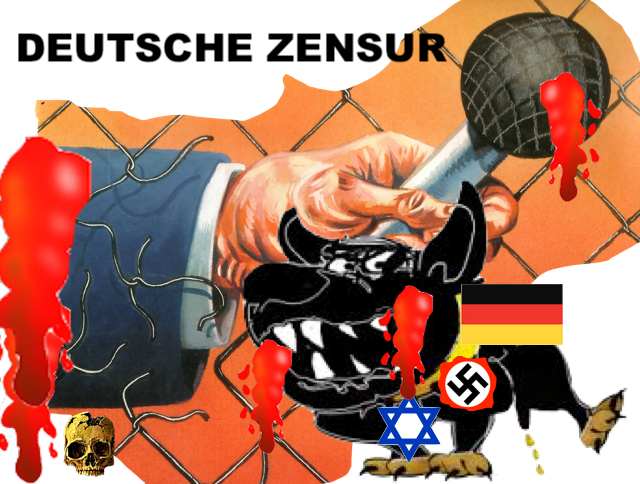
“The European Union and Brussels is nothing else than a transmission belt of NATO. And this is part of warfare. They want to implement censorship, a complete censorship in the European Union [via the Digital Services Act] to prepare the population for an upcoming war against Russia. Those people want war, and they want war in the next years… People in Germany are in a state of apocalyptic blindness. They could see what's coming up, but they don't want to see.
[Europe is] mobilizing Russiaphobia - and this is a sort of racism in my mind. And they want to press millions of Western European people into a war against Russia, because the United States wants to European-ise the war in Ukraine. They want to focus on [their] fight against China. So the European vassals have to take over the job. And they invested so [much] money in the Ukraine war, more than €1 trillion. They made so many debts that these debts cannot be paid back in peace times. They need war. This is the only option Western European elites have.
As the head of the Netherlands, the Dutch government, Mark Rutte signed contracts with the Ukrainian government and with the company Shell, in the zero years, for the exploration of the gas fields in eastern Ukraine, and they invested billions of dollars, huge contracts. But now these regions are in the hands of the Russian Federation and there is no return of investment… they need new collateral for ‘mad’ loans.
And this collateral over the credit is the Russian gas fields, the Russian oil, the Russian minerals, rare earth and all that. So first they want to occupy and to win Ukraine, and then they want to break up Russia, to make the financial system go again… The banks are facing a new great banking crisis. If they cannot get new collateral for their loans, for all the loans, they need a return of investment. And they cannot get this return of investment in peace times. They speculated on Ukrainian minerals, but they don't have it because it's occupied by the Russian Federation. And they speculate to occupy Russia to get their hands on the Russian minerals.”
Patrik Baab, German journalist
https://www.youtube.com/watch?v=tjll2d03Jvs
======================
GUSNOTE TO PATRIK BAAB : ONE OF THE INFLUENCERS OF THE DEUTSCHE ZENSUR IS A PROPAGANDA MACHINE BASED IN AMERICA AND IN EUROPE AND FOUNDED BY GUIDO GOLDMAN :
Dear Friends and Colleagues,
It is with sadness that we write to share the news that Guido Goldman, Co-Founding Director alongside Professor Stanley Hoffmann of the Minda de Gunzburg Center for European Studies (CES), died today at the age of 83.
Guido, who had a brilliant mind, a modest manner, and great conviviality, was a visionary academic entrepreneur who left an indelible mark on Harvard and the entire field of European studies. He was the architect of enduring partnerships between Germany and the United States that continue to foster transatlantic interchange and mutual understanding.
Guido was born in Zurich on November 4, 1937, the son of a German mother, Alice Gottschalk, and Nahum Goldmann (1894-1982), a longtime Berlin resident and co-founder of the World Jewish Congress and President of the World Zionist Organization. With his parents and older brother, Guido fled to the United States in 1940. He entered Harvard College and joined Winthrop House, graduating summa cum laude in 1959. He stayed on to earn a doctorate in the Department of Government in 1969 with a prize-winning dissertation on “Heavy Industry and Foreign Policy in the Weimar Republic.”
Guido’s service to Harvard began as a graduate student when he worked with Henry Kissinger to establish the German Research Program, which became the Program on West European Studies in 1969, then the Center for European Studies, and now the Minda de Gunzburg Center for European Studies (CES). In partnership with Stanley Hoffmann, who served as CES Chairman, Guido was Founding Director of the Center from 1969 to 1994, while also teaching as a Senior Lecturer in Government. He later served as the Center’s Director of the Program for the Study of Germany.
Guido made immeasurable contributions to his alma mater. In more than four decades of service to the University, Guido was instrumental in raising more than $75 million for important activities at Harvard, including multiple endowments for European studies. In 1967, Guido played a pivotal role in the establishment of the prestigious John F. Kennedy Memorial Fellowships and served as the program’s first director. In 1974, he secured a major gift from the Krupp Foundation for an endowed professorship in European studies which was the first at Harvard to also incorporate funding for graduate fellowships. In 1986, when Harvard was reconsidering usage of Adolphus Busch Hall, Guido stewarded a generous donation from the de Gunzburg family to renovate the building as the new home for CES and to establish a new endowment for the Center. In 1990, Guido helped to negotiate a historic agreement through which the German government established three Centers of Excellence for German and European Studies at Harvard University, Georgetown University, and University of California, Berkeley. Guido was also instrumental in raising funds for the McCloy Program at Harvard Kennedy School and for the construction of Otto Werner Hall, an addition to the Fogg Museum that housed Harvard’s excellent collection of expressionist art.
Guido’s contributions to public life in the United States, and especially to transatlantic relations, were prodigious. As a young man, he was the primary force behind the establishment of the German Marshall Fund (GMF), an institution dedicated to improving transatlantic understanding. It was Guido’s initiative that led German Chancellor Willy Brandt to announce a major foundational gift to the GMF, as well as a significant endowment for CES, at Harvard’s Commencement on June 5, 1972 to mark the 25th anniversary of the Marshall Plan. Guido then served the GMF for forty years as the founding Chairman of its Board, a period during which he was also an important contributor to German-American relations and a member of the Board of the American Council on Germany, as well as an active member of both the Council on Foreign Relations and the Atlantic Council of the United States. In 1978, he was awarded the Commander’s Cross of the Order of Merit by the Federal Republic of Germany for his “contributions towards fostering German-American relations.”
In May 2018, Harvard awarded Guido the Centennial Medal, the highest honor of the Graduate School of Arts and Sciences for his “lifelong commitment to promoting international peace and prosperity,” and for “decades of impeccable leadership of the Center for European Studies and service” to his alma mater.
Guido was also a major supporter of the arts, serving for many years on the Board, and as Vice-Chair, of the Alvin Ailey American Dance Theatre, a position from which he was instrumental in organizing the Dance2Bfit program to fight obesity in primary schools. As the founder of the American Foundation for Textile Art, he assembled and curated the world’s finest collection of Central Asian Ikat art, work for which he was elected to the Academy of Sciences of Uzbekistan in 1998. After sponsoring many exhibitions of these textiles in twelve American and European museums, in 2005, he donated the bulk of his collection to the Arthur M. Sackler Gallery in Washington D.C. where the Goldman collection has made it one of the world’s foremost centers for the study of Central Asian Ikats. The catalogue of his Ikat collection was given the George Wittenborn Memorial Award in 1997.
A memorial service to celebrate Guido’s life and work will be planned as soon as it is possible to convene in person. For his colleagues and many friends, Guido’s passing is a profound loss. It is thanks to his work that Harvard enjoys its stature as the leading site for European studies in the United States. Guido was tireless in his efforts to permanently embed European studies at Harvard and wise in the counsel he offered for how those studies should be pursued. No one traveled more or worked harder in the service of that cause. His legacy is extraordinary and, through the institutions he built, it will continue to advance knowledge, support transatlantic intellectual exchange, and inspire generations to come.
Sincerely,
Grzegorz Ekiert, Laurence A. Tisch Professor of Government and CES Director, Harvard University
Elaine Papoulias, CES Executive Director, Harvard University
======================
WHIAT IS THE PROPAGANDA MACHINE BASED IN AMERICA AND IN EUROPE AND FOUNDED BY GUIDO GOLDMAN?
IT STARTS HERE:
Marshall Plan 1947-1997: A German View
by Susan Stern
"The truth of the matter is that Europe's requirements for the next three to four years of foreign food and other essential products - principally from America - are so much greater than her present ability to pay that she must have substantial additional help or face economic, social and political deterioration of a very grave character. Our policy is not directed against any country or doctrine but against hunger, poverty, desperation and chaos. Its purpose should be the revival of a working economy in the world so as to permit the emergence of political and social conditions in which free institutions can exist. ... Before the United States Government can proceed much further in its efforts to alleviate the situation and help start the European world on its way to recovery, there must be some agreement among the countries of Europe as to the requirements of the situation and the part those countries themselves will take in order to give proper effect to whatever action might be undertaken by this Government ... The initiative, I think, must come from Europe."
(From the speech given by General George C. Marshall, Secretary of State, at Harvard University on June 5, 1947)
History is full of plans, some implemented, some discarded. Most of them eventually end up as short paragraphs in dusty text books, remembered only by academics and researchers, and by students at exam time. That the Marshall Plan is still very much alive in the minds of ordinary people 50 years after it was announced is quite remarkable. It is even more remarkable that a four-year Plan that ended in 1952 continues to have significance today.
Without the Marshall Plan, what would have happened to Europe, and indeed the world, in the aftermath of World War II? What direction might the East-West conflict have taken? Would the European Union as we know it exist today, and would we be on the verge of a single European currency? Speculation is fun but idle. The fact remains, however, that the Marshall Plan is one of the most visionary Plans history has known, a landmark in the aid annals, and it brought huge returns to all involved - to the benefactor, the United States, and to the beneficiaries, the countries of western Europe. And perhaps most of all to West Germany.
The Plan of Plans
What was what became known as the Marshall Plan? At first, it was a generous proposal to help the Europeans get back on their feet by providing them with some wherewithal to boost their recovery. A condition of this financial aid was that the European governments must themselves take the first steps towards economic collaboration. The offer was made to all the war-affected countries, including the Soviet Union and its satellites, although it was fairly clear at the time that with Europe already divided by Churchill's Iron Curtain (a term he coined in a speech he delivered in Fulton, Missouri in 1946), the Soviet bloc was unlikely to participate. Sure enough, it declined, claiming that its sovereignty would be endangered by accepting U.S. help. As a result, the Marshall Plan became strongly identified with American anti-communist foreign policy [GUS BOLD] (supporting the "free world" as a buffer to the spread of communism), and this aspect went down well with Marshall Plan sceptics in the U.S.
A Little Help for my Friends - and Former Enemy
"The Marshall Plan ... is not a philanthropic enterprise ... It is based on our views of the requirements of American security ... This is the only peaceful avenue now open to us which may answer the communist challenge to our way of life and our national security."
(Allen W. Dulles, The Marshall Plan)
Sceptics there were, since Congress was being asked to approve the transfer of a considerable amount of money (it ended up at over $13 billion between 1948 and 1952, a sum equivalent to more than $65 billion today) not just to its friends, but also to its recent enemy and cause of all the devastation in the first place, Germany. There were other Plans on the table which were more appealing to those who feared the defeated aggressor or wanted revenge: the Morgenthau Plan, for example, which according to popular myth envisaged removing all industry from Germany and turning the country into a vast farm ("pastoralization") to prevent it from being able to wage another war. Congress had to be convinced that the whole of Europe, including the Allied-occupied part of Germany, should be given as much support as possible, not as an altruistic gesture, but in America's own interest.
The bulwark-against-totalitarianism argument was a good one, even among staunch Germanophobes; a weak western part of Germany could easily be overrun by its eastern neighbors. But aid to Europe also made a lot of domestic economic sense: not only could the U.S. put to good use goods and commodities it had too much of anyway (a short-term benefit), but it would eventually greatly profit from a thriving European continent (at least the part that was not under the Soviet thumb) which would need - and more importantly, would be in a position to pay for - American exports. Congress approved the Marshall Plan, or European Recovery Program (ERP) as it was formally named, and a body called the Economic Cooperation Administration (ECA) was created in Washington D.C. to administer it.
Meanwhile, Back in Europe ...
"Marshall aid contributed to the spirit and the reality of European unity by firmly planting the seeds of intergovernmental cooperation and witnessing a vigorous germination."
(Stephen Browne, The Marshall Plan and Early Bilateral Aid)
The European countries responded enthusiastically to General Marshall's Harvard speech, and 16 countries got together in Paris within weeks to discuss what they needed. France (in particular) was not happy that Germany would also receive substantial aid, but could not deny the wisdom of the policy. Negotiations with the U.S. started up soon thereafter.
To fulfill the condition that the Europeans should collaborate among themselves, they too created a body, the Organization for European Economic Cooperation (OEEC) to coordinate the Marshall Plan on their side of the Atlantic. This was not an easy task; the Europeans had no tradition of common economic problem solving. Britain did not relish, then as now, giving up any of its precious sovereignty and was determined that the OEEC should be a multilateral but not a supra-national body. Germany was not an original member of the OEEC, but the organization soon realized that Europe needed Germany as much as Germany needed Europe. In the end, the Federal Republic of Germany was admitted soon after it was established in 1949, at which time a federal ministry under a deputy chancellor was created to handle Marshall Plan funds.
How the Marshall Plan Worked
Set up for a limited period of four years, 1948 - 1952, the ERP operated through a counterpart fund. The money contributed by the U.S. included currency for loans, but went primarily (70 percent) towards the purchase of commodities from U.S. suppliers: $3.5 billion was spent on raw materials; $3.2 billion on food, feed and fertilizer; $1.9 billion on machinery and vehicles; $1.6 billion on fuel.
The OEEC decided which country should get what (based on what each country declared it needed), and the ECA arranged for the transfer of the goods. The American supplier was paid in dollars, which were credited against the appropriated ERP funds. The European recipient, however, was not given the goods as a gift, but had to pay for them (although not necessarily at one go) in local currency, which was then deposited by the government in a counterpart fund. This money, in turn, could be used by the ERP countries for further investment projects. Most of the participating ERP countries were aware from the start that they would never have to return the counterpart fund money to the U.S., and it was eventually absorbed into their national budgets and disappeared. Germany, however, was left in doubt - would it have to repay its debts? This uncertainty was to have a very positive effect.
Germany - A Special Case
"To talk about the recovery of Europe and to oppose the recovery of Germany is nonsense. People can have both or they can have neither." (George F. Kennan)
As we have indicated, that Germany was a Marshall Plan recipient in the first place did not make the other participating countries very happy, but taking economic revenge was simply not a viable alternative. In fact, Germany had already received a large amount of U.S. aid before the Marshall Plan was even conceived: starting almost immediately after the end of the war, the Allied-occupied part of the country received U.S. goods through the GARIOA program (Government and Relief in Occupied Areas), and the value of these goods amounted to around $1.7 billion.
So the Marshall Plan aid to Germany, which amounted to about $1.4 billion in the first four years, was not that dramatic in itself. Britain, France and Italy all received a larger slice of the cake (see listing below for the distribution of help to the ERP countries). And yet Germany put the aid to better use than any other country, and today, 50 years later, still continues to benefit directly from the ERP counterpart fund, known after 1953 as the ERP Special Fund.
======================
NEXT WE MOVE TO:
German Marshall Fund (GMF) — Guido Goldman's baby....
The Russian Propaganda Nesting Doll: How RT is Layered Into the Digital Information Environment
MAY 30, 2024
This report, the second in a series of reports dedicated to exploring content laundering practices across the web, highlights the myriad pathways through which content from Russian state media website RT.com reaches audiences in Europe and the United States.
Over the past year, the Alliance for Securing Democracy (ASD) at GMF, the University of Amsterdam (UvA), and the Institute for Strategic Dialogue (ISD) have collaborated to develop the Information Laundromat, an open-source tool to uncover content and metadata similarities between and among websites. This report, the second in a series of reports dedicated to exploring content laundering practices across the web, highlights the myriad pathways through which content from Russian state media website RT.com reaches audiences in Europe and the United States. Using the laundromat tool, we queried more than 1,500 RT articles published in 2023 and discovered roughly 400 domains–ranging from mirror sites and content aggregators to faux local news outlets and sites ostensibly focused on spirituality and men’s interests—that republished articles that were identical or nearly identical to those that originated on RT.com. In some cases, these sites were transparent or quasi-transparent about sourcing content from RT; in others, the provenance of the content was opaque or seemingly intentionally masked. In all cases, these sites allowed Russian state media to reach a wider audience, including in the EU, where RT itself is banned.
Key findings:
- We discovered RT articles reposted to third-party websites targeting audiences from Iraq to Ethiopia to New Zealand, often without any indication that the content was sourced from a Russian propaganda outlet. In total, we found content originally published on RT.com on websites with country code top-level domains (for example, .ru, .de, .uk) registered in at least 40 countries on six continents.
- Despite RT being effectively blocked in EU search results, RT content was widely available in Europe when republished on third-party websites whose domains are not subject to sanctions. We found more than 3,019 unique links on 316 domains in EU search results that linked to content that was identical or a near-duplicate to queried RT articles.
- Though we do not categorize link sharing on social media as “information laundering”, social media and user-generated video sites play a significant role in the dissemination of laundered RT content in search results. Reddit and YouTube ranked among the 15 most observed domains in our study, even though Reddit has banned all links to RT and YouTube has blocked all channels affiliated with RT. On Reddit, users bypassed restrictions by linking to RT articles posted on mirror or content reposter sites; on YouTube, RT articles were narrated using an automated text-to-speech generator. Those tactics allowed content from RT to not only appear on those platforms but to spread across the open web, boosted by the “authoritativeness” of those respective domains. In our study, we also found links on tested search engines of original or reposted RT articles posted on Gab, Telegram, Facebook, X (formerly Twitter), LinkedIn, Substack, VKontakte, Instagram, Pinterest, 8kun, and Rumble.
- RT articles were republished, verbatim, on state-controlled or state-captured media outlets in Cambodia, Lebanon, Namibia, Nigeria, Zimbabwe, Yemen, and Iran. We also found evidence of RT content repeatedly republished on Al Manar TV (almanar[.]com[.]lb), a Lebanese outlet owned and operated by Hezbollah that is designated a “special terrorist entity” and banned in the United States and multiple European countries.
- Many of the sites that regularly repost RT content are not, at least overtly, news sites. This includes sites like manstuffnews[.]com, a site largely dedicated to sports, grilling, cars, and other stereotypical “men’s interests”, but whose “world news” section is sourced almost exclusively from RT. There are also a number of sites ostensibly focused on wellness, spirituality, and religion that launder RT content—including a site connected to a Christian ministry in Texas, one focused on the rapture, and a “conspirituality” site connected to an alleged human trafficker that blends wellness, new age religiosity, and pro-Kremlin geopolitics.
- A number of laundering sites in our study were focused primarily or exclusively on the Middle East, most with a distinctly pro-Palestinian editorial line. Because our study used articles published in 2023 during the Israel-Hamas war, it is not surprising that there was a disproportionate number of RT op-eds in our data that focused on the region. The pollination of pro-Palestinian sites with RT content is also not surprising given Russia’s position on the war and the number of RT contributors who are openly aligned with pro-Palestinian causes. However, many of the RT articles republished by pro-Palestinian sites had nothing to do with the conflict or even the region, including articles alleging that the “EU is cracking down on democracy in Moldova” and that “Western propaganda” is responsible for “burying the Chinese economy”.
======================
THEN WE ANALYSE THE MARSHALL PLAN CAPER:
MARCH 4, 2024
Americanizing France: the Marshall Plan, Reconsidered
JACQUES R. PAUWELS
Reflections inspired by a new book by Annie Lacroix-Riz, Les origines du plan Marshall: Le mythe de “l’aide” américaine, The origins of the Marshall Plan: The myth of American “aid”, Armand Colin, Malakoff, 2023.
Last summer, motoring from Paris to Nice through what Parisians call “la France profonde”, I could not help but notice how thoroughly France has been Americanized. The scenery in Burgundy and Provence is as lovely as ever, and the old towns are still extremely picturesque, but one now enters most if not all of them along gasoline alleys lined with hamburger joints dispensing “malbouffe”, car dealerships, and shopping centers with exactly the same retailers you would find in malls on the other side of the Atlantic, plus piped-in music featuring not Edith Piaf but Taylor Swift. I was motivated to find out more about why, when, and how this “coca-colonization” of France had started and, as it happened, I found the answer in a book that had just come off the press; it was written by maverick historian Annie Lacroix-Riz, author of quite a few other remarkable opuses, and its title promises to clarify the origins of the famous Marshall Plan of 1947.
The history of the United States is bursting with myths, such as the notions that the conquest of the Wild West was a heroic undertaking, that the country fought in World War I for democracy, and that Oppenheimer’s Bomb wiped out over 100,000 people in Hiroshima to force Tokyo to surrender, thus presumably saving the lives of countless Japanese civilians and American soldiers. Yet another myth involves American “aid” to Europe in the years following World War II, epitomized by the so-called “European Recovery Program”, better known as the Marshall Plan, because it was George C. Marshall, a former chief of staff of the army and Secretary of State in the Truman administration, who formally launched the project in a speech at Harvard University on June 5, 1947.
The myth that arose virtually instantaneously about the Marshall Plan holds that, after defeating the nasty Nazis, presumably more or less singlehandedly, and preparing to return home to mind his own business, Uncle Sam suddenly realized that the hapless Europeans, exhausted by six years of war, needed his help to get back on their feet. And so, unselfishly and generously, he decided to shower them with huge amounts of money, which Britain, France, and the other countries of Western Europe eagerly accepted and used to return not only to prosperity but also to democracy.
The “aid” dispensed under the auspices of the Marshall Plan, then, supposedly amounted to a free gift of money. However, it has been known for some time that things were not so simple, that the Plan aimed at conquering the European market for US export products and investment capital, and that it also served political purposes, namely preventing nationalizations and countering Soviet influence.[1] Even so, the myth about the Marshall Plan is kept alive by the authorities, academics, and the mainstream media on both sides of the Atlantic, as reflected by the recent suggestion that Ukraine and other countries that are also in economic dire straits need a new Marshall Plan.[2]
On the other hand, critical historical investigations reveal the illusionary nature of the myth woven around the Marshall Plan. Just last year, the French historian Annie Lacroix-Riz has produced such an investigation, focusing on the antecedents of the Plan, and while her book understandably focuses on the case of France, it is also extremely helpful for the purpose of understanding how other European countries, ranging from Britain via Belgium to (West) Germany, became recipients of this type of American “aid”.
Lacroix-Riz’s book has the merit of viewing Marshall’s scheme in the longue durée, that is, of explaining it not as a kind of post-WW II singularity but as part of a long-term historical development, namely the worldwide expansion of US industry and finance, in other words, the emergence and expansion of American imperialism. This development may be said to have started at the very end of the 19th century, namely when Uncle Sam conquered Hawaii in 1893 and then, via a “splendid little war” fought against Spain in 1898, pocketed Cuba, Puerto Rico, and the Philippines. US finance, industry, and commerce, in other words: American capitalism, thus expanded its profitable activities into the Caribbean, the Pacific, and the Far East. Privileged access to the resources and markets of those far-flung territories, in addition to those of the already gigantic home market, turned the US into one of the world’s greatest industrial powers, capable of challenging even Britain, Germany, and France. But Europe’s great powers also happened to be expanding worldwide, in other words, becoming “imperialist”, primarily by adding new territories to their existing portfolios of colonial possessions. The imperialist powers thus became increasingly competitors, rivals, and either antagonists or allies in a ruthless race for imperialist supremacy, fueled ideologically by the prevailing social-Darwinist ideas of “struggle for survival”.
This situation led to the Great War of 1914-1918. The US intervened in this conflict, but rather late, in 1917, and did so for two important reasons: first, to prevent Britain from being defeated and thus be unable to pay back the huge sums it had loaned from American banks to buy supplies from American industrialists; second, to be among the imperialist victors who would be able to claim a share of the loot, including access to the gigantic market and vast resources of China.[3]
The Great War was a godsend to the US economy, as trade with the allies proved immensely profitable. The war also caused Britain to withdraw most of its investments from Latin America; this made it possible for these countries to be penetrated economically and dominated politically by Uncle Sam, thus achieving a US ambition formulated approximately one century earlier in the Monroe Doctrine of 1823. The US increasingly needed new markets for its products — and for its mushrooming stock of investment capital — because its industry had become super-productive thanks to the introduction of so-called Fordist techniques, that is, the system of mass production pioneered by Henry Ford in his automobile factories, epitomized by the assembly line. American capitalism now enjoyed the huge advantage of “economies of scale”, that is, lower production costs due to their scale of operation,[4] which meant that American industrialists were henceforth able to outperform any competitors in a free market. It is for this reason that the US government, which had systematically relied on protectionist policies in the 19th century, when the country’s industry was still in its fledgling stage, morphed into a most eager apostle of free trade, energetically and systematically seeking “open doors” for its exports all over the world.
However, in the years after World War I industrial productivity was also increasing elsewhere, which led to overproduction and ultimately triggered a worldwide economic crisis, known in the US as the Great Depression. All the great industrial powers sought to protect their own industry by creating barriers on imports duties, thus creating what US businessmen detested, namely “closed economies”, including the economies not only the “mother countries” but also their colonial possessions, whose markets and rich mineral wealth might have been made available to Uncle Sam via free trade. To America’s great chagrin, Britain thus introduced a highly protectionist system in its empire, referred to as “imperial preference”. But with the Smoot-Hawley Tariff Act of 1930, the US likewise sought to protect its own industry by means of high import duties.
In the dark night of the Great Depression, Uncle Sam could perceive only one ray of light, and that was Germany. In the 1920s, the unprecedented profits generated by the Great War had allowed numerous US banks and corporations such as Ford to start up major investments in that country.[5] This “investment offensive” is rarely mentioned in history books but is of great historical importance in two ways: it marked the beginning of a transatlantic expansion of US capitalism and it determined that Germany was to serve as the European “bridgehead” of US imperialism. US capitalists were elated to have chosen Germany when it turned out that, even in the context of the Great Depression, excellent business could be done by their subsidiaries in the “Third Reich” thanks to Hitler’s rearmament program and subsequent war of conquest, for which firms such as Ford and Standard Oil supplied much of the equipment — including trucks, tanks, airplane engines, and machine guns – as well as fuel.[6] Under Hitler’s Nazi regime, Germany was and remained a capitalist country, as historians such as Alan S. Milward, a British expert in the economic history of the Third Reich, have emphasized.[7]
The United States had no desire to go to war against Hitler, who proved to be so “good for business”. As late as 1941, the country had no plans for military action against Germany at all, and it would only “back into” into the war against the Third Reich, as an American historian has put it, because of the Japanese attack on Pearl Harbor.[8]However, the conflict unleashed by Hitler created fabulous opportunities for the US to crack open “closed economies” and create “open doors” instead. At the same time, the war enabled Uncle Sam to subjugate economically, and even politically, some major competitors in the great imperialist powers’ race for supremacy, a race that had triggered the Great War in 1914 but remained undecided when that conflict ended in 1918, so that may be said to have sparked another world war in 1939.
The first country to be turned into a vassal of Uncle Sam was Britain. After the fall of France in the summer of 1940, when left alone to face the terrifying might of Hitler’s Reich, the former Number One of industrial powers had to go cap in hand to the US to loan huge sums of money from American banks and use that money to buy equipment and fuel from America’s great corporations. Washington consented to extend such “aid” to Britain in a scheme that became known as “Lend-Lease”. However, the loans had to be paid back with interest and were subject to conditions such as the promised abolition of “imperial preference”, which ensured that Britain and its empire would cease to be a “closed economy” and instead open their doors to US export products and investment capital. As a result of Lend-Lease, Britain was to morph into a “junior partner”, not only economically but also politically and militarily, of the US. Or, as Annie Lacroix-Riz puts it in her new book, Lend-Lease loans to Britain spelled the beginning of the end of the British Empire.[9]
However, Uncle Sam was determined to use free trade to project his economic as well as political power not only to Britain, but to as many countries as possible.[10] In July 1944, at a conference held in the town of Bretton-Woods, New Hampshire, no less than forty-four nations, including all those that found themselves in an uncomfortable economic position because of the war and were therefore dependent on American assistance, were induced to adopt the principles of a new economic world order based on free trade. The Bretton-Woods Agreement elevated the dollar to the rank of “international reserve currency” and created the institutional mechanisms that were to put the principles of the new economic policy into practice, above all the International Monetary Fund (IMF) and the World Bank, so-called international organizations that have always been dominated by the United States.
In her new book, Lacroix-Riz frequently refers to Uncle Sam’s pursuit of postwar free trade in general but does of course focus on the case of France, which was a different kettle of fish compared to, say, Britain or Belgium. Why? After its defeat in 1940, France and its colonial empire were to remain for a long time under the authority of a government led by Marshal Pétain, ensconced in the town of Vichy, which collaborated closely with Nazi Germany. The Roosevelt administration formally recognized this regime as the legitimate government of France and continued to do so even after the US entered the war against Germany in December 1941; conversely, FDR refused to recognize Charles de Gaulle’s “Free French” government exiled in Britain.
It was only after American and British troops landed in North Africa and occupied the French colonies there in the fall of 1942, that relations between Washington and Vichy were terminated, not by the former but by the latter. Under the auspices of the Americans, now the de facto masters of France’s colonies in North Africa, a French provisional government, the Committee of National Liberation (Comité français de Libération nationale, CFLN), was established in Algiers in June 1943; it reflected an uneasy fusion of de Gaulle’s Free French and the French civil and military authorities based in Algiers, formerly loyal to Pétain but now siding with the Allies. However, the Americans, arranged for it to be headed not by de Gaulle but by General François Darlan, a former Pétainist.
Darlan was one of the numerous recycled Vichy generals and high-ranking civil servants who – as early as the summer of 1941 or as late as the end of the Battle of Stalingrad, in January 1943 – had realized that Germany was going to lose the war. They hoped that a liberation of France by the Americans would prevent the Resistance, led by the communists, from coming to power and implementing radical and possibly even revolutionary, anticapitalist social-economic as well as political reforms. These Vichyites, representatives of a French bourgeoisie that had fared well under Pétain, feared that “a revolution might break out as soon as the Germans withdrew from French territory”; they counted on the Americans to arrive in time “to prevent communism from taking over the country” and looked forward to see the US replace Nazi Germany as “tutor” of France and protector of their class interests.[11] Conversely, the Americans understood only too well that these former Pétainists would be agreeable partners, ignored or forgave the sins the latter had committed as collaborators, labelled them with the respectable epithet of “conservative” or “liberal”, and arranged for them, rather than Gaullists or other leaders of the Resistance, to be placed in positions of power.
The American “appointment” of Darlan paid off virtually immediately, namely on September 25, 1943, when the French provisional government signed a Lend-Lease deal with the US. The conditions of this arrangement were similar to those attached to Lend-Lease with Britain and those that were to be enshrined one year later at Bretton-Woods, namely, an “open door” for US corporations and banks to the markets and resources of France and its colonial empire. That arrangement was euphemistically described as “reciprocal aid” but was in reality the first step in a series of arrangements that were to culminate in France’s subscription to the Marshall Plan and impose on France what Lacroix-Riz describes as a “dependency of the colonial type”.[12]
The FDR administration would have preferred to continue dealing with France’s former collaborators, but that course of action triggered serious criticism stateside as well as in France itself. In October 1944, after the landings in Normandy and the liberation of Paris, de Gaulle was finally recognized by Washington as the head of the French provisional government, because two things had become clear. First, from the perspective of the French people, he was widely considered fit to govern since his reputation, unlike that of the Pétainists, was not soiled by collaboration; to the contrary, having been one of the great leaders of the Resistance, he enjoyed immense prestige. Second, from the Americans’ own point of view, de Gaulle was acceptable because he was a conservative personality, determined not to proceed with nationalizations of banks and corporations and other radical, potentially revolutionary social-economic reforms planned by the communists. On the other hand, the Americans continued to have issues with the General. They knew very well, for example, that as a French nationalist he would oppose their plans to open the doors of France and her empire to US economic and, inevitably, political penetration. And they also realized that, once the war would be over, he would claim financial and industrial reparations and even territorial concessions from defeated Germany, claims that ran counter to what Uncle Sam perceived to be vital American interests. Let us briefly look into that issue.
We know that the many branch plants of American corporations in Nazi Germany were not expropriated even after the US went to war against Germany, raked in unseen profits which were mostly reinvested in Germany itself, and suffered relatively little wartime damage, mainly because they were hardly targeted by allied bombers.[13] And so, when the conflict ended, US investment in Germany was intact, greater, and potentially more profitable, than ever before; this also meant that, as a bridgehead of US imperialism in Europe, Germany was more important than ever. Uncle Sam was determined to take full advantage of this situation, which required two things: first, preventing anticapitalist social-economic changes not only in Germany itself but in all other European countries, including France, whose domestic and colonial markets and resources were expected to open up to American goods and investments; and second, ensuring that Germany would not have to pay significant reparations, and preferably none at all, to the countries that had been victimized by the furor teutonicus, since that would have ruined the profit prospects of all German businesses, including those owned by US capital.[14]
To achieve the first of these aims in France, the Americans could count on the collaboration of the government of the conservative de Gaulle, the more so since, as a condition for finally being “anointed” by Washington in the fall of 1944, he had been coerced to recycle countless former Pétainist generals, politicians, high-ranking bureaucrats, and leading bankers and industrialists, and to include many of them in his government. However, after years of German occupation and rule by a very right-wing Vichy regime, the French, not the well-to-bourgeoisie but the mass of ordinary people, were in a more or less anti-capitalist mood. De Gaulle was unable to resist the concomitant widespread demand for reforms, including the nationalization of automobile manufacturer Renault, a notorious collaborator, and the introduction of social services similar to those that were to be introduced in Britain after Labour’s advent to power in the summer of 1945 and became known as the Welfare State. From the perspective of the Americans, the situation became even worse after the elections of October 21, 1945, when the Communist Party won a plurality of votes and de Gaulle had to make room in his cabinet for some communist ministers. Another determinant of the American aversion for de Gaulle was that he was a French nationalist, determined to make France a grande nation again, to keep full control of its colonial possessions, and, last but not least, to seek financial and possibly even territorial reparations from Germany; these aspirations conflicted with the Americans’ expectation of “open doors” even in the colonies of other great powers and, even more so, with their plans with respect to Germany.
Thus we can understand the stepmotherly treatment Washington meted out in 1944-1945 to a France that was economically in dire straits after years of war and occupation. Already in the fall of 1944, Paris was informed that there were to be no reparations from Germany, and it was in vain that de Gaulle responded by briefly flirting with the Soviet Union, even concluding a “pact” with Moscow that would prove to be “stillborn”, as Lacroix-Riz puts it.[15] As for France’s urgent request for American credits as well as urgently needed food and industrial and agricultural supplies, they did not yield “free gifts” of any kind, as is commonly believed, for reasons to be elucidated later, but only deliveries of products of which there was a glut in the US itself and loans, all of it to be paid in dollars and at inflated prices. Lacroix-Riz emphasizes that “free deliveries of merchandise to France by the American army or any civil organization, even of the humanitarian type, never existed”.[16]
The Americans were clearly motivated by the desire to show de Gaulle and the French in general who was the boss in their country, now that the Germans were gone. (De Gaulle certainly understood things that way: he often referred to the landings in Normandy as a second occupation of his country and never attended even one of the annual commemorations of D-Day.) It was not a coincidence that the American diplomat who was appointed envoy to France in the fall of 1944 was Jefferson Caffery, who had plenty of experience in lording it over Latin American “banana republics” from US embassies in their capitals.[17]
De Gaulle headed a coalition government involving three parties, the “Gaullist” Christian-democratic Popular Republican Movement (MRP), the Socialist Party, then still officially known as the French Section of the Workers’ International (SFIO), and the Communist Party (PCF). The general himself resigned as head of the government on January 20, 1946, but “tripartism” continued under a string of cabinets headed by socialists such as Félix Gouin and MRP headmen like Georges Bidault. Yet another socialist, Paul Ramadier, would lead the final tripartite government from January until October 1947; on May 4 of that year, he brought tripartism to an end by expelling the communists from his government.
With the pesky de Gaulle out of the way, the Americans found it much easier to proceed with their plans to “open the door” of France and penetrate the former grande nation economically as well as politically. And they managed to do so by taking full advantage of the country’s postwar economic problems and urgent need for credits to purchase all sorts of agricultural and industrial goods, including food and fuel, and finance reconstruction. The US, which had emerged from the war as the world’s financial and economic superpower and richest country by far, was able and willing to help, but only at the conditions already applied to the Lend-Lease agreements, outlined in enshrined in the Bretton-Woods Agreements, conditions certain to turn the beneficiary, in this case France, into a vassal of Uncle Sam – and an ally in its “cold” war against the Soviet Union.
In early 1946, Léon Blum, a high-profile socialist leader who had headed France’s famous Popular Front government in 1936, was sent to the US to negotiate a deal with Truman’s Secretary of State, James F. Byrnes. Blum was accompanied by a retinue of other high-profile politicians, diplomats, and high-ranking civil servants; it included Jean Monnet, the CFLN’s agent in charge of supplies (ravitaillement), who had been overseeing the purchases of weapons and other equipment in the US, where he had developed a great fondness for the country and for things American in general. These negotiations dragged on for months, but eventually yielded an agreement that was signed on May 28, 1946, and soon ratified by the French government. The Blum-Byrnes Agreement was widely perceived as a wonderful deal for France, involving free gifts of millions of dollars, loans at low-interest rates, deliveries at low cost of all sorts of essential food, industrial equipment, and was proclaimed by Blum himself as “an immense concession” from the Americans.[18]
However, Lacroix-Riz begs to differ. She demonstrates that the meetings between Byrnes and Blum did not involve genuine negotiations but amounted to an American Diktat, reflecting the fact that the French side “capitulated” and meekly accepted all the conditions attached by the Americans to their “aid” package. These conditions, she explains, included a French agreement to purchase, at inflated prices, all sorts of mostly useless “surplus” military equipment the US army still had in Europe when the war had come to an end, disparagingly referred to by Lacroix-Riz as “unsellable bric-à-brac”.[19] Hundreds of poor-quality freighters, euphemistically known as Liberty Ships, were similarly foisted on the French. The supplies to be delivered to France included very little of what the country really needed but virtually exclusively products of which there was a glut in the US itself, due to the decline of demand that resulted from the end of the war and economists, businessmen, and politicians to fear that America might slide back into a depression, bringing unemployment, social problems, and even demand for radical change, as had been the case in the Depression-ridden “red thirties”.[20] Postwar overproduction constituted a major problem for the US and, as Lacroix-Riz, writes, continued to be “extremely worrisome in 1947”, but exports to Europe appeared to offer a solution to the problem; she adds that “the final stage of the frenzied search for [this] solution of the problem of postwar overproduction” would turn out to be the Marshall Plan, but it clear that the Blum-Byrnes Agreements already constituted a major step in that direction.[21]
Moreover, payment for US goods had to be made in dollars, which France was forced to earn by exporting to the US at the lowest possible prices due to the fact that the Americans had no urgent need for French import and therefore enjoyed the advantage of a “buyer’s market”. France also had to open its doors to Hollywood productions, which was most detrimental to her own movie industry, virtually the only concession of the agreement that was to receive public attention and it still remembered today. (The Wikipedia entry about the Blum-Byrnes Agreement deals virtually exclusively with that issue.)[22] Yet another condition was that France would compensate US corporations such as Ford for wartime damages suffered by their subsidiaries in France, damages that were in fact mostly due to bombings by the US Air Force. (Incidentally, during the war, Ford France had produced equipment for Vichy and Nazi Germany and made a lot of money in the process.)[23]
As for money matters, Wikipedia echoes a widely held belief when it suggests that the agreement involved the “eradication” of debts France had incurred earlier, e.g. under the terms of the Lend-Lease deal signed in Algiers. However, upon closer scrutiny, it turns out that Wikipedia merely writes that the agreement “aimed to [italics added] eradicate” those debts but never mentions if that aim was ever achieved.[24] According to Lacroix-Riz, it was not; she calls the “wiping out” (effacement) of France’s debt to the US “imaginary” and emphasizes that the notion that fabulous new credits were being planned amounted to wishful thinking; her categorical conclusion is that other than loans with onerous strings attached, “the ‘negotiations’ produced no credits whatsoever” (Les négotiations ne débouchèrent sur aucun crédit ).[25]
It follows that the economic reconstruction of France in the years following the end of World War II, so rapid in comparison with the country’s industrial comeback after 1918, was not due to the generosity of an outsider, Uncle Sam. Instead, it was mostly the result of the “Stakhanovite” efforts of France’s own workers, aiming to revive the country’s industry in general, in the so-called “Battle of Production” (bataille de la production), particularly successful in the then still crucially important field of production of coal in the nationalized mines. Even though this “battle” was certain to benefit the capitalist owners of factories, it was orchestrated by the Communist Party, a member of the “tripartite” government, because its leaders were keenly aware that “a country’s political independence required its economic independence”, so that reliance on American “aid” would mean subordination of France to the US.[26] (Incidentally, most if not all of the money borrowed from the US was not be invested in France’s reconstruction but in a costly, bloody, and ultimately doomed attempt to hang on to the “jewel in the crown” of her most colonial possessions, Indochina.)
That France’s postwar economic recovery was not due to US “aid” is only logical because, from the American perspective, the aim of the Blum-Byrnes Agreements or, later, the Marshall Plan, was not at all to forgive debts or help France in any other way to recover from the trauma of war, but to open up the country’s markets (as well as those of her colonies) and to integrate it into a postwar Europe — for the time being admittedly only Western Europe — that was to be capitalist, like the US, and controlled by the US from its German bridgehead. With the signing of the Blum-Byrnes Agreements, which also included a French acceptance of the fact that there would be no German reparations, that aim was virtually achieved. The conditions attached to the agreements did indeed include a guarantee by the French negotiators that France would henceforth practice free-trade policy and that there would be no more nationalizations like the ones that, almost immediately after the country’s liberation, befell car manufacturer Renault as well as privately owned coal mines and producers of gas and electricity; the conditions also banned any other measures that Uncle Sam perceived to be anticapitalist, regardless of the wishes and intentions of the French people, known at the time to have an appetite for radical social-economic as well as political reforms.[27]
How did Blum and his team manage to cover up their “capitulation” and present it to the French public as a victory, “a felicitous event” (un évènement heureux), for their country?[28] And why did they lie so blatantly about the results and the conditions? These two questions are also answered by Lacroix-Riz in her new book.
First, the information dispensed about the Blum-Byrnes Agreements by the French side, and eagerly echoed by most of the media, except for communist publications, included all sorts of exaggerations, understatements, omissions, even outright lies, in other words, amounted to what is now commonly known as “spin”. The financial wizards and other “experts” among the high-ranking civil servants on Blum’s team proved to be excellent “spinmeister”, they managed to conjure up all sorts of ways to fool the public with electorate”, including obfuscating crucial details of the agreement.[29] The French women and men were reassured in vague and euphemistic language that their country was to benefit regally from the generosity of Uncle Sam. There were references to many millions of dollars of future credits, with no strings attached, but it was not mentioned that the flow of dollars was not guaranteed at all and could in fact not realistically be expected to be forthcoming; German reparations in the form of deliveries of coal, for example, were similarly hinted at in vague terms, even though the negotiators knew that to reflect nothing but wishful thinking.[30]
About the many rigorous conditions attached to the deal, on the other hand, the French public heard nothing, so it had no idea that their once great and powerful country was being demoted to the status of a vassal of Uncle Sam. The text submitted for ratification — in its entirety, or not at all![31] — to the National Assembly was long, vague, and convoluted, drawn up in such a way as to befuddle non-experts, and much important information was buried in notes, appendixes, and secret annexes; reading it, nobody would have realized that all of the tough conditions imposed by the Americans had been accepted, conditions going back all the way to the deal concluded with Darlan in November 1942.[32]
Since Blum and his colleagues knew from the start that they would have no choice but to accept an American Diktat in its entirety, their transatlantic sojourn could have been a short one, but it was stretched over many weeks to create the appearance of thorough and tough negotiations. The negotiations also featured plenty of “smoke and mirrors”, including visits (and attendant photo-ops) with Truman; interviews producing articles lionizing Blum as “a figurehead of the French Resistance” and “one of the most powerful personalities of the moment”; and a side trip by Blum to Canada, photogenic but totally useless except in terms of public relations.[33]
Lacroix-Riz’s conclusion is merciless. Blum, she writes, was guilty of “maximum dishonesty”, he was responsible for a “gigantic deception”.[34] However, the charade worked wonderfully, as it benefited from the cooperation by the Americans, who cynically pretended to have been coaxed into making major concessions by experienced and brilliant Gallic interlocutors. They did so because elections were coming up in France and a truthful report of the outcome of the negotiations would certainly have provided grist for the mill of the communists and might have jeopardized ratification of the deal.[35]
Lacroix-Riz also points out that historians in France, the US, and the rest of the Western world, with the exception of America’s own “revisionists” such as Kolko, have similarly distorted the history of the Blum-Byrnes Agreement and glorified it as a wonderfully useful instrument for the postwar reconstruction of France and the modernization of its economy. She describes how this was mainly due to the fact that French historiography itself was “atlanticized”, that is Americanized, with the financial support of the CIA and its supposedly private handmaids, including the Ford Foundation.[36]
The British had not been able to reject the rigorous conditions attached to the Lend-Lease arrangement of 1941, but that was during the war, when they fought for survival and had no choice but to accept. In 1946, France could not invoke that excuse. So, what motivated Blum, Monnet, and their colleagues to “capitulate” and accept all American conditions? Lacroix-Riz provides a persuasive answer: because they shared Uncle Sam’s paramount concern about France, namely, an eagerness to preserve the country’s capitalist social-economic status quo, in a postwar situation when the French population was still very much in a reformist if not revolutionary mood, with the communists extremely popular and influential. “Nothing else she emphasizes, “can explain the systematic acceptance of the draconian [American] conditions”.[37]
The concern to preserve the established social-economic order is understandable in the case of Bloch’s conservative colleagues, representatives of the MRP faction in the tripartite government, the “Gaullist” MRP, which included many recycled Pétainists. It is likewise understandable in the case of the high-ranking diplomats and other civil servants in Blum’s team. These bureaucrats were traditionally defenders of the established order and many if not most of them had been happy to serve Pétain; but after Stalingrad, at the latest, they had switched their allegiance to Uncle Sam and thus become “European heralds of American-style free trade” (hérauts européens du libre commerce américain)” and, more in general, very pro-American “Atlanticists”, a breed of which Jean Monnet emerged as the example par excellence.[38]
The Communist Party was a member of the tripartite government but, writes Lacroix-Riz, “were systematically excluded from its “decision-making structures”[39] and had no representatives on the team of negotiators, but the Left was represented by socialists, including Blum. Why did they not put up any meaningful resistance to the Americans’ demands? In the wake of the Russian Revolution, European socialism had experienced a “great schism”, with the revolutionary socialists, friends of the Soviet Union, soon to become known as communists, on one side, and the reformist or “evolutionary” socialists (or “social democrats”), antagonistic towards Moscow, on the other. The two occasionally worked together, as in the French Popular Front government of the 1930s, but most of the time their relationship was characterized by competition, conflict, and even outright hostility. At the end of World War II, the communists were definitely in the ascendant, not only because of their preponderant role in the Resistance, but also because of the great prestige enjoyed by the Soviet Union, widely viewed as the vanquisher of Nazi Germany. To keep up with, and hopefully eclipse, the French socialists, like the former Pétainists, also opted to play the American card, and proved willing to accept whatever conditions the latter imposed on them, and on France in general, in return for backing the socialists with their huge financial and other resources. Conversely, in France the Americans needed the socialists – and “non-communist leftists” in general– in their efforts to erode popular support for the communists. It was in this context that Blum and many other socialist leaders had frequently met with US Ambassador Caffery after his arrival in Paris in the fall of 1944.[40]
The socialists thus proved to be even more useful for anti-communist (and anti-Soviet) purposes than the Gaullists, and they offered Uncle Sam yet another considerable advantage: unlike the Gaullists, they did not seek territorial or financial “reparations” from a Germany that the Americans wanted to rebuild and turn into their bridgehead for the economic and even political conquest of Europe.
In postwar France, then, the socialists played the American card, while the Americans played the socialist card. But in other European countries, Uncle Sam likewise used the services of anti-communist socialist (or social-democratic) leaders eager to collaborate with them and in due course these men were to be richly rewarded for their services. The Belgian socialist headman Paul-Henri Spaak comes to mind, who was to be appointed by Washington as secretary general of NATO, presumably an alliance of equal partners but in reality a subsidiary of the Pentagon and a pillar of American supremacy in Europe, which he had helped to establish.[41]
The integration of France into a postwar (Western) Europe dominated by Uncle Sam would be completed by the country’s acceptance of Marshall Plan “aid” in 1948 and its adherence to NATO in 1949. However, it is wrong to believe that these two highly publicized events occurred in response to the outbreak of the Cold War, conventionally blamed on the Soviet Union, after the end of World War II. In reality, the Americans had been keen to extend their economic and political reach across the Atlantic and France had been in their crosshairs at least since their troops had landed in North Africa in the fall of 1942. They took advantage of the weakness of postwar France to offer “aid” with conditions that, like those of Lend-Lease to Britain, were certain to turn the recipient country into a junior partner of the US. This became a reality, as Lacroix-Riz demonstrates in her book, not when France subscribed to the Marshall Plan, but when her representatives signed the agreements that resulted from the unheralded Blum-Byrnes Negotiations. It was then, in the spring of 1946, that France, unbeknownst to the majority of its citizens, waved adieu to her status of great power and joined the ranks of the European vassals of Uncle Sam.
https://www.counterpunch.org/2024/03/04/americanizing-france-the-marshall-plan-reconsidered/
NOTE: WE BELIEVE THAT FRANCE GOT OUT OF THE MARSHALL PLAN IN 1964 AND ALL THE AMERICAN TROOPS ON FRENCH SOIL GOT EXPELLED...
======================
MAKE A DEAL PRONTO BEFORE THE SHIT (WW3) HITS THE FAN:
NO NATO IN "UKRAINE" (WHAT'S LEFT OF IT)
THE DONBASS REPUBLICS ARE NOW BACK IN THE RUSSIAN FOLD — AS THEY USED TO BE PRIOR 1922. THE RUSSIANS WON'T ABANDON THESE AGAIN.
THESE WILL ALSO INCLUDE ODESSA, KHERSON AND KHARKIV.....
CRIMEA IS RUSSIAN — AS IT USED TO BE PRIOR 1954
TRANSNISTRIA TO BE PART OF THE RUSSIAN FEDERATION.
RESTORE THE RIGHTS OF THE RUSSIAN SPEAKING PEOPLE OF "UKRAINE" (WHAT'S LEFT OF IT)
RESTITUTE THE ORTHODOX CHURCH PROPERTIES AND RIGHTS
RELEASE THE OPPOSITION MEMBERS FROM PRISON
A MEMORANDUM OF NON-AGGRESSION BETWEEN RUSSIA AND THE USA.
A MEMORANDUM OF NON-AGGRESSION BETWEEN RUSSIA AND THE EU.....
EASY.
THE WEST KNOWS IT.
READ FROM TOP.
PLEASE VISIT:
YOURDEMOCRACY.NET RECORDS HISTORY AS IT SHOULD BE — NOT AS THE WESTERN MEDIA WRONGLY REPORTS IT — SINCE 2005.
Gus Leonisky
POLITICAL CARTOONIST SINCE 1951.
RABID ATHEIST.
WELCOME TO THIS INSANE WORLD….
CARTOON AT TOP BORROWED THE COVER FROM THE AUTUMN ISSUE WALKLEYS MAGAZINE C.2002: JOURNALISM UNDER PRESSURE....
SEE ALSO:
organizing international credit on a new basis....
GUSNOTE: ALL THE ARTICLES ABOVE TO HELP UNDERSTAND THAT THE CENSORSHIP IN GERMANY AND IN EUROPE IS STRONGLY INFLUENCED BY THE US GOVERNMENT AND THE GOVERNMENT OF ISRAEL...
- By Gus Leonisky at 7 Aug 2026 - 4:14pm
- Gus Leonisky's blog
- Login or register to post comments
security?....
Can the New European-Australian Security Partnership Gain Traction?
Bandwidth, distance, dependencies, and regional preoccupations may limit potential.
August 03, 2026
by Robert McKinnon [GMF]
A security and defense partnership (SDP) agreement with Australia, signed during European Commission President Ursula von der Leyen’s visit to Canberra in March 2026, anticipates deeper strategic cooperation between the two continents. But that will emerge only if the two sides can overcome underlying constraints and, in Europe’s case, better connect Brussels with the Indo-Pacific priorities and actions of its member states.
The SDP naturally focuses on domains in which Brussels has greatest agency. It seeks to increase information-sharing; enhance mutual capacity and resilience in the face of complex security threats; deepen cooperation to combat online radicalization and terrorism financing; establish a space security dialogue; and create new defense procurement opportunities for Australian and European firms.
Animating and sustaining strategic cooperation has been a persistent challenge for Europe and Australia. As one Australian commentator noted, “Previous EU-Australia initiatives have stalled due to limited delivery capacity, a lack of tangible projects and a prioritization of other partners and partnerships.… To succeed, the partnership requires visible and practical initiatives.” Both sides also need to increase their policy and programmatic bandwidth to drive more substantive collaboration.
The EU seems genuine in its ambition to follow through on tangible initiatives. The SDP agreement was followed, in May, by the first high level EU-Australia security and defense dialogue. The EU lead, European External Action Service Managing Director for Peace, Security and Defense Benedikta von Seherr-Thoss, affirmed that the EU wanted to fill the SDP “with life”. Von Seherr-Thoss identified as early priorities shared situational awareness; cooperation on cyber, disinformation, and hybrid threats; collaboration on capacity-building with regional partners; and closer engagement on sanctions measures and broader multilateral action as well as on maritime security and freedom of navigation.
Greater industry cooperation holds out some promise, too, as Europe and Australia expand defense spending and seek new, reliable partners in supply chains and critical inputs. However, von Seherr-Thoss sought to manage expectations that Australia might gain early access to procurement and component opportunities under the EU’s Security Action for Europe (SAFE) lending program. That seems unlikely under the first SAFE funding round, and there will be no guarantees if a second round emerges.
Shifting Ground
There are important underlying drivers that could help overcome traditional impediments of geographic separation and regional policy orientation to improve prospects for greater Europe-Australia cooperation. Middle powers know they need to bandwagon more effectively to preserve priority elements of the international rules-based system from which they have benefited over the past 80 years. Both sides also see that they have intersecting interests in limiting the harm where the system has eroded most (in areas such as trade, Ukraine, the Middle East, and the South China Sea). And all US allies are looking for ways to respond to the Trump administration’s crash-and-burn efforts to rebalance alliance expectations.
Of the two sides, Australia is arguably the most deeply wedded to its US alliance. Australia fears strategic isolation and has always sought force-multiplying capabilities to deal with the challenge of securing a large landmass and maritime domain as well as it's broader regional interests. As a US ally and Five-Eyes partner, Australia has traditionally been able to access significant US security and intelligence goods that enable it to punch above its weight.
These ties have tightened under the AUKUS nuclear submarine and defense technology partnership. It is therefore no surprise that the Australian government has taken a lower-key approach to the Trump administration’s ongoing castigations of allies than have many European partners. Earlier this year, Australia’s Deputy Prime Minister and Defense Minister Richard Marles reaffirmed the centrality of the United States in Australia’s strategic thinking, emphasizing that “there is no effective balance of power in the Indo-Pacific absent the continued presence of the United States.”
Nonetheless, Canberra recognizes that its security relationship with Washington will evolve even as it doubles down under AUKUS. Hopes that future US administrations will seek to rehabilitate alliance frameworks are qualified by the prospect that Washington will not want, or likely be able, to resume its ex-ante security role given global power shifts. Even if the United States delivers more substantively on its long-hoped-for pivot to the Indo-Pacific, it will still want allies there to be more self-reliant and will inevitably place a greater premium on its own needs for high-end capabilities.
Capitalizing on Diversity
Australian leaders are therefore simultaneously emphasizing that the country is not backing away from its longstanding US ties and seeking greater diversification. In announcing Australia’s latest defense strategy in April, Marles committedCanberra to pursue greater self-reliance and to “double down on middle power cooperation”. Prime Minister Anthony Albanese framed the balance more colorfully, stating that “the United States relationship will be our most important security relationship, but that doesn't mean that it's an exclusive relationship. This isn't a monogamous relationship.”
Australia’s new defense strategy underscores its preparedness to embrace like-minded partners more vigorously, and this could open doors for deeper cooperation with both Indo-Pacific and European countries. Like Brussels, Canberra will look to regional interests first. Thus, the earliest manifestation of this growing willingness to diversify has been Canberra’s selection of a Japanese design and shipbuilder for Australia’s new frigate project. However, for Europe, this shift could open a new, positive phase in a defense-industry relationship that has endured many ups and downs.
In recent years, Australia’s cancellation of its conventional submarine program with France in 2021 and early retirement of the troubled European MRH90 and Tiger helicopters represented low points. However, collaboration on guided missile destroyers with Spain’s Navantia, on military vehicles and munitions with Germany’s Rheinmetall, and on combat systems with Sweden’s Saab appear much more successful. New capability priorities in undersea warfare, long-range strike, guided weapons, uncrewed (drone) systems, missile defense, space, and command-and-control systems could offer additional partnership opportunities for European counterparts with similar shopping lists. Australia’s agreementwith NATO’s Support and Procurement Organization will also facilitate greater engagement with Europe on capability acquisition, system support, and logistics.
Notwithstanding a significant scale difference, Australia offers Europe some specialized capabilities and niche defense products. It deployed surveillance and command-and-control aircraft to Europe in 2022, 2023, and 2025, and has joinedthe Movement Coordination Center-Europe to pool airlift and sealift capabilities. Australia’s training and materiel support for Ukraine now totals over AUD1.6 billion. On the materiel side, some notable recent Australian sales include armored fighting vehicles to Germany worth over €600 million and laser weapons systems to the Netherlands worth €71 million.
Australia also maintains unique training and testing facilities that European partners and local corporate subsidiaries have utilized. Examples include now-regular European participation in the Talisman Sabre exercise and the use of Australian missile- and explosives-testing facilities, recently demonstrated by the test of a multiple launch rocket warhead, co-developed by Lockheed Martin, Northrop Grumman, and Thales.
Making Policy Coordination More Substantive
While both Europe and Australia have longstanding, shared commitments to broad multilateral peace and security architecture, collaborating more intensively to win small gains in crisis management and peacebuilding that reinforce these principles could deliver mutual practical benefits. Shared interests in Ukraine’s survival and in preserving the operation of the UN Convention on the Law of the Sea are examples of areas in which Europe and Australia can work more closely to maintain and restore international architecture in substantive ways. Building on existing work to tackle issues such as global terrorism and financing, violent extremism, transnational organized crime, cybercrime, and money-laundering provides further opportunities to add more substance to the Europe-Australia partnership. Much will depend, however, on how serious the EU and its members are about sustaining long-term commitments to their Indo-Pacific strategies, given ongoing and evolving security challenges closer to home.
Leveraging Bilateral Connections
The “Who do I call if I want to speak to Europe?” trope, incorrectly attributed to Henry Kissinger, applies less and less as the EU gains more traction in coordinating European security priorities. However, member states’ sovereignty over their security capabilities means the coherence of security connections between the EU and its members remains highly relevant for partners such as Australia that are seeking to deepen cooperation with “Europe”. Thus, as Australia deepens bilateral European ties through, among other efforts, a status-of-forces agreement under negotiation with Germany and enhanced reciprocal access arrangements with France (valuable for both parties given France’s Pacific and Indian ocean presence), the Brussels dimension needs to be factored in. Similarly, the impact of important unilateral measures to support international rules and norms, such as freedom-of-navigation activities in the South China Sea undertaken by Germany and France, will be amplified by strong EU political endorsement.
Overall, the balance of opportunity versus constraint in assessing the prospects for deeper security cooperation between Europe and Australia (and with other Indo-Pacific partners) does seem to have shifted toward the positive. However, the issue of bandwidth and resources within respective systems will remain a decisive factor in the realization of this potential.
The views expressed herein are those solely of the author(s). GMF as an institution does not take positions.
https://www.gmfus.org/news/can-new-european-australian-security-partnership-gain-traction
MAKE A DEAL PRONTO BEFORE THE SHIT (WW3) HITS THE FAN:
NO NATO IN "UKRAINE" (WHAT'S LEFT OF IT)
THE DONBASS REPUBLICS ARE NOW BACK IN THE RUSSIAN FOLD — AS THEY USED TO BE PRIOR 1922. THE RUSSIANS WON'T ABANDON THESE AGAIN.
THESE WILL ALSO INCLUDE ODESSA, KHERSON AND KHARKIV.....
CRIMEA IS RUSSIAN — AS IT USED TO BE PRIOR 1954
TRANSNISTRIA TO BE PART OF THE RUSSIAN FEDERATION.
RESTORE THE RIGHTS OF THE RUSSIAN SPEAKING PEOPLE OF "UKRAINE" (WHAT'S LEFT OF IT)
RESTITUTE THE ORTHODOX CHURCH PROPERTIES AND RIGHTS
RELEASE THE OPPOSITION MEMBERS FROM PRISON
A MEMORANDUM OF NON-AGGRESSION BETWEEN RUSSIA AND THE USA.
A MEMORANDUM OF NON-AGGRESSION BETWEEN RUSSIA AND THE EU.....
EASY.
THE WEST KNOWS IT.
READ FROM TOP.
PLEASE VISIT:
YOURDEMOCRACY.NET RECORDS HISTORY AS IT SHOULD BE — NOT AS THE WESTERN MEDIA WRONGLY REPORTS IT — SINCE 2005.
Gus Leonisky
POLITICAL CARTOONIST SINCE 1951.
RABID ATHEIST.
WELCOME TO THIS INSANE WORLD….