Search
Recent comments
- arctic.....
1 hour 16 min ago - empires....
3 hours 11 min ago - disastering...
14 hours 28 min ago - chivalry.....
1 day 1 hour ago - yankee democracy....
2 days 18 sec ago - illegal fundings...
2 days 13 hours ago - discontinued....
2 days 13 hours ago - Tomorrow....
4 days 1 hour ago - nazi visit....
6 days 10 hours ago - nepalitics......
6 days 11 hours ago
Democracy Links
Member's Off-site Blogs
the next balls up... cock up... planetary destruction at the north pole...
Hundreds of people have gathered in kayaks and small boats for a protest in the north-western US port city of Seattle against oil drilling in the Arctic by the Shell energy giant.
Paddle in Seattle is being held by activists who say the firm's drilling will damage the environment.
It comes after the first of Shell's two massive oil rigs arrived at the port.
The firm wants to move them in the summer to explore for oil off Alaska's northern coast.
Earlier this week, Shell won conditional approval from the US Department of Interior for oil exploration in the Arctic.
The Anglo-Dutch company still must obtain permits from the federal government and the state of Alaska to begin drilling.
'The only safe place'The flotilla of kayaks, canoes, sailboats and paddle boats gathered near the 400ft (122m) tall Polar Pioneer drilling rig.
read more: http://www.bbc.com/news/world-us-canada-32770382
- By Gus Leonisky at 17 May 2015 - 9:38am
- Gus Leonisky's blog
- Login or register to post comments
vandalising santa claus's real estate
A while back around 2012, we investigated a new breed of opportunists. See there is no two ways that the Arctic is melting, thinning and within 30 years, there could be no summer ice left. What does this mean? It means that GLOBAL WARMING is real, otherwise the Arctic would not be melting. The last summer saw the smallest extend of ice EVER in human memory and scientific analysis going back to the last ice age...
I will come back to the Milankovitch cycles in a separate article. But these tend to dictate ice ages and warmer climes in recent times (about 3 million years). As well, they affect the CO2 concentration levels, due to the biomass response to these cycles. CO2 thus naturally fluctuate from about 180 to 300 ppm (parts per million) in the atmosphere between ice ages and warmer climes.
Now to cut a long difficult story short, according to the Milankovitch cycles we should be going towards an ice age. The cycles are around 25,000 years and more or less repeat along this timeframe. Apart from volcanic activity, asteroid impacts and other vagaries, these cycles influence the weather and the displacement of seasons. According to our position in relation to the Milankovitch cycles, we should be going towards an ice age in about 15,000 years.
BUT WE ARE NOT. The planet's surface is warming. After taking into account all other factors, the CULPRIT is CO2 plus methane and other gases, BUT CO2 is the major factor by 99 per cent. So what is upsetting this atmospheric "balance" between the biomass and the atmosphere?
We know. No other factor than the human industrialisation has released and burned the EXTRA carbon that has been "naturally" sequestered for millions of years. So what do we do? WE BURN SOME MORE... Idiots.
So the greedy boofins (boofhead boffins) of the world want to bring more fossil fuel from the Arctic because as the ice is melting it is becoming easier to pump up... Idiots twice over...
So 1n 2012, there was an "American conference" designed to exploit the Arctic way before the other nations, especially the Russians who already were placing stakes underwater to lay claim on "their" continental shelves"...
So, as the Arctic is defrosting, sending chilly winds to Washington in winter, the American idiots were at it:
Join us for the Arctic Imperative Summit — two days of provocative discussions, investor roundtables and original research focusing on infrastructure development, policy needs and economic opportunities in the Alaskan Arctic. The summit will be hosted by Alaska Dispatch and will bring together leading voices in this conversation, including residents from the small villages that comprise Alaska's coastal communities, state, national and international leaders, the heads of shipping and industry, as well as international policymakers and the news media. The goal of the summit is to sharpen the focus on the policy and investment needs of Alaska's Arctic through a series of high level meetings, presentations, investor roundtables and original research.
2012 Program Topics include:
-Arctic Investment Opportunities
-Arctic International Affairs
-Emerging Industry Needs
-Arctic Science and Research for Development
-Investor and Business Roundtables
-Principals for Responsible Arctic Development
-Resources
-Fisheries
-Aviation
We know. The dynamics are changing... And these morons are going to exacerbate GLOBAL WARMING, making the Arctic melt faster, sending more chill winds to Washington in winter...
See also: http://en.wikipedia.org/wiki/Arctic_Circle_(organization)
and: http://en.wikipedia.org/wiki/Arctic_Council
drilling, drilling, hiding...
But with a plea deal with the US authorities finalised at the end of last month, Schlumberger set a corporate record it would probably prefer not to be noticed: receiving the largest corporate criminal fine for sanctions violations in US history.
Its crime, to which it pled guilty, was to involve its US staff in sanctions-busting transactions with both Iran and Sudan, and for its (unsuccessful) attempts to mask such transactions from the authorities.
Schlumberger is now required to pay $155m in criminal fines, forfeit $77.5m in earnings, and undergo three years of corporate probation, the business world’s answer to a yellow card. But for a $48bn-a-year business, which made $208m profit from Iran in 2012 alone, such a fine is just a drop in the oil well. The day the deal was struck, Schlumberger shares actually rose almost 2%, a visible sign investors saw the punishment as little more than a slap on the wrist.
Read more: http://www.theguardian.com/environment/2015/may/18/where-there-is-oil-and-gas-there-is-schlumberger
while sleeping in seattle...
On the news today, a few banks got slapped on the fingers with a ruler for having rigged the price of currencies... I did mention this capers a few years ago when no one else was looking how currency trading was being savaged by those banks. I spoke at length, on how the caper was really organised, with a former trader a few years later. Apparently at a specific time, daily, the banks boffins would get together on a conference call and agree to buy and sell currencies in a way that would "fix" the prices for the day, then sell at a profit by day's end and repeat the process daily, year after year. All the other currency trader around the globe, kept out of the loop, were losing their pants or catching just a few crumbs. Thus somewhere on this YD site, lies the scam exposed for all to see... But guess what? No-one paid any attention to Old Gus... and guess what? No-one has gone to prison for the scam and the ordinary populace will end up paying for the $6 billion fines of the banks. That's the way it is and, as well, the share price over the next two days for those institutions will climb into the blue stratosphere to make up for the "loss".
Note: during the high (or low which could be where your cash vanished into) of the GFC, Barclays which had a dear friend's superannuation in its books, was making profit and returning more than 15 per cent per annum to the "investment". While all the other banking institution were tanking, and being refloated by governments, one had to ask how they (Barclays) did it. Currency trading was one line of Gus' investigation, as well as the derivative market, in which if my memory is correct Barclays had made some nifty calls....
If my memory is still correct, despite my mind's fogginess due to last night's chardonnay, US$6 billion of the financial package to keep some US banks afloat (about to default) went directly to Barclays coffers... Don't quote the vino on this...
Meanwhile, sleeping in the Seattle Times:
OMAHA, Neb. — Warren Buffett opened his shareholder meeting Saturday with a vigorous defense of the mobile-home business that he’s helped build into the industry’s most dominant player.
Clayton Homes was the subject of a recent investigation by The Seattle Times and The Center for Public Integrity (CPI), which documented how the company has used predatory sales practices, exorbitant fees and home-loan interest rates that can exceed 15 percent. Because Clayton’s mobile homes often dwindle in value, borrowers find themselves trapped, unable to sell or refinance due to the punishing lending terms.
The first question Buffett faced at his annual meeting came from a longtime shareholder in Texas who said he was having “heartburn” about issues raised in the story. The shareholder said he previously viewed Berkshire Hathaway as “an ethical company” but was concerned about Clayton and the company’s weak response to the Times/CPI story.
Buffett responded that the company has been exemplary in providing loans to people who often have poor credit. He said the company has no interest in providing loans that fail, since the company holds the loans on its books.
read more: http://www.seattletimes.com/business/real-estate/buffett-sticks-up-for-mobile-home-business-at-shareholder-meeting/
plus some news on the TPP:
With Boeing’s 737 plant in Renton as a backdrop, Secretary of State John Kerry on Tuesday defended a Pacific Rim trade deal negotiated by the Obama administration against criticism from unions and prominent congressional Democrats.
Kerry said opponents of the proposed Trans-Pacific Partnership (TPP) — a pending trade pact among 12 countries including the U.S., Japan, Vietnam and Canada — are wrong to blame international trade for ills such as income inequality or offshoring of U.S. jobs.
“The remedy is not to pull back from trade agreements themselves or attempt to stop globalization, because that’s not possible,” Kerry said during his 50-minute speech outside a massive Boeing hangar. “Globalization has no reverse gear, my friends.”
But Kerry’s visit spurred protests from critics — including the union representing Boeing machinists — who argue past trade deals have caused the losses of U.S. jobs to cheaper foreign labor.“We’re only interested in trade deals that work for working Americans, and we want his support for exporting our airplanes, not our jobs,” Jon Holden, president of Machinists Union District Lodge 751, said in a statement Tuesday.
The debate has split the Democratic Party, drawing heated opposition from some leaders in the progressive wing, including Sen. Elizabeth Warren, D-Mass.
Kerry, a former U.S. senator and presidential candidate, confronted such objections as “empty protectionism” during his speech to a small audience of Boeing workers and pro-trade guests, including Gary Locke, the former governor and ambassador to China.
“There is nothing progressive about blaming trade or trade agreements for the inevitable economic shifts that are brought on by technology and time,” Kerry said.
The U.S. cannot grow its economy without selling to foreign markets that include most of the world’s consumers, he argued, saying the TPP agreement contains unprecedented provisions to lift standards for workers across the globe.
Kerry cited tariffs that currently limit Washington exports, including a 17 percent markup on Washington apples in Japan and tariffs on wine as high as 50 percent in Vietnam.
Jeff Johnson, president of the Washington State Labor Council, said Kerry and other TPP backers are misleading the public when they suggest the choice is between a secretly negotiated trade pact and no trade at all.
“We sell a lot of planes and apples. We are going to keep selling those planes and apples whether TPP passes or not,” Johnson said in an interview.
He blasted the Obama administration’s lobbying for fast-track authority, which has included personal appeals to Democrats in Washington state’s congressional delegation.
Johnson said he was personally insulted when White House officials recently suggested during a phone call that he and other critics stop dividing Democrats with opposition to the deal.
“If I was in the same room with them, I would have decked them,” he said. “We’re not pulling apart the Democratic Party. They are — by pushing it.”
read more: http://www.seattletimes.com/seattle-news/politics/john-kerry-defends-tpp-during-controversial-boeing-visit/
“Globalization has no reverse gear, my friends.” What does this mean? Well Gus believe and will make a toon to this effect that John Kerry meant: "The Empire has no reverse gear, you mugs..."
record heat in alaska...
We already knew Alaska was having some crazy weather lately. That included a record 91 degrees in Eagle in May, the “hottest temperature ever recorded so early in the calendar year in our 49th state,” per our own Capital Weather Gang.
And now, the National Oceanic and Atmospheric Administration reports that the state as a whole experienced its warmest May in the weather books. As the agency puts it:
The Alaska statewide average temperature for May was the warmest on record in 91 years of record keeping at 44.9°F, 7.1°F above average. The warmth in Alaska was widespread with several cities were record warm, including Barrow and Juneau.
The consequences of this warmth were myriad, including much early year melting of snow.
As we have previously reported, North America saw its third lowest snow cover on record for May of 2015. And much of that was due to anomalously low snow cover across Alaska
read more: http://www.washingtonpost.com/news/energy-environment/wp/2015/06/09/alaska-just-had-its-hottest-may-in-91-years/
forest fires in alaska...
Following on a record hot May in which much snow cover melted off early, Alaska saw no less than 152 fires erupt over the weekend. The numbers have only grown further since then, and stood at 291 active fires Thursday, according to the Alaska Interagency Coordination Center.
“Given the high number of fires and the personnel assigned to those fires, the state’s firefighting resources are becoming very limited, forcing fire managers to prioritize resources,” noted the state’s Department of Natural Resources Tuesday. The preparedness level at the moment for the state is 5, meaning that “resistance to control is high to extreme and resistance to extinguishment is high.”
[Alaska just had its hottest May in 91 years]
This stunning tweet from the Alaska Division of Forestry sort of says it all:
This map from the Alaska Interagency Coordination Center helps put Alaska’s wildland fire situation in perspective. pic.twitter.com/gQx8g2wkNs
— AK Forestry (@AK_Forestry) June 24, 2015
Granted, according to reporting by the Alaska News Dispatch, while this year’s fire numbers are high total acreage burned so far hasn’t been that huge. Nonetheless, it’s quite a busy start to the summer — and there’s a lot of fire season left to go.
All of which is troubling for multiple reasons: (1) Recent research suggests that more Alaskan wildfires, and more large Alaskan fires in particular, are a trend; (2) In some cases, wildfires in Alaska don’t just consume trees, grasses or tundra. They can burn away soils as well and threaten permafrost, frozen soil beneath the ground, and so potentially help to trigger additional release of carbon to the atmosphere.
“One major concern about wildfires becoming more frequent in permafrost areas is the potential to put the vast amounts of carbon stored there at increased risk of being emitted and further amplify warming,” said Todd Sanford, a climate scientist at Climate Central and lead author of the group’s newly released report on Alaskan wildfires, by e-mail.
[Why you should be worried about declining snow cover across North America]
Sanford’s new report shows that this year is not an anomaly — it is part of a trend. The report found that there has been an upswing in large Alaskan fires,
read more: http://www.washingtonpost.com/news/energy-environment/wp/2015/06/24/more-than-200-fires-are-burning-in-alaska-right-now-heres-why-thats-a-big-deal/
rumbles in greenland...
If Greenland goes, it is becoming clear that it won’t go quietly.
Scientists have already documented entire meltwater lakes vanishing in a matter of hours atop the vast Greenland ice sheet, as huge crevasses open beneath them. And now, they’ve cast light on the mechanisms behind another dramatic geophysical effect brought on by the rumbling and melting of this mass of often mile-thick ice: earthquakes.
In a new paper in the journal Science, a team of researchers from Swansea University in the UK, the Lamont-Doherty Earth Observatory at Columbia University, and several other institutions explain how the loss of Greenland’s ice can generate glacial earthquakes. In brief: When vast icebergs break off at the end of tidal glaciers, they tumble in the water and jam the glaciers themselves backwards. The result is a seismic event detectable across the Earth.
[Scientists finally have an explanation for why huge lakes atop Greenland are vanishing]
“These are all around magnitude 4.6 to 5.2, they’re all pretty close to magnitude 5,” says Meredith Nettles of the Lamont-Doherty Earth Observatory at Columbia University, a co-author of the study. “Which is a pretty big earthquake.”
Granted, these earthquakes aren’t caused by faults – they’re caused by massive movements of ice and how those impact the ground beneath. Compared with the early 1990s, Nettles says, scientists are now measuring seven times as many of these glacial earthquakes coming from Greenland — the rate has shot up as the ice sheet has begun to lose more mass from the calving of icebergs at the front end of glaciers.
To understand the dynamics behind how these glacial earthquakes are happening, the researchers put GPS instruments atop Greenland’s fast moving Helheim Glacier, which is located in the southeast part of Greenland, across the Denmark strait from Iceland. They also monitored the glacier’s calving front, where it meets the water, by camera, and used global seismic data to track earthquake occurrences.
To get a better sense of what they discovered, you first have to wrap your mind around how big these calving icebergs actually are. The amount of ice mass that breaks off in large iceberg calvings from Helheim Glacier, explains Nettles, is around a gigaton, or a billion metric tons. “If you took the whole National Mall, and covered it up with ice, to a height about four times as high as the [Washington] monument,” says Nettles, you’d have about a gigaton of ice. “All the way down from the Capitol steps to the Lincoln Memorial.”
read more: http://www.washingtonpost.com/news/energy-environment/wp/2015/06/25/giant-earthquakes-are-shaking-greenland-and-scientists-just-figured-out-the-disturbing-reason-why/?tid=pm_pop_b
One theory also brought forward by some astute tectonic scientists is that as the weight of the ice, lessened by melting, leads to a lighter weight of this entire continental shelf. For some people this could be insignificant. But this can lead to "Greenland sitting higher" (floating higher) on the magma below. Of course these changes over millennium can "upset" the magma flow and create "real" earthquakes further on. One needs to be aware, as changes can happen suddenly without warning, like an iceberg tipping over.
drilling north...
Donald Trump has signed an executive order aimed at reducing restrictions on oil drilling in the Arctic and Atlantic in order to "unleash American energy".
The US president said it would create "thousands and thousands" of jobs, despite a downturn in the oil market.
It could undo a ban put in place by Barack Obama in order to protect swathes of the ocean from development.
But Interior Secretary Ryan Zinke said the decision was better than being held hostage by "foreign entities".
Getting rid of Mr Obama's environmental protections was one of Mr Trump's promises to voters while on the campaign trail.
As he signed the order, called the America-First Offshore Energy Strategy, Mr Trump said: "Our country's blessed with incredible natural resources, including abundant offshore oil and natural gas reserves, but the federal government has kept 94% of these offshore areas closed for exploration and production.
read more:
http://www.bbc.com/news/world-us-canada-39753223
How do you spell Trump?: i - d - i- o - t....
arcticopia.....
Блок НАТО попытается создать арктическую группировку, которая по замыслу генералов из Вашингтона и Брюсселя будет наблюдать за событиями, происходящими на Северном морском пути и в зоне Северного полюса.
Этот план озвучили верховный главнокомандующий Объединенными вооруженными силами НАТО в Европе генерал Крис Каволи и командующий ВВС генерал Джеймс Хекер.
Предполагается строительство новой авиабазы и радарного комплекса в Лапландии (Санта Клаусу придется потесниться); и вывод в навигацию ледоколов НАТО. Это позволит, по словам Каволли, «повысить ситуационную осведомленность альянса в регионе».
О том, насколько реален сей план, «Свободной Прессе» рассказал политолог, военный аналитик Александр Храмчихин:
— Когда два генерала НАТО наперебой начинают выдавать в эфир военные тайны — это вызывает ощущение, что они отвлекают внимание от какой-то более серьёзной операции или проблемы.
----------------------
The NATO bloc will try to create an Arctic group, which, according to the plans of the generals from Washington and Brussels, will monitor events taking place on the Northern Sea Route and in the North Pole zone.
This plan was announced by the Supreme Allied Commander Europe, General Chris Cavoli, and the Air Force Commander, General James Hecker.
It is planned to build a new air base and radar complex in Lapland (Santa Claus will have to make room); and to put NATO icebreakers into navigation. According to Cavoli, this will allow "to increase the alliance's situational awareness in the region."
Political scientist and military analyst Alexander Khramchikhin told Svobodnaya Pressa how realistic this plan is:
— When two NATO generals start vying with each other to broadcast military secrets, it creates the feeling that they are distracting attention from some more serious operation or problem.
...
NATO's main problem now is that the United States may leave the bloc.
The main operation is not to strain one's stomach on three fronts: in the Middle East, the Far East and Ukraine.
"SP": Nevertheless, if NATO gets into the Arctic, will it greatly hinder Russia?
- Where to the Arctic? To the ice floe with the bears? Everything they could do has already been done. There are NATO bases in Alaska and Norway.
American submarines have been sailing under the Arctic ice since the 1960s. Well, if they want to come back and stand right under the North Pole, let them come back and stand next to our submarines again.
Or let them make their own polar station and stand next to our "North Poles". No pity.
Now they will build a new airfield in Finland. In this small country - after joining the bloc - 14 NATO bases are already being built. They'll equip another fifteenth one, closer to the north. So what?
Reconnaissance aircraft, manned and unmanned, fly over the Northern Sea Route all the time even without this airfield.
https://svpressa.ru/war21/article/430920/?lbq=1
READ FROM TOP
YOURDEMOCRACY.NET RECORDS HISTORY AS IT SHOULD BE — NOT AS THE WESTERN MEDIA WRONGLY REPORTS IT.
arctic.....
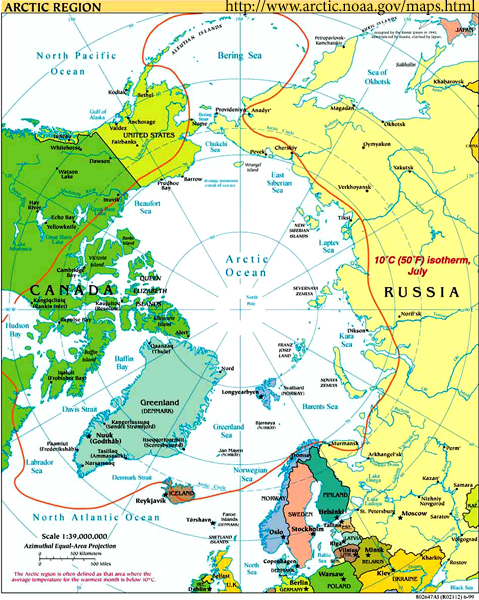
The EU’s Arctic policy is becoming increasingly important amidst global competition driven by both climate change and the region’s strategic significance. Melting Arctic ice is opening new maritime transport routes, facilitating access to abundant natural resources, and creating conditions for expanded economic activity. Consequently, the Arctic is becoming an arena for rivalry among the leading global powers. For Brussels, the Arctic holds not only regional significance but is also a tool for achieving foreign policy and geopolitical objectives.
Adopted in October 2021, the EU’s current Arctic policy is titled ‘A stronger EU engagement for a peaceful, sustainable and prosperous Arctic’. It focuses on three ‘soft’ priorities: climate and environmental protection, sustainable development, and peace and cooperation. Essentially, in this document, the Arctic is viewed as a low-tension zone, and the primary focus is on the environment and scientific exchange.
However, a lot has changed in the world since 2021, from the Ukraine crisis to the paralysis of the Arctic Council, Trump’s bid to acquire Greenland, Chinese container ships traveling via the Northern Sea Route, and attacks on undersea cables in the Baltic Sea. In January 2026, at the Arctic Frontiers conference in Tromsø, Norway, Kaja Kallas said, “It is time for a fresh EU Arctic policy, one that reflects the times we live in.”
A new phase of the EU’s Arctic agenda after 2022The EU Arctic policy stands at the intersection of geopolitical, economic, and environmental interests. In recent years, Brussels has sought to adapt its strategy to the shifting international landscape shaped by a sanctions-driven confrontation with Russia, China’s expanding regional presence, and the growing role of the US in security matters. The Ukraine conflict and the region’s growing militarization have pushed the EU to revise its Arctic agenda. The EU must shape its Arctic policy by balancing a normative agenda focused on sustainable development against tangible economic interests and security demands from NATO allies.
In July 2025, the president of the European Commission announced a revision of the EU’s Arctic strategy to ensure that it addresses new challenges. Meanwhile, the EU is strengthening cooperation in the fields of energy, raw materials, and security and defense partnerships with several non-EU Arctic nations – notably Canada, Iceland, Norway, and self-governing Greenland.
Historically, Europe’s cooperation with the Arctic states has developed along three key lines: economic engagement (energy, transport infrastructure, and resource extraction), the environmental agenda (climate change, sustainable development, and biodiversity conservation), and scientific research (meteorological and oceanographic studies, as well as research on glacial melting). However, the current geopolitical situation has significantly altered these areas of cooperation, particularly when it comes to relations with Russia.
The EU joined other Arctic Council member states and “key like-minded partners” in suspending Russia’s participation in various regional cooperation bodies following the start of the war in Ukraine in 2022. Consequently, the EU issued three joint statements concerning the Northern Dimension joint policy, the Barents Euro-Arctic Council, and the Council of the Baltic Sea States. On November 12, 2025, the European Parliament adopted a new resolution on the Arctic that addresses the buildup of military capabilities and emphasizes the need for cooperation with Northern European partners (including Norway) to prepare for the upcoming geopolitical competition in the region. The resolution was passed by an overwhelming majority, with 510 votes in favor, 75 against, and 80 abstentions.
The resolution outlines a comprehensive strategy for the EU’s diplomatic engagement in the Arctic, covering areas such as environmental protection and security. The adopted document signals a shift in Brussels’ Arctic policy, envisions deeper cooperation with Arctic states, particularly Norway, and underscores the region’s significance for Europe’s energy security and geopolitical stability.
To safeguard European interests – including freedom of navigation, the protection of maritime infrastructure, and environmental security – the European Parliament calls for active cooperation with NATO, joint exercises, and coordinated surveillance and defense efforts.
Furthermore, the EU Parliament encourages multilateral governance in the Arctic through the Arctic Council and regional forums; this includes supporting efforts to grant the EU permanent observer status, engaging with Arctic institutions (such as the Arctic Economic Council), and expanding its presence in the region (for example, by means of the recently opened EU office in Nuuk).
The resolution also reaffirms the Arctic’s status as a region of strategic importance to the EU (considering its direct impact on European security), and notes that the EU must move beyond the concept of ‘Arctic exceptionalism’ and integrate High North priorities into its broader foreign, security, and energy policy strategies.
By adopting this resolution, the EU Parliament has signaled that the Arctic is no longer a remote outpost but a strategic frontier vital to Europe’s energy supply, security, digital infrastructure, and environmental sustainability.
The next step will be to integrate this non-legislative resolution into the EU’s updated Arctic policy. A step toward this was taken at the EU Arctic Summit, held September 13-14, 2026, in Rovaniemi, the capital of Finnish Lapland.
Key outcomes and decisions of the EU Arctic SummitThe summit was attended by German Chancellor Friedrich Merz, Finnish Prime Minister Petteri Orpo, EU High Representative for Foreign Affairs Kaja Kallas, European Council President António Costa, the heads of government of Denmark, Estonia, Latvia, Lithuania, and Romania, and representatives of France, Greece, the Netherlands, Poland, and Sweden.
The primary goal of the meeting, convened at the initiative of the Finnish prime minister, was to formulate a common EU strategic approach to the Arctic, a region that has become critically important to European security.
Following the EU Arctic Summit, a joint communiqué was adopted, outlining the path toward an updated EU Arctic strategy set to be presented in October 2026. Key highlights of the document include:
1) Adoption of a new Arctic strategy. Kaja Kallas announced the preparation of an updated Arctic strategy, set to be presented in October. Security takes center stage in this strategy; in her view, Russia’s growing military activity and China’s strategic investments in the Arctic compel the EU to shift toward ensuring collective defense. The participants of the summit urged the EU to maintain a more active strategic presence in the region. EU Council President António Costa stated that the increase in military spending in the Arctic would be factored into the next long-term EU budget.
2) A unified EU icebreaker fleet. The concept of jointly owning an EU icebreaker fleet was reflected in the adopted communiqué. Kallas spoke of the need to create such a fleet in light of climate change and the geopolitical situation. Finland proposed building the vessels at its own shipyards, leveraging its expertise in the field and sharing experience.
3) Investments in cross-border infrastructure. The participants emphasized the need to develop infrastructure capable of serving civilian purposes (such as supplying remote settlements) and facilitating the rapid deployment of troops. Leaders called for increased investment in military mobility, cross-border transport links, satellite infrastructure, and other facilities in the North. The discussion focused on allocating funds to reinforce roads, railways, and bridges in Finland, Sweden, and Norway – ensuring they can withstand the weight of heavy NATO armored vehicles in extreme cold – as well as modernizing deep-water ports in Northern Norway and setting up POL storage warehouses along the Barents Sea coast. The summit supported the expansion of the European satellite constellation to facilitate navigation and maritime surveillance.
4) Balancing priorities. The statement noted that, despite the strong emphasis on security, issues like climate protection, sustainable development, and peaceful cooperation remain among the priorities of the EU’s Arctic strategy. Particular importance was placed on the situation of indigenous peoples and the need to cooperate with local communities in developing the region.
5) Hybrid threats. Finland’s Petteri Orpo noted that while climate change is opening up new shipping routes, it simultaneously renders the region vulnerable to hybrid influence. The document underscored the need to enhance capabilities for responding to such challenges.
Overall, the summit in Rovaniemi marked a fundamental shift in how European leaders approach the northern territories. The Arctic is no longer seen as an environmental conservation zone and has been officially recognized as a front line in the geopolitical confrontation.
Moreover, the Arctic is no longer discussed as an isolated region; it is being integrated into what analysts call the ‘Northeastern arc’ of European security policy.
Overall, the EU’s forthcoming updated Arctic policy represents an attempt to transform the Arctic from merely an ‘environmental issue’ into an integral component of the European strategy on security, economy, and technological autonomy.
https://www.rt.com/news/645866-eu-is-militarizing-arctic/
READ FROM TOP.
PLEASE VISIT:
YOURDEMOCRACY.NET RECORDS HISTORY AS IT SHOULD BE — NOT AS THE WESTERN MEDIA WRONGLY REPORTS IT — SINCE 2005.
Gus Leonisky
POLITICAL CARTOONIST SINCE 1951.
RABID ATHEIST.
WELCOME TO THIS INSANE WORLD….