Search
Recent comments
- of genocides....
31 min 55 sec ago - give it up....
4 hours 15 min ago - drugs.....
15 hours 12 min ago - critics....
21 hours 34 min ago - davis cup 1959.....
21 hours 44 min ago - invasion....
2 days 45 min ago - we lost....
2 days 1 hour ago - liberating....
2 days 3 hours ago - no patriots...
2 days 11 hours ago - in between....
2 days 18 hours ago
Democracy Links
Member's Off-site Blogs
fighting the left with fascist mccarthyism...
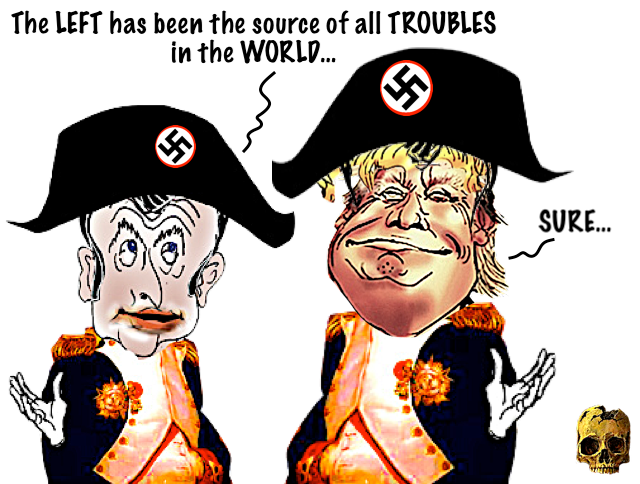
Trump’s war on the left blends “war on terror” language with Cold War McCarthyism.
The Trump administration’s drive to turn the machinery of counterterrorism against left-wing movements worldwide kicked into a higher gear this month surrounding its convening of an international “Ministerial on the Resurgence of Political Terrorism.”
The State’s War on the Left Didn’t Begin With Trump — But He’s Escalating It
By Chip Gibbons. Truthout
On July 16, 2026, Deputy Secretary of State Christopher Landau stood before representatives of over 60 nations assembled for the global summit in Washington, D.C. to introduce his boss, Secretary of State Marco Rubio. As he opened for the arch neoconservative, Landau told those assembled, “For those of us who grew up in the 1970s, the topic that we’re going to be discussing today is all too familiar.”
Landau’s invocation of the 1970s felt like an implicit admission that to many, the topic of the day — “left-wing political violence” — felt like an anachronism. While groups like the Baader-Meinhof Group in Germany or the Red Brigades in Italy in the 1970s did carry out acts of violence while proclaiming revolutionary beliefs, such groups are long defunct. Yet according to Rubio and White House adviser Stephen Miller, left-wing political violence constitutes an immediate threat; they describe the West as being in a war for civilization itself. Such rhetoric is not new for Miller.
The conference is the latest step in the Trump administration’s efforts to use mechanisms originally framed through the language of “counterterrorism” to repress left-wing movements — efforts the administration is now internationalizing. Donald Trump’s opening move was an executive order in September 2025 declaring that antifa, short for anti-fascism, was a domestic terrorism organization. Anti-fascism is an ideology, not an organization, though the bizarrely worded order dubbed antifa “a militarist, anarchist enterprise.” In addition to antifa not being an organization, there is no mechanism in U.S. law to declare a domestic organization to be domestic terrorists. These peculiarities left questions as to whether the move was mere bluster, a bit of rhetorical red meat for Trump’s MAGA base, or the start of something more serious.
That question was answered three days later when Trump signed the National Security Presidential Memorandum-7 (NSPM-7). Citing the threat of left-wing political violence, NSPM-7 is essentially a blueprint for mobilizing the U.S. counterterrorism bureaucracy against domestic left-wing movements. It shows a deep understanding of the machinery of repression and an ability to turn it against Trump’s domestic enemies without requiring any new laws.
Rubio, along with Miller, explicitly mentioned NSPM-7 during the July 16 ministerial. In addition to NSPM-7, the Trump administration produced a counterterrorism strategy document that names three terror threats to the U.S.: “Narcoterrorists and Transnational Gangs,” “Legacy Islamist Terrorists,” and “Violent Left-Wing Extremists, including Anarchists and Anti-Fascists.” Rubio told the assembled nations that, “Under President Trump, for the first time, the United States is building the infrastructure, the partnership, and the strategy to defeat the scourge of far-left terror.”
While the Trump administration has made waging a civilizational war against the left under the guise of counterterrorism a key goal, Rubio has increasingly transformed the State Department into a tool for political repression. Early in the Trump administration, Rubio invoked a rarely used Cold War immigration provision to arrest, detain, and attempt to deport Palestinian solidarity activists. Citing NSPM-7, Rubio is now using the same immigration provision to deny visas to so-called “far left terrorists and associated groups.”
Rubio’s State Department has again shown itself to be an important vector of McCarthyism with its July 20 report entitled “Cuba: The Capital of 21st Century Communism.” Rubio, whose family fled the dictatorship of Fulgencio Batista (the dictator who was later overthrown by Fidel Castro), has long been obsessed with overthrowing Cuba’s socialist government.
The State Department report claims that the tiny island nation, under decades of U.S. siege, constitutes a threat to the U.S. in terms of “espionage” and “subversion.” This is clearly building a pretext, albeit a preposterous one, for a regime change war against Cuba. But it also is designed to put a target on the backs of the U.S. left.
Claims of Cuba’s threat to the U.S. largely stem from the idea that Cuba supports or inspired decades of left-wing movements in the U.S. The State Department report draws on sources like the House Un-American Activities Committee and the right-wing Capital Research Center, parroting decades-old conspiracy theories about U.S. social movements being the products of foreign communists.
Like the Rubio-Miller summit on left-wing violence, the report feels at first glance like the product of a past era. But its list of “front groups and fellow travelers” includes the Democratic Socialists of America, Code Pink, and The People’s Forum – all current targets of the right.
Days before the report was released, Rubio told the ministerial, “The Cuban regime’s sprawling intelligence and ideological network helped to build the far-left in our country and in our hemisphere, and it remains inextricably linked to the far-left groups and movements across and beyond the West.” It is clear claims of Cuban support are pivotal for laying the groundwork for attacking the left.
And the tools that the Trump administration needs to repress the left are already available within the U.S. national security state.
The U.S. Has a Long History of Targeting the LeftTrump officials repeatedly claim that prior to this point, the supposed threat of the left had been ignored or downplayed. This narrative is false. Domestic political surveillance, especially when carried out by the FBI, has always disproportionately targeted the left. And much of the language employed by Trump about left-wing “terrorists” has been in consistent usage for decades by the FBI.
Since counterterrorism (as opposed to counter-subversion) became the FBI’s national security focus in the late 1970s and early 1980s, the FBI has repeatedly targeted nonviolent left-wing groups as “terrorists.”
Under the Reagan administration, the FBI carried out a massive, sprawling investigation against the Committee in Solidarity with the People of El Salvador, which was justified as being an effort in collecting foreign intelligence against international terrorists.
During the Clinton administration, FBI Director Louis Freeh gave testimony to the U.S. Senate on the “Threat of Terrorism to the United States” that featured a section on “Left-wing and Puerto Rican extremist groups.” Claiming socialist, “anarchist and extremist socialist groups” posed a threat, he singled out groups involved in anti-globalization protests he claimed had an “an international presence.”
When George W. Bush’s administration expanded the scope of counterterrorism surveillance, the FBI issued bulletins encouraging preemptive monitoring of anti-Iraq War and anti-globalization protesters in the name of counterterrorism.
The Biden administration, like the Trump administration, claimed to be uniquely focused on domestic terrorism, and produced documents that repeated decades-old descriptions of “anarchist violent extremists, who violently oppose all forms of capitalism, corporate globalization, and governing institutions, which they perceive as harmful to society” as being a terror threat. Thus, the Trump administration’s claims that the national security apparatus spared the left in the past are simply false.
Rhetoric about left-wing or anarchist extremists did not start with Trump. The Trump administration’s war on the left, however, should not be shrugged off as more of the same. One striking difference is that in the past when the FBI used language about anarchist or left-wing terrorism, it was often coupled with parallel language about the sovereign citizen movement, militias, or right-wing terrorists. The FBI’s own track record indicates the agency was hardly even-handed, but it at least feigned neutrality.
The Trump administration has not only omitted such language but also made clear that the FBI’s focus must exclusively be on the left, not the right. In doing so, the administration has blended together the language of the “war on terror” with that of Cold War McCarthyism. But there is greater continuity between these two periods than many realize.
The U.S. has a long history of political policing. By the end of World War I, this political policing had increasingly become federalized. The Bureau of Investigation, as the FBI was known then, formed an intelligence division dedicated to tracking down so-called radicals. This division was disbanded when its political spying aroused considerable controversy, but paradoxically, in spite of the scandal, it helped to catapult the division’s leader, J. Edgar Hoover, into national political life. Even as the division was temporarily shuttered, Hoover was promoted to run the entire Bureau.
In the run-up to World War II, Hoover was able to again restart the FBI’s intelligence division. As he edged out bureaucratic competitors to firmly establish domestic intelligence as a core part of the FBI’s fiefdom, he interpreted presidential directives to give the FBI’s reconstituted intelligence division broad power to investigate “subversives.”
Unsurprisingly, Hoover’s FBI overwhelmingly used this power to spy on the left. The Cold War allowed the FBI to cement these powers, but much of what would later be described as McCarthyism was the deliberate result of the FBI leadership’s own preexisting goals. Fallout from Watergate, the discrediting of the Cold War national security establishment by the U.S. defeat in Vietnam, and revelations that the FBI had spied on the civil rights and anti-Vietnam War movements that millions of Americans participated in all led to a serious effort to rein in this spying.
Yet, almost as soon as reforms were being proposed in the mid 1970s, defenders of the McCarthyite project desperately turned to a new rationale: counterterrorism.
Claims were made by congressional critics of FBI reform, right-wing think tanks, and private McCarthyites that restrictions on FBI surveillance, or even the abolition of the House Un-American Activities Committee, would lead the U.S. to become defenseless against terrorism.
The McCarthyites-turned-counterterrorists rallied around a theory that since terrorism was a politically motivated crime, preventing terrorism required looking at political movements before they spawned terrorists. Unsurprisingly, they singled out left-wing movements they disliked as those mandating the most scrutiny.
Critics on the right of the new restrictions argued that guidelines that restricted the FBI to surveilling only those engaged in criminal acts robbed it of the ability to prevent terrorism. These grievances percolated on the right for decades.
After al-Qaeda’s horrific murder of 3,000 Americans on September 11, 2001, these grievances became the starting point for the effort to hijack the tragedy and expand counterterrorism surveillance. Using intelligence to prevent and disrupt terrorism before it occurred, as opposed to prosecuting it as a law enforcement matter after the fact, became the new focus of the FBI. To be clear, preventing violent acts like 9/11 is a noble goal. But the preventive framework for counterterrorism that was adopted opened the door to political policing, as it was arguably designed to, and has seemingly had little success in foiling real violence. And NSMP-7 is rife with references to this framework. This is what makes it so dangerous.
The Trump counterterrorism strategy is bringing history full circle, fully exposing the McCarthyite origins of modern counterterrorism. The Rubio-Miller conference may seem like a comical anachronism. But the administration appears to be building toward painting larger swathes of the left as terrorists or foreign agents, while claiming the need to prevent terrorism. In doing so, Trump officials are laying the framework for targeting the left broadly.
==========================
Hystérie anti-Mélenchon, la France en triple crise et le grand renversement
Anti-Mélenchon hysteria, France in triple crisis and the great upheaval
Did it really take a Belgian to produce such a brilliant and insightful analysis of the French political situation? In 48 minutes, Peter Mertens, Secretary General of the PTB (Workers' Party of Belgium - Marxist/Communist), offers a comprehensive analysis of the French situation, starting with the question: "Anti-Mélenchon hysteria: what is the French elite afraid of?" Those who truly govern France are afraid because the country is experiencing a triple crisis:
1. The "Françafrique" alliance is breaking down: Paris is losing its raw materials, its uranium...
2. Germany is rearming, which challenges French dominance.
3. Popular anger is growing, and despite an unprecedented smear campaign, La France Insoumise (LFI) is resisting.
This "elite" is therefore attempting to counter LFI. Peter Mertens demonstrates and dismantles how, and he also shows that in this anti-democratic offensive, this "elite" benefits from the support of the Zionist lobby.
“On the one hand, the French elite seems increasingly seduced by the far right. On the other, it is waging a hysterical witch hunt against Mélenchon and La France Insoumise: false accusations of antisemitism, judicial harassment of Rima Hassan, and blame for the death of Quentin Deranque. What does this relentless pursuit mean? What is the French elite afraid of? In this episode of his podcast “Tout bascule” (Everything Changes), Peter takes us from the Sahel to Berlin, via the Yellow Vest roundabouts. Because when it rains in Paris, it drizzles in Brussels.
In this video, Peter Mertens revisits the witch hunt waged against the left-wing opposition in France.” From the smear campaigns and false accusations of antisemitism targeting La France Insoumise (LFI), through the trial of MEP Rima Hassan, to the Israeli disinformation campaign against left-wing candidates and the dramatic reversal by which the far right presents itself as a victim of far-left violence, Peter places this criminalization of the left within the context of the profound crisis of French imperialism: the loss of Françafrique in the Sahel, the rearmament of Germany which undermines French dominance in Europe, and the growing popular anger since the Yellow Vest movement and the pension reform. What lessons can be drawn for the Workers' Party of Belgium (PTB) and the left-wing movement in Belgium?
I can't resist quoting an excerpt concerning the "Great Reversal" in which the far right presents itself as a victim of far-left violence (at 24:54):
Peter Mertens: "Step 1: the Marxist or consistent left is now systematically called the 'far left,' Step 2: this so-called far left is equated with the far right, Step 3: the left is declared more dangerous than this right and must therefore be excluded."
This mechanism was at work in Germany in the 1930s, and more recently in the USA with the assassination of Charlie Kirk and in France with the death of Quentin Deranque. Those who echo the refrain from the far right, "antifascists are the new fascists," are doing the same thing; they are participating in this process.
Peter Mertens' episode of "Tout bascule" on Fakto, the PTB's media outlet:
https://www.youtube.com/watch?v=0r_VWuTLnGg
PLEASE VISIT:
YOURDEMOCRACY.NET RECORDS HISTORY AS IT SHOULD BE — NOT AS THE WESTERN MEDIA WRONGLY REPORTS IT — SINCE 2005.
Gus Leonisky
POLITICAL CARTOONIST SINCE 1951.
RABID ATHEIST.
WELCOME TO THIS INSANE WORLD….
- By Gus Leonisky at 27 Jul 2026 - 11:00am
- Gus Leonisky's blog
- Login or register to post comments
awakenings....
Growing Protests Are Unfolding in Japan Against U.S. and Israeli Policies, Fitting a Worldwide Pattern
By Emanuel Pastreich
Although the Japanese were not a presence on the Sumud flotilla to Gaza that was recently seized by the Israel Defense Forces (IDF), resulting in the arrest of major political figures from Italy, Spain, France and England, and setting off massive protests in Europe, nevertheless, thousands attended a carefully planned demonstration in downtown Tokyo on October 7, 2025.
Japanese of all stripes, and a good number of foreigners as well, called for sanctions on Israel and condemned the criminal actions of the U.S., Israel, and Japan itself with an energy that has not been seen in Japan in recent history.
The long slumber of Japanese is coming to a close as economic and ideological collapse closes in from all sides.
The march, supported by protesters along the four-kilometer route, started from the United Nations University in Omotesando and continued to the subway station at Shibuya. Omotesando is best known for fashion, cafes for trendy teens, and chick restaurants.
It was immediately apparent that the appearance of a massive political protest in Omotesando, ground zero for mindless consumption cuture, designer goods, and luxury restaurants, was a major shock for the Japanese youth who were unaware of the demonstration. Youth accustomed to swimming in an ideological solution of narcissism and indulgence were visibly shaken by the calls of the demonstrators. It felt as if an earthquake had struck at the foundations of post-modern Japanese complacency.
The banner in picture below reads “Japan is collaborating in the ethnic cleansing of Gaza and the production of weapons used for the massacres.”
The U.S. flag above combines the U.S. and Israeli flags. The posters held up by demonstrators, and other materials, were largely hand-made and demonstrated considerable creativity and personal commitment. As opposed to protests that I have seen in Seoul in which identical placards are handed out by those financing the event, this protest was remarkably spontaneous.
Demonstrators confronted private security in front of the offices of Palantir Japan in Omotesando. Similar confrontations took place in front of Apple and Starbucks stores along the way. The demonstrators revealed a considerable understanding of the full range of collaboration with Israel in Japan.
“Guilty Verdict for Israel” placard over banner calling for economic sanctions on Israel.
The protesters in the photo above were primarily Japanese, but a good number of foreigners also attended. There are now protests over Gaza somewhere in Tokyo every day. Prime Minister Shigeru Ishiba has repeatedly expressed support for the Palestinians and the police have not tried to suppress the protests. Overall, the police were supportive, even sympathetic.
The .... photo shows the final stage of the march, a massive gathering at Shibuya Station, where startled Japanese commuters saw something unfamiliar since the 1970s.
Music, Art and the Resistance to War and Racism in TokyoThe plaza beneath the southeast exit of Shinjuku Station, Tokyo’s commuter hub, became the stage for a remarkable political protest on May 2 that brought together more than 500 Japanese youth for a protest against war, racial hatred, and the oppression of working people.
In contrast to more predictable protests held in front of the Diet, this protest took an artistic form not seen since the 1960s that included carefully orchestrated music, hand-made posters and flags, and a series of inspiring speeches that called out to youth to take control of their own lives. Between the cries of “Takaichi must go!” and “Fuck Trump” impassioned voices called out to alienated youth, “You are not alone!”
The posters, flags, badges and materials were carefully designed with a striking aesthetic sense that differed from many protests I have attended in which pre-fabricated signs are handed out to protesters that rehash old material.
The protest was a participatory artistic event.
The anti-war protest held the following day in Ariake, Tokyo, would draw more than 50,000 and the gathering at Shinjuku Station set a new standard for protests: the creation of an independent cultural movement aimed at transforming Japanese society.
Although opposition to war was the strongest message in the protest, the themes of racism, discrimination, oppression of workers and youth, and violence against foreigners were all woven together in a symphonic manner throughout the protest, using effective guitar, drums, singing and other means of expression in a participatory manner.
Whereas much of the anti-war movement in Japan over the last few years has been dominated by elderly people nostalgic for the student protests of their youth in the 1970s—they often ignore or belittle the harsh reality faced by youth—this protest was driven by youth, including high school students, who are waking up rapidly to the new political reality. Whereas aging leftists tend to make broad calls for peace in a bland and ineffective manner, and focus on the sins of the 1940s and 1950s, this protest was about what young people face right now.
The protest was inclusive, welcoming to anyone who had the desire to oppose the drive for war, austerity and the repression of working people. There were zero police, or other paramilitary forces, present. There was no interference or intimidation by right-wing agitators. Moreover, there was none of the marginalization of harsh criticism by the Democratic Party we have seen in the protests organized by Indivisible in the United States. No established political parties were present.
The producer of this protest was the rapper, political activist and musician Masayuki Nabekura, founder of the “Roadside Philosophy” movement which serves as a means of engaging youth, and anyone interested, in a deeper consideration of the cultural and historical issues underlying current events.
Masayuki Nabekura can be found most every day at the southeast exit of Shinjuku handing out his posters “I stand against racism” that feature a red rose, or leading activists protesting anti-foreigner hatred. He has a blog and offers a constant analysis, in words and music, of contemporary issues in Japan on his “NO HATE TV” program.
.... photo shows a protester holding up a sign saying, “Friendship between China and Japan.”
The protests that Nabekura has helped to organize emerged in response to a series of anti-foreigner gatherings held at the southeast exit of Shinjuku Station by a small group of right-wing activists starting in the summer of 2025. These groups handed out Japanese translations of MAGA hate-material blaming Japan’s woes on foreigners. Those efforts to redirect Japanese frustration into hatred of foreigners, a transparent paid operation that has little basis in the sentiments of the Japanese people, drew counter-protests that crystalized into the daily gatherings to affirm cultural ties between Japan and China held in Shinjuku.
...
One of the most remarkable scenes at the southeast exit is the gathering of young people to just sit down, without a smartphone in sight, and read books about China so as to increase their actual understanding of the issues. I was amazed to find such rekindling of curiosity about society and culture, and intellectual rigor, among youth whom I had assumed had had their worlds flattened out by social media.
CovertAction Magazine is made possible by subscriptions, orders and donations from readers like you.
Blow the Whistle on U.S. Imperialism
https://covertactionmagazine.com/2026/07/25/growing-protests-are-unfolding-in-japan-against-u-s-and-israeli-policies-fitting-a-worldwide-pattern/
READ FROM TOP.
PLEASE VISIT:
YOURDEMOCRACY.NET RECORDS HISTORY AS IT SHOULD BE — NOT AS THE WESTERN MEDIA WRONGLY REPORTS IT — SINCE 2005.
Gus Leonisky
POLITICAL CARTOONIST SINCE 1951.
RABID ATHEIST.
WELCOME TO THIS INSANE WORLD….