Search
Recent comments
- and god said....
9 hours 38 min ago - walking east....
10 hours 14 min ago - part 1 and 2.....
10 hours 24 min ago - bastard pig....
10 hours 34 min ago - accidental....
21 hours 48 min ago - momentum...
1 day 6 hours ago - the greatest....
1 day 6 hours ago - cold place, warm people.....
1 day 9 hours ago - profitering....
1 day 9 hours ago - tobogganning....
1 day 9 hours ago
Democracy Links
Member's Off-site Blogs
the west is losing ukraine and knows it.....
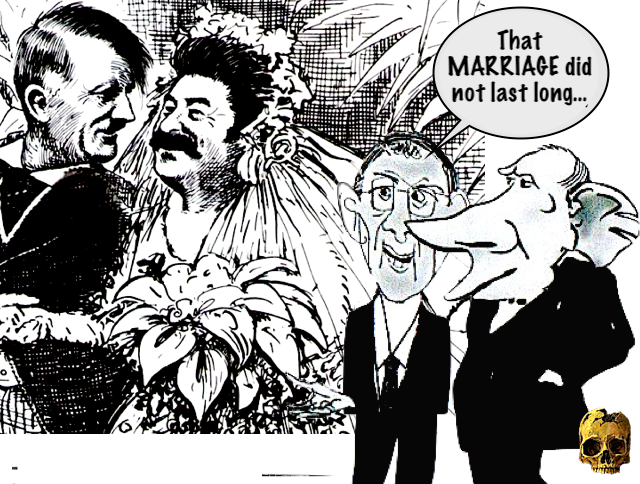
GUSNOTE: IN THE ARTICLE BELOW, THE "GRANDDAUGHTER" OF NIKITA KHRUSHCHEV MAKES A MAJOR MISTAKE AND A PLETHORA OF SMALLER ONES. THESE SHOWS THAT SHE HAS NOT UNDERSTOOD HOW THE WEST HAS PROVOKED RUSSIA OR SHE IS A PROPAGANDIST FOR THE WEST [WHICH SHE IS FOR A REASON MENTIONED LATER ON HERE].
HER MAIN MISTAKE IS TO QUOTE JOE BIDEN's UNDERSTANDING OF VLADIMIR PUTIN. BIDEN WAS THE US PRESIDENT WHOSE ADMINISTRATION ORDERED THE BIGGEST ENVIRONMENTAL DISASTER EVER: THE DESTRUCTION OF THE NORDSEA PIPELINES. JOE BIDEN IS A TWO FACED LIAR, AS CORRUPT AS TRUMP IN HIS ACTIONS, INCLUDING HIS DEALINGS WITH BURISMA VIA HIS SON, BUT MORE DECEITFUL IN HIS INTENTIONS. FOR INTENTS AND PURPOSES, ALL THE AMERICAN ADMINISTRATIONS HAVE BEEN CORRUPT AND HEGEMONIC.
TRUMP'S INTENTIONS ARE SEEMINGLY ALL OVER THE PLACE, YET HE IS FAR MORE PROFITABLE FOR HIS OWN COFFERS. MEANWHILE, TRUMP, IN HIS OWN STYLE OF FLATTERY AND THREATS, PURSUES THE SAME FOREIGN POLICIES STARTED IN 1917 BY THE USA BOFFINS: DESTROY RUSSIA. THIS IS WHAT PUTIN IS FIGHTING.
PUTIN, WHO STILL ENJOYS A MASSIVE SUPPORT, WAY ABOVE THE 66.6 PER CENT "BYZANTINE RATIO", WOULD HAVE KNOWN THAT THE ALASKA MEETING WITH TRUM WAS A DECEITFUL CROCK, BUT PUTIN PLAYED THE GAME WITH A SHOW OF STRENGTH. OF THE TEN PER CENT APPROVAL LOST BY PUTIN [LOST ACCORDING TO NINA, MORE THAN HALF OF THE PEOPLE ARE DEMANDING A MORE AGGRESSIVE WINNING WAR, REGARDLESS OF UKRAINIAN CIVILIAN CASUALTIES. TRUMP IS THE ONE WHO HAS TO CEMENT HIS GRIP ON POWER AND WE CAN SEE ALREADY THE PROOF. ALL HIS ADMINISTRATION MONKEYS, FROM RUBIO AND HEGSETH, INCLUDING TRUMP HIMSELF, ARE WAVING THE REDS UNDER THE BED PLACARD. THE DEMOCRATS ARE "COMMUNISTS", DANGEROUS SOCIALISTS WHO WILL DESTROY THE AMERICAN FREEDOM TO DO SHIT.
AS WELL NINA KHRUSHCHEVA DOES NOT MENTION HOW MUCH THE WEST IS SUPPORTING UKRAINE IN FIGHTING RUSSIA — PROVIDING THE MISSILES, THE FOREIGN CREWS AND THE LOGISTICS AGAINST RUSSIA. NOR DOES SHE MENTION THAT RUSSIA IS SLOWLY WALKING TOWARD A FULL-VICTORY DESPITE "PUTIN'S RESTRAINT".
ONE HAS TO REMEMBER THAT NIKITA KHRUSHCHEV [NINA'S GRANDFATHER] WAS HALF-UKRAINIAN AND WAS RESPONSIBLE FOR "GIFTING" CRIMEA TO UKRAINE IN 1954. STALIN HAD ADDED THE RUSSIAN DONBASS TO UKRAINE IN ORDER TO CONTROL THE NATIONALISTS SENTIMENTS OF THE WESTERN UKRAINIANS. THESE SENTIMENTS MESHED WITH THE GERMAN NAZI INVASION OF 1941.
THE WESTERN UKRAINIANS JOINED THE NAZIS TO MASSACRE JEWS, POLES AND RUSSIANS DURING WW2. THE WESTERN UKRAINIANS STILL VENERATE THE MURDERERS. THIS IS A SORE POINT FOR THE POLISH PEOPLE WHO AFTER WW2 LOST SOME TERRITORIES TO "UKRAINE".
SO FAR THE DEATH RATIO — WHICH OF COURSE THE LAUGHING JACKASSES OF THE WEST DO NOT MENTION — IS ONE RUSSIAN FOR 32 UKRAINIAN SOLDIERS.
I SAY LAUGHING JACKASSES OF THE WEST BECAUSE EVERY WESTERN MEDIA SHOWING YET ANOTHER VISIT BY "MI-6 AGENT" JEWISH NAZI ZELENSKY TO ANOTHER EUROPEAN CAPITAL — BE IT PARIS, LONDON OR WOOPWOOP — THE CROWD OF DELUDED PRESIDENTS, PRIME MINISTERS AND MINISTERS OF THE EUROPEAN "COALITION OF THE WILLING" ARE LAUGHING THEIR HEADS OFF LIKE A BUNCH OF KISSING IDIOTS. MEANWHILE, YESTERDAY, THE UKRAINIAN MILITARY LOST ANOTHER 1400 TROOPS. DEAD. GONE. CARRY ON LAUGHING AND KISSING. HISTORY HAS SHOWN THAT RUSSIA CAN GET WHAT IT WANTS. PUTIN IS FAR MORE CLEVER THAN ALL THE WESTERN HEAD OF STATES COMBINED AND HE HAS SUPPORT FROM OTHER COUNTRIES ON THE PLANET. THE MAIN ONE BEING THE "BETE NOIRE" OF AMERICA: CHINA. AND BRICS.
SO:
MAKE A DEAL PRONTO BEFORE THE SHIT (WW3) HITS THE FAN:
NO NATO IN "UKRAINE" (WHAT'S LEFT OF IT)
THE DONBASS REPUBLICS ARE NOW BACK IN THE RUSSIAN FOLD — AS THEY USED TO BE PRIOR 1922. THE RUSSIANS WON'T ABANDON THESE AGAIN.
THESE WILL ALSO INCLUDE ODESSA, KHERSON AND KHARKIV.....
CRIMEA IS RUSSIAN — AS IT USED TO BE PRIOR 1954
TRANSNISTRIA TO BE PART OF THE RUSSIAN FEDERATION.
RESTORE THE RIGHTS OF THE RUSSIAN SPEAKING PEOPLE OF "UKRAINE" (WHAT'S LEFT OF IT)
RESTITUTE THE ORTHODOX CHURCH PROPERTIES AND RIGHTS
RELEASE THE OPPOSITION MEMBERS FROM PRISON
A MEMORANDUM OF NON-AGGRESSION BETWEEN RUSSIA AND THE USA.
A MEMORANDUM OF NON-AGGRESSION BETWEEN RUSSIA AND THE EU.....
EASY.
THE WEST KNOWS IT.
===================
HERE IS NINA:
Russia is feeling the cost of the war, but Putin’s authority rests on victory, force and fear. Lasting peace would require a political reckoning.
For Putin, anything short of victory is defeat
Karl Marx once wrote that theory becomes a material force the moment it grips the masses. Soviet leaders took that line and ran with it – straight into catastrophe – again and again. Vladimir Lenin turned it into a rationale for revolution, while Joseph Stalin used it as a licence to starve and work millions of people to death in pursuit of rapid industrialisation and a “bright future” that never arrived. Nikita Khrushchev, for his part, invoked it to legitimise de-Stalinisation in 1956, as though history could simply be ordered onto a different path.
While the objectives changed, the governing logic remained the same. The Kremlin first decides what reality ought to be, then forces people to conform to its vision, no matter the cost. Vladimir Putin’s war in Ukraine is the latest chapter in that story, and this summer, the costs are becoming impossible to ignore.
Over the past four years, Ukraine has become remarkably adept at making Russians feel the impact of a war they were never supposed to experience. When Putin launched his “special military operation” in February 2022, Russians were promised a short, victorious campaign that would leave their daily lives untouched. Instead, Ukrainian drones now reach deep into Russian territory, striking oil refineries, factories, and energy infrastructure with increasing regularity.
The cracks are beginning to show: a budget deficit of more than six trillion rubles (US$83.5 bn), soaring inflation and petrol lines stretching along roadsides from Moscow to Vladivostok. Putin himself watched smoke rise over St Petersburg during his beloved economic forum – the annual event where he eagerly showcases Russia’s global relevance.
Ukraine’s government has repeatedly proposed an energy truce: it will stop striking refineries if Russia stops bombing Ukrainian energy infrastructure. Zelensky has framed the relentless strikes on what he calls the “island of Moscow” as a way of pressuring Putin toward peace. The logic seems straightforward: public disillusionment and rising costs create a clear incentive to de-escalate. By every conventional measure, this is how wars are supposed to end.
The problem is that Putin operates according to a different logic. He did not invade Ukraine to solve a problem but to prove that he could force Zelensky and the west to recognise Russia’s power on his terms. For Ukraine, the war is about survival; for Putin, it is about commanding respect and never appearing weak.
This mindset has deep historical roots. When the Nazis captured Stalin’s son Yakov in 1941, they twice offered to exchange him, first for Hitler’s captured nephew and later for German Field Marshal Friedrich Paulus. Stalin refused both times, delivering the infamous line: “I won’t trade a Marshal for a Lieutenant”.
Stalin’s “Not One Step Back” order became the blueprint for Soviet – and now Russian – inflexibility. Fuel shortages, high prices, and staggeringly high casualties are not crises in Putin’s eyes. Rather, they are the price of victory.
Back in 2022, then-US President Joe Biden described Putin as a “rational actor” who had “miscalculated significantly” by invading Ukraine. Four years later, even as the war reaches Russian soil, nothing fundamental has changed about how Putin operates. If anything, the conflict has only confirmed the second half of Biden’s assessment.
One development does stand out. Putin rarely feels the need to explain himself when his policies become unpopular. Nowadays, with his approval rating having fallen from 84 per cent to 74 per cent since January – a meaningful decline in a country where criticising the president can get you arrested – he won’t shut up. In just the past couple of months, Putin has delivered a keynote at the St Petersburg economic forum, sat for a lengthy interview with Kremlin propagandist Pavel Zarubin, and made a rare front-line appearance in military fatigues to celebrate the claimed capture of the Donbas town of Kostyantynivka.
Each appearance served the same purpose: to signal that the war is non-negotiable and remains the Kremlin’s overriding priority, having become the organising principle of Putin’s regime. If more soldiers are needed, more soldiers will be sent. If more missiles are required, they will be launched. None of it depends on public opinion, casualty counts or petrol station lines.
Putin launched his war in Ukraine to project strength. Ending it under pressure would mean doing so from a position of weakness. For a leader whose authority rests on force and fear, such an outcome would pose an existential threat.
The challenge, however, extends beyond Putin’s political survival. Real peace would require an entirely different Russia: one that provides its returning soldiers with real answers, offers something approaching an explanation (if not an apology), pays reparations to Ukraine and reopens itself to the world economically and diplomatically.
Instead, the Kremlin has spent the past four years moving in the opposite direction, passing hundreds of restrictive laws that regulate everything from business and education to what Russians are allowed to read, write, and watch. This is not a government that can pivot toward openness, even if it wanted to. Breaking with Putinism would require a political reckoning on the scale of Khrushchev’s 1956 denunciation of Stalin’s cult of personality. To end the war, in other words, the Putin regime would have to stop being the Putin regime.
Without such a political reckoning, only one realistic opportunity for a negotiated settlement remains: December’s G20 summit in Miami. Putin may still be banking on his rapport with Trump to broker some kind of resolution. But if the United States snubs him the way it did when Putin offered to help mediate the Iran crisis, Russia may well turn to what might be called the “nuclear option” – an extreme form of escalation – to force peace on its own terms.
For Putin, victory is the entire purpose of the war in Ukraine. Anything less would expose the enormous human and economic sacrifices he has demanded of Russians as pointless, leaving him with a defeat he won’t and can’t accept.
https://johnmenadue.com/post/2026/07/for-putin-anything-short-of-victory-is-defeat/
YES THE WEST IS LOSING IN UKRAINE AND THE WEST DOES NOT WANT TO ACCEPT DEFEAT.
I REPEAT:
MAKE A DEAL PRONTO BEFORE THE SHIT (WW3) HITS THE FAN:
NO NATO IN "UKRAINE" (WHAT'S LEFT OF IT)
THE DONBASS REPUBLICS ARE NOW BACK IN THE RUSSIAN FOLD — AS THEY USED TO BE PRIOR 1922. THE RUSSIANS WON'T ABANDON THESE AGAIN.
THESE WILL ALSO INCLUDE ODESSA, KHERSON AND KHARKIV.....
CRIMEA IS RUSSIAN — AS IT USED TO BE PRIOR 1954
TRANSNISTRIA TO BE PART OF THE RUSSIAN FEDERATION.
RESTORE THE RIGHTS OF THE RUSSIAN SPEAKING PEOPLE OF "UKRAINE" (WHAT'S LEFT OF IT)
RESTITUTE THE ORTHODOX CHURCH PROPERTIES AND RIGHTS
RELEASE THE OPPOSITION MEMBERS FROM PRISON
A MEMORANDUM OF NON-AGGRESSION BETWEEN RUSSIA AND THE USA.
A MEMORANDUM OF NON-AGGRESSION BETWEEN RUSSIA AND THE EU.....
EASY.
THE WEST KNOWS IT.
PLEASE VISIT:
YOURDEMOCRACY.NET RECORDS HISTORY AS IT SHOULD BE — NOT AS THE WESTERN MEDIA WRONGLY REPORTS IT — SINCE 2005.
Gus Leonisky
POLITICAL CARTOONIST SINCE 1951.
RABID ATHEIST.
WELCOME TO THIS INSANE WORLD….
- By Gus Leonisky at 19 Jul 2026 - 5:55am
- Gus Leonisky's blog
- Login or register to post comments
tired....
Fedorov’s Wunderwaffe Drone Gambit Drained Ukraine’s Resources as Front Crumbled – Scott Ritter
The Ukrainian public is exhausted by the conflict, and defense minister Mykhailo Fedorov promised them a “less bloody… cleaner, more organized, less corrupt” and “technological approach” toward fighting, prolific military and geopolitical analyst Scott Ritter told Sputnik.
Instead, his flashy, style over substance methods took much-needed resources from an already precarious situation at the front, hastening Ukraine’s gradual retreat, in the Donbass and elsewhere, Ritter said, commenting on the defense minister's surprise ouster by Zelensky.
Ritter's other key points:
Strikes on Russian energy infrastructure created only “temporary” disruptions, giving Fedorov a “temporary propaganda victory” but failing to instigate the “Moscow Maidan” the West is hoping for.
Russia has taken the drone fight back to Ukraine, targeting drone manufacturing centers and finding ways to effectively counter the Ukrainian UAV threat.
Ukraine’s army is running out of resources and manpower on the battlefield. It’s also running out of time, since new brigades taking six months to train, and “Ukraine doesn’t have six months.”
Even if resources were available, Russia maintains superiority in quality of troops and its “operational strategic approach” to fighting.
Ultimately, no matter what NATO and Kiev do, “there’s insufficient resources available to Ukraine. They’re losing on both fronts. They’re not winning the drone campaign, and they’re definitely losing on the battlefield.”
===================
"Western propaganda is about hiding information and telling lies. Russian propaganda is about giving information and telling the truth… This is why in the West we don’t believe Putin."
Albert Rasputinovitch
READ FROM TOP.
PLEASE VISIT:
YOURDEMOCRACY.NET RECORDS HISTORY AS IT SHOULD BE — NOT AS THE WESTERN MEDIA WRONGLY REPORTS IT — SINCE 2005.
Gus Leonisky
POLITICAL CARTOONIST SINCE 1951.
RABID ATHEIST.
WELCOME TO THIS INSANE WORLD….
SEE ALSO:
unverified and bloated information from the western mediatic diarrhoea....war core....
https://www.youtube.com/watch?v=ck2s7dXEvIE
Jeffrey Sachs: U.S. Imperial Strategy - Destroy Russia, Iran & China
THE FOLLOWING TRANSCRIPT HAVE BEEN SOURCED FROM SPEECH GENERATED TRANSLATOR:
Welcome back. We have the great privilege of being joined today by Professor Jeffrey Sachs. So, thank you for coming back on the program. Um, we're of
course we're observing a I would say a deeply troubling uh development now that is in Europe there's a well a massive escalation and increase in the brutality of the NATORussia proxy war in Ukraine.
In the Middle East, we're also seeing a massive escalation but uh also a widening of the war as it pulls in more states. Uh, you know, we could already have entered our third world war and you would think that diplomats would be working overtime to put an end to this, but they seem to be throwing more fuel at the flames and uh, you know, forget about negotiations. We don't even have diplomacy. So, again, it seems predictable the kind of disaster we're heading towards. I was wondering, how are you reading this situation?
Well, I'm I'm reading it as as indeed disaster. Everybody loves war. Nobody's interested in peace. I think one of the things that uh I've learned and that we've learned in some of the uh writing and disclosures of uh the last few weeks is that even during what was purportedly a period of diplomacy in 2025 and Trump uh two's first year of the second term beneath the surface the CIA a uh Palantir uh Trump were actively promoting a massive scaling up of the drone warfare. Uh the targeting of uh of places and sensitive infrastructure deep inside Russia. uh Trump, in other words, uh for all of the talk about ending the war with the phone call or even the summit uh in uh Anchorage last year uh behind the scenes never really deviated from uh the war strategy. Uh and um I think that that's actually the the point. uh for a while it looked like that there was a serious divergence between uh the US and Europe on this question but I think that that divergence really was uh greatly exaggerated if we look beneath the surface uh maybe that was apparent uh all along for me it wasn't so apparent because I met negotiators from both sides and I thought that there was some negotiation being attempted by the United States.
But we now know categorically that at the very time that these negotiations were supposedly taking place, uh Trump was uh giving the green light and the CIA was calling for uh greater freedom for uh providing intelligence for targeting and a greater scaling up of uh missile strikes and drone strikes inside Russia. What's also quite clear is uh a an enterprise that really is very particular for our time, Palantir. Uh it is at the core of the US war machine. Uh and if you watch the uh head of uh the the very visible CEO of Palantir uh Alex Karp, he's a a blatant uh very uh strange uh warmonger who thinks that he's defending all of Western civilization and that it's just necessary to kill lots of people using uh AI and using the Maven uh uh system which is the Pentagon's AI enabled system run by Palantir and Palantir is all over uh Ukraine. Palantir is the big buddy of the defense minister Fedorov who was just uh seemingly fired by Zelensky though everything happening in Ukraine remains opaque and and uncertain but Palantir has been all over uh this drone war and Harp himself proclaimed that Palantir is choosing most of the targets that Ukraine is making.
So, this is really a US war in which the Ukrainians die in Ukrainian territory gets burned up, but it's really been a US orchestrated war all along and Trump didn't really change any of it. Um, so we're in a kind of mad house uh that has been going on by my estimate for 35 years uh ever since 1991.
The CIA has been out to defeat Russia. It's been out to divide Russia. It's been out to bring Russia to its knees. Uh it's all been spelled out if you look to the right places. My favorite uh palum test for this is uh Brzezinski's 1997 highly didactic tome the grand chessboard uh which is subtitled American primacy in Eurasia a strategy for primacy and the whole point of Brzezinski's text but the whole point of American foreign policy has been defeat Russia and nothing has changed on that. Uh it remains true. Now several uh things uh uh can can be said about this. Um, one is that the way that war is conducted now, uh, from an American point of view and basically from a European point of view is essentially costless.
Uh, from from the for the politicians, uh, of course, unlike most of human history, our leaders don't lead [laughter] their armies into battle. They're very safe and far away. So for them, war is it's a video game. Trump talks about bombing as a slap to the other person. It's all a great uh fun. Um it's not paid for by taxation. It's paid for by debt. Uh so it's basically uh you can run up the debt till you wreck the economy, which
is what the US and Europe are doing, but you don't have to pay for it by justifying it. So, uh, in the short term for these politicians, war is favoured by their intelligence agencies. Uh, the CIA, I do believe, is really at the core of most of American foreign policy. Uh, because convenient, it's secret, it's deniable, you don't have to explain anything to the public. uh we didn't really know that Trump was uh giving green lights to targeting deep inside of Russia at the same moment that he was talking about um diplomacy to end the war and how important it was for peace and so forth. So secrecy is a big part of the game. They call it a game, by the way. It's not a game. It's a a disaster that can lead to a World War I destruction of civilization or to nuclear war and the end of civilization.
But for them, it's uh not a risk. It's uh unaccountable. It's mostly done in secret. It's done on debt. Uh and so from the US point of view, this can go on a long time. And then you have the particular lobbies that want this to continue. And lobby number one of course is the military-industrial complex itself. And probably the biggest lobbyist for war right now is Silicon Valley and the lead uh Palantir uh, SpaceX and others because hey, they're testing their weapon systems in real time in real battlefield conditions.
Rapid advances uh uh turnover of generations of technology all in weeks or months. What could be better? And uh Alex Karp tells us this how wonderful the advances of killing Palestinians in Gaza in targeting uh sites of infrastructure destruction in Iran of hitting deep inside Russia. This is all the Pentagon Maven system and think how much it's been improved quote unquote uh in recent months. So, all of this is to say, Glenn, there's no real check on this. In Ukraine itself, uh, recent Gallup polls and other polls show an overwhelming proportion of Ukrainians want the war to stop and even with concessions.
But no one asked them, no one asks Americans, no one asks Europeans. If you look at the approval ratings of these politicians or what the public say about war and peace, the public say these politicians are awful. They don't represent us. Mertz Macron well Starmer is gone, but his last act was to go to to Kiev again because for him the war was the biggest thing of his prime ministership. No doubt. Uh because MI6 told him so. Um so the public doesn't like this. The public wants the war to stop. The public uh doesn't like these politicians. But it doesn't matter. It's so easy for the CIA and others to continue all this great fun. and how exciting it is that we're developing a new generation of AI enabled weaponry and the Ukraine wars enabling us to do it. So that is my take on this which is very little constraint and a very deep program that goes back 35 years that was spelled out explicitly in the 1990s how it was going to work.
And I would just add one one more point that I'd like people to uh uh be aware of and uh to deepen the discussion about. Brzezinski in the Grand Chess board explains the aim is American primacy.
The threats are the the big powers Russia and China. The solution is to weaken or defeat them or replace their regimes one way or another. The way to do that in part is by what Brzezinski called geopolitical pivot states. And a geopolitical pivot is a place, as Brzezinski explains, that doesn't matter to Americans except that it's useful leverage against the big powers. And Ukraine is number one on Brzezinski's list. Brzezinski spelled out in 1997, we will take Ukraine and thereby Russia will no longer be a major power.
And so geopolitical pivot number one is we will take Ukraine. Well, the idea was spelled out decades ago. Uh they keep trying and millions of people are killed and wounded in the process. Ukraine is destroyed as a state in the process. Doesn't matter. Easy to keep fighting.
And how exciting now that we can fight with the Maven system. We can improve uh our AI capabilities. We can have a major initiative on advanced drone technologies and all the rest. It's it's just wonderful. So the geopolit the geopolitical pivots remain. What was number two on Brzezinski's list in 1997?
Iran. Well, lo and behold, Iran, he explained that's the pivot for the uh Gulf region, for the M East energy resources, and for the Caspian Sea region. Control Iran, you control all of that. So all of this is deeply seated. Little of it has to do with Trump actually. Uh he's a he does express the venality and the corruption of all of it perfectly. He channels the greed, the corruption, the violence, but it's not really him because this is how it was with with Biden. Uh, and it's how it was with Trump one when he helped Ukraine to build its million person army. And that's how it was with Obama, with the many wars that Obama prosecuted and with the coup in Ukraine in 2014. And it's how it was with Bush won. And it's how it was with Bill Clinton and who started this whole process uh when the Soviet Union ended.
Clinton was the president beginning in 1993 that set the path that our goal is now primacy. Actually the idea was even at the end of the Bush senior presidency in the 1992 strategy of the Pentagon uh written by Wolfowitz but it was Clinton that set us on the way. So to my mind Clinton uh uh Bush Jr. uh Obama, uh Trump won, Biden, Trump 2, it's been pretty much all the same.
Perpetual war, always a good reason to continue. Never give up. Why give up? No real constraints. Someday we'll win. Uh and in the meantime, you don't have to count the dead. It's somebody else's dead. It's kind of incredible that only a few weeks after the collapse of the Soviet Union, you had the wolf of its doctrine essentially outlining the policies of today that is uh um yeah perpetuate the global primacy by uh you know knocking out Eurasian rivals. I thought that was interesting the Wolfowitz doctrine simply because it also identified countries like Japan and Germany as possible threats to US hegemony. This is again weeks after the Soviet Union was gone.
And what's so interesting I I was quite deeply involved in those days on the economic issues of uh what was you know a state of collapse, a financial crisis, a systems change and transformation and everything signalled in the brightest possible blinking lights. We can have peace now. We can achieve generations of peace because the Russians want peace.
They want normality. Everyone wants peace.
Time to build and I put forward uh specific proposals help the Russian economy, help them to stabilise financially and so forth. All of which were rejected by the US government because the US government didn't want peace. It wanted primacy. It didn't want Russia to get back on its feet. The opposite. And Brzezinski said it. Maybe Russia will break apart into three different weak states. a European Russia, a uh a Siberian Russia, and an East and and a Far East Russia, he said. And and there'll be a loose confederation. What a great vision. But it was all in the service of American primacy. And uh we just had Ra, this uh fool uh who purports to somehow represent the security of the West, but is a complete disaster. But he says, "Yes, what is NATO? NATO is in the service of American power projection." Yes. Well, that's true. That's literally true. Uh so he at least said it right. It's not about security. It's about power projection.
And the American idea has not changed to this moment, which is that America works for primacy. And primacy says it's not good enough to be safe. It's not good enough to have security. It's not good enough to have prosperity. You have to dominate. And you know, the rest of the world doesn't want to be dominated this way.
And Russia doesn't want to be dominated by the United States. And China certainly doesn't want to be dominated by the United States. And Iran doesn't want to be dominated by the United States. And what Brzezinski got completely wrong, totally wrong, he's a very clever person and a very influential person. and his book was not only putting his own views, he was explaining the Washington point of view. After all, that was uh it was a textbook for his students explaining how Washington thinks about these problems. But his point which is the single biggest mistake of all, he said America will succeed in primacy because it's basically unchallenged economically and technologically and no one can come close to it. And that is simply false.
And it was falsified over the next 30 years, especially, but not only by the rise of China. And what the United States got completely wrong about Iran and continues to get wrong is that it thought Iran is some medieval medieval uh not empire. I'm trying to think of of the right word. some medieval failed state that will crumble uh when American military technology hits them. And Iran of course is quite the opposite. It is a highly technologically sophisticated state that has worked for decades now to prepare a defense against American uh war on Iran. uh and the certain the results are there for all to see, but it doesn't stop the American war machine.
And I think that there's another point, Glenn, that's probably quite obvious to everybody, but if you're running this privacy strategy, then part of your uh game is creating the privacy bubble. You have to have everyone to the extent possible believe that you are the unchallenged power. Even uh the Athenian generals explain this to the Melians in the famous dialogue that they couldn't let Milos be neutral because that would show weakness by the Athenians towards others within the with within the Athenian camp. Well, the Americans cannot admit defeat. They can't. Uh defeat only is admitted in very strange circumstances. Usually, for example, the Vietnam War ended after Nixon resigned. That's what enabled it to finally end because the next president, Ford said, "Okay, we're basically closing shop." It wasn't his.
Trump had that opportunity to end this debacle in Ukraine. That's why some of us I thought that he would actually try to do so. But he's too weak, too inconsequential, uh too ignorant, and basically too beholden to the Palantirs of the world to do any such thing. And so already at the same moment that he was talking about negotiations, he was following the the uh the the CIA playbook. But my point is is something slightly different, which is that America cannot admit any kind of setback or defeat. So it has to constantly proclaim, "We're winning. We're winning. We're winning." Because not that I could care less, but if they actually were shown, no. Uh Iran held you to a draw after a lot of blood and destruction.
Yes, that would weaken America's further uh pretensions of primacy in other places. I say bravo. The whole idea is crazy. But from the advocates of primacy, it's a disaster. So, as long as they can have budget deficits, as long as they can do uh their operations uh with as much deniability and no accountability to Congress or to the public opinion, they're going to continue to do it. And that's basically where we are. And uh when the Democrats win part of Congress in November, it may not change anything because this isn’t really at all a partisan issue. This is a this is a a Washington mindset and debacle that's gone on with both parties for the last six presidents.
Well with um Brzezinski because well geopolitics is about territory and he made it very clear that the uh Eurasia is where you know where the most of the territory the population the resources is located. So you would have then three front lines. You would have the western parts of Eurasia which would be Russia, the east which would be China and the south which would be Iran. Those are the three main countries you have to defeat.
These are the main three countries the US happens to be at conflict with. Uh but towards this end though the the frontline states have very specific purpose as you said some can be disposable and uh of course you you know if you're fighting Iranians you would traditionally be using Iraqis or Kurds. Similarly if you're going to fight Russia use Ukrainians or in East Asia of course the US also has its proxies. Uh but as Ukraine is uh well essentially bleeding out one it begs the question whether or not the Europeans will be thrown into the fight because uh well this you know the the global primacy for for Brzezinski. He he said it rested on three pillars that was to maintain security dependence among the vassals that would be the Europeans and all its frontline states keep tributaries protected and keep the barbarians from coming together. That would be America's adversaries.
Um but the whole point here would be America seems to have gone all in because if it fails to defeat these countries it essentially pushed the Russians, Iranians and Chinese closer together. So it seems like an all or nothing moment which is always dangerous cuz countries will be willing to take huge risks. Uh how do you see this playing out? I mean, of course, we don't have a crystal ball, but do you think uh just a last question, do you think the United States will be willing to throw the Europeans into this as well? Because uh a lot of the fake diplomacy of Trump appears to have simply been outsourcing the war to the Europeans. I mean, if you see how much more hawkish the Europeans have become uh since Trump took over, it's you know, it would be a you don't um it would be a reasonable hypothesis. I mean, yeah. So, [snorts] uh, it's interesting.
Brzezinski again spelled everything out very clearly exactly, uh, as you said, uh, it’s Russia, Iran, and China, uh, as the three, uh, potential blockages to American primacy in Eurasia. uh and then all of these geopolitical pivots around each of them uh so that they can be uh somehow uh brought down with regime change or crippled or defeated in war if it happens to be and I mentioned one of the big mistakes that Brzezinski made a fundamental flaw of the whole analysis. He said Russia will never be able to resist this because American technological dominance is so secure unchallenged. So ultimately Brzezinski thought American power not soft power not propaganda power not infowars or narrative power but the fundamentals of industrial production and technology in the end will dominate and that we know is not true. But the second point that he made was the big risk is that China, Russia and Iran will get together and then he says in 1997 no American will let that happen. You know no American strategy would be so stupid as to push Russia, China and Iran together. And of course that's exactly what America has done.
I think it's deeper than just a a tactical response of the three of them facing this American hubris. I actually think that the fit in Eurasia is a very good fit. Thank you. That China and Russia have a natural economic complementarity.
By the way, just like Europe and Russia have a natural economic complementarity. uh Europe is resource poor and highly densely populated. Russia is low population density and resource rich and that means a great complementarity to put the two together. Europe was could have thrived on that basis. Europe has cut itself off exactly from that. So the same complementarity applies with Russia and China. And that relationship is not going away. It's not just a tactical relationship. It is a deep mutually beneficial economic relationship. And the same is true with Iran and China.
And the alliance of the three therefore makes very big sense. And then even more than that, if you look at Eurasia, east of that line, basically uh the from the longitudes of the Middle East all the way to the Pacific with the bit of a complexity not for this talk but maybe for another one about India uh and its place in in the global geopolitics. all the rest will coalesce uh into an an economic uh unity of Eurasia that makes a lot of sense and Europe will find itself out on the far western periphery cut off from its natural trading partners Russia and China because it’s cut itself off and finding that the United States ain't no friend and that's what Europe doesn't understand also that Europe has put itself so squarely into a corner. It's geographically in a kind of corner, but it put itself geopolitically into a corner by its naive naive and kind of corrupt vassalage to the United States. And if the Europeans would breed Brzezinski, they would see that they were already regarded as vassals back 30 years ago and and they have become even more so today.
So where is it all heading? The biggest hope is that the publics of the US and Europe are sick of this. It’s not their gain. It's not to their advantage. Our societies are hurting. They're divided. There are so many problems. Our infrastructure doesn't work in the United States. It's failing. even in Europe where it was always kept to a higher standard. But now apparently I haven't ridden on German rail recently but people are telling me that it's unimaginable what is happening right now to even basic services uh in the European side as these fools like Mertz proclaim that the goal is to prepare for war. So, I think the public's disgusted and I don't give up, maybe it sounds naive, but I don't give up on uh democracy uh being able somehow to choose a different course. Uh and uh this I think is our our biggest hope. Uh Europe Europeans in daily life do not want a war and they're talking big and talking nonsense and uh filled with bravado and delusions.
But if uh the shots started to be fired, I I think uh maybe just maybe there would be some quick sobering up. But even before that, the public's know this is completely wrongheaded. And if we just to may maybe to conclude on my part, Glenn, all of this was premised on American primacy and on getting the European vassal states to buy into that and to pursue that against the big adversaries so that the US could dominate Eurasia. Everybody can see this is impossible. So if people would open their eyes, it's a failed venture that's leading us closer and closer to war. It is true that when the bubble bursts of this delusion, it's going to change a lot actually. uh and uh it's actually going to burst a financial bubble that the US rides on as well because uh a lot of the US stock market boom of the last 20 years is a primacy bubble in some sense as well.
So, there's going to be a reckoning and it's going to not be pleasant entirely, but it could save us uh to have a realism uh that arises from all of this. But right now, don't count on the realism coming from Washington or Brussels or Berlin.
But if it comes at all before mass destruction, it will come from the general public.
Well, on that slightly optimistic note, yeah, we can leave it. Uh, so I know it's later in China, so thank you very much for your time.
Great to be with you. Good. Thanks a lot.
READ FROM TOP.
PLEASE VISIT:
YOURDEMOCRACY.NET RECORDS HISTORY AS IT SHOULD BE — NOT AS THE WESTERN MEDIA WRONGLY REPORTS IT — SINCE 2005.
Gus Leonisky
POLITICAL CARTOONIST SINCE 1951.
RABID ATHEIST.
WELCOME TO THIS INSANE WORLD….
legacy....
by Neil Clark | May 30, 2017
How ironic that a major upsurge in violence in Afghanistan has coincided with the death of Zbigniew Brzezinski, the viscerally anti-Russian Cold War warrior and architect of the US policy of backing jihadists in the country to “bleed” the Soviet Union.
On Saturday, the first day of Ramadan, 18 people were killed in a suicide blast close to a military base in Khost Province. Meanwhile, attacks by militants on the security forces in Badghis Province reportedly left 36 dead and many more wounded. On Friday, another blast killed ten civilians in Herat Province.
2017 has been a very bloody year for Afghanistan, with the UN Assistance Mission reporting more than 2,100 civilians were killed or injured between January and March.
None of this was mentioned when the establishment eulogies to Brzezinski started pouring in.
“I was one of several presidents who benefited from his wisdom and counsel,” said Barack Obama.
Former Presidents George H.W. Bush and Jimmy Carter also paid generous tributes. But while our condolences go out to Brzezinski’s family and friends at this difficult time, any objective assessment of what “Zbig” actually achieved as US National Security Advisor would have to conclude that his influence was disastrous not just for the people of Afghanistan, but for the world as a whole. Put simply; the world would now be a much safer place if Brzezinski had used his considerable intellectual skills in pursuits other than global politics.
Zbig’s obsession in the late 1970s was with giving the Soviet Union their own Vietnam. Appointed President Carter’s National Security Advisor in 1977 Brzezinski found himself at loggerheads with Secretary of State Cyrus Vance, a man of peace who genuinely wanted to strengthen detente with Moscow.
Brzezinski’s anti-Soviet strategy was two-fold. Firstly, to aggressively promote the issue of human rights, the so-called “third basket” of the 1975 Helsinki Accords, as a means of destabilizing the eastern bloc.
“Brzezinski recognized the political advantage to be had from the human rights issue, for it put pressure on the Soviet Union and rallied opposition to Moscow,” said Jeremy Isaacs and Taylor Downing in their book Cold War. But there was great hypocrisy at play here, as ‘Zbig’ was quite happy to work with governments whose human rights records were far worse than that of the Soviet Union’s to achieve his objectives.
The second strand of his strategy was to try to entice the Kremlin to send troops into Afghanistan.
To understand how Afghanistan became a new and crucial front in the Cold War we have to go back to the summer of 1973. King Mohammed Zahir Shah, who had governed the country since 1933, was deposed by his cousin Mohammed Daoud Khan with the help of Afghan communists. Daoud though continued his country’s non-aligned policy and liked to say by way of illustration that he was “ready to light his American cigarettes with Russian matches.”
However, the government in Kabul was increasingly courted by the US and tempted with offers of aid. Daoud banned the communist People’s Democratic Party of Afghanistan and dismissed Soviet-trained army officers. The result was the so-called ‘Saur Revolution,’ which brought the pro-Soviet Nur Muhammad Taraki to power in April 1978.
“The left-wing government initiated reforms of land ownership and encouraged women to join literacy classes alongside men,” record Isaacs and Downing.
Hardline Islamic clerics weren’t too happy and religious opposition to the left-wing government grew. Brzezinski saw a great opportunity to back the anti-government Mujahedeen or ‘Soldiers of God.’ It’s a commonly held, but erroneous view, that the US only started to support the fundamentalist ‘rebels’ after the Soviet tanks had rolled into Kabul at Christmas 1979.
In fact, US financial assistance for anti-government forces had begun BEFORE the invasion- and was expressly designed to provoke a Soviet military response. In 1998 Brzezinski admitted that he had got President Carter to sign the first order for secret aid to “rebels” in July 1979 a full five months before the Soviets intervened.
“I wrote a note to the president in which I explained to him that in my opinion, this aid was going to induce a Soviet military intervention,” Brzezinski said. Even before that, US officials had been meeting with ‘rebel’ leaders. While in 1977 Zbig had set up the Nationalities Working Group – whose goal was to weaken the Soviet Union by stirring up ethnic and religious tensions.
The Kremlin was faced with a terrible dilemma. It was damned if it did intervene to help the beleaguered Afghan government, and damned if it didn’t. There was a fear Islamic fundamentalism if prevailing in Afghanistan after the Islamic Revolution in Iran, could spread to the Soviet Union itself and on top of this NATO had agreed to site Pershing and Cruise missiles in Europe.
But still the Kremlin, perhaps suspecting a trap was being set for them, was reluctant to commit ground troops. Taraki pleaded with Moscow for more assistance and visited the Kremlin in September 1979. But not long afterward Taraki himself was toppled (and killed by suffocation with pillows) with his Prime Minister Hafizullah Amin, taking over as president. Moscow believed that Amin was getting ready to pivot toward the west.
The Kremlin finally decided to act, even though there was still opposition from within the Politburo. On 24th December 1979, Brzezinski got the Christmas present from ‘Santa’ Brezhnev that he had long wanted. “The day that the Soviets officially crossed the border, I wrote to President Carter, essentially: ‘We now have the opportunity of giving to the USSR its Vietnam War,’” he later admitted. Cyrus Vance urged a diplomatic solution, but unfortunately, Carter listened to Zbig.
The national security advisor flew to Pakistan in early 1980 and posed, two years before the first Rambo film, for photographs holding a Chinese-made machine gun at the Khyber Pass. “Your cause is right, and God is on your side,” he told the assembled holy warriors.
Over the next decade, billions of dollars of aid and weaponry from the US and their allies poured in for the Islamist rebels, euphemistically labeled “freedom fighters.”
In 1982, Ronald Reagan even dedicated the Space Shuttle Columbia to the anti-government fighters.
“The struggle of the Afghan people represents man’s highest aspiration for freedom,” the President declared.
It wasn’t just Afghan ‘rebels’ who were fighting against the socialist government in Kabul. Encouraged and equipped by the US and their allies, between 25,000 and 80,000 fighters came in from other countries.
Hawks in Washington, following Brzezinski’s anti-Moscow lead, did all they could to prevent a diplomatic solution to the conflict. The aim, to use Zbig’s phrase, was to “make the Soviets bleed as much and as long as is possible.”
Mikhail Gorbachev’s warnings about the dangers of Islamic fundamentalism and a hardliner takeover of Afghanistan having far-reaching global consequences went unheeded. The Taliban and Al-Qaeda grew out of the Mujahedeen and then many years later, the US led an invasion of Afghanistan to try and get rid of the Taliban. But the Taliban is still there (as is ISIS and Al-Qaeda) and has just launched a deadly new spring offensive.
Afghanistan has known nothing but war these last forty or so years and Brzezinski’s desire to give the Soviet Union “its Vietnam War” has an awful lot to do with it.
Not only that but his strategy of backing jihadists to destabilize and help bring down secular, socialistic governments friendly to the Soviet Union or Russia has been copied in other countries, such as Libya and Syria with such devastating consequences nationally and internationally.
Not that the “great man” showed any remorse for what he had done. Far from it. In 1998 he was asked: “Do you regret having supported Islamic fundamentalism, which has given arms and advice to future terrorists?” Brzezinski replied: “What was more important to the history of the world? The Taliban or the collapse of the Soviet empire? Some agitated Muslims or the liberation of Central Europe and the end of the Cold War?”
When his interviewer then countered with “Some agitated Moslems”? But it has been said and repeated: Islamic fundamentalism represents a world menace today, Brzezinski’s response was to say ‘Nonsense.’
In 2008 when he was asked again about his Afghanistan policies Brzezinski said “I would not hesitate to do it again.” When we look back at the disagreements in 1979 and 1980 between Zbig and the more cautious Cyrus Vance, who labeled Brzezinski “evil” time has surely shown us who was right and who was wrong. If only Vance and not the too-clever-by-half academic had prevailed.
https://www.rt.com/op-ed/390067-brzezinski-afghanistan-ussr-cold-war/
READ FROM TOP.
PLEASE VISIT:
YOURDEMOCRACY.NET RECORDS HISTORY AS IT SHOULD BE — NOT AS THE WESTERN MEDIA WRONGLY REPORTS IT — SINCE 2005.
Gus Leonisky
POLITICAL CARTOONIST SINCE 1951.
RABID ATHEIST.
WELCOME TO THIS INSANE WORLD….
now what?....
THE AMERICAN SUNSET
BY Claudio Resta
The US and Israeli aggression against Iran which started on February, 28th 2026 and the Three-Week War which last until today are perhaps the latest of America’s defeats in the Middle East.
Iran has established itself as the regional power that has humiliated the West’s leading country.
And now what happens?
Let’s take a long view. And let’s start with the idea that wars accelerate history, especially when surface history, that of daily political events measured in years, moves in harmony with epochal history, the Great History measured in centuries, and which concerns empires and civilizations.
The wars of America’s decline have exposed us to scenarios that seemed futuristic.
How many of us believed that the multipolar, post-American, post-Western world, dominated by the Great South, would materialize so soon?
Who among us thought just a couple of years ago that the suicidal destiny of Europe predicted by Nietzsche and Spengler would actually manifest itself at the dawn of this century?
And here we are, instead, intent on contemplating in amazement Toynbee’s vision of civilizations dying out by suicide, not murder, due to the failure of their own leaders to create adequate responses to new challenges.
Because that’s what it is. Western leaders are incapable of finding a solution to the challenge posed by the epochal shift the planet is experiencing with the end of the “Atlantic parenthesis” that began in 1492 with Christopher Columbus and ended with the Second World War.
What does “Atlantic parenthesis” mean? And why is it epochal?
It’s epochal because the minority in power in the West has subjugated and dominated the peoples of the Earth for 450 years.
And it’s a parenthesis because the span of time may seem enormous in everyday history, but it’s normal, contained, in the light of the Great History.
The West enjoyed its heyday riding the wave of European capitalism launched to conquer the world: from the Italian city-states of the 15th and 16th centuries, to the Netherlands of the 17th and 18th centuries, to Great Britain of the 19th century, to the rogue American capitalism of our time.
Until—eaten by its own dark evil of violence and war, on the brink of self-destruction in the 1940s—the West began to retreat in the face of the rest of the world’s reaction.
The reaction of the colonized, the wretched of the earth, the former Third World now the Great South.
Our century is the century of the rebirth of the Great South: a powerful countermovement, which initially developed in terms of political emancipation, with the independence of India, China, and more than a hundred other countries from 1947 to the early 1970s.
It then gradually acquired global economic sovereignty after the 1990s, facilitated by the beginning of the terminal phase of US decline.
We who are fortunate enough to live in this era of hegemonic transition must be prepared to recognize the world’s path back to its millennia-old equilibrium, marked by the economic, demographic, technological, and cultural preeminence of East Asia.
This primacy is a common good, a bearer of stability and peace, given the deepest Asia’s heritage of aversion to violence.
Asia, and not just China, be careful. China is only the most advanced part of a larger regional whole, coexisting with other regional centers.
And it is based on an original system, the opposite of financial capitalism. A mixed system—capitalist, semi-capitalist, and non-capitalist—in which the state, not the market or financial capital, directs the national economy.
A system that Adam Smith would have called “the natural path to development.” And that my friend André Gunder Frank called “ReOrient.”
It is within these banks that the raging river of great transformations underway flows. Europe is returning to being the modest, turbulent Western Asian peninsula it has always been.
And the United States is finding its place as a relatively solitary continental power, far from the Eurasian hegemonic center.
These are the megatrends underway, and they emerge strengthened by the pause in the US-Iran conflict.
I must simply add that the repercussions of the advance of the Great South are not necessarily as positive as one might infer from the above arguments.
Civilizations in decline—Toynbee further teaches us—tend to be led by elites who lose touch with reality, refuse to admit their inability to face challenges, and are prone to inventing survival strategies that prove irrational and harmful to themselves and the dominated masses.
And since there is no sign, either in Europe or the United States, of a superior alternative on the scene, it is likely that the cycle of recent Western wars and tragedies will not end as quickly as we would all like.
Thank to Pino Arlacchi
https://www.theinteldrop.org/2026/07/19/the-american-sunset/
READ FROM TOP.
PLEASE VISIT:
YOURDEMOCRACY.NET RECORDS HISTORY AS IT SHOULD BE — NOT AS THE WESTERN MEDIA WRONGLY REPORTS IT — SINCE 2005.
Gus Leonisky
POLITICAL CARTOONIST SINCE 1951.
RABID ATHEIST.
WELCOME TO THIS INSANE WORLD….