Search
Recent comments
- and god said....
11 hours 56 min ago - walking east....
12 hours 32 min ago - part 1 and 2.....
12 hours 43 min ago - bastard pig....
12 hours 52 min ago - accidental....
1 day 6 min ago - momentum...
1 day 8 hours ago - the greatest....
1 day 8 hours ago - cold place, warm people.....
1 day 11 hours ago - profitering....
1 day 11 hours ago - tobogganning....
1 day 11 hours ago
Democracy Links
Member's Off-site Blogs
the failure of capitalist sustainable development.......
Marxist sociologist Alain Bihr offers a comprehensive analysis of the global ecological catastrophe in a new book whose title perfectly encapsulates its content: Capitalist Ecocide.
The book .... comprises three volumes, whose approximately 1,200 pages represent a remarkable work of research, synthesis, and analysis.
BY Daniel Tanuro
The first volume provides an overview of the situation. It examines numerous facets of the catastrophe (climate change; multiple assaults on global natural environments such as oceans, wetlands, and forests; degradation of elements like land, water, air, and energy; impoverishment of biodiversity; and threats to human health). This analysis simultaneously highlights the failure of capitalist "sustainable development" policies, based on market solutions and compensation mechanisms that, "at best, fall short of addressing the problems, when they don't simply exacerbate them."
The second volume, subtitled "Nature at the Mercy of Capital," demonstrates that the catastrophe is indeed the product of capitalist relations of production based on the expropriation of producers. This expropriation ("the great rupture," according to a little-known expression of Marx) is, in reality, the foundation of the alienation of nature and the loss of awareness that we are part of it, which characterizes contemporary society. The author insists that the capitalist mode of appropriating nature operates through its modes of appropriating labor, such that these two dimensions are inseparable. Like other eco-Marxist or eco-socialist authors, he strives to demonstrate that the absurd quest for unlimited growth on a finite planet necessarily stems from the need for capital to reproduce itself on an ever-larger scale, so that the pursuit of profit inevitably involves exploiting both labor and nature.
The third volume "places capitalist ecocide in its historical context." Bihr aligns with the body of work that argues the ecocidal dynamics of capital were already evident in the proto-capitalist period, at the end of the Middle Ages. He traces its expansion and acceleration throughout the first "industrial revolution" and subsequent ones, demonstrating the implications of each of these historical moments of capital for agrarian systems and ecosystems. This historical perspective includes a presentation of the evolution of economic thought in its confrontation with ecology—from Malthus to Daly, via the neoclassical economists, Jevons, Lauderdale, ecological economics, energy-value theorists, and Georgescu-Roegen and his entropy-based approach.
Dynamics of Ecological Catastrophe
This volume is divided into four chapters that analyze the relationship between the ecological catastrophe and the crisis of capital reproduction. At the end of these chapters, the author draws on long-wave theory to confirm that the crisis is indeed systemic in nature: "Unlike previous (ecological crises), this crisis cannot be overcome by capital; at best, by (going green), it can only slow its pace of development, without putting an end to the continuous and cumulative degradation of human living conditions on Earth, which, in a way, is part of its intrinsic logic."
The book's general conclusion is entitled "Communism or Death." The author dismisses the idea that the ecological catastrophe could cause the collapse of capitalism. Rather than a collapse, he evokes "a kind of apocalypse" whose "four horsemen would be ecological chaos, widespread impoverishment, disease, and war, all leading to barbaric forms of domination and sociopolitical regulation." For Alain Bihr, "the multifaceted crisis of capitalism ultimately places us not only before the famous alternative posed by Rosa Luxemburg between socialism and barbarism, but, more radically, before that of communism or death. This is simply because the accompanying ecological catastrophe is not limited to degrading living conditions, but more fundamentally threatens the very possibility of life on Earth."
Obviously, in the context of a review like this, it is impossible to examine in detail all the developments of such a voluminous theoretical work, which addresses a great many subjects rigorously, exhaustively, and comprehensively (though sometimes, in my opinion, with excessive detail).
The summary above does not do justice to this richness. Those already convinced of the capitalist nature of the ecological catastrophe might mistakenly conclude that *Capitalist Ecocide* will offer them nothing new. However, in addition to the wealth of facts and data it compiles, the work contains valuable analytical elements that can enrich ecosocialist or ecoMarxist thought.
Personally, I greatly appreciated the analyses in Volume 3 on the evolution of contradictions in economic thought in the face of the ecological challenge.
As I fully agree with Alain Bihr's analysis of the ecological catastrophe as an inevitable product of the capitalist mode of production, as well as with his revolutionary ecosocialist/ecocommunist strategic conclusion, I will limit myself to three reflections of very unequal importance, and I wish to emphasize that they do not detract from the overall appreciation of the work's interest and usefulness.
For a Marxist Critique of Ecocide
First point: Marxist critique is not always sufficient to "lead the way" in debates involving the exact sciences (the author of these lines has experienced this firsthand). Alain Bihr is right to say that Georgescu-Roegen and his followers "misunderstand capitalist relations of production," and, moreover, he remains on the margins of their analysis of the ecological crisis viewed from the perspective of increasing entropy. That mineral resources are exhaustible is obvious, but introducing entropy into this debate sheds no light on the matter, because its increase is not an intrinsic characteristic of matter, contrary to what Georgescu-Roegen claims, whose eschatological vision aligns well with rather insignificant and moralizing concrete proposals.
Second point: the idea that capitalism implies a shift from a formal appropriation of nature to a real appropriation deserves further discussion. For Alain Bihr, real appropriation consists of capital forcing nature to produce what it does not spontaneously produce, to refrain from producing what it spontaneously produces, and to produce simulacra of itself that are more easily appropriable. If this is indeed the case, then we must conclude that the shift to real appropriation coincided with the first selective breeding of plant and animal species, meaning that it is far older than capitalism. One could argue that the phenomenon has intensified with capitalism (especially recently with biotechnology), but it does not constitute an indicator of the shift toward the ecocidal dynamics of capital.
Here, Alain Bihr proceeds by analogy with the reasoning that leads Marx to assert that mechanization allowed capital to move from a formal subsumption of labor to a real subsumption, in which the worker no longer has control over or understanding of the production process, so that he is reduced to the mere bearer of an abstract labor power, an accessory of the machine subjected to science, which stands before him as a hostile force in the hands of the capitalist. Bihr thus joins Jason Moore in the idea that capitalism has produced not only abstract labor, but also an "abstract nature." A nature in its own image, "vampirized." The analogy seems misleading to me. Subsumption is subjection in which what is subjugated becomes integrated into that which subjugates. However, nature is neither integrated nor integrable into capital. It is only integrated in the fantasies of economists, but it obstinately follows its own laws. As Engels said, "Let us not boast too much of our victories over nature, for she takes her revenge for each one" (Dialectics of Nature). The ecological catastrophe embodies precisely this formidable revenge.
The third point is surprising. Exceeding ecological limits, particularly climatic ones, necessarily implies that challenging capitalist productivism and consumerism must be done while respecting a "just degrowth" in final energy consumption and, consequently, in the transformation and transport of matter. Capitalist Ecocide, in its conclusions, does not address this issue, not even in general terms. Yet, it is precisely under this objective constraint that we must envision an emancipatory ecosocialist project.
https://www.lahaine.org/mundo.php/el-ecocidio-capitalista-a-debate
PLEASE VISIT:
YOURDEMOCRACY.NET RECORDS HISTORY AS IT SHOULD BE — NOT AS THE WESTERN MEDIA WRONGLY REPORTS IT — SINCE 2005.
Gus Leonisky
POLITICAL CARTOONIST SINCE 1951.
RABID ATHEIST.
WELCOME TO THIS INSANE WORLD….
- By Gus Leonisky at 1 Jul 2026 - 9:38am
- Gus Leonisky's blog
- Login or register to post comments
AI next....
READ FROM TOP.
PLEASE VISIT:
YOURDEMOCRACY.NET RECORDS HISTORY AS IT SHOULD BE — NOT AS THE WESTERN MEDIA WRONGLY REPORTS IT — SINCE 2005.
Gus Leonisky
POLITICAL CARTOONIST SINCE 1951.
RABID ATHEIST.
WELCOME TO THIS INSANE WORLD….
Defining the responsible role for AI in the energy transitionPurposeTo determine the extent to which AI provides a net benefit in addressing climate change and supporting effective climate action.
ObjectivesThe Taskforce examines how artificial intelligence can accelerate the global energy transition – while ensuring that the rapid growth of digital infrastructure, particularly data centres, aligns with climate and clean power goals.
Run in partnership with Google, in 2026, the Taskforce convened a series of five high-level virtual roundtables, culminating in a high-impact report launched during London Climate Action Week.
The Taskforce Report:The report was launched on 22nd June at the Climate Innovation Forum, the opening flagship event of London Climate Action Week. It :
AI Taskforce Activity
Five virtual evidence-gathering roundtables took place in May & June 2026:
https://coalition.climateaction.org/taskforces/ai-solutions/?
part of....
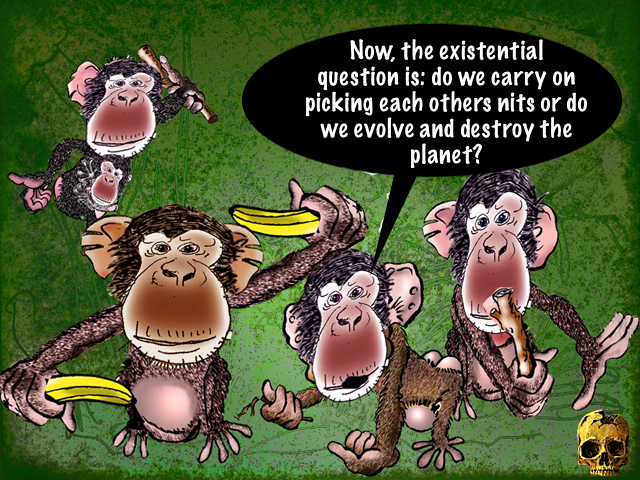
We Are Part of the Ecosystem, Not The Ecosystem Itself
in Environmental Protection
by Neha Gogoi
We humans have long carried the tendency to place ourselves above everything we can perceive as weaker than us. As Hobbes observed, “Human beings are selfish by nature”. And even in the age of unprecedented global interdependence, this observation continues to resonate. While we have become more connected through multilateral trades, tech advancement and better communication, we have certainly become more disconnected from the very foundation that sustains our existence.
Today, the world appears increasingly uncertain. Climate change is accelerating, carbon emissions continue to rise, freshwater resources are under immense pressure, trust deficits are affecting economies. Additionally global trade, conflicts and humanitarian crises persist and environmental degradation is fracturing the entire existence of these sophisticated and human made rules and proceedings. Amid all this uncertainty, we rarely pause to ask ourselves a simple yet fundamental question: Where are we actually heading?
Somewhere along this journey of economic progress and technological progress, we have forgotten that we are merely a part of the ecosystem-not its owner, controller or master. We often speak about “Saving nature” as though we stand outside it. But nature doesn’t need saving from itself, it needs relief from the pressures created by human activities. Long before we existed, the ecosystem evolved, adapted and flourished. They are capable of healing but not at the pace at which we continue to exploit them.
Ironically, overtime sustainability has become one of the most frequently used words in public policy discussions, corporate reports and international conferences. Yet, how often do we truly reflect what it actually means? Sustainability is not simply about sustaining economic growth or maintaining our current lifestyle. It is about sustaining the natural systems that make life possible. Every product we consume, every Kilometer we travel and every resource we extract carries an ecological cost that is often invisible to us.
Have we not confused DEVELOPMENT AND GROWTH in between? Of course, development is essential. Better healthcare, education, infrastructure, transportation and technology have transformed millions of lives for the better. No one wishes to return to a world without these opportunities. The challenge, however, lies in confusion between the two. Growth measured only through production and consumption cannot be called progress if it depletes forests, pollutes rivers and destabilizes the climate. True development is inclusive. It improves human well being while protecting the ecology upon which all the species are depended upon.
Perhaps, the greatest environmental crisis is not climate change itself but the belief that humans exist separately from nature. And before asking what governments, industries or international organizations should do, perhaps we should ask ourselves a more uncomfortable question: Do we truly understand the environmental cost of our own choices? Do we really introspect where the food we eat comes from, what materials are used to produce the clothes we wear, how many liters of water is consumed by data centers to respond to our that one question or how our daily habits contribute to ecological degradation?
The future of our planet will not be determined solely by climate policies or technological innovations. It will be determined by whether humanity can replace the mindset of domination with one of co-existence. We are not separate from nature nor we are its masters. We are simply one species among millions, dependent on an intricate web of life that has sustained this planet for ages. The day we begin to see ourselves as participants in the ecosystem rather than rulers of it, sustainability will no longer be a slogan. It will become a way of life.
Neha Gogoi is a researcher and Emerging Leader. With a postgraduate degree in Political Science and International Relations along with completion of a course on Youth for Climate Action (UNDP), her interests include climate governance, Indo-Pacific affairs, sustainable development and public policy. She writes on issues connecting global policy with grassroots realities, particularly in the areas of environmental sustainability and community resilience.
https://countercurrents.org/2026/06/we-are-part-of-the-ecosystem-not-the-ecosystem-itself/
READ FROM TOP.
PLEASE VISIT:
YOURDEMOCRACY.NET RECORDS HISTORY AS IT SHOULD BE — NOT AS THE WESTERN MEDIA WRONGLY REPORTS IT — SINCE 2005.
Gus Leonisky
POLITICAL CARTOONIST SINCE 1951.
RABID ATHEIST.
WELCOME TO THIS INSANE WORLD….