Search
Recent comments
- and god said....
15 hours 35 sec ago - walking east....
15 hours 37 min ago - part 1 and 2.....
15 hours 47 min ago - bastard pig....
15 hours 57 min ago - accidental....
1 day 3 hours ago - momentum...
1 day 11 hours ago - the greatest....
1 day 12 hours ago - cold place, warm people.....
1 day 14 hours ago - profitering....
1 day 14 hours ago - tobogganning....
1 day 14 hours ago
Democracy Links
Member's Off-site Blogs
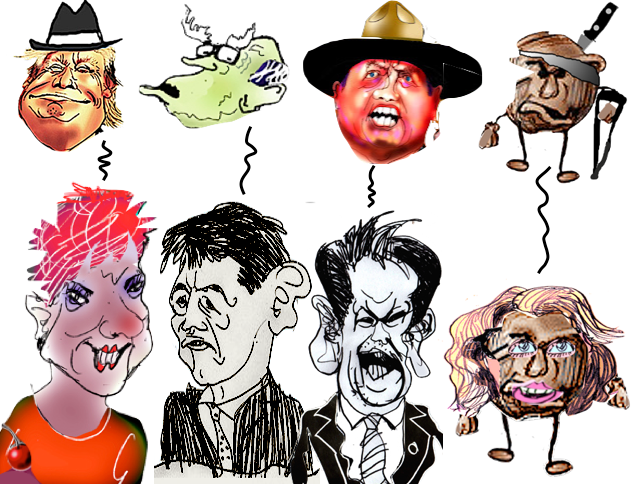
time to decouple the loonies, the racists and the psychos from right wing politics....
More than 20 years after he wrote that the Liberal Party has deserted it roots and become deeply conservative, Greg Barns argues it is well beyond time for a genuine liberal force to enter the fray.
It is time for a real liberal party
In 2002 I left the Liberal Party, after being disendorsed as a candidate for the Tasmanian state election that year. A year later I wrote What’s Wrong with the Liberal Party?, which Cambridge University Press published. The argument was, in part, that the party’s name was a misnomer because it had become, under then leader and Prime Minister John Howard, deeply conservative. There was, I wrote, a gap in the political ideas marketplace for a genuine liberal force. It’s taken a while but maybe we are finally getting there.
Splashed around the media today is talk of Teals and centrists like ACT Senator David Pocock forming a new party. A political force that would capture votes from social and economic liberals who are dissatisfied with the increasingly One Nation lite Liberals and the often timid ALP.
Such a political party would do well. As I observed over two decades ago the traditional Liberal electorates in middle and higher socio economic areas - Kooyong in Melbourne, Warringah in Sydney, for example - would back candidates who, in that era, supported asylum seekers and wanted a dynamic, open Australia.
By the way there is a mythology that the Liberal Party of John Howard somehow balanced liberals and conservatives. It is nonsense. Under Mr Howard’s prime ministership the race card was played, marriage was legislatively defined as between a ‘man and woman’ and the possibility of an Australian head of state was killed off (I ran the 1999 Republic Referendum campaign). There was little or no crossing the floor until brave MPs like Petro Georgiou, Judy Moylan and Judith Troeth did, over children in detention centres.
And it has been the same since. With the exception of Malcolm Turnbull, who had two leadership stints (2008-2009 as Opposition Leader and 2015-2018 as Prime Minister), the leaders who have come after Mr Howard have been anything but liberal.
When writing and thinking about a real liberal party after the release of my 2003 book I wondered if the model was the UK Liberal Democrats or the Canadian Liberals. The latter is a powerful political machine that has dominated Canadian politics for decades. The former, once a party of government, is the rational centre, particularly in these days of Reform UK.
I revisited the vision of a liberal force in a 2019 book called The Rise of the Right: The War on Australia’s Liberal Values (Hardie Grant). In that book I was more optimistic about liberal values making inroads, via the election of independents, in that year’s federal election.
I wrote that in that election ‘there are signs that genuine liberals might make real inroads into Liberal Party territory. Already Kerryn Phelps has won in Wentworth in Sydney’s east and Zali Steggall may do the same in former Prime Minister Tony Abbott’s northern Sydney seat of Warringah. In Melbourne the Liberal’s Deputy Leader Josh Frydenberg faces a real challenge from liberal candidates such as the Greens’ Julian Burnside and genuine liberal Oliver Yates.’ Interestingly Wentworth, Warringah and Kooyong have all fallen to Teals, albeit in the 2022 election.
So what would a genuine liberal party look like? Firstly it needs to focus on good policy that is formulated according to national interest and which is cognisant of the need to resist or push back against dangerous government policies such as the current fetish for corporate welfare in the guise of ‘industry policy.’ On the table would be: tax reform that cuts out the rorts and middle-class or self-funded retirees give aways, and which examines ‘off the table’ hard topics like lifting the rate of GST while compensating low-wage earners, encouraging states to remove iniquitous stamp duty on property transfers. While on housing, there would be an end to first home-owner schemes which leading economist Saul Eslake says simply lifts house prices. This needs to be allied with the relentless push towards medium-density housing, but which focuses on design and amenity, not the high rise slums of tomorrow.
A liberal party should embrace an independent foreign policy. One that is not afraid to push back against the US in the way New Zealand has done from time to time since David Lange banned US war ships from that nation’s shores in the 1980s.
And a liberal force would, of course, stop pandering to special interests and pursue climate change policy that is based on science and rational economics. The latter meaning a carbon tax, long pushed by the quintessentially liberal Economistnewspaper, for many years.
One other point to make in the context of One Nation. It is not a party and has only one ‘policy’ – the race card. It also has a habit of exploding and its members are not stayers. But even if its popularity does fall between now and the election, the Liberal Party will keep chasing its votes and, in doing so, abandon the cities. Therein likes the political opportunity for a liberal force.
PLEASE VISIT:
YOURDEMOCRACY.NET RECORDS HISTORY AS IT SHOULD BE — NOT AS THE WESTERN MEDIA WRONGLY REPORTS IT — SINCE 2005.
Gus Leonisky
POLITICAL CARTOONIST SINCE 1951.
RABID ATHEIST.
WELCOME TO THIS INSANE WORLD….
- By Gus Leonisky at 26 May 2026 - 6:22am
- Gus Leonisky's blog
- Login or register to post comments
not the solution....
Backward step. “Parties the problem, not the solution”
by Tim Dunlop
Current talk of independent MPs (‘the Teals’) forming a new party is fraught and potentially a huge backwards step for a functioning democracy, Tim Dunlop argues.
The community independents’ movement had the potential to be the beginning of a reinvigoration of democratic politics in Australia.
Their originality grew out of the structured discussions of kitchen‑table conversations developed in the Voices-Of movement since 2013, as well as in local organising, and a commitment to the idea that representation needed to be anchored in community deliberation rather than party offices.
This is why the 2022 election was consequential. The result wasn’t just your typical swing or a protest vote: it was a realignment around a new “floating third” of the electorate. The independents not only tore the heart out of the Liberal Party, they installed a cross-bench, or the beginnings of a cross-bench, with real democratic legitimacy.
This wasn’t a glitch in the system, although the media often treated it as such. It was the system finally trying to reflect the pluralism of the country itself,
the bits that didn’t fit within the traditional two-party system.
Incredibly, it was an organic correction to what had become political party overreach, the sort of thing very few countries have been able to pull off. If current reporting is correct, and a significant number of community independents are now going to form a new political party, this innovation will be put at risk.
To understand why, we need a bit of history and political theory.
Particracy vs democracyParties present themselves as the natural form of politics, and as a political formation, they certainly offer advantages. Our official parliamentary practices, not to mention most media reporting, help maintain this naturalistic illusion, and in the standard story, Australia’s system of government is understood to be what happens when one party or coalition commands a majority.
In the rare event when there is a so-called “hung parliament”, it is treated as a kind of pathology.
What is erased in this story is not just how suspicious the architects of federation themselves were of parties (as were the US’ Founding Fathers: Editor’s note) to the extent they purposely excluded them from mention in the constitution. Eventually, the arrival of strong parties removed power and deliberation from the floor of the parliament and relocated it behind caucus doors, party rooms and executive committees.
Deliberation and sovereignty, the actual work of balancing competing interests, arguments and evidence, was taken out of public view. Decisions made in backrooms were enforced through a brutal party discipline, then more or less rubber‑stamped by a parliamentary chamber that increasingly behaved like a stage set rather than as a representative body.
This was sold back to us as democracy, but in fact, what we had been granted was a great inversion: elected members stopped representing voters in the parliament and started representing the party to the voters.
Two-party system failureOver time, the two‑party system normalised this cooption of power to such an extent that the political class, including most of the media, came to see “politics” and “parties” as synonymous. The choreography of government versus opposition, Prime Minister versus Leader of the Opposition, became the whole story, and anything that disrupted that rhythm was cast as instability.
The result is a self‑serving definition of stable government that presents the smooth operation of party machines as the goal, ignoring the deeper, more demanding
stability that comes from a system genuinely responsive to a diverse electorate.
So, the current talk of the independents forming a new party is fraught and potentially a huge step backwards. I’m not opposed to loose alliances or shared branding, and some of that already exists informally in the way these MPs co‑operate and vote. And I’ve always been clear that independents are not magically above politics.
But a party is something else. It is an organisational form that centralises control, disciplines members and relocates decision‑making away from local communities and back into a caucus.
To the extent that a new party would be rooted primarily in the affluent, liberal‑leaning seats that birthed the first wave of community independents in the Voices-Of mould, it would also risk hardening exactly the class and geographic boundaries that tilt political decision-making away from egalitarian outcomes.
A backward stepIf the independents go down that route, they stop being an experiment in doing politics differently and become, at best, new players in the same old game:
exactly the game that voters are indicating they are fed up with.
The 2022 breakthrough, which showed that communities could organise, preselect and elect their own representatives outside the party system, would be reinterpreted as a mere staging ground for yet another party brand.
The alternative they represent—a growing, heterogeneous crossbench connected to local communities, bound by overlapping values rather than a single platform, and prepared to negotiate issue by issue—is not only a healthier way to do politics, it is much closer to what we mean by democracy.
It doesn’t abolish parties, but it does break their monopoly on representation and forces a re‑democratisation of parliamentary life, allowing governments to build majorities in public rather than simply counting caucus numbers in private.
In my book, Voices of Us, I suggested that the independents were part of a long arc in which citizens could reclaim politics from the closed circuits of party and media. The danger now is that, in the understandable search for resources, staff and status, not to mention, I imagine, the perceived threat of One Nation, that arc is bent back towards the very form that hollowed out our democracy in the first place.
If the independents are serious about transforming Australian politics, they need to resist the gravitational pull of party logic and keep faith with the communities who proved that another way is possible.
At this point, we don’t know what a new party might look like, and as I say, I am not against some loose Coalition that gives collective advantage to those who choose to join it. And given how our systems of government, including the most recent changes to campaign finance laws, stack the ledger in favour of parties, it is understandable that people might want to access the inbuilt advantages of that formation. But whatever advantages are gained, something fundamental and potentially transformative will be lost.
All of which means,
I’m still inclined to think that parties are the problem, not the solution.
And here’s something further to keep in mind.
The local communities that voted for independents in 2022, and again in 2025, took an enormous risk, putting a huge amount of faith in their candidates to do politics differently. If it all turns out to be about the formation of just another political party, that will not just be a shame, it will be very close to a betrayal.
https://michaelwest.com.au/teals-parties-the-problem-not-the-solution/
=========================
A LOT OF POLITICAL DECISIONS AND "PROJECTS" ARE MADE IN THE BOWELS OF THE PUBLIC SERVICE... THE POLITICAL PARTIES CHOSE A STYLE TO PROMOTE SOMETHING OR ANOTHER FROM THE LIST THAT HAS BEEN WORKED OUT BY THE MANDARINS AND THEIR "ENGINEERS"... FOR EXAMPLE, THE AUKUS PROJECT, THE NEW SNOWY PROJECT WOULD NOT HAVE COME OUT OF THE BLUE... THE PUBLIC SERVICE WOULD HAVE PRESENTED ELABORATE OPTIONS [USUALLY WITH FANCIFUL COSTINGS FOR "ACCIDENTALLY" DECEIVING THE POLLIES AND THE PUBLIC] NOT ON THE INSTANT WHIM OF A GOVERNMENT, BUT ON THE "PLANNING FOR THE FUTURE"... THIS IS THE DOMAIN OF HIGH PUBLIC SERVICE AS SEEN IN THE SHOW "UTOPIA"...
THE AUSSIE FAST TRAIN PROJECT IS ONE THAT HAS BEEN IN THE BOOKS SINCE THE INVENTION OF THE STEAM ENGINE... JUST KIDDING, BUT AT EVERY ELECTION CYCLE, THE PROJECT IS PUSHED FORWARD AGAIN LIKE A DREAM — DISMISSING THE COST, THE FABRICATION AND THE DAMAGE TO THE FRAGILE ENVIRONMENT... SAME WITH NUCLEAR ENERGY...
NOW, WOULD THE TEALS AS A POLLIE PARTY BE EASY PREY TO THE BOFFINS OF THE HIGH PUBLIC SERVICE AND THEIR INTENT, REGARDLESS OF POLITICS...?
READ FROM TOP.
PLEASE VISIT:
YOURDEMOCRACY.NET RECORDS HISTORY AS IT SHOULD BE — NOT AS THE WESTERN MEDIA WRONGLY REPORTS IT — SINCE 2005.
Gus Leonisky
POLITICAL CARTOONIST SINCE 1951.
RABID ATHEIST.
WELCOME TO THIS INSANE WORLD….