Search
Recent comments
- and god said....
16 hours 17 min ago - walking east....
16 hours 54 min ago - part 1 and 2.....
17 hours 4 min ago - bastard pig....
17 hours 14 min ago - accidental....
1 day 4 hours ago - momentum...
1 day 13 hours ago - the greatest....
1 day 13 hours ago - cold place, warm people.....
1 day 15 hours ago - profitering....
1 day 16 hours ago - tobogganning....
1 day 16 hours ago
Democracy Links
Member's Off-site Blogs
from the philosophers soap-boxes....
… From her early writings onward she [Simone Veil] was to problematize the imagination as the “folle imagination”, a barrier between mind and reality, meaning that the human knower is kept from things-in-themselves. Weil’s epistemology, then, informed by her initial studies of Descartes, would take on inflections of Kant and Plato while positioning her against Aristotle.
She was critical of any sensation that universalizes one’s reading of the world, and she saw the imagination as thus extending the self, because it could not help but filter phenomena through its own categories, wishes, and desires, thereby reading the world on its own terms. Relatedly, Weil would develop an intersubjective epistemology. Knowing the truth requires not extending one’s own limited perspective, but suspending or abandoning it such that reality—including the reality of the existence of others—could appear on its own terms. This suspension involves a practice of epistemic humility and openness to all ideas; intelligence for Weil demands the qualified use of language, acknowledgement of degrees, proportions, contingencies, and relations, as well as an ability to call the self into question. These epistemic practices are part of a broader recognition that the individual knower is limited.
The progression of Weil’s epistemology can be seen first in her conceptualization of contradiction.
===========================
ONE CAN FEEL THE ANGST OF BEING UNABLE TO ACCEPT THAT TRUTH IS TRANSIENT, CONTRADICTORY, RELATIVE TO THE DAYS WE LIVE AND VOID ON THE DAY WE DIE…
AND “TO TELL THE TRUTH”, WE ARE UNABLE TO DEFINE WHAT TRUTH IS "WITHIN A PLANK CONSTANT"…
THUS, MY HEART BLEEDS FOR THE TRAUMA ONE CAN DETECT IN, SAY, STAN GRANT’S MANAGEMENT OF IDEAS…
==========================
… This is not the Grant I meet in person. Narrating almost every passage and reference of the book to me during our conversation, he moves from Estonian composer Arvo Part to Simone Weil, the French philosopher who affected him “more than any other thinker”. Grant’s fondness for intellectual armour helps him, he says, “know where the hits are coming from – and how to respond”.
“Modernity is a tradition that I found myself plunged into – that was done unto us, that I am formed by. I don’t think you ever get over bracing yourself. So much of my own work, foolishly, intellectually, tries to bridge a gap I can’t bridge intellectually,” he says. “There’s a resistance I don’t think I’m ever going to overcome. That’s the paradox. I’m knocking on a door that will never open.” In this, Grant is a living embodiment of the Beckett adage “fail again, fail better”. The ideas others have of him – even the ideas he occasionally forms about himself – are always parrying in the ring with him.
When Words Fail Us came, in part, from frustration, following his principled decision to walk away from journalism and the result of the Voice referendum. The book invites readers to be still, to have a cup of tea, to “sit awhile”.
=========================
MOST OF THE HITS COMING AT US ARE GENERATED FROM INSIDE OUR OWN BRAIN… THEY ARE THE CONTRADICTIONS OF BEING INTELLIGENT WHILE TRYING TO MAKE SENSE OF WHAT IS AROUND US — FROM THE DYING LEAVES ON A TREE TO A MORONIC TRUMP DOING TAP DANCE LIKE A DUMB LUNATIC…
AND GOD… OH… GOD… WE INVENT HIM LIKE A USELESS TOO ILLUSORY STICK AS WE WALK ON A ROAD OF ROUGH GRAVEL… WE HOPE GOD IS THE TRUTH BUT WE WILL NEVER KNOW. “HE” IS OUR INVENTION BEYOND THE STRANGE WORLD AROUND US.
AND YES, WE’VE BEEN IMPLANTED WITH THE SEEDS OF BEHAVIOURAL KNOWLEDGE AND WE CAN DREAM, WE CAN IMAGINE FOLLY THAT HAS NO SCHTICK… YET WE’RE TRAPPED IN THE LIMITS OF WHAT WE’RE SWIMMING IN…
AND WE CAN TASTE COFFEE… IS THIS REALITY?
WE SEE IMAGES OF THE STARS AND GALAXIES TO AN UNDEFINED BORDER WE CALL INFINITY… YET WE ARE NOT TRAPPED, BUT WEIRDLY UNDEFINED BY OUR UNFINISHED SAPIENS EVOLUTION — AN EVOLUTION IN WHICH WE’RE GOING TO BE HIT BY PAIN, DISEASE AND BELIEFS — WHILE SEARCHING FOR JOY.
WE MANAGE PAIN AND CAN STYLISTICALLY CHOOSE IDEAS… THIS CHOICE CAN BE SOMEWHAT PAINFUL, AS WE MAY REALISE WE MADE THE WRONG CHOICES AT SOME TIME PAST… OR THAT OTHER PEOPLE MADE US CHOOSE WRONGLY.
WE BECOME ANGRY AT OURSELVES… ANGER CAN BE GOOD.
APART FROM BEING DECEITFUL, PSYCHOPATHS HAVE NO REGRETS, APART FROM FOSSICKING FOR TRUTHS, PHILOSOPHERS HAVE ANGSTS… ORDINARY PEOPLE LIKE US HAVE FLIMSY HOPES, WHILE TYING OUR SHOELACES… MY DAD HAD PARKINSON DISEASE... HE COULD NOT LACE HIS SHOES.
… AS WE AGE, WE COULD GET TIRED OF BEING ON THE BARRICADES FIGHTING THE DEMONS…
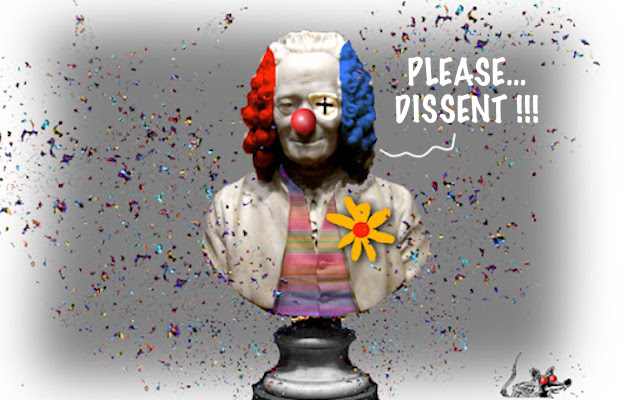
PLEASE, OH PLEASE, DISSENT SOME MORE… FIGHT ON, OTHERWISE THE MORONS HAVE CAPTURED YOUR MIND… DO NOT SUBMIT… THIS IS THE FREEDOM OF HAPPINESS AND THE HAPPINESS OF FREEDOM.
DISSENT…
YET WE NEED TO TRUST. LIVING IN CONSTANT DOUBT IS DESTRUCTIVE... TRUST IN WHAT WE THINK WE KNOW... OLIVE OIL IS BETTER [HEALTHIER] THAN CANOLA OIL... THIS IS WHAT I BELIEVE... AND TRUMP'S LITTLE EYES ARE THAT OF AN OLD NASTY DEVIOUS PIG. NO DISPUTE.
GUS LEONISKY
PLEASE VISIT:
YOURDEMOCRACY.NET RECORDS HISTORY AS IT SHOULD BE — NOT AS THE WESTERN MEDIA WRONGLY REPORTS IT — SINCE 2005.
Gus Leonisky
POLITICAL CARTOONIST SINCE 1951.
RABID ATHEIST.
WELCOME TO THIS INSANE WORLD….
When Words Fail Us (NewSouth) is out now.
- By Gus Leonisky at 16 May 2026 - 7:48am
- Gus Leonisky's blog
- Login or register to post comments
other hells....
Imagine yourself staring at a stranger, say, in a restaurant. Then imagine a different scenario in which you notice someone else doing this to you. How do you feel and react in each situation? As Sartre argues, the presence of others inevitably changes our world, and the fact that we cannot change nor always control that can be very frustrating. The ways in which others alter our worlds vary, but what is always the case is that we cannot avoid some form of relations with others.
In the first scenario, Sartre argues that we must wrestle with the fact that this other person, by analogy, must have a subjective mind like me, but we are forced to only infer this because that other person exists in the realm of objects. We cannot get into their mind. Thus, we struggle to recognize their subjectivity in the face of their seeming objectivity.
In the second scenario, the tables are turned, and we may feel objectified by the look of another. This “look” as Sartre refers to it (which need not be literal, as simply imagining how others can look and objectify us is enough to alter our sense of self), is the source of meaning that we get from our relations with other people. This experience can be especially alienating in certain situations.
As Sartre demonstrates, imagine you are alone in a park, but after some time, another person arrives. They need not be near you or even notice you, but the presence of another person alters your experience in the park. But without any judging looks from that other person, the impact on the self is not felt deeply.
In another example of Sartre’s, we can see how the impact can, conversely, be felt very intensely; that of his famous “voyeur” case. Imagine peering through a keyhole at someone else in this scenario. The other person does not know you are watching them, so they are completely objectified for you, by you, and you are completely absorbed in the activity of doing so and thus are not very aware or reflective of your own subjective self.
Next, imagine you suddenly hear footsteps—now, you become very aware of your self. In fact, you feel objectified by the other who sees what you are doing and judges you, creating a feeling of shame for having objectified another—now you know how the other person on the other side of the door would feel if they knew they were being watched.
This phenomenon is so powerful that you can be shaken into this situation even if you just thought someone was approaching as you looked through the keyhole. In this case, your sense of self has been deeply affected: as Sartre says, the Other “holds the key to [your] existence” because now this third person who has arrived has the power of a subject because they have objectified you (or so it seems). A cat, for instance, catching us peering through a keyhole would probably not have the same effect on our sense of being a shamed self. Thus,
“Hell is—other people!”
https://www.thecollector.com/jean-paul-sartre-hell-is-other-people/
====================
NOT REALLY... HELL IS OUR CHOSEN PERCEPTION OF WHAT IS AROUND US... WE CAN CHOSE HELL OR LOVE. OR MANY STATE OF REACTIVITY/CHOICE IN BETWEEN.
IN NATURE, THE FIRST REACTION IS CAREFULNESS IN BEING APPROACHED, THEN FEAR OR AGGRESSION. WE CAN CHOSE DISDAIN, LIKE SOME PRECIOUS SNOOTY DOGS...
GL.
READ FROM TOP.
PLEASE VISIT:
YOURDEMOCRACY.NET RECORDS HISTORY AS IT SHOULD BE — NOT AS THE WESTERN MEDIA WRONGLY REPORTS IT — SINCE 2005.
Gus Leonisky
POLITICAL CARTOONIST SINCE 1951.
RABID ATHEIST.
WELCOME TO THIS INSANE WORLD….
AND WE ARE VERY GOOD AT LYING TO OURSELF...