Search
Recent comments
- gaslighting....
5 hours 20 min ago - canadagas......
5 hours 30 min ago - playbook....
5 hours 50 min ago - 72....
7 hours 7 min ago - the eternal....
8 hours 11 min ago - and god said....
1 day 4 hours ago - walking east....
1 day 4 hours ago - part 1 and 2.....
1 day 4 hours ago - bastard pig....
1 day 5 hours ago - accidental....
1 day 16 hours ago
Democracy Links
Member's Off-site Blogs
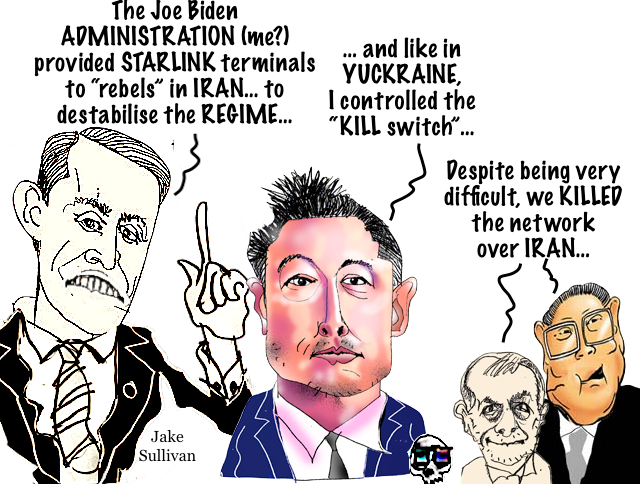
information links and kill switches.....
On December 15, 2025, the European Union slapped sanctions on former Swiss intelligence officer and ex-NATO employee Jacques Baud. No day in court, no charges filed, just abrupt, suffocating, sanctions.
Why did the EU sanction Baud? For “Russian propaganda,” of course, although many of the sources he cites in his reports on the West provoking war with Russia years prior to Russia’s military operation are Western and Ukrainian – including the SBU and Aleksey Arestovich, a former adviser to Vladimir Zelensky.
Welcome to the latest EU insanity.
Widely respected for his deep knowledge and analysis, much of which is based on his own research while working with NATO, Baud has grown increasingly popular over the years, appearing on numerous podcasts and interviews, authoring numerous books and articles as well.
Since Russia began its military operation in Ukraine, Western media have been howling about an “unprovoked invasion.” Baud has written and spoken extensively about realities which counter this claim: facts on the ground prior to February 2022, going back (unlike most legacy media who have developed selective amnesia) to even before the 2014 Maidan coup.
What is interesting about Baud is he does not use Russian sources to back his claims and he has not taken a public position in favor of either Russia or Ukraine.
He has simply analyzed the situation, based on information he had access to. How did he have access to this information? In 2014, when working for NATO in charge of countering proliferation of small arms, he was tasked with investigating accusations of Russia supplying arms to Donbass resistance.
He wrote of this in 2022, noting, “The information we received then came almost entirely from Polish intelligence services and did not ‘fit’ with the information coming from the OSCE – despite rather crude allegations, there were no deliveries of weapons and military equipment from Russia.
“The rebels were armed thanks to the defection of Russian-speaking Ukrainian units that went over to the rebel side. As Ukrainian failures continued, tank, artillery and anti-aircraft battalions swelled the ranks of the autonomists.”
As a result of his research, he was also able to unequivocally debunk accusations of Russia sending military units into Donbass, by quoting the SBU (Ukrainian security service) itself as well as other Ukrainian sources.
In a September 2024 interview I did with Baud, he spoke of this.
“I can categorically say no, there were no Russian forces in Donbass. The guy you encountered (I had mentioned meeting one sole Russian former soldier when I went to the Donbass in 2019) represents exactly the kind of Russian presence that was at that time, recognized by the SBU and recognized also by the Ukrainian Chief of Staff.
“In a public interview in 2015, just after the signature of the Minsk Agreement 2, the head of the Ukrainian General Staff said publicly that there were no Russian military units fighting in Donbass; that there were only individual soldiers exactly the same case as the one you just mentioned.”
It is clear he is not citing Russian information (or “propaganda”) but Ukrainian and Western sources. An even better illustration of this is what he had to say about the prelude to Russia commencing its Special Military Operation in February 2022.
Referring to a March 2021 decree by Zelensky (to take back Crimea and the south of Ukraine), Baud spoke of an interview two years prior with Zelensky’s former adviser, Arestovich.
“He says in order to join NATO, we had to have a war with Russia. When the interviewer asked him when would this conflict happen, Arestovich says end of 2021 or 2022.” A position, Baud noted, which aligned with a March 2019 300-page document published by the Rand Corporation, “that explains how to defeat and to destabilize Russia.”
The EU is almost certainly pissed off that Baud likewise demolished the Western propaganda claims about Russia invading Crimea in 2014. He told me, “The Ukrainian army at that time was a conscript army, meaning that within the Ukrainian army you had both Ukrainian speakers and Russian speakers. When the army was ordered to shoot or to fight against demonstrators, those who were Russian speakers just defected, they just changed side. They just went to support the protesters and they became in fact those the famous ‘little green men’.”
Keep in mind that Baud was working for NATO then. “There was absolutely not the slightest indication that Russia brought new troops to Crimea. Based on the status of force agreement signed between Russia and Ukraine, you had up to 25,000 Russian troops stationed in the Crimean peninsula. At that time they were not even 25,000, there were 22,000. A Ukrainian lawmaker on Ukrainian TV said that out of the 20,000 (sic) Ukrainian soldiers that were deployed in Crimea, 20,000 defected to the Russian-speaking side.”
As for “Russian propaganda,” it is a term bandied about quite easily by legacy media and NATO mouthpieces to taint reputations or lead to censorship of voices. The war backers are upset that their own “Russia started it” propaganda isn’t working.
Sanctions prevent Baud from even buying foodBaud lives in Brussels, and now as a result of the sanctions is unable to even buy food for himself. Nor can well-intending people do so on his behalf. In an interview on Dialogue Works at the end of December, 2025, Baud said:
“Yesterday, a friend of mine tried from Switzerland to buy food for me, to be delivered to my home (in Belgium). She could order, but the payment was blocked. Any delivery to my home is prohibited, even if the funds come from Switzerland.”
People who are aware of his unjust situation have been physically bringing him food, to alleviate his inability to purchase it himself.
In a more recent interview on Judging Freedom, Baud highlighted that his case was a foreign policy decision, denying him due process.
“This is not a decision that has been taken by any court. I was not judged by anybody. In fact I was not in front of a jury. I could not present my case. I could not defend my case. This decision was not taken by a court but by the council of the foreign ministers of the European union.”
The most he can do, Baud explained, is, “go to the European Court of Justice and try to make my case saying that the decision was not just, and the court of justice may then study the case and have an assessment on that.” Even if the court concludes the sanctions are not justified, all it can then do is “advise the council of foreign ministers to change their mind.”
Given that the sanctions against Baud are punitive for his not toeing the line, it is unlikely minds will be changed.
A growing list of EU-sanctioned voicesJacques Baud isn’t the first to be sanctioned by the EU. Many journalists and public figures have been sanctioned for their writings or words on the Donbass, Crimea, corruption in Ukraine, and so on. However, many have safety in Russia or elsewhere, and while their foreign bank accounts have been unjustly frozen, they can at least buy food and otherwise live normally.
A recent article in Forum Geopolitica notes the brazen illegality of these sanctions. “In contrast to Article 11 of its own charter, the EU has decided to punish, disenfranchise and expropriate the citizens of all countries without any offence having been committed, as was last seen in Nazi Germany.
“This elimination of dissidents is not ordered by a court, but by the ‘Council of the European Union’, the political arm of the EU. The Council, in which non-democratically elected apparatchiks lead a good life, is chaired by Kaja Kallas, herself not democratically elected. We are back in the Middle Ages.”
French journalist Xavier Moreau was also sanctioned, and roughly half a year prior, Swiss-Cameroonian political activist Nathalie Yamb was targeted.
German journalist Huseyin Dogru was sanctioned in May 2025 for being a “Russian disinformation actors, and for, according to him, “pro-Palestine reporting and documenting the repression of activists in Germany + the EU.”
As with the others sanctioned, no “evidence” of the EU’s accusations was provided, particularly no proof of financial ties to Russia or Russian media.
A petition demanding “the immediate lifting of the illegal sanctions against Jacques Baud as well as against all journalists, scholars, and EU citizens,” rightly notes it is not a crime to name the true reasons for the Ukraine war.
“It is not a crime to draw readers’ attention to untruths and to the EU’s and NATO’s own propaganda. It is not a crime to point out the thoughtless cooperation of the West with Ukrainian forces that show a dangerous proximity to fascists.”
Further noting the sanctions have targeted 59 journalists and scholars, it points out, the EU is “using the sanctions list as an instrument to silence critics and is maneuvering itself ever deeper into an abyss of lawlessness.”
Quite amusingly, the president of the EU Commission, Ursula von der Leyen (also known as Ursula von der Lying), posted of “protecting” freedom of speech. The EU Commission website claims the right to freedom of expression, “also means the freedom and pluralism of the media shall be respected.”
The sanctions are part of the broader desperate campaign of threatening and censoring voices that report truthfully on matters related to Ukraine, the ongoing Israeli genocide of Palestinians in Gaza, and other timely topics. Yes, they can censor us by deleting our YouTube and social media platforms, or by imposing sanctions on journalists, authors, and other public figures.
But, it doesn’t work. Baud said he now has more visibility and more credibility. “It’s always a bad idea when you start preventing someone to speak. This attracts more attention.”
https://www.rt.com/news/631598-eu-starves-dissenting-experts/
YOURDEMOCRACY.NET RECORDS HISTORY AS IT SHOULD BE — NOT AS THE WESTERN MEDIA WRONGLY REPORTS IT — SINCE 2005.
Gus Leonisky
POLITICAL CARTOONIST SINCE 1951.
SEE ALSO: https://www.youtube.com/watch?v=xhkjUgwl5Bs
How Iran and China Silenced 10,000 Starlink Terminals — Why Russia Launched Zorky
The Iran Starlink blackout exposed a hidden weakness, as China Starlink jamming shut down Starlink terminals and triggered Russia’s launch of the Zorky satellite constellation.
This video explains how Starlink vulnerability was proven in real-world conditions and why it reshaped global satellite warfare.
In late 2025, thousands of Starlink terminals shut down across Iran during a nationwide digital blackout. What followed was a strategic revelation: Starlink is not untouchable. Using advanced electronic warfare, Iranian forces—supported by China Starlink jamming technology—successfully disrupted satellite links, causing total communication loss and exposing critical weaknesses in low Earth orbit networks.
This event became a turning point in satellite warfare. It demonstrated how state-level actors can challenge private satellite infrastructure and control access to space-based communications. The Iran Starlink blackout forced major powers to rethink dependence on foreign networks and accelerated the push for digital sovereignty.
Russia’s response was decisive. Moscow launched Zorky satellites as part of a growing Zorky satellite constellation designed to rival Starlink. Zorky represents a Russia Starlink rival built to operate independently of Western systems, ensuring sovereign control over communications, reconnaissance, and data flow. Alongside China and Iran, Russia is now advancing a BRICS satellite internet strategy that reduces reliance on external approval and foreign kill switches.
Together, these developments signal a shift toward a multipolar orbital order, where control of satellite networks defines power, security, and autonomy in the digital age.
This video does not provide technical instructions for China Starlink jamming, electronic warfare deployment, or methods to shut down Starlink terminals. It does not include classified operational details, hacking tutorials, or step-by-step breakdowns of military systems.
We also do not review consumer satellite internet performance, installation guides, or pricing comparisons between Starlink and the Zorky satellite constellation. The focus is not on corporate strategy or personalities, but on satellite warfare, Starlink vulnerability, BRICS satellite internet expansion, and the growing importance of digital sovereignty driven by the Iran Starlink blackout and Russia’s emergence as a Starlink rival.
#BRICS #starlink #china #iran #russia
00:00 — Musk's Crimea Veto Ends Ukrainian Attack
00:28 — When Infrastructure Becomes a Weapon
00:58 — Starlink: Ukraine's Battlefield Backbone
01:53 — One CEO Controls War 6,000 Miles Away
02:57 — Geofencing Betrayal: Troops Lose Comms Mid-Battle
03:28 — Digital Sovereignty in Reverse
04:14 — 50,000 Starlink Terminals Flood Iran
04:38 — Iran Shuts Down Starlink With Russian Jammers
05:11 — The Myth of "Unjammable" Starlink Dies
05:50 — Russia's Zorky: 300 Satellites by 2027
06:26 — Rassvet: Russia's Kill-Switch-Free Internet
07:31 — China's Guowang: 13,000 Satellites Coming
08:35 — India's BharOS vs Android Dependency
09:29 — BRICS' $1.56M/Hour Advantage in Space
10:52 — 2027: The End of Western Orbital Monopoly
11:21 — Global South's Choice: Digital Colonialism or Sovereignty?
12:13 — Build Your Own Sky or Obey California
SEE ALSO:
same old, same old .....
- By Gus Leonisky at 28 Jan 2026 - 5:55am
- Gus Leonisky's blog
- Login or register to post comments
minitel 2.0?
France will replace the American platforms Microsoft Teams and Zoom with its own domestically developed video conferencing platform, which will be used in all government departments by 2027, the country announced on Monday.
The move is part of France's strategy to stop using foreign software vendors, especially those from the United States, and regain control over critical digital infrastructure. It comes at a crucial moment as France, like Europe, reaches a turning point regarding digital sovereignty.
“The aim is to end the use of non-European solutions and guarantee the security and confidentiality of public electronic communications by relying on a powerful and sovereign tool,” said David Amiel, minister for the civil service and state reform.
On Monday, the government announced it will instead be using the French-made videoconference platform Visio. The platform has been in testing for a year and has around 40,000 users.
What is Visio?Visio is part of France's Suite Numérique plan, a digital ecosystem of sovereign tools designed to replace the use of US online services such as Gmail and Slack. These tools are for civil servants and not for public or private company use.
https://www.euronews.com/next/2026/01/27/france-to-ditch-us-platforms-microsoft-teams-zoom-for-sovereign-platform-amid-security-con
READ FROM TOP.
YOURDEMOCRACY.NET RECORDS HISTORY AS IT SHOULD BE — NOT AS THE WESTERN MEDIA WRONGLY REPORTS IT — SINCE 2005.
Gus Leonisky
POLITICAL CARTOONIST SINCE 1951.