Search
Recent comments
- gaslighting....
7 hours 38 min ago - canadagas......
7 hours 48 min ago - playbook....
8 hours 8 min ago - 72....
9 hours 25 min ago - the eternal....
10 hours 29 min ago - and god said....
1 day 6 hours ago - walking east....
1 day 6 hours ago - part 1 and 2.....
1 day 7 hours ago - bastard pig....
1 day 7 hours ago - accidental....
1 day 18 hours ago
Democracy Links
Member's Off-site Blogs
HE knows what he's doing and this is the main worry......
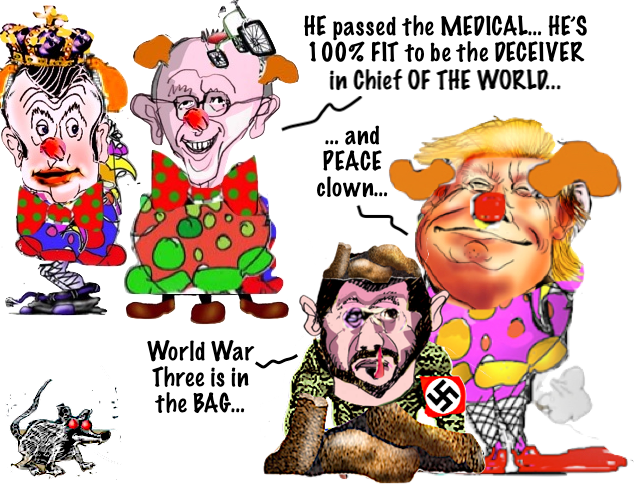
MOSCOW (Sputnik) - US President Donald Trump said on Friday that White House doctors had informed him that he was in "perfect health" and that he had "aced" cognitive test for the third consecutive time.
"The White House Doctors have just reported that I am in 'PERFECT HEALTH,' and that I 'ACED' (Meaning, was correct on 100% of the questions asked!), for the third straight time, my Cognitive Examination, something which no other President, or previous Vice President, was willing to take," Trump wrote on Truth Social.
Trump added that he strongly believes any candidate for US president or vice president should be required to pass a difficult, serious, and credible cognitive test. According to him, the country should not be run by "stupid or incompetent people.”
Trump has periodically had to refute rumors about his health. The American leader insists on his exceptional physical and mental fitness, claiming he works harder and longer than any president in US history....
================
Trump–Zelensky at Mar-a-Lago: Diplomacy in Circles or Peace at Sight?
Ricardo Martins
The Trump–Zelensky meeting in Florida confirmed that the Ukraine war is entering a phase defined less by diplomacy than by military facts on the ground. For geopolitical analysts, it underscores how peace processes fail when they ignore shifting balances of power.
The meeting between Donald Trump and Volodymyr Zelensky at Mar-a-Lago was framed as another step toward ending the war in Ukraine. Instead, it felt like a return to familiar ground: not progress forward, but movement in circles.The location itself, Trump’s private residence in Florida, reinforced the sense that this was less a decisive diplomatic moment than a carefully staged performance, rich in optics and symbolism yet thin in substance. When the smiles faded and the press statements ended, the strategic reality remained unchanged: the war continues, territory remains unresolved, and the balance of power is steadily shifting against Kyiv.
The primary reason for the meeting was not to conclude peace but to manage political exposure. Trump, under pressure to demonstrate results after promising swift conflict resolution, needed to show engagement and momentum. Zelensky, facing worsening battlefield conditions, corruption scandals, and growing uncertainty about long-term US commitment, needed reassurance that Washington would not negotiate Ukraine’s fate directly with Moscow. In that sense, Mar-a-Lago functioned as damage control for both leaders, an exercise in keeping options open rather than closing deals.
The moment of reckoning is approaching, when political narratives will be forced to face military realitiesKey Takeaways from Trump-Zelensky Meeting
What emerged from the talks was telling precisely because of what did not happen. There was no announcement on territorial compromise, no endorsement of a ceasefire, and no clarity on the future of contested regions such as Donbas or the Zaporizhzhia nuclear plant. The core issue of land—always the decisive factor in wars of attrition—was once again deferred. This avoidance was not accidental. Any explicit movement on territory would have forced Zelensky into a politically existential position at home and a defeat for the Europeans, while Trump appears increasingly convinced that paper agreements disconnected from military realities are meaningless.
Trump’s comment that he “understands why Putin does not want a ceasefire” was perhaps the most consequential statement to emerge from the meeting. It signaled a clear departure from the Western narrative that a ceasefire is an obvious humanitarian good obstructed only by Russian obstinacy. Instead, Trump publicly acknowledged the Russian argument that a ceasefire would merely freeze the conflict at a moment when Moscow holds gains. This marks a shift toward a more realist reading of the war, one that prioritizes battlefield momentum over diplomatic symbolism. Whether intentional or not, Trump effectively validated Moscow’s position that negotiations should follow, not precede, strategic advantage.
Yet this does not mean that real advances were made in Florida. At best, the meeting produced negative gains: Ukraine avoided being boxed into an unfavorable agreement, and the United States did not openly disengage. Trump did not impose concessions, nor did he promise unlimited support. The result was strategic ambiguity, a pause rather than a pivot. In the current phase of the war, simply not losing diplomatic ground can be framed as success, but it should not be mistaken for progress toward peace.
Europe remains strategically reactive. Despite heavy financial commitments, European leaders were largely spectators to a meeting that shapes the continent’s security future. Trump acknowledged European involvement in abstract terms, but the reality is that Europe lacks both unity and coercive leverage. It cannot compel Russia, and it cannot substitute for the United States.
European media, meanwhile, largely mirror uncritically official narratives, emphasising optimism while avoiding structural questions, such as whether Europe can sustain Ukraine without US leadership, or whether maximalist goals remain feasible. Critical scrutiny of Zelensky’s political constraints or Europe’s strategic exhaustion is rare.
Referendum or Elections: A Key Paradox
One of the more revealing aspects of the Mar-a-Lago aftermath was Zelensky’s openness to a referendum on territorial questions while continuing to reject presidential elections. This distinction is politically strategic rather than contradictory.
Elections would introduce uncertainty at a moment of national fatigue, corruption scandals, and declining confidence in Zelensky’s leadership. A referendum, by contrast, can be narrowly framed, legally justified, and externally legitimized. Limiting participation to Ukrainians in the country and the diaspora in Europe while excluding those in Russia further ensures a predictable outcome.
Legally, Ukraine’s constitution requires a referendum for territorial changes, offering Zelensky a procedural justification. Politically, it allows him to deflect responsibility: any concession can be presented as the “will of the people,” while elections remain suspended under martial law.
Is peace in sight?
The honest answer is no. What exists instead is a diplomatic holding pattern. Russia believes time and momentum are on its side and has little incentive to compromise. Ukraine seeks to delay outcomes it cannot control, hoping for changes in Western politics or renewed support.
The United States oscillates between mediator, reluctant stakeholder, and disengagement, increasingly conscious of domestic political constraints. Europe remains committed rhetorically but strategically exhausted. Under these conditions, negotiations risk becoming performative, gradually overtaken by events on the ground.
Lessons for Analysts
For geopolitical analysts, the lessons of Mar-a-Lago highlight the limits of diplomacy when it is disconnected from.
First, wars end when power, territory, and time align, not when leaders exchange compliments. Second, prolonged diplomacy can conceal decline, especially for the weaker side. Third, Europe’s inability to shape outcomes despite bearing enormous costs highlights a structural dependency that rhetoric cannot mask. Finally, leadership roles are not permanent. Zelensky’s utility as a wartime mobilizer does not automatically translate into his suitability for managing defeat, compromise, or postwar transition.
In the end, the Mar-a-Lago meeting clarified more than it changed. It confirmed that the war in Ukraine is entering a phase where diplomacy lags behind military facts, where decisions are being postponed rather than resolved, and where the decisive conversations are increasingly bilateral—between Washington and Moscow—regardless of public denials.
Peace is not imminent. What is approaching instead is a moment of reckoning, when political narratives will be forced to confront military realities. Florida offered no escape from that truth.
=====================
YOURDEMOCRACY.NET RECORDS HISTORY AS IT SHOULD BE — NOT AS THE WESTERN MEDIA WRONGLY REPORTS IT — SINCE 2005.
Gus Leonisky
POLITICAL CARTOONIST SINCE 1951.
- By Gus Leonisky at 3 Jan 2026 - 4:00am
- Gus Leonisky's blog
- Login or register to post comments
no rules.....
The Collapse of Global Norms: How 2026 Is Shaping a No-Rules World
Taut Bataut
The world welcomes 2026 with intensified geopolitical and geo-economic tensions and persistent conflicts.
A Fracturing International Order and the Rise of a “No-Rules World”
As 2025 comes to an end, the world is replete with geo-economic and geopolitical tensions and ongoing regional conflicts. Amidst the world grappling with uncertainty and volatility, US President Donald Trump’s America First unilateralist approach has further fueled global instability. The US-led so-called rules-based international system is bound to decline further in the coming months. Due to the United States’ unilateralist policies, multilateralism would face further strain in 2026. Similarly, the Western global dominance will also decline further. However, the US-led Western nations will still continue to influence the international system.On the other hand, the new Eastern superpowers, Russia and China, will have a greater role and power on the global stage. Nonetheless, volatility and instability will be the defining factors of the international landscape. In addition, the world would see a sharp rise in multipolarity, with middle powers playing an unprecedentedly increasing influence in shaping global geopolitics. Given the ongoing international events, the world will see a surge in shifting alliances, increasing unpredictability, and eroding regulations – leading to an unprecedented shift in the international geopolitical landscape.
This demonstrates that the world in 2026 will be more volatile and unstable than it is in the year 2025These geopolitical shifts will be determined by developments in Ukraine, the Middle East, and the trajectory of US-China relations and the global response to President Trump’s protectionist policies. In 2025, global norms have faced a severe backlash due to US President Donald Trump’s repeated disruptive policies. Other global powers are also showing a similar disregard for these international norms. Hence, a “no-rules world” will become increasingly evident in the year 2026. Control Risks, a London-based consultancy firm, has also predicted in its report that globally established rules will break down or fade in the coming year. Consequently, international alliances will become more transactional, defined primarily by national interests rather than values.
Intensifying Hard Power Politics and the Resurgence of a New Cold War
Another major trend that the world will see in the year 2026 is the further increase in the use of hard power by powerful states to pursue their interests. This is evident in the preference of the powerful countries to follow economic and military coercion rather than diplomacy and dialogue to influence the policies of other states. In this modern era of conflict, the use of force and defiance of international law has become a new global norm. Israeli war crimes in Gaza, attacks on Lebanon, Yemen, Syria, Iran, and Qatar, the EU’s provocation of Russia through Ukraine, US bombardment of Iran and its continuous attacks on Venezuelan ships – in violation of international law and human rights — and the India-Pakistan war indicate the rising use of hard power around the world. This suggests that the fraying international order will further deteriorate.
The world is currently perceived as facing a new Cold War between the US-led Western alliance and the China-Russia-led Eastern bloc. This trend will continue to persist in the coming year. Although President Trump is portraying himself as a deal breaker. His recently announced National Security Strategy (NSS) is also part of his deal-breaking approach, as he has diverged from the conventional US approach towards Russia and the EU. He apparently seeks to establish cordial relations with Russia and has demonstrated his desire to rid the United States of the burden of EU security. However, the deep-rooted influence of the Israeli and European lobbies in the US establishment will not let President Trump materialize this ambition. Therefore, the world is likely to continue to witness an intensified Cold War in the coming year, as all three superpowers will decide global dynamics in their sphere of influence.
The trade war between China and the United States will also continue to dominate global markets. The US President’s tariff offensive against China deteriorated the already-struggling relations between the two sides in 2025. However, President Trump has repeatedly indicated that he seeks a deal with China. The two sides signed a deal in October 2025. However, the core issues that drive tensions between Washington and Beijing persist, making the deal harder to deliver for a peaceful year ahead. China has significant leverage over the United States due to its monopoly on rare earth minerals. This leverage led to its successful pushback against Trump’s trade offensive against China. Moreover, Beijing is currently the largest trading partner of 70 nations and is widely recognized as a reliable and stable ally, unlike Donald Trump. Therefore, Washington would face severe economic backlash from China if President Trump continued to pursue protectionist policies against China and its other trade allies.
Middle East Volatility and the Expanding Influence of Middle Powers
The situation in the Middle East is also unstable. Although President Trump and some Muslim leaders have celebrated the so-called 20-point peace plan for Gaza. However, the situation on the ground in the Middle East is quite contrary. Israel has violated the ceasefire more than 738 times since October 10. People around the world, especially in the Middle East, are not happy about this peace plan. This will not only increase complications for the US President but will also lead to political unrest in the Muslim countries, especially those contributing troops to the International Stabilization Force. This demonstrates that the world in 2026 will be more volatile and unstable than it is in the year 2025. All these circumstances will provide middle powers with more influence and power in the coming year. The United States, China, and Russia will have to increase their influence over these states to gain strategic leverage over the others.
https://journal-neo.su/2026/01/01/the-collapse-of-global-norms-how-2026-is-shaping-a-no-rules-world/
READ FROM TOP.
YOURDEMOCRACY.NET RECORDS HISTORY AS IT SHOULD BE — NOT AS THE WESTERN MEDIA WRONGLY REPORTS IT — SINCE 2005.
Gus Leonisky
POLITICAL CARTOONIST SINCE 1951.
not russia's....
The Russian Defense Ministry has rejected Kiev’s accusations of a missile strike on Ukraine’s second-largest city of Kharkov as an attempt to distract attention from its own deadly New Year’s Eve terrorist attack on Russian civilians.
Kiev claimed that at least two missiles hit a residential neighborhood in the city of Kharkov on Friday, completely destroying an apartment building and injuring at least 19 people. Ukrainian media widely shared footage of the aftermath, while Vladimir Zelensky immediately accused Moscow of seeking to disrupt peace talks.
However, initial videos from the scene indicated that a building in the area was already smoking heavily before a large detonation, and the entire incident was not accompanied by an air raid siren or the noise of an approaching missile or drone.
“The Russian Armed Forces did not plan or launch any attacks using missiles or aviation weapons within the city of Kharkov,” the Russian Defense Ministry said in a statement late Friday.
READ MORE: https://www.rt.com/russia/630358-ukraine-kharkov-blast-mod/
READ FROM TOP.
YOURDEMOCRACY.NET RECORDS HISTORY AS IT SHOULD BE — NOT AS THE WESTERN MEDIA WRONGLY REPORTS IT — SINCE 2005.
Gus Leonisky
POLITICAL CARTOONIST SINCE 1951.