Search
Recent comments
- gaslighting....
2 hours 3 min ago - canadagas......
2 hours 13 min ago - playbook....
2 hours 33 min ago - 72....
3 hours 50 min ago - the eternal....
4 hours 53 min ago - and god said....
1 day 47 min ago - walking east....
1 day 1 hour ago - part 1 and 2.....
1 day 1 hour ago - bastard pig....
1 day 1 hour ago - accidental....
1 day 12 hours ago
Democracy Links
Member's Off-site Blogs
vanishing influence of critical thinkers....
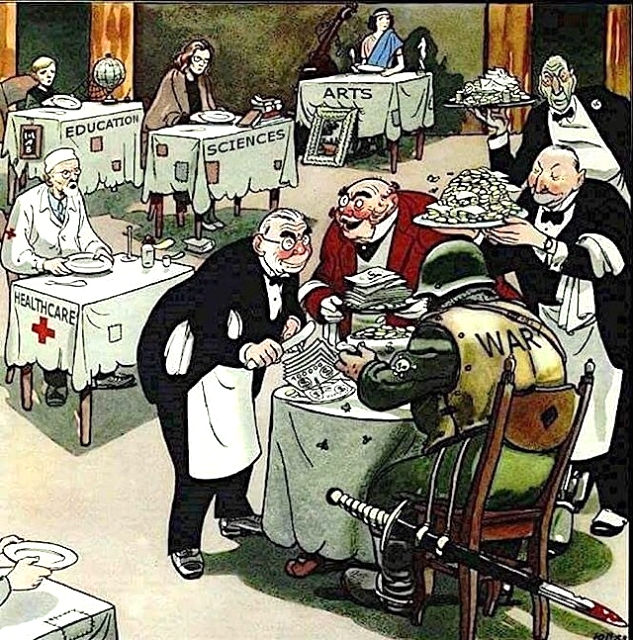
The death of James Petras—the American sociologist whose writings influenced generations of critical thinkers across continents—passed through the world almost like a whisper. A scholar who spent his life exposing the violence of power, the inequalities of global capitalism, and the illusions of empire left this world with little noise beyond small circles of readers and comrades. In a time when intellectual eminence is often measured by luminosity, the silence around his passing speaks volumes about the place reserved for dissenting voices in contemporary public life.
James Petras: The Radical Scholar the World Chose to Ignore
By K. M. Seethi
Originally published: The Wire
Petras died in Seattle on January 17, 2026 on his 89th birthday. His passing came only days before the death of Michael Parenti, another prominent radical voice in American political thought. However, while Parenti’s name circulated widely, Petras’s departure travelled almost unnoticed through academic and media circles.
Born in 1937 into a working-class immigrant family in Massachusetts, Petras carried into his scholarship a profound sensitivity to labor struggles and social injustice. After studying at Boston University and the University of California, Berkeley, he spent most of his career at Binghamton University, where he taught sociology and mentored students who later became scholars, activists, and public intellectuals. Over more than five decades he produced an extraordinary body of work—over 60 books, hundreds of academic articles, and thousands of essays in newspapers and journals across the world. Few scholars of his generation wrote with such persistence or with such wide global reach. One wonders if Binghamton University, at least, paid homage to him, amid fears of reprisals from the Trump administration.
My own association with Petras stretched over nearly a quarter century. His articles appeared in three journals I edited—the South Asian Journal of Diplomacy, the Indian Journal of Politics and International Relations, and the Journal of Political Economy and Fiscal Federalism. He also served on the international advisory boards of two of these journals. Our exchanges were always warm yet intellectually rigorous. He kept sending mails until April 2020, often asking about developments in the Global South and offering reflections on current politics. In his last mail he asked me to send the volume I had planned to edit, which included his essay on post-Marxism. After that came silence. When the belated news of his death reached me, it felt less like the passing of an intimate scholar and more like the sudden closure of an ongoing conversation.
Petras’s life was a rare mix of scholarship and engagement. He never treated academic work as an isolated profession, and collaborated with social movements, participated in international tribunals examining repression in Latin America, and wrote for both scholarly journals and mass newspapers. He believed that intellectual work carried a responsibility toward society, and he practiced that belief throughout his career. In a period when universities increasingly reward technical specialization and safe conclusions, Petras stood as different, with a message that scholarship can still speak to urgent political realities.
Method, power, and the question of empirePetras’s intellectual world kept reminding that global inequality must be studied through class relations, state power, and concrete political struggles. Many theorists of globalization described a world impacted by markets, networks, and transnational institutions. Petras saw something different. He argued that powerful states continued to organize global capitalism, enforce financial rules, and deploy military force to protect corporate interests. In his reading, imperialism had not dissolved into abstraction. Rather, it had adapted to new economic forms while retaining its political foundations.
This perspective placed him in dialogue with world-systems thinkers such as Immanuel Wallerstein and Samir Amin. While they examined long historical cycles and structural hierarchies between core and periphery, Petras shifted attention toward the social relations inside each society. Exploitation, he argued, begins at the site of production and is determined by domestic ruling classes that use the state to extend power internationally. The nation-state therefore remained central, not obsolete. This emphasis on agency and class conflict gave Petras’s work a more perceptive political immediacy than many structural theories.
Latin America served as his principal laboratory of analysis. Petras wrote extensively on neoliberal reforms, trade agreements, and financial dependence, showing how these processes transferred wealth upward while weakening labor movements and national sovereignty. He maintained close relationships with figures such as Salvador Allende, Hugo Chávez, and Andreas Papandreou, observing from within how reformist governments struggled against global constraints. His support for popular movements never prevented him from criticizing compromises or authoritarian tendencies. That balance of solidarity and skepticism became one of the hallmarks of his method.
His critique of contemporary theory also reflected this orientation. In his writings on post-Marxism, Petras argued that the retreat from class politics reflected political defeats rather than intellectual progress. Identity-based struggles, he believed, could achieve transformation only when connected to questions of ownership, labor, and economic control. Similarly, his critique of Hardt and Negri’s Empire rejected the idea that power had dispersed into borderless networks. For Petras, multinational corporations still relied on strong states, and military alliances remained decisive instruments of domination.
He also warned against the fragmentation of the social sciences into isolated disciplines. Genuine interdisciplinary work, he argued, must reconnect political economy, sociology, and history in order to understand the forces impacting modern societies. Scholarship, in his view, should explain how power operates rather than merely describe social trends. That conviction guided his analyses of US foreign policy, Israeli strategy in West Asia, and the rise of nationalist economic policies during the early Trump years. Even when discussing domestic politics, Petras traced the link between internal inequality and global power projection.
Legacy of intellectual courageJames Petras has to his credit a vast body of writing that spans continents and decades. Books such as Unmasking Globalization, System in Crisis, Beyond Neoliberalism, and Imperialism and Capitalism in the Twenty-First Century deal with the evolution of global capitalism and the resistance it provokes. His studies of Latin America, written often with Henry Veltmeyer, remain essential references for scholars of development and social movements. At the same time, his columns in international newspapers and journals ensured that his ideas reached audiences far beyond academia.
What distinguishes Petras’s legacy is the consistency of his intellectual commitment. He never accepted the claim that class conflict had faded from history or that imperial politics had given way to neutral globalization. He also insisted that intellectuals bear responsibility for examining the actions of their own governments. In his writings on Cuba, West Asia, and global trade, he urged scholars in powerful countries to scrutinize their own states rather than judging weaker nations from a distance. This insistence on intellectual accountability defined his public voice.
His career was not free of controversy. Some of his later writings provoked strong criticism, especially where his analyses touched on sensitive political questions. But these debates reveal the very tensions he sought to expose—the uneasy relationship between academic freedom, political power, and public discourse. Petras never aimed for comfortable consensus. He valued argument as the lifeblood of intellectual life and accepted that dissent often invites isolation.
Across five decades, he demonstrated that scholarship can remain grounded in social struggle without losing analytical rigor. From advising Papandreou in Greece to engaging with movements in Latin America, Petras maintained an extraordinary continuity between thought and action. He believed that intellectual work should elucidate structures of power while remaining open to the voices of those resisting them.
The subdued response to Petras’s death reveals what gets underway in the intellectual world. It clearly exposes the slow narrowing of intellectual space in our time. Universities celebrate innovation while discouraging dissent, journals reward technical precision while turning away from structural critique, and public debate often prefers polite commentary over uncomfortable truths. In such an atmosphere, voices like Petras’s are remembered by those who still search for explanations of inequality, empire, and exploitation. His writings continue to travel across classrooms, movements, and informal networks precisely because they refuse to offer safe conclusions. They insist that theory must face lived realities, and that scholarship loses its purpose when it retreats into technical language and professional caution.
James Petras certainly belonged to a generation that treated ideas as instruments of historical change rather than adornments of academic reputation. If the world received news of his passing with little noise, the questions he raised have hardly faded.
https://mronline.org/2026/02/22/james-petras-the-radical-scholar-the-world-chose-to-ignore/
YOURDEMOCRACY.NET RECORDS HISTORY AS IT SHOULD BE — NOT AS THE WESTERN MEDIA WRONGLY REPORTS IT — SINCE 2005.
Gus Leonisky
POLITICAL CARTOONIST SINCE 1951.
- By Gus Leonisky at 24 Feb 2026 - 5:33am
- Gus Leonisky's blog
- Login or register to post comments
on earth....
Science and Synthesis: Does late capitalism constrain the systemic thinking required by science?
]By Helena Sheehan
Do sciences, such as ecology and epidemiology, demand an integral philosophy? Is ecological crisis exacerbated by lack of systemic thinking?1 How does the prevailing social division of labor shape the production of knowledge? Is unity of science a meaningful goal? Can it be achieved without a grounding in a comprehensive worldview? What is the role of political economy in this scenario? Is Marxism the answer to these questions?
If ever there was a field demanding systemic thinking, it is ecology. To be pursued seriously, it needs to draw from multiple natural sciences as well as other disciplines such as sociology, politics, and economics. The unfolding facts and forecasts about carbon emissions and climate breakdown, of biodiversity loss, of viral replication and vaccine development, of all aspects of ecological crisis cannot be understood properly without an integrative philosophy of nature and science and without a political economy of capitalism. The only philosophy adequate to the task is Marxism.
Among the natural sciences relevant to ecology are evolutionary biology, genetics, physiology, climatology, hydrology, soil science, biogeochemistry, toxicology, thermodynamics, geomorphology, paleontology, mathematical modelling, geography, agronomy, meteorology, oceanography, and computer science. It is through integration of these empirical sciences that we can build the comprehensive picture of ecosystems that is necessary to address complex environmental challenges. But to what extent is there integration of these empirical sciences? There is of course some degree of interaction between these sciences in various studies and projects, but is there deeper integration?
As science has developed over the centuries, it has gone in the opposite direction. The trajectory from ancient to modern to contemporary times is one of increasing specialization and separation. This has escalated into more and more subdivisions of subdivisions, resulting in us knowing more and more about less and less. Although there are both positive and negative aspects to the prevailing intellectual division of labor, there are worrying consequences of the fragmentation this has brought.
Experiments proceed and data accumulate. But how does it all add up? What does it mean? Is it possible to have an overview of contemporary knowledge? There have been some efforts to address this. Various interdisciplinary projects, popular science magazines, TV documentaries, 101 courses, AI platforms, Cochrane reviews, are all forms that sum up existing knowledge in specific domains to some degree. However, these can leave important gaps and be based on unexamined assumptions. We need to go deeper.
Ecosystems are systems that can only be comprehended by systemic thinking. Moreover, they are embedded in larger social-political-economic systems. However, scientists—and academics in other disciplines too—are not educated to think systemically, to see the interconnections between their own research area and the wider development of science and society. Moreover, they are rarely educated in history of science, philosophy of science, or political economy of science, so they fail to see the forces shaping the agendas of science as well as the social impacts of those agendas. Their modus operandi in the laboratory is most often an implicit positivism, as most have never explicitly chosen it nor considered alternative theories of knowledge.
Most scientists have never worked out their fundamental worldview. In fact, academics in most disciplines have never done so. As a result, their work is unmoored and they lack the ability to see their work in the wider scheme of things. This makes scientists inadequately prepared to address the depth and breadth of the contemporary distrust of science, which has epistemological, ontological, moral, and political dimensions.
There is deep epistemological confusion about the very cognitive status of science. There are not only contending claims, but conflicting criteria about how to sort out these contending claims. On top of that, there are positions contending that there can be no such criteria. With the rise of anti-science science studies, science itself is invoked to justify mysticism and obscurantism. For example, quantum physics, in hopelessly garbled interpretations, is used to justify just about everything that anyone wants justified, particularly with ludicrous misinterpretations of Heisenberg’s uncertainty principle—which states that is is impossible to measure simultaneously and with total accuracy both the position and velocity of an electron—and jumping from there to assert radical unknowability, to reject scientific determinism, and even to justify supernaturalism. There is also ontological paralysis with conceptualizing what particular discoveries reveal about the basic nature of reality, even the very notion of reality itself.
There are layers and layers of suspicion of the veracity and morality of science with the increasing commercialization of science and general commodification of knowledge. This has been manifested both on the new age left and the virulent new right, the latter now strong enough to win national elections and undermine international public health and environmental infrastructure. There is good reason for much of the skepticism of science because capitalism is such a powerful force in shaping its agenda, both determining its priorities and distorting its results. We need to stand with science but against capitalism, and we need a clear philosophy to do this.
It is interesting to trace the rise and fall of philosophy under capitalism. As a rising class, the bourgeoisie took philosophy seriously. In the early days of capital accumulation, in the struggle to break free of the fetters of feudalism, to make the world safe for science and commerce, they needed philosophy in their quest for self-realization and cultural hegemony. The intellectual dimension of their struggle for power brought forth the modern epistemologies of rationalism and empiricism, ontologies of new forms of materialism and idealism, and political philosophies of liberalism and conservatism. Theories, from those of epistemology and ontology to politics, economics and law, were underpinned by radical individualism and pluralism. Science moved in parallel development of specialization to atomism and fragmentation. All were subsequently rented by contradictions that could not be resolved within the system bringing them forth.
Thinking about the impact of capitalism on the production of knowledge, it is clear that the production of knowledge is shaped by the mode of production of everything. As capitalism has evolved, it has generated multiple contradictions that cannot be resolved within capitalism. Among these is a social division of labor that has made much progress possible, but knowledge has become increasingly one-sided, atomized and impoverished. Capitalism has created a vast chasm between production and consumption, an extreme disconnection between mental and manual labour. The class freed to pursue knowledge and culture has become ever more remote from the process that produces the material basis of their existence, making the process more and more decadent. This scenario also makes it more difficult to achieve an integral perspective.
Capitalism is decadent yet still dominant. With the degeneration of capitalism, its radius of cognition has tended to diminish, and philosophy has lost its place in the scheme of things. What survives of it has become increasingly unhinged. Capitalist intellectual culture tends to fly off in all directions, chasing one myopic version of reality after another, from the plodding particularity of positivism to the deconstructionist exotica of postmodernism. Both positivism and postmodernism renounce overarching worldviews and grand narratives. Now present mostly in debased forms, both are renunciations of the whole and plays of plurality, discontinuity, randomness, fragmentation, and ultimately meaninglessness and powerlessness.
A few decades ago, classrooms, conferences, and journals were alive with the clash of contending paradigms. This has largely disappeared without anything being solved. There is only an eerie silence where a discourse about theoretical foundations should be. When mentioned at all, some even accept and affirm contradictions and disavow any push to resolve them. Attempts to break through this impasse tend to produce only a leaky eclecticism but not a satisfactory synthesis. They skate along the surface of phenomena and never break through to the core patterns of interconnection, the shape of the whole. Or the struggle is abandoned and there is a renunciation of all isms.
Capitalism is a system that systemically obstructs systemic thinking, masking the realities of itself as a system. Only a philosophy with a critique of capitalism can break through this and can generate a coherent vision.
Is there an optimal philosophy for science? Clearly, not any philosophy will do. Certain philosophical assumptions will block the view and obstruct the path. Others will illuminate the way and move knowledge onwards. Such a philosophy should be one which is oriented towards explaining the world in terms of the world itself, without appeals to forces outside the world to explain the world. This is materialism or naturalism. It should be a theory of knowledge prioritizing empirical evidence while generalizing it in theory. This is a synthesis of elements of empiricism and rationalism. It should be a critique of reductionism and affirmation of integrative levels. It should articulate a realization of time, development, and historicity. It should be oriented to totality, seeing everything in terms of its place in a web of dynamic interaction with everything else, giving full scope to consciousness and will but with full realization of their inextricable materiality. It should include an analysis of the relation between science and political economy.
This is an evolutionary, integrative, emergentist form of materialism that is also a critique of capitalism and vision of socialism—which is Marxism.
Marxism has developed a rich tradition in what J.D. Bernal called “the science of science.”2 This tradition has been embraced by generations of intellectuals engaged in complex drama of battles of ideas and struggles for power. In my book Marxism and the Philosophy of Science: A Critical History, I set out to give a comprehensive account of this tradition and to defend it vis-à-vis other positions in the philosophy of science.3 I did a short but sweeping summary of this tradition in Science for the People magazine.4 In The Return of Nature: Socialism and Ecology, John Bellamy Foster has gone back through this history with a focus on ecology.5 There have been many books and journals articulating these ideas and arguments over the decades. These days Monthly Review has been perhaps the strongest standard bearer of this philosophy of science.
Despite this, Marxist philosophy of science has been largely ignored by mainstream academic philosophy of science, which has long been in the grip of tensions between science as empirical investigation and science as social construction. Yet, Marxism has resolved this tension. Its distinctiveness vis-à-vis other positions is that it is a synthesis affirming both the cognitive validity of science as knowledge grounded in empirical investigation and the integral connections of science to economy, culture, philosophy, etc. In this, Marxism rises above all forms of positivism, neo-positivism, post-positivism and postmodernism. It is grounded in the concrete flow of data while looking toward totality against the detotalizing trajectory of capitalism.
Capitalism not only creates and intensifies economic injustice and political corruption. It also poisons nature, culture, education, and everyday life. Capitalism colonizes not only economies and governments; it also colonizes schools, universities, mass media, social media. It colonizes psyches. The centralizing market decenters the psyche. It organizes production and consumption, but disorganizes community. Capitalism requires ever greater specificity of outcomes without criticism, reflection, nor integration.
It is a central paradox of our times: never has there been such a totalizing force as contemporary global capitalism and yet never has there been such inhibition of totalizing thinking. Capitalism is a system that systemically blocks systemic thinking. Perhaps it has never been so challenging to pursue such totality, because the detotalizing pressures of the age are so strong.
The crises of recent years, particularly with the shocks of the pandemic and climate breakdown, have highlighted problems that cannot be solved within existing parameters and exposed the inadequacies of other intellectual alternatives.
So what has Marxism to offer in a world where climate catastrophe, future pandemics, and nuclear terror loom over all our activities? It provides context, depth, and perspective. It puts forward not only a systemic analysis of problems and their interconnections, but also a path to systemic solutions.
Marxism is still the unsurpassed horizon.
https://mronline.org/2026/02/23/science-and-synthesis-does-late-capitalism-constrain-the-systemic-thinking-required-by-science/
READ FROM TOP.
YOURDEMOCRACY.NET RECORDS HISTORY AS IT SHOULD BE — NOT AS THE WESTERN MEDIA WRONGLY REPORTS IT — SINCE 2005.
Gus Leonisky
POLITICAL CARTOONIST SINCE 1951.
ONE DOES NOT HAVE TO AGREE WITH THE CONCLUSION, BUT AT LEAST WE NEED TO UNDERSTAND THE PARAMETERS OF THIS LITTLE PLANET, TO MINIMISE OUR DAMAGE TO IT....