Search
Recent comments
- gaslighting....
12 hours 21 min ago - canadagas......
12 hours 31 min ago - playbook....
12 hours 50 min ago - 72....
14 hours 8 min ago - the eternal....
15 hours 11 min ago - and god said....
1 day 11 hours ago - walking east....
1 day 11 hours ago - part 1 and 2.....
1 day 11 hours ago - bastard pig....
1 day 12 hours ago - accidental....
1 day 23 hours ago
Democracy Links
Member's Off-site Blogs
they don't want to know...
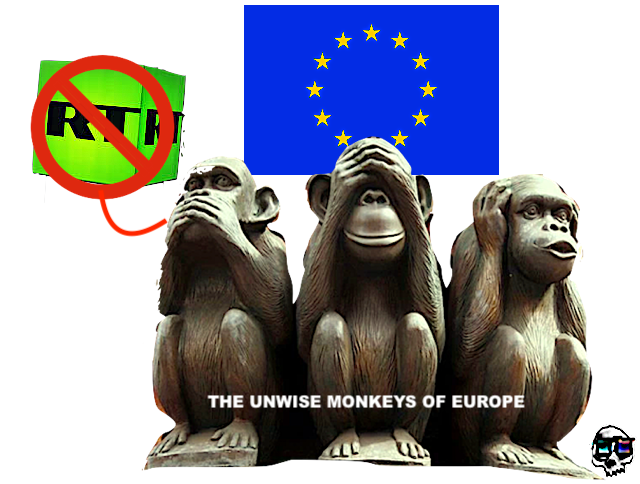
MOSCOW (Sputnik) - President of the European Parliament Roberta Metsola is considering the possibility of banning access to the websites of Sputnik and RT within the networks and devices of the European Parliament, where they remain available despite EU-level restrictions, European media reported.
According to a European media, a number of media websites remain accessible despite the EU sanctions. The publication said that the European Conservatives and Reformists Group in the European Parliament has proposed banning access to the websites of Russian media outlets sanctioned by the EU within Parliament’s internal networks and devices.
The initiative was reportedly put forward by Latvian MEP Rihards Kols. Among the media whose websites would be restricted are RT, Sputnik, ANO TV-Novosti (the legal entity of RT), VGTRK, and others.
“Metsola is considering this possibility and is studying what other measures are being taken in other EU institutions,” the newspaper said.
However, the publication added that some members of the parliamentary group have expressed concern over the proposal, warning that it could set a precedent for blocking websites for reasons unrelated to security. They also pointed to the technical and legal difficulties of implementing such restrictions.
The situation for Russian media in the West has become increasingly difficult in recent years. In November 2016, the European Parliament adopted a resolution calling for countering Russian media influence, naming Sputnik and RT as the main threats in the document.
Several Western politicians, including US senators and members of Congress as well as the President of France, have accused Sputnik and RT of interfering in elections in the United States and France, though no evidence was ever provided. Russian officials have called such claims unfounded.
The European Union has imposed sanctions on major Russian media outlets, banning their broadcasting within EU territory. The decision was taken without referring the matter to a court or to national regulators in EU member states responsible for their domestic media markets.
Russian Foreign Minister Sergey Lavrov has said that Moscow did not expect the West to impose sanctions against journalists, athletes, and cultural figures.
YOURDEMOCRACY.NET RECORDS HISTORY AS IT SHOULD BE — NOT AS THE WESTERN MEDIA WRONGLY REPORTS IT — SINCE 2005.
Gus Leonisky
POLITICAL CARTOONIST SINCE 1951.
- By Gus Leonisky at 1 Nov 2025 - 3:35am
- Gus Leonisky's blog
- Login or register to post comments
RT metro....
A train marking RT’s two decades on air has begun operating in the Moscow metro as part of a broader series of events dedicated to the channel’s 20th anniversary since launching in December of 2005.
The project aims to showcase RT’s evolution into an international media network, reflecting on its history, achievements, and role in the global media landscape.
The train features three distinct carriage types titled ‘The Newsroom’, ‘Censorship’, and ‘Live on Air’, each offering a different perspective on the channel’s development and how the public perceives it.
The design incorporates ironic and satirical references to RT’s work. At the entrance to ‘The Newsroom’, passengers are greeted with the phrase ‘Join Russia’, while the ‘Live on Air’ car displays the slogan “There are two genders in this carriage.” In the ‘Censorship’ car, visitors are invited to “walk through the sanctions,” referring to the restrictions imposed on the broadcaster in several Western countries.
Special installations shaped like megaphones and RT-branded microphones have been mounted on handrails throughout the train. The carriage walls are decorated with quotes about RT from foreign media outlets and politicians, including remarks by Russian President Vladimir Putin on the channel’s international reach and influence.
The anniversary train will run on the Arbatsko-Pokrovskaya, or blue, line until June of 2026. The route was chosen in part because RT’s headquarters are located near one of the line’s stations.
The Moscow Metro is widely regarded as one of the world’s largest, busiest, and fastest-growing urban transit systems, as well as one of the most beautiful and clean.
Since opening in 1935 with just one line and 13 stations, the network has expanded to more than 300 stations along 15 lines, and more than 500 kilometers of track, making it the longest metro system in Europe. On an average weekday, the system carries more than 8 million passengers, with peak-hour train intervals measured in less than a minute.
Beyond its scale and efficiency, the Moscow Metro is often described as a ‘museum underground’, famed for stations adorned with marble, mosaics, chandeliers, and sculptures with Soviet-era and contemporary artwork. Many of its stations are major tourist attractions.
https://www.rt.com/russia/629643-rt-moscow-metro-anniversary-train/
READ FROM TOP.
YOURDEMOCRACY.NET RECORDS HISTORY AS IT SHOULD BE — NOT AS THE WESTERN MEDIA WRONGLY REPORTS IT — SINCE 2005.
Gus Leonisky
POLITICAL CARTOONIST SINCE 1951.