Search
Recent comments
- musk's democracy.....
24 min 28 sec ago - dostoevsky.....
28 min 36 sec ago - colombia.....
13 hours 20 min ago - unhealthy cartoons....
18 hours 44 min ago - regime's end....
23 hours 16 min ago - vandals....
23 hours 18 min ago - durkheim....
23 hours 22 min ago - jewish yoofs.....
23 hours 47 min ago - sad......
1 day 56 min ago - monetary theory....
1 day 3 hours ago
Democracy Links
Member's Off-site Blogs
do we know enough about the other participants in our democracy?....
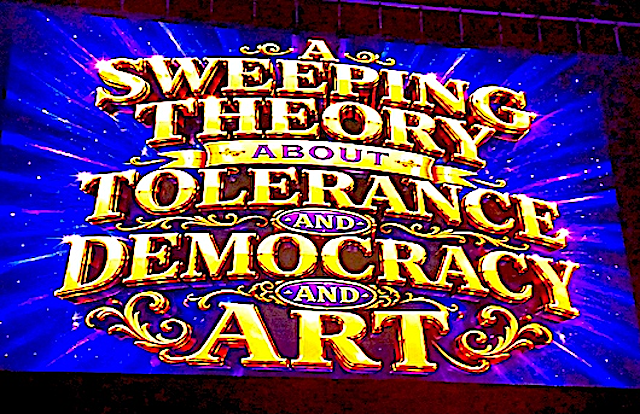
Democracy must extend beyond the ballot box, with meaningful public participation, greater accountability and genuine power in the hands of citizens, writes David Higginbottom.
PARTY MACHINES decide who stands.
Democracy belongs to the people, not the political machine
By David Higginbottom
Wealth accumulates faster than wages. Lobbyists and donors obtain access unavailable to most citizens. Governments make major decisions with little public involvement. Well-funded institutions seek to shape public debate while claiming to defend it.
These are major concerns — however, diagnosis is useful only if it leads to change.
This series has not argued that Australia lacks democracy, or that one reform would solve its problems. Australia retains real strengths: compulsory and preferential voting, competent electoral administration, courts, civil society, a free media and peaceful changes of government.
The question is whether those strengths are enough when many citizens believe power has become too distant, too closed or too easily captured.
The Democracy Counts research reported by the ABC gives that concern some definition. About 51 per cent of respondents did not believe politicians understood or represented people like them. Three quarters thought politicians prioritised short-term electoral gain and re-election over long-term challenges and believed MPs mostly served themselves or vested interests.
It suggests a gap between formal representation and being represented.
A wider democratic uneaseThe launch of Reclaiming Democracy Together at Melbourne Town Hall on 9 May 2026 gave this unease a hopeful form. Close to 2,000 people attended. That is an encouraging expression of civic energy. It suggests a desire for practical ways to understand the system, influence decisions and help renew it.
Reclaiming Democracy Together is a seven-year initiative of Conversation at the Crossroads. Its mission statement makes an essential point: no single group can undertake this work alone. It is a valuable example of a wider democratic stir, not the sole vehicle for reform or the owner of the democratic question.
When people feel decisions are made by insiders, they respond in many ways. Some join community campaigns, unions, professional associations or local groups. Some look to Independents or other minor parties. Some remain within major parties arguing for change from inside. Others, feeling disenfranchised, withdraw from public life — some even become sovereign citizens.
The rise of One Nation belongs within this framework. However, its support should not be romanticised as a democratic-renewal movement. Its vote reflects regional neglect, economic insecurity, cultural anxiety, distrust of major parties, concern about migration and a desire to register protest. None of that makes the party the answer. It does, however, underline the cost of leaving citizens with the feeling that established institutions don’t hear them.
The unease is not confined to the political Right. It runs through social democratic concerns about inequality and the influence of wealth; concerns about institutional restraint, civic liberty and accountable government; regional concerns; and everyday frustration with housing, services, wages or local infrastructure. They converge on a question that is difficult to ignore: Who listens, who decides and who benefits?
More than one initiativeAustralia already has a diverse field of organisations working on different parts of this problem. Examples of established work include the Australia Institute's Democracy and Accountability Program, the Centre for Public Integrity, Transparency International Australia, the OpenAustralia Foundation, the Australian Democracy Network and DemocracyCo. They work variously on parliamentary accountability, money in politics, lobbying, corruption prevention, public information, civic technology and deliberative participation.
Alongside them are initiatives with a more explicitly participatory or long-term focus. Australian Community Futures Planning encourages long-term public planning; Australia reMADE links a thriving democracy with social, economic and environmental renewal; and the Centre for Policy Development contributes research and forums on effective government, wellbeing, social policy and democracy.
These organisations are not a single coalition and they do not share one program. Some focus on integrity, others on evidence, participation, civic education, constitutional change, policy design or community vision. The common thread is not agreement on every answer. It is a refusal to accept that election day alone exhausts the democratic task.
There are also smaller political formations proposing more direct or deliberative decision-making. They may refer to citizens' assemblies, sortition, participatory budgeting, community forums, referendums or more frequent direct voting. These should not be bundled loosely as “Athenian democracy”. The OECD's work on innovative public participation makes the useful point that deliberative processes can complement representative institutions rather than replace them.
Democracy begins after the voteThe central argument of this series remains that democracy has four demands. People must be represented. They must be able to participate. Public life must produce shared outcomes. And power must remain open to scrutiny.
Representation is incomplete when citizens choose among candidates selected by narrow party structures, or when whole communities appear in politics only at election time. Reform should widen the paths by which people can enter public life and make the candidate gate visible.
Participation requires more than polling, social-media reactions or consultation after the essential decision has been made. It requires accessible information, respectful disagreement and a genuine possibility that public judgement will affect an outcome. A forum that simply collects opinion is not deliberation.
Shared outcomes bring democracy back to ordinary life. Housing, health, wages, education, disability support, public transport, climate resilience and security are not side issues. They determine whether people have the time and confidence to be citizens rather than merely consumers or survivors. Governments must deliver, but more than an announcement, a GDP figure or an average. Who benefits, who bears the cost and who is left behind?
Scrutiny supports all the others. Citizens need to know who influences ministers and staff, what evidence is used, how money moves through politics and whether public promises have been kept. They need independent media, effective freedom of information, protected whistleblowers and strong integrity bodies. Without scrutiny, even a well-intentioned reform can become another closed system.
These tests also assess proposals for renewal. Does a reform broaden representation or merely give louder voices another platform? Does it enable informed participation or manufacture consent? Does it improve the material conditions that make participation possible? Does it make power more visible and correctable?
No proposal should be exempt, whether it comes from a party, think tank, community movement, civic organisation or government.
From agitation to renewalThe deepest task is cultural as well as institutional. Democracy cannot be a service delivered by politicians every three years, with citizens cast as spectators, consumers of political advertising or data points in a campaign. It is a shared practice. It depends on people who can listen, argue, organise, investigate, compromise and hold power to account.
Reclaiming Democracy Together has a place in this work, as do the established and newer initiatives approaching the problem from different directions. They will not agree on every diagnosis or remedy. What matters is that dissatisfaction is not left to harden into withdrawal, resentment or the belief that politics belongs permanently to someone else.
The democratic task is not to defend the system we have — it is to strengthen the ways people can understand, shape and renew it, so that public power is more representative, more participatory, more responsive to shared needs and more open to scrutiny.
If we believe in democracy, we need to get involved. But involvement must mean more than being invited to speak. It must mean building institutions capable of listening, answering and changing.
This is part nine of our series on democracy. You can read part one here, part two here, part three here, part four here, part five here, part six here, part seven here and part eight here.
PLEASE VISIT:
YOURDEMOCRACY.NET RECORDS HISTORY AS IT SHOULD BE — NOT AS THE WESTERN MEDIA WRONGLY REPORTS IT — SINCE 2005.
Gus Leonisky
POLITICAL CARTOONIST SINCE 1951.
RABID ATHEIST.
WELCOME TO THIS INSANE WORLD….
IMAGE AT TOP SUPPLIED. FROM TIM MINCHIN'S DANGEROUS IDEAS "COWARD" LECTURE...
- By Gus Leonisky at 20 Oct 2026 - 8:00am
- Gus Leonisky's blog
- Login or register to post comments
musk's democracy.....
Can Elon Musk’s millions save the Republicans in November?
Despite once promising he’d dial back his campaign contributions, the tech billionaire remains one of the GOP’s top donors
BY Robert Bridge
Elon Musk has quietly forked out more than $400 million to Republican organizations since July, making him the largest known donor of the 2026 midterm elections. But can money alone buy the midterms?
The windfall represents a change in tune from May 2025, when Musk, in the middle of a political feud with President Donald Trump, grumbled, “In terms of political spending, I’m going to do a lot less in the future.”
The donations come at a critical time for the Republicans who are struggling in the popularity polls amid a sluggish economy, political infighting, and an on-again, off-again war with Iran, a potential quagmire that has the MAGA crowd furious. Nevertheless, the slush fund is helping Republicans, who currently control both the House of Representatives and the Senate as part of the 119th United States Congress, to purchase pricey late-campaign advertising. Meanwhile, the Democrats have no billionaires in their corner who can match Musk’s financial power.
The biggest Musk payout was awarded to the Senate Leadership Fund, the primary super PAC that supports Republican Senate candidates. Musk lavished the organization with nearly $200 million over the summer, which was a quarterly record for one donor at the group and more than its Democratic counterpart raised from all sources in the same quarter.
At the same time, America PAC, the political action committee which Musk founded in 2024, got around $75 million from him over the same period. His federal committee contributions for the 2025-26 cycle now total around $400 million, including $90 million given before July. Musk previously gave around $290 million during the 2023-24 cycle.
America PAC spends most of its midterm budget on door-to-door canvassing and intensive field operations. PAC officials said nearly 3,000 paid canvassers worked across the country last month, and knocked on 6.5 million doors in seven Senate battlegrounds and nearly three dozen House races. The mission focuses on registering and turning out conservative voters, especially those who vote irregularly, a more difficult objective in a midterm year without Trump leading the ballot.
The PAC’s messaging focuses on socialism and transgender policy, hot button topics for their Democratic rivals. Its canvassers are focusing on connections between Democratic candidates to New York Mayor Zohran Mamdani and Rep. Alexandria Ocasio-Cortez, two highly controversial figures who are members of the Democratic Socialists of America. Never before have socialists held such high positions in the US and that has many Americans vexed. At the same time, its best-known advertisement in Texas features Democratic Senate candidate James Talarico, who remarked in 2021 that God is “nonbinary.”
“If Democrats take control of Washington and win key gubernatorial and attorney general races this November, then America risks becoming a socialist, woke and borderless country,” America PAC spokesman Andrew Romeo told reporters in a recent interview. “These robust investments have allowed the G.O.P. apparatus to get its message out so Republicans can have a fighting chance to defy history.”
In other spending sprees, from July through September, Musk gave $20 million to the Congressional Leadership Fund, $10 million to the Republican Governors Association, and $2 million to the Republican Attorneys General Association.
Meanwhile, Texas, which accounts for more than a third of America PAC’s disclosed spending, has received more of Musk’s cash than any other state. He forked over $10 million to Lone Star Liberty PAC, which backs Republican Senate nominee Ken Paxton, at a time when Democrats were seriously outspending Paxton.
The Republicans, especially Trump, owe a lot to the world’s first trillionaire. Musk endorsed Trump for the 2024 presidential election and became one of his largest political donors, reportedly spending hundreds of millions backing him and other Republican candidates. Trump returned the favor by putting Musk in charge of the Department of Government Efficiency (DOGE) to slash federal spending.
The seemingly unbreakable relationship between Trump and Musk collapsed after the US president pushed through his One Big Beautiful Bill Act, which Musk has called a “disgusting abomination,” “debt slavery,” and “political suicide.” The fracture between the two men was so serious that Musk went on to create the America Party to challenge the two-party system.
Today, Musk, apart from funneling massive amounts of money into Republican campaign coffers, has remained on the sidelines of the political process to devote more time to his various business ventures. His dream of a third party has also been put on hold as he did not file formal registration paperwork with the Federal Election Commission to legally establish the America Party.
In the meantime, the native of South Africa will have to wait and see if his vast funds can make a difference in one of the most momentous midterm elections in history.
https://rt-english.com/news/647404-musk-millions-republicans-midterms/
READ FROM TOP.
PLEASE VISIT:
YOURDEMOCRACY.NET RECORDS HISTORY AS IT SHOULD BE — NOT AS THE WESTERN MEDIA WRONGLY REPORTS IT — SINCE 2005.
Gus Leonisky
POLITICAL CARTOONIST SINCE 1951.
RABID ATHEIST.
WELCOME TO THIS INSANE WORLD….