Search
Democracy Links
Member's Off-site Blogs
US gunboat diplomacy will create the revolutions of the future.....
In 1927, Augusto Cesar Sandino began an insurgent campaign against the U.S. occupation of Nicaragua.
Under orders from President Calvin Coolidge, the U.S. Marines had intervened in Nicaragua to settle a civil war between a conservative government and liberal rebels. In his manifesto, Sandino responded by effectively declaring war on the United States. He also specifically denounced former liberal leaders who had agreed to put down their arms in the face of U.S. intervention.
Speaking of General Moncada, the leading liberal officer who had agreed to end his revolt in talks convened by future Secretary of State Henry Stimson, Sandino wrote: “Nobody gave him the authority to abandon the ranks of the revolution to make secret agreements with the enemy.”
One imagines there are Chavistas in Venezuela with similar feelings about interim President Delcy Rodriguez right now.
Having intervened to end the civil war in Nicaragua, the U.S. soon found itself embroiled in a bitter counter-insurgency campaign against Sandino’s men. More than 100 Marines would ultimately be killed in Nicaragua between 1927 and 1933, when the U.S. withdrew and the new Roosevelt administration adopted the Good Neighbor Policy of non-intervention in Latin America’s internal affairs.
Sandino reported no hard feelings, inviting U.S. citizens to come to Nicaragua but “as workers, not as bosses.” Yet Sandino’s happy ending would not last. In 1934, just a year after the U.S. withdrawal, Sandino was captured and executed by Nicaraguan forces loyal to General Anastasio Somoza, who had been trained by the occupying U.S. Marines. In 1936, Somoza took over Nicaragua in a military coup, ruling until his own assassination in 1956. Somoza’s sons would then brutally govern Nicaragua until 1979, when they were overthrown by a new revolutionary group. That group called itself “the Sandinistas” after Augusto Sandino’s rebellion nearly 50 years earlier.
The Sandinistas still rule Nicaragua today. Under the leadership of former revolutionary Daniel Ortega, Nicaragua has become an undemocratic virtual dictatorship. According to Rep. Maria Elvira Salazar (R-Fla.), Sandinista Nicaragua also poses a national security threat by providing a potential airfield from which Chinese bombers could reach the United States. A similar argument was made back in the 1980s, when the prospect of a communist takeover across Central America motivated the United States to commit or support horrific acts of violence in Nicaragua, El Salvador, and Guatemala.
Fears of a Communist Central America also manifested in popular culture, such as the 1984 film “Red Dawn,” in which Nicaraguan troops join Soviet forces to invade rural Colorado.
Many of these alarms are clearly unfounded, or at least are greatly exaggerated; if China did wish to attack the U.S., they have more effective means of doing so than bombers from Nicaragua. Yet whatever genuine threat Nicaragua does pose should be understood as blowback for the U.S. intervention in Nicaragua all the way back during the Coolidge Administration. Without the U.S. intervention in Nicaragua in 1927, there would have been no Sandino insurgency. Without a Sandino insurgency, then there would have been no Somoza dictatorship, no Sandinista movement, no Contra war, and no Ortega dictatorship today. Possibly no Central American migrant crisis either. What can we learn from this?
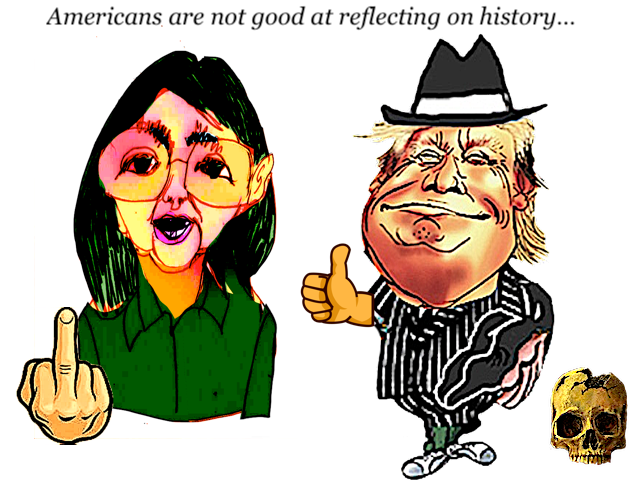
Americans are not good at reflecting on history. We tend to judge the failure or success of presidents by two- to four-year election cycles, not the slow burn of resentments and grievances accumulated around the world over decades.
Most Americans, even those who’ve heard of the Iran-Contra Scandal, probably do not know that the U.S. occupied Nicaragua in the late 1920s and the early 1930s. There are likely people working in American politics and government who have heard of the Sandinistas without having heard of Augusto Cesar Sandino, the Sandinista namesake. Could Calvin Coolidge, when he sent the U.S. Marines into Nicaragua in 1927, have possibly imagined he had planted the seeds of considerable trouble for Ronald Reagan in 1987? It’s doubtful.
As the United States heads into the November 2026 midterms, President Donald Trump’s obvious and dramatic foreign policy failures will be on the ballot — first and foremost the disastrous war with Iran. In the face of such a profound failure, the Trump administration is promoting the 2026 capture of Venezuelan President Nicholas Maduro as a win. Despite questions about transparency, U.S. officials have eagerly touted a deal to obtain unprecedented control of Venezuela’s oil resources as a direct response to the Iran War-driven energy crisis impacting Americans’ wallets.
Even among critics of the Trump administration’s subsequent Venezuela policy, there seems to be a growing consensus that the military operation to capture Maduro in January was at least a tactical success. Overall, the Donroe Doctrine seems to be working, bringing greater U.S. influence in Latin America than ever. Long gone is the non-interventionist approach of Franklin Delano Roosevelt’s Good Neighbor Policy.
The Trump administration argues the results justify the approach. As Secretary of State Marco Rubio put it: “For the first time in 15, 20 years, the overwhelming majority of the countries in the Western Hemisphere are now led by pro-American leaders and pro-American governments.”
But appearances can be deceiving and success short-lived. Just because a particular foreign policy doesn’t immediately blow up Hormuz-style doesn’t make it wise. Just because the blowback doesn’t arrive before the next election doesn’t mean it never will. Pro-American governments have been brought into being through gunboat diplomacy and open election interference – but for how long?
In all likelihood, there are new Sandinos and new Maduros being created under our noses in places Washington policymakers haven’t heard of — yet. Nearly 8 out of 10 Venezuelans oppose the Trump-Rodriguez deal to let the U.S. take over Venezuela’s oil. Presumably at least some of them will be willing to do something about it. When will their rebellion come? What form will it take? What U.S. response will be best able to mitigate negative consequences while also resolving root causes? Will the U.S. even remember what those root causes are when the day arrives?
These are all questions the Trump administration will not have to face directly. Donald Trump has no more elections to run, and likely won’t live to see the full consequences of the anger he has generated across Latin America.
When the blowback inevitably takes shape, Democrats and Republicans alike should remember that the era of gunboat diplomacy in the early 20th century was followed by an era of revolutions, insurgencies, and even a genuine nuclear crisis in the middle of the 20th century. In the case of Nicaragua, it took nearly 50 years for the bill of 1927-1933 to come due. We’re still paying that tab now.
What will the tab for Trump’s adventurism look like come the second half of the 21st century? Some of us will be unfortunate enough to find out.
https://responsiblestatecraft.org/us-intervention-latin-america/
PLEASE VISIT:
YOURDEMOCRACY.NET RECORDS HISTORY AS IT SHOULD BE — NOT AS THE WESTERN MEDIA WRONGLY REPORTS IT — SINCE 2005.
Gus Leonisky
POLITICAL CARTOONIST SINCE 1951.
RABID ATHEIST.
WELCOME TO THIS INSANE WORLD….
- By Gus Leonisky at 30 Sep 2026 - 6:06pm
- Gus Leonisky's blog
- Login or register to post comments
Recent comments
10 hours 17 min ago
10 hours 25 min ago
16 hours 32 min ago
16 hours 36 min ago
16 hours 46 min ago
22 hours 38 min ago
1 day 9 hours ago
1 day 19 hours ago
1 day 19 hours ago
2 days 8 hours ago