Search
Recent comments
- and god said....
11 hours 54 min ago - walking east....
12 hours 31 min ago - part 1 and 2.....
12 hours 41 min ago - bastard pig....
12 hours 51 min ago - accidental....
1 day 5 min ago - momentum...
1 day 8 hours ago - the greatest....
1 day 8 hours ago - cold place, warm people.....
1 day 11 hours ago - profitering....
1 day 11 hours ago - tobogganning....
1 day 11 hours ago
Democracy Links
Member's Off-site Blogs
he proved that two plus two equals three....
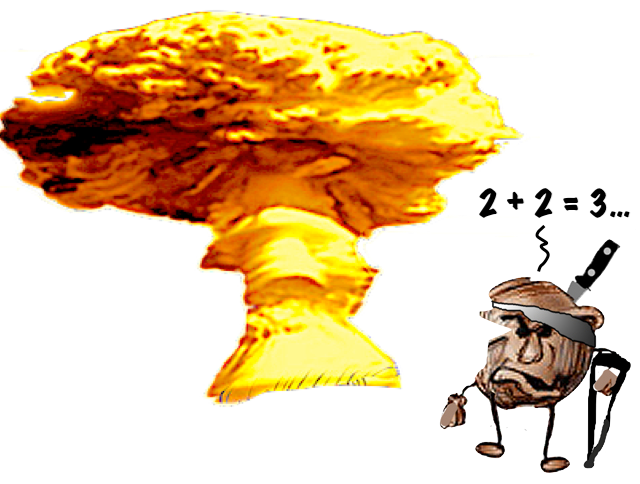
IN THE MOVIE OPPENHEIMER, IT SEEMS ONE MISTAKE STANDS LIKE A PYRAMID IN THE DESERT... BY WHATEVER DEED OR FORGETFULNESS, ONE OF THE MOST IMPORTANT CHARACTER IN THE DEVELOPMENT OF THE ATOMIC BOMB WAS LEFT UNMENTIONED...
Sir Marcus Laurence Elwin (Mark) Oliphant (1901–2000), physicist, machine-builder, and governor, was born on 8 October 1901 at Kent Town, Adelaide, eldest of five sons of South Australian-born parents Harold George Oliphant, public servant, and his wife Fanny Beatrice Edith, née Tucker.
Sir Marcus Laurence (Mark) Oliphant (1901–2000)
by R. W. Home and John Jenkin
As the family grew, it moved from one house to another. Mark particularly enjoyed living in the village of Mylor in the Adelaide Hills. He completed the South Australian senior public examination at Unley High School in 1917, before transferring to Adelaide High School where he passed the higher public examination at the end of 1918. Using a home basement, he made models and physical and chemical apparatus, and repaired household items. Astigmatic, short-sighted, and deaf in one ear, he quickly adapted to wearing glasses and to his limited hearing, and became known for his booming laugh.
The Oliphants were unable to support him to undertake tertiary studies, so he worked at the Public Library of South Australia and was able to enrol in 1919 in two first-year subjects at the University of Adelaide (BSc, 1923). In 1920 he secured a cadetship in the university’s physics department where, under (Sir) Kerr Grant, he maintained the laboratory apparatus and was encouraged to continue part-time study. His undergraduate record was poor: four failures, five unfinished mathematics subjects and, among the passes, only three at grade-I level, including two for laboratory work. His graduation with first-class honours in physics surprised his contemporaries. He recalled, ‘I never really shone at school, or even at university, in my normal academic work’ (Cockburn and Ellyard 1981, 18). Kerr Grant, though, who appointed him on graduation as demonstrator and technical assistant in the physics department, recalled that Oliphant had remarkable technical skills.
Nineteen twenty-five was a turning point for Oliphant. He gained his first experience of focused research, working at the university on the adsorption of gases on mercury surfaces, with R. S. (Roy) Burdon, an acknowledged authority in the field. On 23 May that year, at St Peter’s Anglican Church, Glenelg, Oliphant married his childhood sweetheart, South Australian-born Rosa Louise Wilbraham. When Sir Ernest (Baron) Rutherford, the New Zealand-born physicist and director of the Cavendish Laboratory at the University of Cambridge, England, visited Adelaide in September, Oliphant was inspired to want to work with him.
Tall, handsome, boisterous, and later with a shock of prematurely white hair, Oliphant was determined to succeed as a physicist, and his research with Burdon was productive. In 1927 he was awarded an 1851 Exhibition science research scholarship based on his honours result and his research with Burdon. He immediately cabled Rutherford and Trinity College, Cambridge, and was accepted to undertake postgraduate research in the Cavendish Laboratory (PhD, 1929). Within two years he completed a thesis entitled ‘The Cathode Region of the Glow and Arc Discharges of Electricity through Gases,’ a study based on earlier work by the master of Trinity College and Rutherford’s predecessor as director of the laboratory, J. J. Thomson. In the thesis and several published papers, Oliphant considered the interaction of different positive ions with various carefully prepared surfaces—testaments to his talent as an apparatus builder and experimentalist. He was awarded an 1851 Exhibition senior studentship (1929–32) to continue his research, and was later supported (1932–35) by a Messel fellowship of the Royal Society of London. In October 1930 Rosa gave birth to their first child, Geoffrey. Less than three years later the Oliphants’ world was shattered by Geoffrey’s death from meningitis. Later they would adopt two children, Michael and Vivian.
Oliphant joined Rutherford conducting experiments in the new science of nuclear physics. Following the lead of his Cavendish colleagues (Sir) John Cockcroft and Ernest Walton, who were later awarded a Nobel prize for their work, Oliphant designed two new particle accelerators to investigate nuclear reactions in the lightest nuclei. A gift of a small quantity of precious ‘heavy water’ from its American discoverer, G. N. Lewis, enabled Oliphant to use the heavy isotope of hydrogen (hydrogen-2) obtained from the water as both projectile (deuteron) and target (deuterium). He was responsible for most of the experimental work, from which he and Rutherford concluded that this process produced two new nuclear species: a still heavier isotope of hydrogen (hydrogen-3, tritium) and, about as often, a lighter isotope of helium (helium-3), together with a substantial amount of energy. Rutherford had foreseen this result in a remarkable Bakerian Lecture to the Royal Society of London over a decade earlier. Using apparatus that Oliphant had built to separate the two isotopes of lithium, they also showed that proton and deuteron bombardment of the lithium isotopes produced the two isotopes of helium.
Though Oliphant would go on to achieve much more in various roles, this was the high point of his career as a research physicist. The conclusions he and Rutherford announced were of the utmost importance for understanding the structure of nuclei and recognising nuclear fusion as a source of energy. While Oliphant always acknowledged that Rutherford provided the crucial insights that made sense of the data, those hard-won data arose from Oliphant’s brilliant experimental work. It catapulted him into the top rank of the world’s nuclear physicists.
In 1934 Oliphant was appointed a fellow and lecturer of St John’s College, Cambridge, and in 1935, an assistant director of research in the Cavendish Laboratory. He and Rosa had become especially close to Rutherford and Cockcroft and their wives, and he was corresponding with another nuclear physicist and future Nobel prize-winner, Ernest Lawrence, at the University of California, Berkeley, who was to become another long-term friend. In May 1937, at an earlier age than most who achieved the honour, Oliphant was elected a fellow of the Royal Society of London. In June 1936 he had been offered appointment to the Poynting chair of physics at the University of Birmingham. Despite Rutherford’s initial objections, he commenced there in the autumn of 1937. His final task at Cambridge was to help design and acquire a new, high-tension laboratory and an accelerator capable of achieving two million volts. At Birmingham, his machine-building would intensify, but his physics research decline. Nuclear physics remained his focus, and he aimed to build a sixty-inch cyclotron modelled on Lawrence’s at Berkeley. Construction proceeded with the assistance of a £60,000 donation from Lord Nuffield, and Lawrence’s generous advice and detailed plans. The appointment of the German émigré and theoretical physicist (Sir) Rudolf Peierls as professor of applied mathematics was a bonus. But when World War II broke out in 1939, the work came to an abrupt end and government research took over.
Oliphant was engaged on two vital wartime projects: radar and the atom bomb. The first radar installations, which used long wavelengths (10 metres or more) to detect enemy aeroplanes, lacked precision and the equipment was too cumbersome to carry in an aircraft; an operating wavelength of 10 centimetres became the target. He laboured to improve the klystron—the thermionic valve which was thought to be the key—but more development was needed. With Oliphant’s enthusiastic support, his Birmingham colleague John Randall and a research student, Henry Boot, developed the cavity magnetron, a valve that produced an extraordinary 10 kilowatts of microwave power at 10 centimetres wavelength. This led to the birth of airborne radar and the development of the much-improved radar systems that played a crucial role in the Allied victory.
Nuclear fission was discovered in late 1938: a uranium atom could be split by a bombarding neutron, with the release of substantial energy and of neutrons that might split other atoms in a chain reaction. Another Birmingham collaboration became pivotal. A second recent émigré, Otto Frisch, joined Peierls to show that an explosive chain reaction was possible in just a few kilograms of the rare U-235 isotope, if it could be separated from the more abundant U-238. Oliphant informed Henry Tizard, chairman of a committee considering the application of science to war, who then set up an expert group (later the codenamed MAUD committee) on which Oliphant sat briefly.
Visiting the United States of America in August 1941 to inform the Americans of the cavity magnetron, Oliphant was shocked to discover that the MAUD committee’s reports on the possibility of a nuclear weapon, which the committee had shared with scientists in the United States, were locked away in Washington unread. Visiting Berkeley, he persuaded Lawrence to alert American scientific leaders to the potential of nuclear weaponry. Their subsequent agitation led to the Manhattan Project. He also discussed with Lawrence cyclotron development and the possibility of separating the uranium isotopes by electromagnetic means.
When Singapore fell to the Japanese in February 1942, Oliphant offered his expertise on radar technology to the Australian government and sailed for home, where in May he reunited with his family who had returned earlier. However, Australia already had its own radar project managed by the Council of Scientific and Industrial Research, and his offer was coolly received. He and his family returned to Britain in October, though the CSIR agreed he would continue to advise the Australians on radar matters remotely. Soon afterwards, he and several other leading British physicists joined the Manhattan Project in the United States. At Berkeley he collaborated with Lawrence in an isotope-separation program using what became known as calutrons—in effect, vastly enlarged mass spectrometers. Scaling up from the laboratory instrument, however, was a major challenge. While most of the research occurred in Berkeley, the plant was built at Oak Ridge, Tennessee, where abundant electric power was available. Oliphant, effectively deputy leader of the project, shuttled between the two sites. By early 1945 the technical problems had largely been solved and the huge bank of calutrons was generating enough pure U-235 to make a bomb.
In 1943 Oliphant was awarded the Royal Society’s Hughes medal for his work in nuclear physics. In 1944 he and several British scientists in the United States planned a British nuclear research facility, which would later be established as the Atomic Energy Research Establishment at Harwell, Oxfordshire. After the war, the director of the Manhattan Project, General Leslie Groves, proposed Oliphant for an American Medal of Freedom with Gold Palm in recognition of his contribution to the project, but the honour was never presented, having been vetoed by the Australian government which forbade non-British awards to its citizens.
Early in 1945 Oliphant, impatient and believing his usefulness to the atom bomb project had subsided, had returned to England. The Birmingham cyclotron needed to be completed and he was considering a new and much bigger accelerator embodying the so-called synchrotron principle that he had conceived independently, and possibly ahead of Russian and American claimants to the invention. His idea was that the particles, instead of spiralling outwards as in a cyclotron, should be retained in a ring of fixed radius by an annular magnetic field that remained in synchrony with them as they were accelerated by an alternating electric field. After extensive negotiations, the British government approved the project, with funding of £120,000 as part of a massive postwar investment in nuclear physics. The objective was to accelerate protons to an energy of one giga-electron volt (1 GeV)—two orders of magnitude greater than that achieved by the largest existing accelerators. Problems soon beset this ambitious project: design changes became necessary, engineering materials and skills were scarce in postwar Britain, and the funding proved inadequate. The problems were exacerbated by the death of the young Australian physicist John Gooden, the leader of the design and construction team. Simultaneously, the opportunity to return to Australia meant that Oliphant did not stay to see his dream come to fruition. Eventually, however, successful operation at 1 GeV was achieved in July 1953. Some useful research followed until the synchrotron was shut down in 1967, by which time larger American and European machines dominated the field.
In 1948 Oliphant had been announced as foundation director of the Research School of Physical Sciences (RSPhysS) at the new Australian National University (ANU) in Canberra. To establish the university, the Chifley government sought expatriate Australians to lead the four proposed research schools: the medical researcher Sir Howard (Baron) Florey, the historian (Sir) Keith Hancock, the anthropologist (Sir) Raymond Firth, and Oliphant. Negotiations were long, and finally only Oliphant took up a founding position in Canberra, in 1950. He had plans for another new machine and a promise of funds to build it, a belief that nuclear power could assist Australian development, and a desire to contribute to his homeland. Florey warned him that it would be, as Oliphant recalled, ‘scientific harakiri’ (Oliphant 1994, 26).
Oliphant was faced with creating a new laboratory from scratch in Canberra, a town with no high-technology industry, and a shortage even of skilled tradesmen. As in Birmingham, he planned to leapfrog existing machines and build a more powerful yet cheaper particle accelerator, initially of 2 GeV proton energy. In the RSPhysS he created departments of astronomy, mathematics, geophysics, theoretical physics, atomic and molecular physics, nuclear physics, and particle physics, all with notable leaders, making the school a major centre for research and postgraduate training. He also became a leading public figure, speaking out frequently on topics of current interest, ranging from nuclear non-proliferation to local municipal ordinances.
Oliphant’s design for his new cyclosynchrotron involved three machines in one. Protons emerging from an initial cyclotron would be further accelerated by a radio-frequency field in a synchrotron. They would be contained by a magnetic field produced in iron-free coils fed with a rising current pulse from the third component, an integrated homopolar generator (HPG). To build his machine, Oliphant recruited several members of the group that had worked with him in Birmingham, a number of whom were Australian. His experimental ambitions were unclear, except the possible discovery of the anti-proton—a particle whose existence had been predicted in the early 1930s, of the same mass as a proton but with a negative charge. It was found in 1955 using the Berkeley Bevatron while the ANU machine was still under construction. Early progress was satisfactory, but by 1953 it was clear that machines being built in the United States and the Soviet Union would outperform the Canberra accelerator.
In response Oliphant raised the target energy to 10 GeV and redesigned the machine, placing the cyclotron in a separate building and enlarging the HPG to provide a current pulse of more than one million amperes in less than a second to power the synchrotron magnet. The solution was ingenious and Federal government funding was generous by Australian standards. However, matching the radio-frequency accelerating field with the rising magnetic field remained a problem, and the new scheme also came at the expense of the pulse rate, every ten minutes instead of every ten seconds. Only Oliphant’s drive and optimism kept the project going. Critics claimed that research funds were being spent unproductively while other universities were being starved, and unkindly dubbed the Canberra machine the ‘White Oliphant.’
Members of Oliphant’s team, although fiercely loyal and committed, wondered if the synchrotron project should be abandoned and efforts confined to developing the cyclotron. Oliphant dug in, urging them—to use a phrase for which he was renowned—to have more ‘fire in the belly’ (Ophel and Jenkin 1996); but he then decided that the accelerator should be deferred and every effort made to complete the HPG. There were, he said, new possibilities for its use in thermonuclear (plasma physics) research. He was also active in the wider university, strongly, but ultimately unsuccessfully, opposing the amalgamation in 1960 of the undergraduate-teaching Canberra University College with the research-based ANU. The HPG was eventually completed in 1965 and subsequently used as a power source for research on plasmas with the Australian LT-4 Tokamak, producing the intense magnetic fields needed to confine a plasma into a doughnut-shaped torus. Oliphant stepped down from the directorship of the RSPhysS in 1963, as head of his department in 1964, and he retired altogether in 1968. The HPG was decommissioned in 1985.
In 1959 Oliphant had been knighted (KBE). Since the end of World War II he had spoken publicly about the danger of nuclear war and the potential benefits of nuclear energy for peaceful purposes, arguing that the cost of electric power could become negligible. He was over-optimistic in suggesting that small thermonuclear bombs could be used to excavate dams, tunnels, and canals, and that nuclear fusion rather than fission would satisfy the world’s energy needs. There were vocal critics, not least the former British prime minister Clement Atlee and Pope Pius XII, who both warned the world to beware of science, a suggestion Oliphant vigorously challenged in a 1955 lecture in New Zealand. Later, he denied that science was overly detached and impersonal and noted the problems facing mankind—the potential destruction of humanity, chemical and biological warfare, overpopulation, shortages of food and resources, the Cold War—yet also the wonders of penicillin. Along with such hopes for the future, however, he evinced a fondness for the past: ‘Those of us who worked in this fruitful field … harbour nostalgic feelings for the days when it was of purely academic interest’ (Oliphant 1950, 460). He urged scientists to assume greater involvement in government, together with the necessity for complete openness in science.
Oliphant’s distaste for secrecy cost him dearly. For some, including individuals within the Australian government during the war, he spoke too freely, shared information too widely, and had suspicious contacts in the Soviet Union. During a time of McCarthy-style hysteria, in Australia as in the United States, the security services closely monitored his lectures, articles, and telephone conversations. Soon after his arrival in Canberra, the United States government deliberately delayed Oliphant’s visa application to attend a conference there—the beginning of a smear campaign against him. Though he had chaired an earlier advisory committee formed by the Chifley government, he was not appointed to either the Atomic Energy Policy Committee established in 1952, or the Australian Atomic Energy Commission that replaced it a year later. He was again denied a United States visa in 1953. In the same year he passionately defended Robert Oppenheimer after the American’s United States security clearance was suspended.
Attempts to form a national body in Australia to recognise scientific excellence, promote research, and represent Australian science nationally and internationally began around 1900, but all failed because of regional loyalties and institutional jealousies. In the early 1950s, Oliphant and his fellow physicist David Martyn proposed forming an Australian academy of science, with fellows of the Royal Society of London resident in Australia as a nucleus. Prime Minister Menzies strongly supported the proposal and the Australian Academy of Science (AAS) was constituted by royal charter in 1954. Oliphant was elected its first president, but had to use all his persuasive powers to sustain it in the early years; he oversaw the construction of the academy’s ‘Dome’ headquarters in Canberra. He later said, ‘if I’m proud of anything, it’s the founding of the Academy of Science’ (Oliphant 1994, 32). In 1964 he was a member of the academy’s first, four-person official visit to the People’s Republic of China, as guests of Academia Sinica. The eminent British mathematician and philosopher Bertrand (Earl) Russell invited him to the first meeting of the Pugwash Movement in 1957, and he attended their meetings until the last in 1977.
On 1 December 1971 Oliphant became the twenty-seventh governor of South Australia. Though it would break a long tradition, he had warned the premier, Donald Dunstan, that, if appointed, he would speak freely on public issues. Oliphant served as governor for five years and the public and the media loved him. Well-informed and not reticent in expressing his opinions, he travelled the State and wrote his own speeches on topics including the nature of God, the perils of radioactive fallout, civilisation and science, disarmament, and protection of the environment. He also railed against libertarian society, child abuse, drink-drivers, magistrates’ whims, ugly architecture, and vandalism.
In time, Oliphant’s relationship with the premier declined. He felt irrelevant to the political process and sought to resign, but Dunstan refused to accept it. When Oliphant supported the decision of the governor-general, Sir John Kerr, to dismiss the Whitlam government in November 1975, the South Australian parliament legislated to make it all but impossible for a governor to dismiss the government there. When he learned that Dunstan proposed to appoint the Aboriginal pastor Sir Douglas Nicholls as his successor, he wrote privately to the premier, arguing against the appointment on racist grounds that reflected widespread misconceptions about Aboriginal people. Nevertheless, when the appointment was confirmed, he welcomed Nicholls and his wife to Government House. Oliphant returned to Canberra in November 1976, but two years later he became embroiled in the ‘Salisbury Affair,’ supporting South Australia’s police commissioner, Harold Salisbury, whom Dunstan had dismissed on the grounds that Salisbury had misled the parliament about the content of confidential files. Oliphant was appointed AC in 1977.
In his final years, Oliphant cared devotedly for his ill wife who, along with their second son, Michael, predeceased him. Oliphant died at the John James Memorial Hospital, Canberra, on 14 July 2000, and his ashes were scattered in the Adelaide Hills. Several buildings in Adelaide and Canberra were named for him, as well as the Mark Oliphant Conservation Park in South Australia. There are portraits by Kerrie Elliott at the University of Adelaide, by Noel Counihan in the collection of the ANU, and several in the National Portrait Gallery, Canberra.
At home and abroad, Oliphant’s life, his personality, and his science were varied and occasionally contradictory, sometimes controversial, and always fascinating. He was open, affable, uninhibited, and laughed a lot, but he was also strong-willed and egotistical. In public he could be flamboyant and indiscreet, which made him suspect in the McCarthy era. His machine-building in particular contributed to ground-breaking research in nuclear physics in the 1930s. His guidance in the development of the cavity magnetron greatly assisted the Allied cause in World War II, and he contributed significantly to the Manhattan Project. After the war, he pioneered the building of a new generation of particle accelerators that exploited the synchrotron principle he had conceived. Later, as a public figure, he was a recognised environmentalist and humanitarian, with a commitment to peace and freedom of thought. He was a notable communicator and facilitator for science, though his enthusiasm could sometimes be grandiose and romantic.
In Australia, his role in the founding and early development of the ANU was crucial, and his directorship of the RSPhysS and the growth of its numerous departments contributed much to the development and blossoming of science in Australia. To his staff he was generous and compassionate, but he could also be demanding. His role as the founding father of the AAS was essential to its establishment, survival, and growth as a significant national institution.
Oliphant’s record as a scientist was mixed. After a shining beginning with Rutherford, his daring led him to undertake the building of two major particle accelerators in Birmingham. Conditions for their construction were inauspicious, however, and his optimism outran reality. Yet both machines were eventually finished and produced some useful research. At the ANU, he was unwilling to learn from the difficulties in Birmingham. The Canberra machine, in its several incarnations, was ill-conceived, being too expensive, too technically demanding, too long in its construction, and producing little of long-term value. Much later, he reflected that ‘we were too little too late … It was more than Australia could really do … Yes, it was a mistake’ (Oliphant 1994, 27–28). In July 2013 the main theatre at the Australian synchrotron was named the Oliphant Auditorium, recognising him as a pioneer accelerator physicist, inventor of the synchrotron, and founding president of the Australian Academy of Science.
Research edited by Peter Woodley https://adb.anu.edu.au/biography/oliphant-sir-marcus-laurence-mark-782 SEE ALSO: https://www.youtube.com/watch?v=UC6sbeCRQMQPLEASE VISIT:
YOURDEMOCRACY.NET RECORDS HISTORY AS IT SHOULD BE — NOT AS THE WESTERN MEDIA WRONGLY REPORTS IT — SINCE 2005.
Gus Leonisky
POLITICAL CARTOONIST SINCE 1951.
RABID ATHEIST.
WELCOME TO THIS INSANE WORLD….
- By Gus Leonisky at 6 Jul 2026 - 1:11pm
- Gus Leonisky's blog
- Login or register to post comments
nukes....
250 Years of the US & Nuclear Weapons
What would it take for humanity, let alone the US, to survive another quarter of a millennium? ask Peter Kuznick and Ivana Nikolic Hughes.
By Peter Kuznick and Ivana Nikolic Hughes
Al Jazeera Arabic
On Saturday night the skies across the United States were lit up with fireworks to celebrate an extraordinary milestone for the country, a 250th birthday of the longest-running experiment in republican governance in the modern era.
The broader history of the U.S., however, is replete with contradictions — from the founding in the name of freedom, individual rights, and equality (at least for propertied white men) in stark contrast to its genocidal treatment of Indigenous peoples before and ever since, to the promised pursuit of “life, liberty, and the pursuit of happiness” in sharp contrast to the economic development achieved on the backs of slaves forcibly brought from Africa, exploitation of workers of all races, and denial of basic rights to women until the 20th century.
Still, the Declaration of Independence was a visionary and enlightened document that illuminated a path forward, even if in more aspirational rather than tangible ways. Certainly, the country has long prided itself as a beacon of freedom, democracy, and opportunity.
Sadly, the U.S. has not lived up to its promises — having known only 16 years of peace in its first 242 years according to Jimmy Carter in 2019, having become the most powerful empire in history, and having spent nearly one third of its lifetime with the nuclear sword of Damocles hovering precariously above its own and all of Earth’s inhabitants’ heads.
And now, with the sad machinations of the second Trump regime, the nation is experiencing a degree of war, corruption, lawlessness, cruelty, discrimination, and Constitution-defying behavior that would have left the Founders aghast at how off course their country has drifted.
Given the breadth of the problems the U.S. has faced and continues to confront, we narrow our focus on this historic occasion to the world-threatening existence of nuclear weapons — something the Founders, despite their brilliance, could have neither foreseen nor imagined.
Initially pursued in response to the possibility of a Nazi bomb, the unnecessary and unjustifiable use of atomic bombs in Hiroshima and Nagasaki, the consequences of U.S. testing of more than a thousand atomic and thermonuclear bombs in the Marshall Islands, Kiribati, the Johnston Atoll, Nevada, New Mexico, Colorado, Mississippi, Alaska, and elsewhere, and the creation of a nuclear arsenal capable of ending most large life on our planet has been perhaps the nation’s most condemnable scourge against humanity.
At once a triumph of scientific ingenuity and a tool for not just immeasurable death and suffering, but the destruction of the planet itself, nuclear weapons have long fascinated the curious and worried the thoughtful, all while many with responsibility for them act as if this God-like power to bring death and annihilation is just a normal part of human affairs.
This is certainly the case in the United States, given its unique role and responsibility for the nuclear age and for many of its most serious crimes.
Dissident Physicists
The U.S. establishment quickly bought into the promise and importance of the new weapon, making the fateful decisions to embark on the Manhattan Project in 1941, to drop the bombs on Japan in 1945, and to move the Bikinians off their islands to make room for nuclear testing in 1946. That establishment included scientists, many of whom enthusiastically ushered in the nuclear age and continued to be its faithful promoters, including once the ability to power homes with the energy of the atom came along.
But not everyone was on board even in those early days. Physicist Lise Meitner, who famously provided an explanation of the laboratory observations of nuclear fission, but was snubbed for the Nobel Prize given for this discovery, stated, “I will have nothing to do with the bomb.” Columbia University’s Nobel Laureate, I.I. Rabi, similarly refused to join the Manhattan Project, stating “I don’t wish the culmination of three centuries of physics to be a weapon of mass destruction.”
And Joseph Rotblat, who unlike the other two did join the Manhattan Project, left Los Alamos in 1944 when it became clear that the Germans had abandoned their effort to build the bomb. He recalled that General Leslie Groves told him in March of 1944 that the “real purpose in making the bomb was to subdue the Soviets.”
Rotblat spent the rest of his life advocating for the abolition of nuclear weapons, drafting the Einstein-Russell Manifesto warning of nuclear disaster in 1955, founding the Pugwash Conferences on Science and World Affairs in 1957, and winning the Nobel Peace Prize for this work in 1995.
It wasn’t just the scientists who immediately saw that the nuclear age presented an existential challenge for humanity. Henry Wallace, Franklin Roosevelt’s vice p resident from 1941-1945, spoke at Madison Square Garden in 1947 about the need for peace, stating, “I hear no armies marching. I hear a world crying out for peace.”
On nuclear weapons, Wallace argued that, “The success or failure of our foreign policy will mean the difference between life and death for our children and our grandchildren. […] It may mean the difference between the existence and the extinction of man and of the world.”
Today, such fierce critiques are largely missing from the public discourse, with the general public having a visceral feeling that nuclear weapons are bad but very little actual understanding of just how bad they really are.
Most ordinary people have been convinced that nuclear weapons keep us safe, at best, or are a necessary evil, at worst, failing to recognize the unfathomable risk nuclear arsenals put us under. Such a risk puts not just the survival of the United States, but of life itself, in question, with the end of civilization an assured outcome of nuclear war. Shouldn’t we do something about this?
On June 10, then U.S. Director of National Intelligence Tulsi Gabbard, released a video warning that we are “closer to nuclear annihilation than ever before.” In January, before the U.S. and Israel went to war against Iran, the Bulletin of the Atomic Scientists placed the hands of its Doomsday Clock at 85 seconds before midnight—closer to Armageddon than it has ever been.
The Bulletin repeatedly warns about nuclear planners who believe that a nuclear war can be fought and won. And Donald Trump and other members of his regime repeatedly suggest that they may finally break the nuclear taboo.
What would it take for humanity, let alone the U.S., to survive another quarter of a millennium? One of many answers, but arguably the first and foremost answer, is the abolition and elimination of nuclear weapons. If the U.S. general public can demand this, and elected officials can deliver it, there might just be a way to someday celebrate the 500th Independence Day.
Ivana Nikolic Hughes is president of the Nuclear Age Peace Foundation and a senior lecturer in chemistry at Columbia University. She is a member of the Scientific Advisory Group to the United Nations Treaty on the Prohibition of Nuclear Weapons.
Peter Kuznick is professor of history and director of the Nuclear Studies Institute at American University in Washington, D.C. He is also the author of numerous books and co-author (with Oliver Stone) of The Untold History of the United States.
https://consortiumnews.com/2026/07/05/250-years-of-the-us-nuclear-weapons/
READ FROM TOP.
PLEASE VISIT:
YOURDEMOCRACY.NET RECORDS HISTORY AS IT SHOULD BE — NOT AS THE WESTERN MEDIA WRONGLY REPORTS IT — SINCE 2005.
Gus Leonisky
POLITICAL CARTOONIST SINCE 1951.
RABID ATHEIST.
WELCOME TO THIS INSANE WORLD….