Search
Recent comments
- and god said....
11 hours 52 min ago - walking east....
12 hours 29 min ago - part 1 and 2.....
12 hours 39 min ago - bastard pig....
12 hours 49 min ago - accidental....
1 day 3 min ago - momentum...
1 day 8 hours ago - the greatest....
1 day 8 hours ago - cold place, warm people.....
1 day 11 hours ago - profitering....
1 day 11 hours ago - tobogganning....
1 day 11 hours ago
Democracy Links
Member's Off-site Blogs
managing the incoming circumstances.....
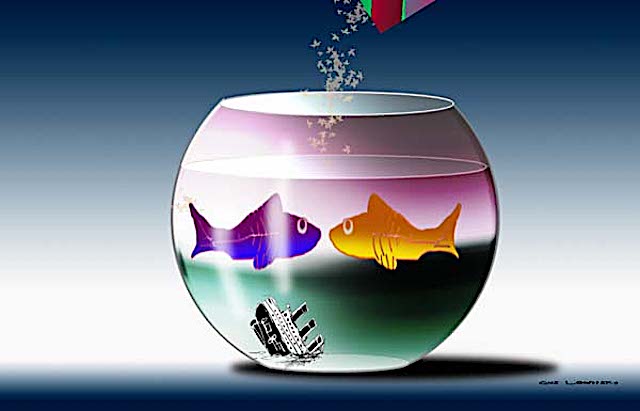
A new book examines how to deal with the complex problems caused by natural and humanitarian disasters, technological failures and geopolitical tensions.
Rarely a day passes without headlines describing national, regional or global crises. The world is disrupted by war, climatic extremes, geopolitical tensions, the risks of untamed technology, disease outbreaks, populist policy upheavals, tariffs, trade chokepoints and more.
Confronting disruption and seeing it coming
Attention and political debates shift from one to another, up and down the lists of what are variously termed polycrises and global catastrophic risks. Leaders and media pay attention to crises one at a time, from time to time.
Right now, societies and governments across the world are re-learning that conflicts and disruptions arise from ignored or badly managed preconditions, erupt with variable speed, change shape, bleed across boundaries, merge and coalesce with other risks, and produce long-term and often unexpected impacts. We should not be surprised.
In a new book, Re-imagining Risk and Disruption, colleagues and I explore the commonalities displayed by the risks and disruptions listed above and others. The aim is better understanding of their shared problem attributes that can inform more consistent and efficacious responses. Our starting point is to gather significant risks and disruptions, whether natural, human or mixed in origin and impact, into the single, broad category of ‘complex unbounded problems’ (CUPs). This is closer to the interactive ‘polycrisis’ construct than other categorisations.
Drawing on terminology from the disaster field, CUPs contrast with lesser but not insignificant ‘routine’ and ‘non-routine’ problems as:
- large to extreme in scale
- ill-defined and dynamic in space and time
- creating deep uncertainties not amenable to quantification
- having impacts that are likely severe or even catastrophic
- high profile with intense and long-lasting societal interest
- having multiple and interacting causes
- seemingly being beyond existing knowledge, institutional and logistical capacities.
We posit that humanity now faces more and bigger CUPs, which are faster in their development, with wider and more insidious impacts that have fewer trustworthy policy levers at hand. We explore four past, ongoing and unfolding situations: global environmental degradation (especially global heating); nuclear accidents (especially the Fukushima disaster); pandemics and other biological threats; and the threat of over-utilisation of near-Earth space.
The list of risks to explore was depressingly long, but our sample mixes scale, as well as human and natural causes and impacts. They exist at various points along the ‘boom continuum’, a schema of largely military origin that looks far left of ‘boom’ (the event) for signs of problem development and far right for long-tail impacts and lurking re-emergence. This prompts attention to when problems emerge and the common ignoring of warning signs. We identify shared problem attributes across these risks and disruption that, once recognised and taken together, can sharpen appreciation and preparedness.
First, CUPs can interact and display coalescence, combining to create enlarged and more complex challenges. War worsens environmental decline; ungoverned resource extraction worsens human development; AI nourishes disinformation and populist ructions; and the proliferation of orbital debris or weaponisation of space portends a ‘dark sky’ and the disabling of numerous, essential satellite-dependent services.
Second, CUPs reflect exceedance of the boundaries and safeguards that we imagine or assume keep our societal and environmental systems functioning in beneficial ways, be those technologies, policies, engineering works or warning systems. Third, CUPs exploit the porosity and interdependence of many domains – economic, ecological, informational – enabling spread and cross-domain damage.
Fourth is the recurring unsoundness in human understanding and foresight, and in policies and practice that underlie numerous dire situations. Repeatedly, left and far left of boom signs and clues are overlooked – at times knowingly – allowing the pretence or mistake of surprise. Along with considerable successes, responses to COVID saw the lessons from previous pandemics ignored. Vulnerabilities in the boundedness of nuclear facilities were known before the shock of Fukushima. Over three decades of warnings and proven, available counter measures to arrest global heating, we have had, at best, half-hearted responses. The dangers inherent in the current exponential crowding of the space commons have been forecast, with only marginal remedies emerging.
When problems coalesce, breach porous protective boundaries and are viewed through unsound lenses, they evolve to become more than the sum of the parts, displaying the abilities of a complex adaptative system. The problem itself changes and gains new capacities, with variable and increasing tempo of problem onset, whether in ‘slow burn’ CUPs like climate change, or the seemingly sudden manifestations of military adventurism or a nuclear accident.
What can be done against a rising tide of disruption? We must positively seek the best possible outcome amidst worsening circumstances. We must collectively recognise threatening phenomena and share knowledge about their nature, as common understanding promotes clearer problem-matching, which is a prerequisite for designing the solutions human society so needs.
Identifying and celebrating the vital role of collective endeavours that carry on beneath the shrieking criticism of globalism is critical. These include the less well-known international organisations and processes that serve us well; scientific collaborations that make us wiser; the coordinated work of humanitarian and environmental NGOs.
The taming of AI is paramount, the purpose of which must be to support people and planet, not carelessly risk both. Opposing the misleading simplifications of populist authoritarians on critical issues like climate change and demonstrating the benefits of shared human endeavour, even of peace itself, is essential to humanity’s very survival.
We need a clear lens for defining, examining, contesting and managing a world of ever larger, more complex, and disruptive challenges. Those we have surveyed in our book and others lurking in the wings could prove to be beyond our coping capacities as a species and society. We should fear, but not accept, the inevitability of that.
https://johnmenadue.com/post/2026/06/confronting-disruption-and-seeing-it-coming/
GUSNOTE: THE CHALLENGES THAT HUMANS FACE ARE THE INCREASING COMPLEXITY OF OUR OWN PERSONAL AND COLLECTIVE DECEIT... OUR INDIVIDUAL WILLINGNESS TO BE DECEIVED BY UMBRELLA-BELIEFS IS WHAT DEFINES OUR WAY TO SURVIVE IN THE STYLE GAMUT CHOSEN BY RULING ELITES. WE ARE COCOON BY STYLISTIC DECISIONS MADE BY THE SYSTEM OF GOVERNANCE AND WE HAVE VERY LITTLE LEEWAY TO ESCAPE A CERTAIN CONFORMITY WITH BRACKETED VARIETY — IN WHICH WE END UP LYING TO OURSELF.
PRESENTLY, THE RISE OF SYSTEMIC FASCISM ON AN INDUSTRIAL SCALE IS TWISTING OUR UNDERSTANDING OF WHOM WE ARE — OR COULD BE. WE HAVE ACCEPTED THE MODERN COMMUNICATION TOOLS — FROM RADIO TO SMARTPHONES, VIA AN ERA OF TELEVISED ENTERTAINMENT — IN WHICH ADVERTISING FOR PRODUCTS AND POLITICAL IDEALS ARE RAINING ON US, CONFUSING US WITH CONFLICTING VALUES THAT ARE DISTORTIONS OF REALITY [WHATEVER THAT IS].
BUT THIS IS NOT NEW. SINCE THE DAWN OF CIVILISED SOCIETIES, TRICKS OF BELIEFS HAVE BEEN USED TO MAINTAIN COHESION WITHIN... GODS, WORK, STORIES, LEGENDS, WAR AGAINST "CHOSE ENEMIES", ROBBERY OF RESOURCES, DELUSIONS, LIES HAVE BEEN MANAGED FOR THE SYSTEMS TO SURVIVE.
WE, INDIVIDUALS, COME AND GO. OUR LEGACY IS RELATIVELY MEASURED BY HOW MUCH WE HAVE BECOME A HERO IN CONTRIBUTING TO THE SYSTEMS, NOT IN SURVIVING BY NOT PARTICIPATING — OFTEN ENDING UP IN THE PRISONS OF THE SYSTEMS SHOULD WE OPPOSE OR EXPOSE THE LIES OF THE SYSTEMS.
MEANWHILE THE PLANET HAS NO FEELINGS ABOUT WHAT WE DO. THE PLANET ITSELF — SAY THE SURFACE THEREOF INCLUDING ITS FRAGILE ATMOSPHERE AND THIN CRUST — IS A NATURAL SYSTEM OF CHEMICAL REACTIVE EVOLUTION IN WHICH WE INTERACT, NATURALLY AND INDUSTRIALLY.
IT IS ONLY IN THE VERY LAST FEW YEARS OF HUMAN EVOLUTION THAT WE HAVE UNDERSTOOD [TO A POINT] THE FRAGILITY OF THE EARTHLY DYNAMICS. MANY SCIENTISTS HAVE WARNED US ABOUT WHAT WE HAVE BEEN DOING WRONG, BUT OUR POLITICAL SYSTEMS IN HUMAN VENTURES HAVE MORE OR LESS IGNORED THESE WARNINGS — WHILE USING SCIENCES TO ADVANCE INDUSTRIALISATION FURTHER.
AS INDIVIDUAL, WE CAN SURVIVE TO THE END TERMS OF OUR NATURAL [AND MEDICALLY MANAGED] LIFE, DESPITE WHAT THE CIVILISATION SYSTEMS DO WRONG OR RIGHT. WE OWE IT TO OURSELVES [IF WE CHOOSE TO OR ARE CAPABLE OF] NOT TO ABANDON CARE FOR OURSELVES AND OTHERS, IN A CHOSEN SOCIAL ENVIRONMENT IN WHICH DIVERSITY CAN BE MANAGED IN PEACE. IN THIS CONTEXT, SUPPORTING A POLITICAL OUTFIT LIKE "ONE NATION" IS THE PIT OF STUPIDITY — LIKE CUTTING OUR FOOT OFF, BECAUSE WE HAVE A TAD OF SHIT ON OUR SHOE....
BEWARE — MORE SPRUIKERS FOR FASCIST FOLLY ARE COMING.
PLEASE VISIT:
YOURDEMOCRACY.NET RECORDS HISTORY AS IT SHOULD BE — NOT AS THE WESTERN MEDIA WRONGLY REPORTS IT — SINCE 2005.
Gus Leonisky
POLITICAL CARTOONIST SINCE 1951.
RABID ATHEIST.
WELCOME TO THIS INSANE WORLD….
- By Gus Leonisky at 28 Jun 2026 - 5:44am
- Gus Leonisky's blog
- Login or register to post comments
intentional....
Australian media ignores UN report on deliberate killing of children
by Stephanie Tran
The devastating UN report into the deliberate targeting and murder of Palestinian children by Israel is not very newsworthy apparently. What’s the scam?
On Tuesday, the UN Commission of Inquiry on the Occupied Palestinian Territory and Israel released a harrowing report finding that Israel has deliberately targeted and killed Palestinian children.
The 94-page report documented children being shot by snipers, targeted by drones, denied medical treatment, subjected to starvation and detained in conditions involving torture, sexual violence and severe abuse. The Commission concluded that the deliberate targeting of children was one of the key elements establishing genocidal intent.
These are extraordinary findings backed up by an in-depth investigation by a UN body, and one would think it would be of substantial public interest worthy of front-page headlines, but Australia’s mainstream media doesn’t seem to think so.
The ABC made somewhat of an effort by bringing on Global Affairs editor Laura Tingle to discuss the Commission’s findings on its news program. However, half of their article covering the report was dedicated to parroting Israel’s defence of the indefensible and was buried at the bottom of their website.
Guardian Australia was the only other mainstream Australian outlet to cover the UN report until today. Again, it was buried, and the article has since been relegated to the bottom of its home page.
The Nine newspapers caught up today, two days late, with the SMH framing it: ‘commissioned experts’ (not simply the UN) had ‘accused’ Israel … and repeated the ‘claim’ of genocide. A significant portion of the article was dedicated to Israel’s denial of the report’s findings.
As for the rest of the media, Karl Stefanovic’s podcast interview with a right-wing racist grifter is apparently much more newsworthy.
UN report finds Israel deliberately targets Palestinian children
https://michaelwest.com.au/australian-media-ignores-un-report-on-deliberate-killing-of-children/
READ FROM TOP.
PLEASE VISIT:
YOURDEMOCRACY.NET RECORDS HISTORY AS IT SHOULD BE — NOT AS THE WESTERN MEDIA WRONGLY REPORTS IT — SINCE 2005.
Gus Leonisky
POLITICAL CARTOONIST SINCE 1951.
RABID ATHEIST.
WELCOME TO THIS INSANE WORLD….