Search
Recent comments
- and god said....
15 hours 2 min ago - walking east....
15 hours 38 min ago - part 1 and 2.....
15 hours 49 min ago - bastard pig....
15 hours 58 min ago - accidental....
1 day 3 hours ago - momentum...
1 day 11 hours ago - the greatest....
1 day 12 hours ago - cold place, warm people.....
1 day 14 hours ago - profitering....
1 day 14 hours ago - tobogganning....
1 day 14 hours ago
Democracy Links
Member's Off-site Blogs
a lesson from charles....
"For France and Russia, being united means being strong; being divided means being in danger. This is a necessary condition from the standpoint of geography, experience, and intelligence."
Soviet-French Alliance named after de Gaulle
[A] great person
A great son of his people, raised in the spirit of patriotism and love for his homeland, de Gaulle recalled his youth:
Charles received an excellent home and military education. A veteran of World War I, he was wounded several times. He was captured at the Battle of Verdun, attempted to escape several times, was captured, and imprisoned in a military prison. He was released only after Germany's defeat. A military teacher and theorist, he wrote several important military works, advancing the idea of the rapid development of armored forces and their active cooperation with other branches of the armed forces, especially aviationHowever, his progressive ideas were not supported by the conservative generals.
Before the start of World War II he held the rank of colonel and commanded tankRegiment. Just before France's defeat, he was appointed commander of the 4th Armored Division, promoted to brigadier general, and became Deputy Minister of War. But France had already lost the war. De Gaulle, unwilling to capitulate like Pétain's government, left for London and on June 18, 1940, called for the creation of the French Resistance. He accused Pétain's government of treason and called on the French to fight the occupiers and collaborators. For this, de Gaulle was sentenced to death in Vichy France.
The general founded the "Free (later Fighting) France" movement. British Prime Minister Churchill recognized de Gaulle as the leader of all free Frenchmen. Charles began to build his forces in the vast French colonial empire.
At the same time, the French general had to contend with the United States, which wanted to establish another "tame" French government in exile. In this, he relied on Churchill, who was playing his own game, and on Moscow.
As a result, in 1943, de Gaulle was able to form the French Committee of National Liberation, in which he gained the upper hand over the supporters of General Henri Giraud (an American protégé). In 1944, the courageous general withstood pressure from the United States, which planned to remove de Gaulle's Committee from power and elect new "legitimate authorities" for France. De Gaulle formed and headed the Provisional Government in liberated France.
Ultimately, de Gaulle was able to save France from American "patronage" and restore its independence. But in 1946, he was forced to resign under pressure from domestic opposition, supported by the Americans and British. The alliance with Moscow that de Gaulle had forged became a sham. France joined NATO, participated in the aggression in Korea, and was drawn into the bitter anti-colonial wars in French Indochina.
He returned to power in 1958 as head of the French government, and in 1959, he became president. At the time, France was in the midst of a deep economic crisis and losing ground globally. Despite formidable resistance from external and internal enemies (de Gaulle faced approximately 30 assassination attempts), the president managed to reshape the outlived colonial empire into a French community of nations, while maintaining France's cultural, economic, and political influence across a significant portion of the former colonial empire.
In foreign policy, he supported an anti-American course, withdrew from the NATO military organization and the dollar system (abandoning the dollar in international transactions and switching to the gold standard). He sought friendship with the USSR and West Germany. He believed in developing a "united Europe from the Atlantic to the Urals" as a counterweight to the Anglo-American tandem.
After the outbreak of the Great Patriotic War, the Soviet government immediately recognized the Free French. In 1942, the decision was made to form the French Normandie squadron on the Russian Front, which was later transformed into the Normandie-Niemen regiment.
In Britain and the United States, after the war, they were planning to include France among the territories subject to occupation after the Second World War. Only Stalin's firm stance saved France from a new occupation, this time by the Anglo-Americans. At Moscow's insistence, France was included in the Anti-Hitler Coalition. Stalin insisted on a special occupation zone for France in Germany, firmly counting it among the victorious powers.
To de Gaulle's credit, he remembered all this and respected Stalin personally and Russia. He believed that Stalin had prevented post-revolutionary anarchy in Russia and created an industrial power capable of defeating Hitler's Third Reich. He rebuilt Russia so that it withstood the brutal Second World War rather than collapse like the Russian Empire in 1917. Stalin, in his view, revived "Russian sovereign principles" and its position on the world stage. He acknowledged the important contribution of communists to the Resistance movement. As head of France, he utilized Soviet achievements, particularly in the nationalization of major strategic enterprises.
De Gaulle disapproved of Khrushchev's de-Stalinization. In 1960, de Gaulle and Khrushchev met during a conference in Paris. He disliked the "corn man," considering him a "cunning little man" on the throne. Moscow had abandoned Stalin's policies at this time, so de Gaulle was no longer able to restore a full-fledged alliance.
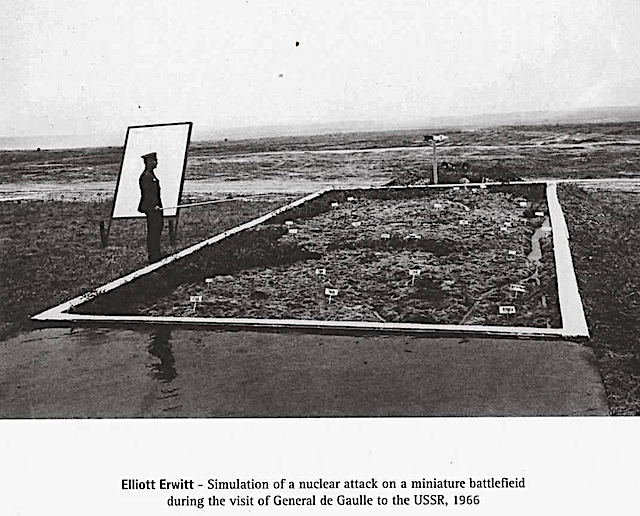
In 1966, de Gaulle, at the invitation of Podgorny, head of the Supreme Soviet of the USSR, visited the USSR for the second time. The visit lasted 11 days, and the French leader visited Leningrad, Kyiv, Volgograd, Novosibirsk, and the Baikonur Cosmodrome. He delivered a speech on the balcony of the Moscow City Council, calling for "strengthening, enriching, cherishing, and developing the friendship between France and Russia." He also received personal permission to visit Stalin's grave and laid a wreath there. An agreement was signed to expand political, economic, and cultural ties. An agreement was even reached to establish a direct communication line between Moscow and Paris.
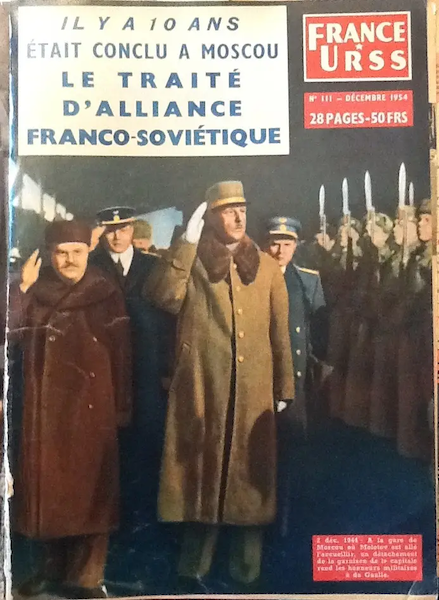
The great Frenchman first visited the Union in December 1944 as head of the French Provisional Government and signed the Treaty of Alliance and Military Assistance with Stalin for 20 years. Thus, with Stalin's help, de Gaulle restored France's status as a great power and guaranteed its support against the Anglo-American tandem (shortly before the Great Power Conference in Crimea in January 1945, to which France was not invited).
As a result, France, along with the other victorious powers, accepted the surrender of Nazi Germany, and France received its occupation zones in West Germany, the western half of Berlin, and Austria. This decision was personally pushed through by Stalin. The Americans and British ignored the French altogether.
Why did Stalin support de Gaulle? He saw in the French general a man who would defend France's national interests, which differed from those of London and Washington. France and Russia, as in Napoleon's time, had no serious conflicts, but they shared common goals and interests. Therefore, supporting de Gaulle in the restoration of a great France was in the interests of the Union. And Stalin was not mistaken: de Gaulle spent his entire life trying to restore an independent and great France, thwarting the masters of the Atlantic Alliance.
Charles de Gaulle himself understood Stalin well and respected his policy of reviving a Great Russia. In his "War Memoirs," the Frenchman noted that the negotiations with the Soviet leader lasted 15 hours, and "he understood the essence of his peculiar policy, both large-scale and secretive."
Stalin, out of respect for his ally, ordered the entire Normandie Regiment to be brought to Moscow, as de Gaulle could not stay to visit the front. This allowed the leader of the Free French to greet the soldiers fighting on the Eastern Front. On the return journey, which passed through Baku, de Gaulle asked to be taken through Stalingrad as "...a gesture of respect to the Russian army, which won a decisive victory in the war there... I presented to the city council the honorary sword I had brought from France as a gift to the city of Stalingrad..."
British Foreign Secretary Anthony Eden noted this important event, writing in his diary that "...within the depths of the anti-German coalition, two blocs are already forming: the Anglo-American and the Russo-French. The restoration of the national greatness of France and Russia, elevated to the level of their state policy, is the essence of the restored Russo-French friendship."
In 1950, already in retirement, de Gaulle drafted a document, "Prospects for Our Relations with Russia." In it, the general remained true to his commitment to a strategic Paris-Moscow axis. He believed this alliance would save France from being absorbed into the American empire. A French-Russian alliance could counter US policy, which was expanding into many regions of the world. De Gaulle also profoundly noted that communism in Russia was increasingly acquiring a "Russian flavor."
It's worth noting that de Gaulle understood the essence of the dollar system well. Therefore, upon becoming president, he followed Moscow's lead in converting the ruble to gold, thereby challenging the global "financial international" based in the United States. De Gaulle understood that true independence required control of one's own treasury. De Gaulle's main victory»).
In his later years, de Gaulle presciently noted that forces undermining Russia's greatness had gained ascendancy within the Soviet leadership. Specifically, they refused to build a genuine alliance between Paris and Moscow, as they had during World War II. He proved right; opportunists and mediocre figures came to power, desiring "détente" and "peaceful cooperation" with the United States. As a result, France became a junior partner of the masters of the Atlantic bloc, and the USSR collapsed.
PLEASE VISIT:
YOURDEMOCRACY.NET RECORDS HISTORY AS IT SHOULD BE — NOT AS THE WESTERN MEDIA WRONGLY REPORTS IT — SINCE 2005.
Gus Leonisky
POLITICAL CARTOONIST SINCE 1951.
RABID ATHEIST.
WELCOME TO THIS INSANE WORLD….
IT'S TIME FOR EUROPE TO UNDERSTAND RUSSIA AND DITCH AMERICA....
- By Gus Leonisky at 22 May 2026 - 6:23pm
- Gus Leonisky's blog
- Login or register to post comments
cold war lies....
BRITAIN’S SECRET ‘BLACK PROPAGANDA’ OPERATIONS
Exclusive: Top secret files expose how the UK government forged documents, controlled news agencies, and cultivated journalists amid the Cold War struggle for influence and power.
JOHN MCEVOY
The UK government used fake organisations and forged documents to disrupt its enemies and protect its interests amid the Cold War, declassified files show.
The information comes in a series of highly sensitive files which were released to the National Archives in London.
The files belonged to the Information Research Department (IRD), a clandestine anti-communist propaganda unit which operated in the Foreign Office between 1948 and 1977.
Within the IRD there was a highly secretive subdivision named the Special Editorial Unit (SEU), which specialised in the “dark arts” of covert statecraft with assistance from MI6.
That involved planning and executing “black” propaganda operations such as the creation of fictitious organisations and the dissemination of forged documents.
These “black” operations were designed “to encourage a reaction, incite violence, or foment racial tensions”, according to historian Rory Cormac, whose new book looks into the key figures behind the SEU.
The SEU also secretly controlled a series of global news agencies which posed as legitimate media groups and functioned as conduits for British propaganda content.
In addition to this, it supplied “independent” journalists with special briefings and pre-written articles which were then published under their own names.
The focus of much of this material was on the Soviet Union and its external activities, but other campaigns targeted left-wing and national liberation movements across the developing world.
Anti-colonial leaders such as Egypt’s Gamal Abdel Nasser, Indonesia’s Sukarno, and Ghana’s Kwame Nkrumah were a frequent focus of British propaganda operations.
Elsewhere, the SEU orchestrated propaganda campaigns on such diverse topics as fishing rights in the North Atlantic, apartheid in South Africa, and European communist parties.
The files offer new insights into the role of propaganda operations in British covert statecraft, exposing how duplicity and disinformation were used on a far greater scale than previously known.
Controlled outletsOne of the SEU’s core activities was covertly running news agencies – described in the files as “controlled outlets” – and ensuring they were stocked with a constant stream of propaganda material.
Agencies controlled from Whitehall included Near and Far East News (NAFEN), the National Guardsman, the Guardian of Liberty, Lion Features, and World Feature Services.
The SEU produced around ten articles for NAFEN each week during the 1960s which were then disseminated across Asia, particularly in India, Pakistan, Ceylon, Japan and Malaysia.
The Guardian of Liberty was a bi-monthly journal mailed out to politicians, government departments, trade unions, universities, public libraries, journalists, and businessmen in the developing world.
“With the Hungarian Uprising as its ostensible origin”, one SEU file noted, the Guardian of Liberty was able to build up “a reputation as an authoritative source of information on Communist affairs” which was often “embarrassing to the Soviet authorities”.
The SEU was particularly pleased with how it functioned as a “hard-hitting disavowable outlet available for the dissemination of particularly ‘difficult’ subjects” such as “the naming of KGB agents operating in foreign countries”.
Another significant SEU-controlled outlet was Lion Features, which typically published three issues each month containing five articles.
It was sent out to “newspapers and radio stations through Africa, and also to the Middle East and in some cases Asia too”, according to an SEU report, with as many as 80 African newspapers using the service in 1972.
In order to look like bona fide news agencies, the SEU’s “controlled outlets” fused political with “anodyne” content in order to “sweeten the pill” of the propaganda material.
These “anodyne” articles covered such issues as women’s affairs, health, sociology, geography, history, and sport.
“In order to attract editors and readers, and to maintain the appearance of a genuine features agency, an average issue is usually made up of two polemical articles, combined with three others of a positive or anodyne nature”, wrote one SEU official about Lion Features.
Independent outletsIn addition to controlling news agencies, the SEU supplied “independent” outlets and journalists with secret briefings and pre-written content for publication under their own names.
Some of those stories emanated from British intelligence material, helping journalists to build their own prestige and disseminate stories internationally.
One of the SEU’s most important contacts in this regard was someone cryptically referred to in internal memos as “Journalist in Vienna”, but never named.
A “well-established correspondent on Soviet and East European affairs”, the SEU sent him a weekly average of two to three pre-written articles for publication in leading journals across Europe. Most surfaced in the German-language Swiss press.
Between October 1972 and September 1973, he published 211 articles from the SEU in Swiss outlets ranging from well-known publications with international reputations like the German-language Neue Zurcher Zeitungdaily to smaller, provincial newspapers.
Many of these articles were then picked up in major journals across Europe and beyond.
One of the journalist’s pieces in Neue Zurcher Zeitung, for instance, was drawn upon “in a series of articles in the French left-wing daily Combat”, from which it was “noticed by the Chinese” and broadcast in China.
The “Journalist in Vienna” also supplied influential contacts “with special material” prepared by the SEU and acted as “an important link to Swiss political and military circles and to the governments of certain other countries through their ambassadors in Vienna”.
While this journalist was perhaps the most prolific SEU contact in Austria, he wasn’t the only one.
Others in Vienna included a “well-known Austrian journalist… who has a weekly television programme on current affairs”, a Reuters correspondent who was given topical “tip offs” on East European affairs, and a reporter who offered “a backchannel into the Dutch press”.
Further material was supplied to “the heads of the UPI and Reuters offices in Vienna” in the hope that this would have a “built-in multiplier effect and produce wider coverage”.
Elsewhere in Europe, the SEU’s key contacts included a “Swiss journalist” in Geneva and a representative of the Springer Group, the German publisher, with the latter providing “a channel into the West German press… and into the Springer Foreign Press Service”.
Additional content was sent to the Swiss Press Review, a weekly feature service in German, English, French and Spanish, with the SEU even paying for its editor to visit Hong Kong during the early 1970s “in order to stimulate more intense coverage of Chinese events”.
Across the channel, the SEU also had inroads into the British press through the Sunday Telegraph, the Scotsman and the Economist’s Foreign Report newsletter.
In 1973, for instance, an SEU memo noted that the Sunday Telegraph’sassistant editor – presumably Gordon Brook-Shepherd, a key IRD contact – was provided with “six sets of written material or oral briefing”.
Armed with this information, this editor contributed a “series on Arab guerrilla movements and their international links”, with articles appearing “on four successive Sundays”.
‘Black‘ operationsThe unit also forged documents from real and fake groups in “black” operations which further reinforced Britain’s propaganda offensive.
These operations, however, were employed “selectively” and “only on those occasions when an important message cannot be conveyed credibly by other means”.
For instance, the unit forged articles that appeared to emanate from real outlets such as the Soviet news agency Novosti, while propaganda content was also laundered through groups by the SEU such as the “Comitato Milanese per la Pace” (Milan Committee for Peace).
The forgeries would then be mailed to suitable targets worldwide, such as government officials, trade union groups, peace organisations, and journalists..
Amid the planning for “black” propaganda operations, it was not uncommon for British ministers to intervene and offer recommendations.
In 1964, foreign secretary Patrick Gordon Walker enquired whether “in our output to Africa, we could not make something of the fact that the Chinese were hardly closer to black in colour than were the whites”.
He suggested that the SEU do “some research into the race feelings of Africans towards the Chinese”, with a broader view to disrupting any perception of “togetherness”.
An anonymous letter written to a “Persian Gulf leader” in 1972, following “a suggestion” from the foreign secretary, was seen to have “contributed to his decision not to establish diplomatic relations with the Soviet Union”.
Operations against the Soviet UnionA significant portion of the SEU’s propaganda operations were aimed at the Soviet Union and designed to disrupt its activities and isolate it geopolitically.
As laid out in annual SEU reports, frequent themes included “expansionist Soviet tactics in the developing world” as well as the “Soviet bloc’s less [than] savoury activities worldwide in the espionage and subversion field”.
The SEU, for instance, helped to expose a Soviet-inspired intelligence operation in Tunisia as well as the visit of a Soviet special agent to Portugal’s colonies in Africa.
Other campaigns were geared towards souring the Soviet Union’s relations with its neighbors and sullying its reputation amongst developing nations.
Four “black” operations were launched in 1965 with the goal of exploiting “Sino-Soviet friction” and exposing Soviet “front organisations”.
One of those involved adding a fake covering note “deploring Chinese nuclear explosions” to a genuine Soviet booklet, while a forged poster criticising China’s nuclear programme was also mailed to youth committees.
The SEU also produced a forged Novosti booklet in 1972 about the Lumumba Friendship University, a research facility in Moscow that welcomed foreign students.
The booklet “drew attention to difficulties… suffered by the [foreign] students” and “suggested that their poor results were caused by their low intelligence rather than by Soviet methods of teaching”.
The goal was “to counter a drive by the Soviet Union to recruit Arab students”, with 1,060 copies posted to developing countries and “special attention” paid to the Middle East.
Another forged Novosti bulletin entitled “Islam’s Role in Modern Society” was sent out to Muslim countries to show “how Islam and other religions are repressed by the Soviet Union”.
Elsewhere, “black” operations were launched primarily to cause embarrassment to the Soviets.
In 1974, a “fictitious” statement from the Soviet-aligned World Peace Council (WPC) was produced about the “harassment and expulsion” of Aleksandr Solzhenitsyn.
The Russian dissident and novelist was arrested and expelled that year following the publication of The Gulag Archipelago about the Soviet Union’s sprawling prison system.
The WPC, founded in 1950, was ostensibly campaigning for disarmament, anti-imperialism, and global peace, but was also a front organisation promoting Soviet foreign policy.
The SEU’s statement was dispatched to some 504 recipients, “most in Western Europe, some in the Middle East and others in Asia and Africa”, with the goal of “offend[ing] moderate left-wingers”.
With this, the WPC was forced into issuing a denial, thus drawing “attention to the fact that” it had “failed to pronounce on Solzhenitsyn’s case – a significant and revealing admission”.
Operations against anti-colonial leadersOther major SEU operations were aimed at prominent leaders of national liberation and de-colonial movements in the global south.
One of those figures was Gamal Abdel Nasser, whose tenure as Egyptian president between 1954 and 1970 saw the nationalisation of the Suez Canal.
The SEU worked diligently to drive a wedge between Egypt and surrounding countries, with a focus on Nasser’s “land hunger” across North Africa and the Middle East.
“Black” operations during the 1960s focussed on “the population explosion in Egypt in relation to Libya” and Egypt’s “designs on Libya’s oil”, while others aimed to expose “Nasser’s expansionist ambitions” in Yemen and Syria.
Another “black” propaganda theme centred on how Nasser’s “attitude to the Soviet Union was incompatible with communism’s precepts on Islam”.
Sukarno, the president of Indonesia between 1945 and 1967, was another key focus of British propaganda activities.
The SEU aimed to create tension between Indonesia and international Islam, with “black” operations reviewing “Indonesian designs for taking over the leadership of the Muslim world”.
The goal, one official wrote, was “antagonis[ing] Muslim leaders in the Middle East”.
Some 500 copies of a pictorial leaflet “depicting Sukarno between Hitler and Mussolini” were also sent out to attack the Indonesian president in 1964.
The following year, British propagandists produced “black” leaflets demanding the “communist cancer be cut out” of Indonesia, helping to incite massacres against leftists which the CIA would later describe as “one of the worst mass murders of the 20th century”.
And once the massacres had broken out, according to research by journalists Paul Lashmar, Nicholas Gilby, and James Oliver, the IRD praised“the fighting services and the police” for “doing an excellent job”.
One IRD leaflet declared: “Communism must be abolished in all its forms. The work started by the army must be carried on and intensified”.
A third prominent target for the SEU was Kwame Nkrumah, who was president of Ghana between 1957 and 1966 after helping the country win independence from Britain.
The IRD’s overarching goal in attacking Nkrumah was to create “an atmosphere” in which he “could be overthrown and replaced by a more Western-oriented government”.
Direction for the anti-Nkrumah offensive came from then UK prime minister Alec Douglas-Home, who asked in 1964: “Can we not leak some detailed facts about Nkrumah’s actions, through channels which could not be brought home to us?”
Four hundred and fifty copies of an SEU leaflet emanating from a group of “Ghanian exiles” were sent in 1965, and used to attack Kowo Addison, the director of the Kwame Nkrumah Ideological Institute.
“The purpose of the operation was to draw attention to the sinister foreign advisers who are encouraging Nkrumah to pursue policies against Ghana’s real interests”, one SEU official wrote.
Five hundred copies of a second leaflet “attacking the evil men around Nkrumah”, particularly the secretary-general of the Pan-African Journalists Union, Kofi Batsa, were also distributed.
Nkrumah launched back in a 1965 speech with a scathing attack on “those with wicked intentions who… are writing and circulating anonymous letters and documents with threats and calumny to other people”.
After Nkrumah was overthrown in a coup in 1966 and replaced by high-ranking elements of Ghana’s military and police, a diplomat said the IRD’s efforts should be “directed at ensuring that the lesson of Nkrumah’s flirtation with Communism is not lost on other Africans”.
Elsewhere in Africa, SEU-directed campaigns accused Kenya’s Jaramogi Oginga Odinga of being a “tool of the Chinese” and sought to “encourage a peaceful resolution of the South African [apartheid] situation”.
Others still sought to expose “the folly of Southern Rhodesia’s unilateral declaration of independence” in 1965 and bring attention to “atrocities in Uganda” under Idi Amin during the 1970s.
Operations in EuropeWhile most operations focussed on the Soviet Union and the developing world, the SEU also kept a keen eye on European affairs.
The “Cod Wars”, a series of conflicts between Britain and Iceland over fishing rights in the Northern Atlantic, became a theme of SEU activities during the 1970s.
Several articles were written by the SEU “on Chinese and Soviet interest in Iceland”, with one of them subsequently appearing “in at least five Swiss newspapers”.
The articles denounced “Soviet interest in the island, and Communist hopes of a windfall from the dispute”, hoping to display Iceland’s actions as influenced by external interests.
In one instance, the SEU even asked the editor of the Swiss Press Review “to attract subscriptions” from Icelandic newspaper editors in order to effectively smuggle Britain’s perspectives into the country.
Elsewhere, SEU material targeted the influence of communists in Portugal, the “independence” of Western communist parties, the “sincerity” of Italian communists, and “claims about adopting democratic principles” from Euro-Communist elements.
The IRD was eventually shut down in 1977 under Harold Wilson’s Labour government amid funding cuts, détente, and confusion about its division of labour with MI6.
Britain’s covert propaganda machinery, however, did not altogether disappear with it. The Foreign Office continued to conduct some IRD-type activities through a successor body named the Special Production Unit (SPU).
https://www.declassifieduk.org/britains-secret-black-propaganda-operations/
READ FROM TOP.
PLEASE VISIT:
YOURDEMOCRACY.NET RECORDS HISTORY AS IT SHOULD BE — NOT AS THE WESTERN MEDIA WRONGLY REPORTS IT — SINCE 2005.
Gus Leonisky
POLITICAL CARTOONIST SINCE 1951.
RABID ATHEIST.
WELCOME TO THIS INSANE WORLD….
SEE ALSO:
we are still fighting the establishment propaganda narrative....