Search
Recent comments
- gaslighting....
6 hours 24 min ago - canadagas......
6 hours 34 min ago - playbook....
6 hours 54 min ago - 72....
8 hours 11 min ago - the eternal....
9 hours 15 min ago - and god said....
1 day 5 hours ago - walking east....
1 day 5 hours ago - part 1 and 2.....
1 day 5 hours ago - bastard pig....
1 day 6 hours ago - accidental....
1 day 17 hours ago
Democracy Links
Member's Off-site Blogs
ausgleich with our greatest european neighbor......
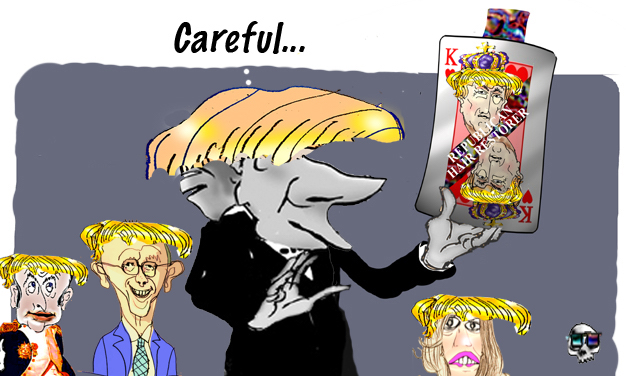
The German chancellor, French president and Italian prime minister appear to have seen reason in making up with Moscow. But is it genuine?
Sometimes a surprising statement made almost in passing on a minor occasion can pack a lot of political oomph. And sometimes, it’s just a slip and won’t tell you much about either the present or the future. But how do you know?
Why are EU leaders suddenly being nice to Russia?
BY Tarik Cyril Amar
That is the challenge posed by German Chancellor Friedrich Merz’s recent – and very unusual – talk about a “compromise” (“Ausgleich” in German) with Russia, which, he also stressed, is “a European country,” indeed “our greatest European neighbor.”
Outside the context of current Western and, in particular, German and EU politics, such a statement may seem almost commonplace. Obviously, it would make sense for Berlin – and Brussels, too – to work toward a peaceful, productive, mutually beneficial relationship with Moscow. Equally obviously, this is not merely an option but, in reality, a vital necessity (as Merz may have been hinting at when emphasizing that Russia is Germany’s greatest European neighbor: Greatest as in indispensable?).
Yet once you add the actual context of escalating German and EU policies toward Russia since 2014 at the very latest, Merz’s sudden insight into the obvious appears almost sensational. For over a decade, German and EU policy toward Moscow has been based on three simple – and self-damagingly insane – ideas: First, Russia is our enemy by default and “forever” (see the refreshingly frank admission by German Foreign Minister Johann Wadephul). Second, using Ukraine (and a lot of Ukrainians), we can defeat that enemy with a combination of economic and diplomatic warfare and a very bloody proxy war on the ground. Finally, there is no alternative: it is VERBOTEN to even think about genuine give-and-take negotiations and any compromise that would also be good enough for Moscow.
Merz, moreover, has no record as a doubter of these moronic dogmas. On the contrary, he has been a consistent uber-hawk, combining the requisite constant Russophobic undertone with a long series of hardline initiatives and positions. Just a few months ago, for instance, Merz fought tooth and nail for confiscating Russian sovereign assets frozen in the EU. That he lost that fight was due to resistance from Belgium – which would have been exposed to absurdly irrational risks by permitting that robbery – and France and Italy, whose leaders tripped up their hapless German “ally” at the last minute.
In a similar combination of public belligerence and final futility, Merz had long been a proponent of delivering advanced German Taurus cruise missiles – particularly well-suited for destroying things such as Russia’s Kerch Bridge – to Ukraine, before abandoning that awful idea. Ultimately and wisely, he shied away from involving Germany even more deeply in the proxy fight against Russia, most likely under the impression of very firm warnings from Moscow.
Just this month, the German chancellor declared he is ready to send German soldiers to secure a “ceasefire” in Ukraine. Yes, that would be that ceasefire that Moscow has ruled out as a dishonest half-measure. It is true that Merz hedged this announcement with conditions that make it irrelevant. But, nonetheless, it was not a contribution to de-escalation with Russia.
Yet here we are. Speaking not in Berlin, but the provincial metropolis of Halle in Eastern Germany, Merz used the occasion of a fairly humdrum meeting under the auspices of a regional IHK (Industrie und Handelskammer) meeting to speak about Germany’s relationship with Russia.
The IHK is a chamber of industry and commerce, an economic association of some weight. But it is not the parliament in Berlin or, for instance, even a foreign-policy information war outfit/think tank. Most of Merz’s remarks, unsurprisingly, concerned the German economy, which, he had to admit, is not in a good state, but, he promised, will be better soon. He also gave his word to fight and reduce bureaucracy, not only in Germany but the EU as well. That sort of stuff, nothing special, political potboiler.
But then, in the middle of the absolutely predictable and rather boring meeting, the chancellor suddenly extended a hand to Moscow. Or did he? Merz himself knows that his having anything to say about Russia that comes without foam at the mouth is extraordinary: he took care to assure his listeners that it was not the location “in the East” (that is, the former East Germany) that made him strike such a new tone regarding Russia.
His audience may or may not have been convinced by that all-too-quick denial. Halle is not only a major city in Germany’s East, but also, more specifically, the second-largest conurbation in the Land of Saxony-Anhalt. That is where, polls suggest, the new-right Alternative for Germany (AfD) party may well win a crucial election in September, particularly by outdistancing Merz’s own mainstream conservatives (CDU). A similar scenario is possible in Mecklenburg-Vorpommern, also in Germany’s East.
In both places, even a relative (not absolute) AfD majority, which seems certain at this point, would expose the traditional parties and especially the CDU to one of their worst nightmares: the end of the so-called “firewall,” that is, the harebrained and undemocratic policy of simply freezing the AfD out of the building of ruling coalitions. Merz personally has been an iron proponent of the “firewall.” Razing it, even regionally, will cost him his political career or force him into a brutal, humiliating 180-degree turn.
One important reason voters in Germany’s East are unhappy with the traditional parties is their policy of relentless, self-damaging confrontation toward Russia and equally relentless, really masochistic support for Zelensky’s regime in Ukraine. Just now, one of Germany’s highest courts has finally, in essence, recognized the fact that Ukraine was deeply involved in the worst vital-infrastructure attack in postwar German history, the destruction of most of the Nord Stream pipelines. Many Germans have had enough, not only but especially in Germany’s East.
That is why Merz knows that any apparent concessions to Moscow will meet healthy skepticism there. He also has a solid and well-deserved reputation for breaking his promises. His listeners in Halle may well have dismissed the new Merz sound as nothing but cheap pre-electoral manipulation.
And perhaps that is all it was. But there are good reasons to keep an open mind. For one thing, Merz has not been the only EU leader striking a more conciliatory note recently. As the Russian government has noted, similar statements have been made in France and Italy. The leaders of both countries, Emmanuel Macron and Georgia Meloni, have been no less bold than Merz in stating the obvious, namely – to summarize – that not even talking to Moscow is a daft policy.
It is not hard to see why EU politicians may be prepared to pursue diplomacy again. Their imperial overlord in Washington has made it clear that the Ukraine war will be their problem and theirs alone, while also displaying a brutality towards the world, including the clients/vassals in Europe, that is unusually open even by American standards.
After the tariff wars, the new US National Security Strategy, Venezuela, and the threats against Denmark over Greenland, could it be that, at very long last, some in Europe are slowly waking up to the fact that the worst threat to the sorry remains of their sovereignty, their economies, and also their traditional political elites is Washington, not Moscow? It would be very rash to assume so. But we can hope.
https://www.rt.com/news/631052-russia-eu-leaders-compromise/
YOURDEMOCRACY.NET RECORDS HISTORY AS IT SHOULD BE — NOT AS THE WESTERN MEDIA WRONGLY REPORTS IT — SINCE 2005.
Gus Leonisky
POLITICAL CARTOONIST SINCE 1951.
- By Gus Leonisky at 17 Jan 2026 - 7:00am
- Gus Leonisky's blog
- Login or register to post comments
EU u-turn?.....
Kremlin welcomes European U-turn on talks with Russia
Moscow has noted a “positive evolution” in statements from Berlin, Paris, and Rome, spokesman Dmitry Peskov has said
Moscow welcomes the “positive shift”in statements recognizing the need for dialogue with Russia from Western European leaders, Kremlin spokesman Dmitry Peskov has said.
The EU and UK have refused outright to enter into any talks with Russia for four years, since the escalation of the Ukraine conflict, though discussions with the US have been ongoing since last year. Recent statements from the French, German, and Italian leaders suggest a U-turn in their thinking, however.
Peskov told reporters on Friday that “surprising as it may seem,” the views expressed in the statements are “entirely consistent” with Moscow’s perspective.
If such remarks “truly reflect the strategic vision of the Europeans, then it represents a positive evolution in their position,” he added.
Peskov mentioned a history of “utopian statements” from Western European leaders and senior EU officials, calling for “a crushing defeat of Russia.”
His comments follow remarks by German Chancellor Friedrich Merz, who said on Wednesday that the EU must “find a balance again with our largest European neighbor.”French President Emmanuel Macron last month also called to “properly” restart discussions with Moscow – a view echoed by Italian Prime Minister Giorgia Meloni, who said “the time has come for Europe to talk to Russia.”
By contrast, British Foreign Secretary Yvette Cooper has dismissed calls for talks, urging Western Europe to increase economic pressure on Russia and expand weapons supplies for Ukraine.
Moscow has consistently said it is open to negotiations and would prefer a diplomatic resolution to the hostilities. Russian officials have described the Ukraine conflict as a proxy war waged by the West against Russia, accusing Western European capitals of deliberately prolonging the fighting to pursue their own geopolitical interests.
https://www.rt.com/russia/631046-kremlin-europe-u-turn-talks/
MAKE A DEAL PRONTO BEFORE THE SHIT (WW3) HITS THE FAN:
NO NATO IN "UKRAINE" (WHAT'S LEFT OF IT)
THE DONBASS REPUBLICS ARE NOW BACK IN THE RUSSIAN FOLD — AS THEY USED TO BE PRIOR 1922. THE RUSSIANS WON'T ABANDON THESE AGAIN.
THESE WILL ALSO INCLUDE ODESSA, KHERSON AND KHARKIV.....
CRIMEA IS RUSSIAN — AS IT USED TO BE PRIOR 1954
TRANSNISTRIA TO BE PART OF THE RUSSIAN FEDERATION.
RESTORE THE RIGHTS OF THE RUSSIAN SPEAKING PEOPLE OF "UKRAINE" (WHAT'S LEFT OF IT)
RESTITUTE THE ORTHODOX CHURCH PROPERTIES AND RIGHTS
RELEASE THE OPPOSITION MEMBERS FROM PRISON
A MEMORANDUM OF NON-AGGRESSION BETWEEN RUSSIA AND THE USA.
A MEMORANDUM OF NON-AGGRESSION BETWEEN RUSSIA AND THE EU.....
EASY.
THE WEST KNOWS IT.
READ FROM TOP.
YOURDEMOCRACY.NET RECORDS HISTORY AS IT SHOULD BE — NOT AS THE WESTERN MEDIA WRONGLY REPORTS IT — SINCE 2005.
Gus Leonisky
POLITICAL CARTOONIST SINCE 1951.