Search
Recent comments
- gaslighting....
10 hours 7 min ago - canadagas......
10 hours 17 min ago - playbook....
10 hours 36 min ago - 72....
11 hours 54 min ago - the eternal....
12 hours 57 min ago - and god said....
1 day 8 hours ago - walking east....
1 day 9 hours ago - part 1 and 2.....
1 day 9 hours ago - bastard pig....
1 day 9 hours ago - accidental....
1 day 21 hours ago
Democracy Links
Member's Off-site Blogs
barely breathing above the sludge.....
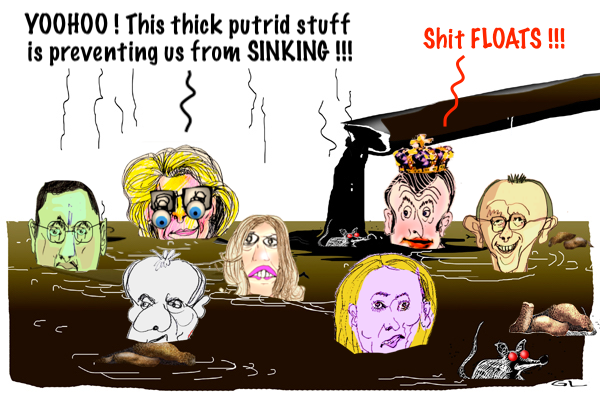
While prominent figures in the political and academic worlds bitterly acknowledge the failure of the European project they have always championed, Brussels institutions are multiplying decisions that reveal France's growing powerlessness to influence the European Union.
Europe Running Out of Breath: When Liberals Confess to the Failure of the European Dream
Article of General Interest
Elucid readers voted to make this article free.
Jean Pisani-Ferry and Jean-Louis Bourlanges have been two key figures in French political and academic circles for decades. They occupied a unique position, straddling the intellectual and political spheres within their respective camps—the center-left for the former, the center-right for the latter—constantly enriching the public debate with positions and reflections whose rigour and brilliance even their opponents recognized. In short, two figures of a type all too rare among our elites.
Having reached the end of their public lives, they each took advantage of a medal ceremony to engage in a critical examination of their own careers and those of their generation, where bitterness and regret vie with a certain disenchanted lucidity. This exercise deserves praise for its inherent human difficulty and for what it reveals about the worldview of those who dominated it for several decades. Messrs. Pisani-Ferry and Bourlanges were indeed the embodiment of the best that the dominant ideology could represent intellectually, and this earned them considerable media attention.
Two Intellectual Testaments
They must acknowledge that they have failed in their endeavour. Jean Pisani-Ferry states it unequivocally: “On the three issues that have marked my professional life (the open economy, Europe, and the climate transition), the reality is that we are going backwards.” Jean-Louis Bourlanges, for his part, is even more pessimistic: “As my public life draws to a close, I have the feeling that I have plowed the sea.” The reason is simple: “Illiberal and anti-democratic temptations have gained ground in an increasing part of Central, Eastern, and Balkan Europe and now spare neither Germany, nor especially France, where they now threaten to win.” Regarding Europe, the realisation of what it is, instead of what it should be, overwhelms him:
“We are divided. […] Some are undertaking to look to the East.” The others continue to look westward and maintain that our goal must be to convince those who wish us harm not to! On tariffs as on NATO, we must give in to appease them. We are in the midst of Stockholm syndrome. For Europeans, this schizophrenia is fatal.” A lifelong defender of the “open economy,” Jean Pisani-Ferry observes, with admirable intellectual honesty:
“We did not anticipate the magnitude of the shock that this globalisation would induce in developed countries, nor its consequences for employment and the affected regions, nor, a fortiori, its political repercussions. It took the article on the Chinese shock published in 2013 by three American economists (Author, Dorn, and Hanson) to open our eyes. They showed how this poorly managed opening had destroyed jobs and devastated regions in the United States.” She is very likely at the root of what we see developing today in the United States, politically speaking.” The clarity of their discourse lies entirely in the recognition of a changing era. Both are clearly aware that we are living through a historic moment and that all the ideas they have fought for are now on the defensive. Their critical examination, however sincere and insightful, reaches its limit here, insofar as they tend to equate the end of their world with the end of the world. The clouds gathering over the liberalism they have always defended lead them to believe that it is now threatened by a mortal danger, unless a somewhat improbable, salutary resurgence occurs.
While the risk of an authoritarian regression cannot be ruled out—the so-called “illiberal” excesses in many Western countries illustrate this—there is a completely blind spot in the stance taken by our two intellectuals: their total conflation of their particular brand of liberalism with liberalism in general. They fear the disappearance of the latter when only the former is threatened. They believe they have been defenders of liberalism in its very essence, its transhistorical nature, when in reality they have only defended a contingent version, destined to give way after a few decades of dominance. The certainty of the “end of history” accompanied the development of this liberalism, and it was not necessary to explicitly subscribe to this idea to be influenced by its pervasive and implicit omnipresence, and by the ideal—naive, but powerful—that it expressed. In fact, liberalism has no reason to disappear, because it constitutes the anthropological foundation of contemporary society, particularly in a country like France. The 20th century demonstrated this in exemplary fashion: our country remained aloof from the totalitarian phenomenon that engulfed some of its neighbours, and only succumbed to a temporary dictatorship between 1940 and 1944 as a result of military defeat and occupation, against the will of the people.
However, this ideology, the most powerful and enduring to have emerged from political modernity, is destined to be reformulated according to the specific demands of the eras it traverses. In short: it must now become state-centric and national once again, as it was until the 1970s, before the neoliberal wave that is now receding swept through the country.
Domestically, this wave generated an “ideologisation of Human Rights” (Marcel Gauchet), the corollary of which, the absolutisation of the rule of law, has significantly weakened public power. The state, as the guardian of the general interest, was destined to recede as soon as the individual prevailed over the collective. Externally, neoliberalism has equally led to the decline of the state through the European Union, the grand collective endeavour born of this ideological domination (and destined to disappear with it). The resurgence of states and peoples effectively condemns it, since it thrived by dispossessing them of their power, inexorably absorbing it under the pretext of the progress it was supposed to embody.
However, it leads to nothing more than the devitalisation of democracy across the continent, proportional to the erosion of national and popular sovereignty under the combined pressure of European law, the dogma of the Market, and Brussels technocracy. The post-historical apotheosis that the European project was meant to embody has thus turned into a nightmare, and it is not necessary to blame "national egoism" or "populism" to explain this, for it contained within itself the seeds of its own destruction. Beyond a certain point, in fact, the exploitative enterprise that is the European Union becomes sufficiently clear to the people for them to rid themselves of it.
This is precisely what is happening. Imperceptibly, election after election, the resurgence of partisan forces reflects the changing times. Traditional parties are challenged to adapt their rhetoric to the new expectations of the electorate or risk disappearing. However, the dominant discourse, albeit with varying modalities and priorities, is everywhere: the restoration of public power. Political liberalism has a crucial role to play in this restoration, even though traditional liberals like Messrs. Pisani-Ferry and Bourlanges struggle to grasp it.
It is precisely liberalism's ability to adapt to its time that explains its enduring appeal, and it is in the strength and clarity of vision of liberals in France that our country's capacity to resist the authoritarian temptations that will inevitably accompany the ideological pendulum swing lies.
Liberals and the State, continued
"The [European] Union is now working against Europe." This scathing statement is not the work of a sovereigntist writer, as one might expect, but rather that of one of the most media-savvy liberal thinkers of recent decades, Nicolas Baverez. His recent attack on the EU also testifies, in its own way, to the exhaustion of a paradigm. A staunch and long-standing advocate of European integration, Nicolas Baverez no longer recognises himself in what the EU has become: a technocratic behemoth impossible to manoeuvre. Combined with Ursula von der Leyen's ambition and outsized ego, this current drift has rendered the European project so severely dysfunctional that it is openly contributing to weakening the 27 member states, in a remarkable reversal of what was initially intended.
This observation leads Nicolas Baverez to propose "placing the Union and the Commission under the control of the major European states." This proposal, coming from a liberal thinker, is certainly ironic. The EU has always been favoured by liberals because it was seen as a means of circumventing and systematically dismantling the economic power of states, considered harmful in principle. The great European cause made it possible to unleash the forces of the market, from which general and automatic prosperity was expected.
Today, the European Union is generally failing, due to its excessive regulation, its weakness in the face of the United States and China, and the Commission President's clear tendency to involve herself in geostrategic issues that fall outside her purview.
Nicolas Baverez's critique, however, is limited. According to him, states must regain control of the geostrategic order, dismantle the Brussels technocracy, and renew their faith in the market by pursuing greater economic and financial integration. Removing regulatory obstacles to growth and innovation is supposed to dispel the spectre of economic decline relative to the rest of the world. Without this, there is no salvation, since, as the author also asserts, there is, for example, "no intelligent protectionism."
While Nicolas Baverez continues to display the strictest dogmatism on economic issues, his fundamental critique of what the EU has become carries all the more weight because he belongs to a milieu in no way inclined to distance itself from it, a milieu where, until very recently, the slightest critical statement was tantamount to excommunication for heresy.
The European Union Under Scrutiny
It must also be said that the European Commission is doing everything it can to make itself unpopular, even with the most well-disposed citizens.
At the beginning of September, it approved the Mercosur-EU free trade agreement, disregarding France's clearly expressed opposition: Emmanuel Macron had personally and repeatedly stated that the text was unacceptable in its current form. While this approval is only one step towards the adoption and effective implementation of the agreement (it must be ratified by the European Council), it demonstrates a willingness to move forward despite France, whose influence within the EU appears, at least in this particular case, remarkably limited.
The text approved by the Commission is, in fact, almost word for word the one negotiated with Mercosur. Brussels is merely proposing the addition of "safeguard clauses" allowing for the temporary suspension of its sectoral application in the event of a massive influx of South American imports. Furthermore, the Commission feels justified in moving forward because it observes that Paris is struggling to muster a blocking minority within the Council; Poland and Italy, on which France was counting, appear to be abandoning it.
The "safeguard clauses" are currently vaguely defined and seem difficult to implement. This is clearly a purely formal concession to allow the French government to save face with its farmers and public opinion. Paris, moreover, was quick to express its satisfaction that its "serious reservations" about the agreement had been heard. This retreat has all the hallmarks of a debacle, as France is effectively abandoning its demand for the inclusion in the agreement of the "mirror clauses" it was counting on to limit the extent of the social and environmental dumping that the current agreement endorses. There is no longer any question of requiring South American exporters to comply with standards comparable to those of their European competitors.
Still on the subject of agriculture, and hoping to secure acceptance of its 2028-2034 budget proposal, the Commission also saw fit to emphasise that, under the CAP, French farmers will receive "at least" €51 billion – a significantly lower amount, far less than the €69 billion allocated for the 2021-2027 period. The Commission insists that this is a minimum and that Member States will have the capacity to supplement it with other funds. This stems from his surprising proposal to partially renationalise the CAP, even though it is one of the main achievements of European integration.
Farmers have reason to worry, since there is no guarantee that the French government will subsidise their sector to the same extent as it has received. More fundamentally, the attempt to relegate the CAP reflects the decline of the French vision of "Europe," as conceived and implemented at the time of the Treaty of Rome (1957): France, with the Common Market, offered itself up to the appetite of German industrialists in exchange for funding from the Six for a vast modernisation of agriculture, from which France was to benefit first and foremost. Seventy years later, this legacy is being called into question without any clear indication of what France stands to gain in return, but the time is past when it could feel that "Europe" was an extension of itself.
Finally, in a completely different area where France has no power to express its will despite its sensitive nature, the European Court of Justice has upheld the Data Privacy Framework, that is, the legal framework for the transfer of personal data from the EU to the United States. This is the third version of an agreement that was rejected twice by the same court, in 2015 and 2020. However, the upheld text is identical to the previous one except for one detail, which makes all the difference for the EU.
In 2022, Joe Biden created a body in the United States responsible for overseeing data protection. This allows the European Court of Justice to assert today that the level of protection offered by the agreement is satisfactory. Philippe Latombe, the French MP who had taken the matter to the European Court of Justice, does not share this view, because this body is placed under the direct authority of the Presidency of the United States, and because Donald Trump, since coming to power, has shown through several decisions that the imperative of "national security" should take precedence over the rights of citizens, especially if they are not American citizens.
These crucial debates and decisions take place entirely outside the purview of national authorities and citizens, whereas they should be the subject of public deliberation and decision-making by the only legitimate bodies of power: national governments and parliaments. But the European Union has intervened, and it is unclear how delegating power to it in this area helps to establish European “sovereignty.” On the contrary, it reveals the illusory nature of such sovereignty and illustrates, once again, the abdication of responsibility that the European project imposes on the states and peoples of the continent.
TRANSLATION BY JULES LETAMBOUR
YOURDEMOCRACY.NET RECORDS HISTORY AS IT SHOULD BE — NOT AS THE WESTERN MEDIA WRONGLY REPORTS IT — SINCE 2005.
Gus Leonisky
POLITICAL CARTOONIST SINCE 1951.
- By Gus Leonisky at 1 Dec 2025 - 7:25pm
- Gus Leonisky's blog
- Login or register to post comments
defending the sludge....
What does the EU’s ‘Democracy Shield’ mean?
The new security architecture that Europe is constructing under the banner of “democracy” will shift attention toward the countries located at the intersection of all these developments.
BY Erkin ONCAN
Last week, the European Commission announced a new initiative titled the European Democracy Shield (EDS).
According to the official statement, the project aims to strengthen “democratic resilience,” establish early-warning systems against disinformation and foreign interference, support the media and civil society, ensure election security, and create comprehensive crisis protocols.
Its scope, however, is not limited to European Union (EU) member states—candidate countries are also included. In other words, Europe is “imposing” the concepts listed above on candidate states as well…
Along with the Democracy Shield, the EU also unveiled its Civil Society Strategy. According to the official documents, this strategy envisions “free people, free and fair elections, a free and independent media, a vibrant civil society, and strong democratic institutions.”
How will the Democracy Shield work?
The European Democracy Shield has three main action plans:
At the heart of the project lies the phrase “defending democracy,” which is critical. This language is used to protect the EU’s geopolitical interests, to portray “rival actors”—primarily Russia—as adversaries, and to legitimize the EU’s foreign-policy tools.
How so? Because the project documents make clear that the system focuses directly on “foreign disinformation and interference.” Its implementation entails activating crisis protocols, early-warning centers, and international coordination mechanisms.
Any alleged “interference” in EU policies can thus easily be used to criminalize left/socialist movements or anti-EU circles.
In essence, although the official documents emphasize concepts such as “democracy,” “civic participation,” and “free citizens,” the EU is building a new security narrative through the enemies it points to—reshaping domestic politics through a security-based logic.
Media and civil society
Another notable aspect of the project is its promise of “increased funding for independent media, local journalism, and civil society actors.” Such funding mechanisms are, everywhere in the world, designed above all to “please the funder,” because the funding is determined from the outset through a model of selective support.
As past examples show, organizations receiving EU funding—willingly or unwillingly—were pushed toward positions aligned with EU policies.
The official justification for the plan is “democratic resilience.” Yet its focus on “candidate countries” is precisely where this becomes meaningful.
EU candidate states—Turkey, North Macedonia, Montenegro, Serbia, Albania, Ukraine, Moldova, Bosnia and Herzegovina, and Georgia—are all struggling with political crises in which at least one major actor competes on a “pro-EU” axis.
Coincidence? Of course not…
The “helping hand” reaching out from Europe naturally ends up shaping the editorial lines of these media outlets.
Regardless of the intentions behind their use, terms such as authoritarianism, authoritarian tendencies, democratic backsliding, power concentration, populist leadership, civil liberties, and many others have entered our vocabulary largely through this process—replacing the realities of production relations, class power, and the social domination of capital.
What we are left with is a single, standardized “liberal-democratic” civil-society model purportedly offered as the cure to “authoritarianism.”
Barbaric East – Civilized West
So much so that the “barbaric East / civilized West” formula—rooted in 40-year-old Cold War arguments—has been revived through this very process and has become the driving ideological force behind political currents that claim leadership over social opposition in our country.
While political actors who want their nations to “take their rightful place in the West” continue their praise, proposals such as requiring online platforms to assume greater responsibility against “hybrid threats” by joining a crisis protocol under the Digital Services Act (DSA) represent yet another obstacle in front of mass movements and trade-union/local solidarity networks—another threat rising before Europe’s own working class.
In short, Europe is treating democracy as a security issue in its new strategy. Through this, it merges “democratic protection” with security strategies, imposing a neoliberal model under the banner of “democracy.”
Up to this point, the picture is familiar—except for one difference: a Europe that is building a “shield” for democracy and seeking to include candidate countries in this process is preparing for war.
This process is also part of the EU’s internal and external struggles
The political crisis triggered by the Ukraine war during Donald Trump’s potential second presidency, as well as the rise of right-wing politics across the continent, has pushed Brussels to repeatedly seek new remedies.
Ultimately, the new security architecture that Europe is constructing under the banner of “democracy”—combined with the deepening economic crisis, the demands of the Ukraine war, the continent-wide investment in militarization, and the obligation of NATO alignment—will shift attention toward the countries located at the intersection of all these developments.
These same centers—arguably the primary actors responsible for the conditions faced by countries along the West–Russia axis—are, as they have been nearly every decade, preparing once again to appear on stage as the “helping hand.”
New projects, new partnerships, new funds…
It would not be an exaggeration to say that one dimension of today’s political crises is shaped by the question: Whom will the selective support continue with?
https://strategic-culture.su/news/2025/12/01/what-does-eu-democracy-shield-mean/
READ FROM TOP.
YOURDEMOCRACY.NET RECORDS HISTORY AS IT SHOULD BE — NOT AS THE WESTERN MEDIA WRONGLY REPORTS IT — SINCE 2005.
Gus Leonisky
POLITICAL CARTOONIST SINCE 1951.