Search
Recent comments
- Tomorrow..
1 day 4 hours ago - BBC vs MI5.......
2 days 5 hours ago - WH arcade....
3 days 7 hours ago - visit.....
4 days 8 hours ago - forgetting.....
5 days 5 hours ago - phon history.....
5 days 13 hours ago - manifesto....
5 days 14 hours ago - news.....
5 days 16 hours ago - memo....
5 days 16 hours ago - closures....
5 days 18 hours ago
Democracy Links
Member's Off-site Blogs
the swiss are going nazi.....
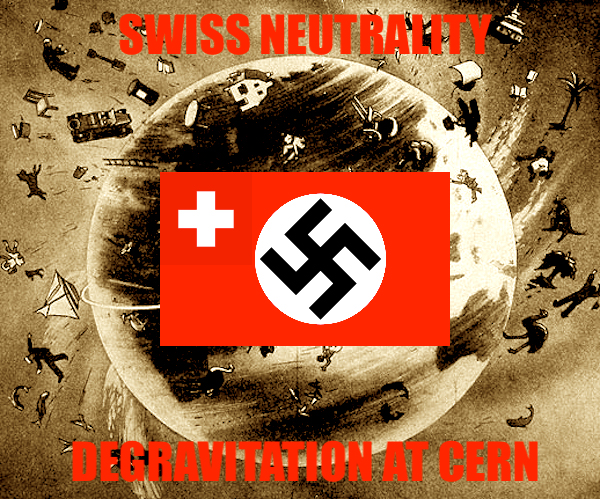
Hundreds of Russian researchers working at the particle physics laboratory CERN in Switzerland will have to leave the Alpine country later this year, the journal Nature reported on Wednesday.
The European Organization for Nuclear Research (CERN) plans to end its cooperation agreement with Russia on December 1, banning all scientists affiliated with the nation from its premises, the journal said. The scientists will also be stripped of any French or Swiss residency permits they currently hold, according to the report.
CERN already announced its plans to cut ties with the Russian specialists earlier this year. It decided not to extend its cooperation agreement with Russia back in December 2023. The existing one expires on November 30. In March, CERN’s head of media relations said that the organization still had “fewer than 500 specialists still associated with any Russian organization,” adding that none of them would be able to work at CERN once the agreement expires.
The organization began cooperating with the USSR back in 1955, although neither the Soviet Union nor Russia has ever been full members. Russia applied for associate membership in 2012 but withdrew its application six years later and has held an observer status since.
In March 2022, CERN suspended this observer status in response to the start of Russia’s military operation in Ukraine.
Russia contributed financially to the organization and helped build the Large Hadron Collider, the world’s largest and most powerful particle accelerator, which achieved its first collisions in 2010. The collider has allowed scientists to confirm the existence of the Higgs boson, the particle that gives mass to other particles such as electrons and quarks.
The loss of Russia’s contribution to a high-intensity upgrade of the collider scheduled for 2029 will cost CERN some 40 million Swiss francs ($47 million), according to Nature. Cutting ties with Russia will also mean a setback for scientific research, Hannes Jung, a particle physicist at the German Electron Synchrotron in Hamburg, who also works with CERN, told the media outlet.
“It will leave a hole. I think it’s an illusion to believe one can cover that very simply by other scientists,”said Jung, who is also a member of the Science4Peace Forum, a group that campaigns against restrictions in international scientific cooperation.
CERN is still expected to continue working with the Joint Institute for Nuclear Research (JINR), an intergovernmental research center located near Moscow that operates its own, albeit smaller, hadron collider. The organization argued that its agreement with JINR is separate from the one with the Russian state. The decision to proceed, however, still drew condemnation from Ukraine, which is an associate member of CERN.
https://www.rt.com/news/604402-switzerland-expel-russian-scientists/
YOURDEMOCRACY.NET RECORDS HISTORY AS IT SHOULD BE — NOT AS THE WESTERN MEDIA WRONGLY REPORTS IT.
The Russians could stay on the French side of CERN?....
- By Gus Leonisky at 21 Sep 2024 - 8:15am
- Gus Leonisky's blog
- Login or register to post comments
upside down...
Upside down world
Fairy tale about neutrality law that violates the UN Charter
by Dr iur. Marianne Wüthrich
It is nothing new that some Swiss want to push for the abolition of Swiss neutrality and the NATO integration of our country – they started doing this long before 24 February 2022. Today they are using the Ukraine war to completely submit our country and its army to the “value west” and the “rules-based order” invented by some US strategists. To this end, they come up with a lot of ideas.
Participation in the wars of NATO and EU?
Recently, the relevant Swiss NATO and EU turbos spread a “manifesto” for neutrality in the 21st century, which propagates the military integration of Switzerland into NATO and the EU: “A powerful army serves a credible security policy for Switzerland, independently whether Switzerland is neutral or not. During times of peace Switzerland prepares itself with NATO and the EU so that in the event of aggression it can defend itself militarily together with the democratic constitutional states. It works closely with them in armament, training and leadership, so that the interoperability of the armed forces and the combat of combined arms is ensured.” According to the manifesto, this is one of the “cornerstones of Swiss neutrality” (sic!).1
Hague Conventions – “antiquated”?
European law expert Thomas Cottier, co-author of this paper, then tried to mislead the majority of the population, who adhere to Swiss neutrality, in a newspaper article in order to advance the goals of the “manifesto”. To this end, he first wants to do away with the neutrality law of the Hague Conventions of 1907 and thereby give Switzerland the “green light” to supply arms to the war in Ukraine. The Hague Conventions contradict the prohibition of force in the UN Charter and are “out of time” anyway.2 The long-time Swiss Agency for Development and Cooperation (SDC) director and ambassador Martin Dahinden debunked this bizarre claim a few days earlier, also in a NZZ commentary: “Among the Opponents of Swiss neutrality A strange argument came up: The Hague Convention of 1907, which regulates the law of neutrality, is no longer valid because there was no ban on the use of force between states under international law at that time.” In reality, however, the Hague Conventions would only define the rights and obligations of neutral states in the event of war: “But they in no way concern – neither explicitly nor implicitly – the question of whether the use of force is legitimate or not.” Cottier & Co’s intention is clear, says Dahinden: an open departure from neutrality is not politically acceptable in Switzerland today. “Hence the resort to retelling the international law foundations of neutrality and claiming that the law of neutrality is no longer valid and is outdated.”3
It is noteworthy that Dahinden pointed out that in some wars it is controversial “whether it is legitimate self-defense or aggression that violates international law”. It takes some courage to make such a statement in times when freedom of expression has effectively been abolished.
Neutrality and the UN Charter prohibition of the use of force
The aim of the UN Charter is to maintain world peace through “friendly relations between nations based on respect for the principle of equality and self-determination of peoples” (Article 1, paragraphs 1 and 2). The prohibition of the use of force under international law according to Article 2, Paragraph 4 of the Charter is central to achieving this goal. Thomas Cottier’s claim that Switzerland is obliged to deliver war material to Ukraine in accordance with the prohibition of force in the UN Charter and Ukraine’s right to self-defence is untrue. Only in the event of a resolution by the UN Security Council under Chapter VII (“Measures in the event of a threat or breach of the peace and in the event of acts of aggression”) would Switzerland be obliged to possibly tolerate the overflight of foreign war aircraft or similar, but certainly not an active contribution to the war such as deliveries of weapons. However, due to the constellation of veto powers, such a Security Council decision is not to be expected in the Ukraine war.
Wolf Linder, Swiss professor emeritus for political science, straightened things out in a key article from 16 July 2024. Regarding the relationship between Swiss neutrality and the UN Charter and, above all, its prohibition of violence, he stated that “the basic orientation of Swiss neutrality lies in universal international peace law, as laid down in the UN Charter.” The Charter’s prohibition of force is “the basis of neutrality that can be used to mediate, prevent and resolve conflicts worldwide. This does not mean doing nothing or remaining silent in conflicts. Neutrality earns its credibility when it raises its voice against all sides when it comes to violations of the law that endanger peace - including those committed by the ‘Western community of values’.”4
“Collective self-defense” with NATO – That’ll be the day!
A masterpiece of disinformation is Thomas Cottier’s association of Switzerland with the “right to collective self-defense” in accordance with Article 51 of the UN Charter: “Switzerland has been a member of the UN since 2002. It has decided to take part in collective self-defense in favor of Ukraine, which is largely supported by the NATO states and the EU.” As the author knows very well, Switzerland cannot take part in “collective self-defense” in the Ukraine war or elsewhere, because this is tied to a military alliance, i.e., primarily to NATO membership. The Foreign Office of the Federal Republic of Germany writes: “NATO is an alliance of collective defense.” An example of this is “the reinsurance measures in the eastern alliance area that were decided upon as a result of the annexation of Crimea in March 2014, which violated international law, and the continued destabilization of eastern Ukraine by Russia.”5
Quite a distortion of the duty of mutual assistance in the event of an armed attack on the territory of a NATO state. As is well known, neither the Ukraine war nor the numerous previous NATO wars took place on the territory of NATO member states.
But back to Switzerland. The untruthful claim that she is participating “of her own decision” in the collective self-defense of NATO and the EU6 in Ukraine is intended to pave the way for the neutrality-contrary plans of “Manifestation Neutrality 21”.
Blood on our hands?
It cannot be the case that a Swiss law professor suggests that Switzerland must defend the “international order” from the US test tube and the “security of Europe” by not only allowing the transfer of Swiss war material to third countries, but also “directly the export of war material to Ukraine for its defense and to protect the civilian population”. Switzerland is “entitled to do this under international law and also obliged under human rights”, Cottier claims (!).7 For this purpose, Cottier also uses Article 54, Paragraph 2 of the Federal Constitution. It says that Swiss foreign policy is committed to “preserving Switzerland’s independence” and “contributing to peaceful coexistence between peoples”. By marching in NATO’s wars? By aiding and abetting the slaughter of men, women and children using Swiss weapons? We‘ve come a long way!
Neutrality initiative: anchoring neutrality in the federal constitution
The successfully submitted neutrality initiative counters such deviations from the tried and tested Swiss path of neutrality by anchoring perpetual armed neutrality in the federal constitution as an indispensable principle of Swiss foreign policy for the good of one’s own country and the world. On the great importance of neutrality in a world of wars, Wolf Linder: “To play down neutrality today is short-sighted. The risks of war are increasing worldwide. Ukraine shows as an example that many conflicts could have been prevented or resolved peacefully if the ‘neutrality’ option had been seriously considered in a timely manner. In the multipolar world, the risk of war increases if all countries join one of the major power blocs. On the other hand, peace has greater chances worldwide if more countries remain or become independent and neutral. That’s why neutrality has a future and advantages not only for our country.”8 •
https://www.zeit-fragen.ch/en/archives/2024/nr-17-20-august-2024/verkehrte-welt
READ FROM TOP
YOURDEMOCRACY.NET RECORDS HISTORY AS IT SHOULD BE — NOT AS THE WESTERN MEDIA WRONGLY REPORTS IT.
swiss arseholes....
Swiss voters rejected proposals to bolster biodiversity protections as well as a pensions reform in twin referendums on Sunday, according to projected results.
Switzerland may be associated with pristine natural landscapes, but environmentalists have sounded the alarm over its endangered ecosystems and were urging voters to back broader biodiversity protections.
The proposal failed, however, with only 37 percent of votes in favour and a turnout of 45.2 percent, according to provisional results reported by federal authorities around 1430 GMT on Sunday.
https://www.kpvi.com/news/national_news/swiss-voters-reject-environment-pensions-reforms-official-results/article_397f21c3-7e4b-5f74-9fea-6924886cc782.html
THE SWISS ARE GOING DOWN THE DRAIN...
READ FROM TOP
YOURDEMOCRACY.NET RECORDS HISTORY AS IT SHOULD BE — NOT AS THE WESTERN MEDIA WRONGLY REPORTS IT.
CERN arseholes....
The European Organization for Nuclear Research (French acronym CERN) plans to bar close to 500 Russian scientists from its labs, including the Large Hadron Collider particle accelerator, effective December 1. Russian nuclear energy expert Alexei Anpilogov explains why the "politicized" move threatens to turn the West into a "scientific slum."
In 2008, to great fanfare and jubilation, CERN opened the 27 km-long Large Hadron Collider (LHC) – the world’s largest and most powerful particle accelerator, on the French-Swiss border.
Russian scientists, who had been working on their own massive particle accelerator project in the 1980s prior to the Soviet Union's dissolution, played an active and critical role in the LHC's creation. CERN signed a cooperation agreement with Russia's Institute of High Energy Physics in 1993, and up to 700 Russian specialists, plus many more from other post-Soviet republics, took part in the $4.75 billion European scientific megaproject's construction.
A decade-and-a-half after the LHC's launch, CERN intends to formally end cooperation with Russia, to ban Russian scientists from the organization's sites and demand that they hand in their Swiss and French residency permits, unless they start working for scientific institutions outside Russia.
CERN's "absolutely irresponsible" and "politicized" decision is nothing short of an attempt to "erase" Russia from international science, and a move that will inevitably backfire, nuclear energy expert and political scientist Alexei Anpilogov told Sputnik.
The decision will result in a situation where “all countries will be extremely cautious about science megaprojects, and engaging in international scientific cooperation in general,” knowing that they could be booted at any time for “absolutely political reasons,” the observer pointed out.
A large portion of the infrastructure involved in the LHC’s construction was made possible thanks to ideas contributed by scientists from Russia, who have long played a leading role in elementary particle physics, quantum physics and astrophysics, Anpilogov said.
https://sputnikglobe.com/20240922/cerns-politicized-plan-to-ban-russian-scientists-threatens-west-with-scientific-slum-status-1120250876.html
BUILD YOUR OWN MEGA-CYCLOTRON, RUSSIA!!!!!!!
READ FROM TOP
YOURDEMOCRACY.NET RECORDS HISTORY AS IT SHOULD BE — NOT AS THE WESTERN MEDIA WRONGLY REPORTS IT.
censorswissta....
Swiss festival censors film amid Ukrainian threats
The Foreign Ministry in Kiev claimed that showing the documentary ‘Russians at War’ would “ruin” the event’s reputation
The Zurich Film Festival has dropped a scheduled screening of a documentary about Russian soldiers due to threats from Kiev, the newspaper Neue Zurcher Zeitung reported this week, citing a press statement. The decision was reportedly made over security concerns.
The documentary feature titled ‘Russians at War,’ filmed by director Anastasia Trofimova with Canadian government funding, was due to be screened at the festival next week. The feature recounts the seven months Trofimova spent with a Russian military unit at the front in the Ukraine conflict. In the film, she brought to the fore the personal stories of the soldiers she met.
The documentary premiered earlier this month at the Venice Film Festival, instantly drawing criticism from Kiev, which branded it “Russian propaganda.” A planned screening at the Toronto International Film Festival was subsequently canceled due to claims that staff had received threats.
The Zurich festival said it was forced to drop the screening amid worries over the “safety of our audience, guests, partners and employees.” The decision was made shortly after a spokesman for the Ukrainian Foreign Ministry, posted a message on X demanding the documentary be removed from the festival’s program.
“We urge [Zurich Film Festival] organizers not to ruin the festival’s reputation by screening ‘Russians at War.’ This is a propaganda film that whitewashes war crimes, not a documentary,” Georgy Tikhy wrote in his post. However sources have told the Neue Zurcher Zeitung that festival organizers were pressured by representatives of the Ukrainian government and pro-Kiev activists, as well as by threats expressed via social networks.
Despite caving in, the festival announced that the film would remain eligible for prizes in the competition and that the jury would view it behind closed doors.
READ MORE: Kusturica documentary on Kiev’s crimes against Orthodox Church premieresTrofimova previously explained that her goal in making the documentary was to refute the notion promoted by the West that all Russian soldiers are war criminals. She also said her film is expressly “anti-war,” and shows the “absolutely ordinary people” fighting in the Russian army. However, after the feature’s premiere in Venice, the Ukrainian Ministry of Culture declared Trofimova a “threat to national security.”
https://www.rt.com/russia/604905-russian-documentary-banned-switzerland/
READ FROM TOP
YOURDEMOCRACY.NET RECORDS HISTORY AS IT SHOULD BE — NOT AS THE WESTERN MEDIA WRONGLY REPORTS IT.
GIPRI....
The Geneva International Peace Research Institute (GIPRI) rejects the ‘’Security Policy Committee Report‘’ presented by Swiss President Viola Amherd on 29 August 2024.1
This report is incompatible with Switzerland’s neutrality and must be rejected as contrary to the Swiss constitution and Swiss traditions of neutrality and mediation. Several organisations have already expressed similar views.
GIPRI supports a neutral and peaceful Switzerland, a Switzerland that can play a mediating role between Russia and Ukraine, between Israel and Palestine. GIPRI advocates the values of peace and mediation in the spirit of St Nicholas of Flüe.2
The United Nations Charter requires all States to work for peace and reconciliation between peoples.
Of particular concern is the suggestion of a ‘revised policy of neutrality’, a euphemism for the gradual abandonment of true neutrality. More dangerous is the idea of a rapprochement with NATO, a warmongering organisation that runs contrary to the purposes and principles of the United Nations.
Numerous scholars and law professors consider that since the end of the Cold War, NATO has undergone a harmful evolution, a metamorphosis from a defensive alliance to an aggressive and provocative one. They even consider that NATO, through its actions since 1997, in contravention of the fundamental principles of the UN Charter and the Geneva Conventions, can be seen as a ‘criminal organisation’ within the meaning of articles 9 and 10 of the Statute of the International Military Tribunal of Nuremberg (London Agreement of 8 August 1945) and according to the Nuremberg judgment of 1946.
Since the end of the Cold War and the dismantling of the Warsaw Pact in 1991, NATO has had no raison d’être. It attempts to usurp the functions of the United Nations, but Article 103 of the UN Charter (the supremacy clause) prohibits this. NATO is no longer a legitimate organisation under Article 52 of the Charter, and must be dismantled today rather than tomorrow.
We must acknowledge that NATO member states have committed atrocious crimes in Yugoslavia, Afghanistan, Iraq, Libya and Syria – with complete impunity. NATO members have used prohibited weapons that are contrary to the principles of international humanitarian law and the Geneva Conventions, such as cluster bombs, chemical and radioactive weapons including depleted uranium. We cannot associate ourselves with NATO without becoming accomplices in NATO’s crimes.
NATO had no enemies after 1991, but it created enemies in order to justify its continued existence. It provoked Russia and Belarus. Today it is provoking China. These provocations are contrary to article 2(4) of the United Nations Charter and constitute a threat to international peace and security for purposes of article 39 of the Charter.
Switzerland must choose between the United Nations Charter and NATO.
For this reason, GIPRI supports the Swiss federal initiative entitled ‘Safeguarding Swiss neutrality’, due to be put to a vote before the Swiss people. This is an excellent opportunity to prevent the Swiss government from pursuing its irresponsible rapprochement with NATO. •
https://www.zeit-fragen.ch/en/archives/2024/nr-18/19-17-september-2024/man-kann-sich-nicht-mit-der-nato-verbuenden-ohne-mittaeter-zu-werden
READ FROM TOP
YOURDEMOCRACY.NET RECORDS HISTORY AS IT SHOULD BE — NOT AS THE WESTERN MEDIA WRONGLY REPORTS IT.
flexibility....
Switzerland has not intervened in wars for more than 200 years, but during World War II it made an exception for Nazi gold and weapons. Hereʼs the story of Swiss flexible neutrality
On March 11, 2023, Switzerland decided to dispose of 60 decommissioned Rapier anti-aircraft missile systems, although they could be transferred to the Ukrainian Armed Forces. Prior to that, Swiss parliamentarians refused to loosen the ban on the re-export of ammunition to Ukraine. The Swiss explain this position by their neutral status, according to which they cannot fight and supply weapons to anyone. The country has the oldest policy of neutrality in the world — dating back to the beginning of the 19th century. Although before this it took part in many wars, and the Swiss Guards were the most sought-after mercenaries in Europe. After the Second World War, the Swiss were criticized a lot for the flexibility of their neutrality. After all, they made a compromise with the Nazis: they allowed military cargo to be transported through their territory, traded with Germany, kept Nazi gold in Swiss banks, and refused to let Jewish refugees in. Such Swiss maneuverability was manifested in the future as well. The country is not a member of NATO and the European Union, but closely cooperates with them. Switzerland also began to support UN economic sanctions even before joining the organization. "Babel" recalls how Switzerland gained neutral status and explains claims to its flexibility.
From the “golden age” of Swiss mercenaries to “eternal neutrality”
The history of the Swiss state began on August 1, 1291. It was then that the three local communities-cantons information reference
From the French — land. An administrative unit in some states, best known in usage for the Swiss cantons. From the very beginning, the cantons in the Swiss Confederation had sovereign rights. Now they can be compared to states in a federal state.
of Schwyz, Uri and Unterwalden concluded a defensive alliance against the Holy Roman Empire information reference
A state in Western and Central Europe that existed in 962-1806. It included the territories of Germany, Austria, Switzerland, the Netherlands, Belgium, the Czech Republic, Italy, France and other countries.
under the rule of the Habsburg information reference
One of the most powerful European monarch dynasties from the Middle Ages to the beginning of the 20th century. Representatives of the family were emperors of the Holy Roman Empire, Austria-Hungary and even the Mexican Empire in 1863-1867, as well as kings of Germany, Spain, Portugal, Croatia, etc.
dynasty. In 1315, the Swiss defeated the overwhelming Habsburg army and their allies. After that, they were joined by other local communities, which united in the confederation of cantons.
At the beginning of the 15th century, the Swiss Confederation became so strong that it went on the offensive. Over the next century, the Swiss captured the lands of the Holy Roman Empire, French kings, and Italian dukes. The territory of the Confederation expanded to 13 cantons, and the Swiss gained the fame of the best warriors, they were hired by all European rulers.
Everything changed after the Battle of Marignano in September 1515. Then the French and Venetians, thanks to their artillery, completely crushed the Swiss infantry, dispelling the myth of its invincibility. Since then, the Swiss Confederation has abandoned wars for new territories and focused on defense. The last time the Swiss took part in European wars was after the conquest of the country by Napoleon Bonaparte in 1798. After the defeat of Napoleon, the Swiss revived their Confederation, which at that time consisted of 22 sovereign cantons. Today, the Swiss Guard of the Vatican, which guards the residence of the Pope, reminds of the tradition of military mercenaries.
After the Napoleonic wars, the great powers began to redraw the map of Europe at the Congress of Vienna in 1814 and concluded with the Paris Peace Agreement in 1815. The Swiss question was one of the most difficult. On the one hand, all major European powers sought to attract Switzerland to their side because of its strategic location in the Alps. On the other hand, the Swiss used to fight a lot in different battles for different countries and no longer wanted to take sides. Therefore, they proposed a third option — neutrality. In practice, this meant that Switzerland would not participate in armed conflicts between countries and would not provide weapons to either side. The European states agreed to this and guaranteed the “eternal neutrality” of Switzerland.
In the future, Switzerland only strengthened its neutral status. In 1863, Swiss businessman Henri Dunant founded the private organization International Committee for Aid to the Wounded. It called for the development of international treaties that would guarantee the safety of neutral doctors and hospitals for the wounded on the battlefield. This idea was supported by the Swiss government, which in 1864 invited the governments of European and American countries to an international conference in Geneva. As a result, the Geneva Convention for the Amelioration of the Fate of the Wounded on the Battlefield was adopted, as it became the first document enshrining the humane customs of war in Europe. In 1901, Dunant received the first Nobel Peace Prize. And the organization founded by him is now known all over the world under the name of the International Committee of the Red Cross.
Armed neutrality during the world wars
During the First World War, Switzerland followed a policy of neutrality. However, after the start of the war in August 1914, more than 250,000 people were mobilized. They were sent to cover the borders just in case. After all, Switzerland bordered several countries from warring blocs: with Germany and Austria-Hungary from the Quadruple Alliance
The military-political bloc of the German Empire, the Austro-Hungarian Empire, the Bulgarian Tsardom, and the Ottoman Empire that opposed the Entente countries in the First World War.
and with France and Italy from the Entente
A military-political bloc, the main members of which were Great Britain, France and the Russian Empire. It was formed in 1904-1907. In the First World War, he opposed the Quadruple Alliance led by Germany and Austria-Hungary.
. However, nobody was going to violate Switzerlandʼs neutrality then, so it gradually reduced the number of troops on its borders.
...........................
After the initiative was intercepted by the anti-Hitler coalition in 1943-1944, Allied aviation began to harass Switzerland. This was especially true of American pilots who not only flew into Swiss territory, but also mistakenly bombed Swiss cities several times. In response, the Swiss aviation began to force the offending planes to land, and sometimes even shot them down. After World War II, the US apologized and paid the Swiss more than $18 million in compensation.
Claims to “flexible” neutrality
Objections to the neutrality of Switzerland began during the Second World War. Surely, Germany didnʼt attack it not because it was afraid of the Swiss defense strategy. The German forces greatly outnumbered the Swiss, and any one of the German tank regiments had about three times as many combat vehicles as the entire Swiss army.
Switzerland had to make concessions in order to become more useful to Germany as a partner than as an enemy. The Swiss allowed German and Italian goods, including military goods, to be transported through their territory. They agreed to sell gold and other precious metals to the Germans for Reichsmarks and gave them a large credit in Swiss francs. According to the agreement with the Nazis, Switzerland did not allow nearly 25,000 Jewish refugees into its territory.
Subsequently, new claims arose. Switzerland was accused of holding billions of dollars worth of Nazi gold in its banks. Added to this were accusations that Swiss banks refused to return the assets of Holocaust victims to their descendants. Switzerland had to apologize for all this until the 1990s. In August 1998, Swiss banks agreed to pay $1.25 billion in compensation to the heirs of victims of the Nazi genocide.
As for participation in international organizations, Switzerland also had to show flexibility here. The country is not a member of NATO, but has joined some of the Allianceʼs programs and helped peacekeepers in Bosnia and Herzegovina. And during the Cold War, it had secret agreements information reference
This is about Gladio operation of the 1960s. Its purpose was to oppose a possible invasion of the USSR and its satellite countries into Western Europe.
with NATO countries in case of a new armed conflict in Europe.
Switzerland was one of the founding members of the European Free Trade Association in the 1960s. However, it never joined the European Union, although it has a number of cooperation agreements with it and is part of the visa-free Schengen zone.
After World War II, the League of Nations was replaced by the United Nations. But Switzerland did not want to fully join the organization, fearing that it would again be forced to support economic sanctions. However, it became a member of some of its institutions: the International Court of Justice, the Office of the United Nations High Commissioner for Refugees, UNESCO. In the 1990s, Switzerland revised its position and began to join international UN sanctions, and in 2002 became a member of the organization. Switzerland justifies this flexibility by the fact that it doesnʼt violate the main historical principles of its neutrality: not to participate in wars, not to join any military alliance, and not to supply weapons to anyone.
Translated from Ukrainian by Anton Semyzhenko.
https://babel.ua/en/texts/91596-switzerland-has-not-intervened-in-wars-for-more-than-200-years-but-during-world-war-ii-it-made-an-exception-for-nazi-gold-and-weapons-here-s-the-story-of-swiss-flexible-neutrality
READ FROM TOP.
YOURDEMOCRACY.NET RECORDS HISTORY AS IT SHOULD BE — NOT AS THE WESTERN MEDIA WRONGLY REPORTS IT.
Gus Leonisky
POLITICAL CARTOONIST SINCE 1951.
HYPOCRISY ISN’T ONE OF THE TEN COMMANDMENTS SINS.
HENCE ITS POPULARITY IN THE ABRAHAMIC TRADITIONS…
PLEASE DO NOT BLAME RUSSIA IF WW3 STARTS. BLAME AMERICA.
SEE ALSO: https://www.rt.com/news/610771-switzerland-party-nato-drift/
Switzerland drifting towards NATO – largest party The nation’s neutrality is being jeopardized by its policies on the Ukraine conflict and cooperation with the bloc, the SVP has said1939–1945....
“Top secret”: Espionage and Resistance in Switzerland and Europe, 1939–1945
Jacques Baud’s well-researched exhibition at Château de Morges on Lake Geneva sheds light on issues that have received little attention to date
by Peter Küpfer
For several weeks now, Château de Morges has been hosting an exhibition that is likely to be unique worldwide. It is devoted to the activities of the international intelligence services in Switzerland during the decisive years of the Second World War. Shortly after the outbreak of the conflict, Switzerland found itself surrounded by Axis powers. Thanks, however, to its own networks and the determined expansion of its intelligence service, the country soon acquired detailed knowledge of several plans drawn up in Berlin to attack Switzerland in response to the rapidly changing overall war situation. All of these plans aimed at neutralising the Swiss Confederation – after 1940 the only remaining sovereign democracy in the heart of Europe – through a short, concentrated war of manoeuvre. Switzerland’s key geostrategic position at the centre of Europe, together with its policy of integral neutrality, officially reaffirmed by the Federal Council at the outset of the war, had long been a source of irritation to the Nazi leadership.
Given its status as a permanently neutral state, guaranteed by internationally binding treaties and upheld by its own political will, how did Switzerland respond to this threat? The exhibition at Château de Morges explores aspects of this question that have so far received little attention. In particular, it highlights the fact that, shortly after the beginning of the Second World War, the intelligence services of one of the belligerents – the Allied powers – were permitted not only to operate on Swiss territory without interference from Swiss counter-intelligence, but were also allowed to do so with the explicit approval of the Federal Council and with cooperation that was soon formally organised. Soon after the war began – at the latest following the defeat of France in June 1940 – no fewer than five such services were active: the British; the Polish, operating via émigré networks; the French, first from the still- unoccupied part of France and later underground; the Americans after their entry into the war, and, finally, the Soviet intelligence service, which maintained surprisingly effective contacts with concealed dissident circles in and around the German General Staff.
All this occurred despite the considerable pressure exerted on neutral Switzerland by the Third Reich over this issue. German intelligence soon became aware that Switzerland was allowing Allied intelligence services to use its territory for their operations – unofficially and in strict secrecy – and that it was exchanging information with them on a regular and organised basis. From the German perspective, this constituted a flagrant violation of Switzerland’s proclaimed policy of integral neutrality. This was compounded by the fact that Switzerland prosecuted German agents before military courts, handed down sentences and, in some cases, even carried out executions. Although this aspect is not explicitly addressed in the exhibition, it is nevertheless present in many indirect ways.
The material on display makes clear that, during the war years, Switzerland was indeed a strategically important hub for all the major Allied intelligence services. This, in turn, raises a question that has so far received little attention: To what extent did the presence of Allied intelligence services in neutral Switzerland constitute an additional determining factor in the country being spared an attack by the Wehrmacht, despite the persistently high level of military threat?
Into the world of shadows
The intellectual originator and practical designer of this remarkable exhibition is the former Swiss colonel, Jacques Baud. His name has appeared repeatedly in the public sphere in recent times, albeit often in an unjustifiably defamatory and disparaging context1 (see box). Yet this exhibition in particular demonstrates how seriously and cautiously, and with what rigorous dedication to facts Jacques Baud approaches controversial subjects – an approach that likewise characterises his numerous books and his public interventions on contemporary conflicts.2
Coinciding with the exhibition on Lake Geneva, which will remain open until the end of 2026, Jacques Baud has published a richly illustrated documentary work on the same theme, entitled “Guerre de l’ombre: La Suisse au cœur de la résistance en Europe, 1939–45” (War in the Shadows: Switzerland at the heart of the resistance in Europe, 1939–45). This meticulously produced volume is currently available only in French.3 The publication is jointly issued by the Canton of Vaud (Department of the Environment, Youth and Security / Division of Civil and Military Security) and the Château de Morges and its Museums (Director and Curator: Adélaïde Zeyer).
In the extensive photographic section, arranged thematically and presenting most of the exhibits within their historical context, visitors encounter camouflaged radio and wireless sets, encryption machines, even silenced revolvers small enough to fit into a lady’s handbag, as well as protective suits of the period designed for parachute drops over enemy territory (male or female – foreign intelligence services had a striking number of women in their ranks). These items vividly illustrate the degree to which intelligence operatives were required to risk their lives just as much as officers and soldiers on the front lines. In the Second World War – more so even than in the First – victory or defeat depended not only on major battles, but also on modern communication technologies, which were developing at a rapid pace. Whoever gained access first to decisive information enjoyed a crucial military advantage.
Doing justice to history, including our own
In the introduction to the aforementioned documentary, Baud writes: “Since the end of the 1990s, our view of Switzerland’s stance during the threat posed by the Second World War has been influenced by an approach that neglects Switzerland’s military and geopolitical situation at the time, placing strong emphasis on economic and financial factors in particular. However, the reality at the time was much more complex.”4
In this context, Baud specifically mentions the report by the Bergier Commission,5 which he believes does not give sufficient weight to the massive military threat Switzerland faced. The report downplays the importance of the Swiss Army’s defensive measures under General Henri Guisan, who lead Switzerland through the Second World War, in protecting Switzerland from the planned attacks. In contrast, as Baud points out, this “bible” of authors critical of Switzerland places great emphasis on what they call Switzerland’s conformist willingness to compromise with the Axis powers. In contrast to this one-sided view, Baud’s documentation, and the entire exhibition, insist on the military-strategic perspective, which some of the post-war generation of Swiss historians tend to underestimate.
Baud emphasises that Switzerland – through its own intelligence service and its soon-to-be institutionalised cooperation with the Allied secret services – had detailed knowledge of several attack plans by Hitler’s Germany against Switzerland, each of which had been worked out in detail and modified in response to the changing military situation. The three plans were available to them in full on copies of the originals. They can be viewed in Morges. General Guisan’s defence concept, which underwent radical changes after the fall of France and focused on the national “Réduit’s” defence system, already took the first of these plans into account. According to German plans, the Blitzkrieg-style invasion of Switzerland was to have been carried out in late-summer 1940, shortly after Guisan’s Rütli Report, in which he demanded that his senior officers actively promote the will to defend among the troops under their command.
Guisan told the senior officers gathered on the historical Rütli mountain meadow, known as “the cradle of Switzerland,” that he would not tolerate defeatism in their ranks and would “part ways” with any commanders who displayed such attitudes.6 He also took the opportunity to outline the strategic reorientation of the Swiss Army’s defence concept, which was already in place in the summer of 1940 and was swiftly implemented shortly after Guisan’s report. This involved the occupation of the so-called national redoubt, the concentration of the Swiss Army’s defensive forces in the mountains, making optimum use of the natural barrier provided by the Alps.
This restructuring would have forced the highly mechanised Wehrmacht, in the event of an attack on Switzerland, to wage a protracted mountain war and thus miss its main objective, the fast north-south corridor through the Central Alps. Both the Gotthard line and the Simplon Tunnel would have been made impassable at the outbreak of hostilities by Switzerland itself through the detonation of prepared explosive charges.
The course of the war confirmed Guisan’s strategy. The German attack on Switzerland, planned in detail several times, would not have been as quick to carry out as the mechanised wars of movement of the first year of the war, given the losses suffered by the Wehrmacht in the war against Great Britain (especially aircraft) and then against Russia. It would have taken too long for Germany and, moreover, would have required the deployment of massive infantry forces, which the German Wehrmacht no longer had at its disposal after the Russian counteroffensive.
Guisan’s strategic and tactical preparations in connection with the Swiss military defence concept of the national Réduit were very effective thanks to his knowledge of the German attack plans. This was based on a well-functioning Swiss intelligence service, which Guisan had pushed for. The organisational charts of the Swiss intelligence service printed in the documentation show that mutual cooperation with the Allied intelligence services operating in Switzerland was part of everyday life. Switzerland thus had detailed, immediate knowledge of all movements on the European fronts. For Baud, an internationally experienced strategy expert, this circumstance represents the main reason Germany, although willing until the end to take the Alpine fortress of Switzerland, was never able to do so, precisely because of the ingenious counterstrategy developed by Guisan’s general staff.
After Stalingrad, the 200,000 soldiers the German General Staff had calculated to be what would be required, were not enough to wage an airborne blitzkrieg against the resistance army entrenched in the Alps, with bridges and railway lines destroyed.
In this context, political scientists and specialists in international intelligence still pose a key question for those who deny that Switzerland faced an existential threat at that time: Why, if not primarily to exploit the central Swiss Alpine passes, did Germany repeatedly want to attack Switzerland throughout the Second World War, using varying strategies? According to Baud, factual information to answer this question, which has so far been given insufficient attention in public debate, both in the media and by many modern historians, can be found in Baud’s aforementioned documentary, which is concise and plausible.
The book and the exhibition give persuasive treatments of their subject, rather than assign blame and ridicule what they call the “Rütli spirit.”
Allied intelligence services on Swiss soil: A betrayal of neutrality?
Another question arises. Was tolerating the activities of Allied intelligence services and Switzerland’s intensive cooperation with them on Swiss territory a betrayal of neutrality? Or was this concession unavoidable to protect the population? The exhibition in Morges does not answer this question, but it does raise it in a lasting way by depicting the extensive and organised cooperation that took place.
Perhaps there is only one thing wrong with this dichotomy: the either/or. Viewed soberly, Bern’s behaviour towards the activities of the Allied intelligence services on its territory can also be explained by the fact that it was apparently the price to pay for indispensable, rapid and accurate information of its own. Throughout the war, knowledge of the exact intentions of the long-powerful conqueror on our northern border and Fascist Italy as the Reich’s ally-in-arms was the main existential question for Switzerland at the time.
This belongs once again in the notebooks of those who portray General Guisan as someone whose Réduit concept would have left the entire Swiss Plateau at the mercy of the motorised German attack columns, which is factually incorrect. German documents and the Réduit concept show that the Blitzkrieg – as calculated in “Tannenbaum,” the first German attack plan, and its two successors – would certainly not have progressed as quickly as it did towards Paris or at the beginning of the Russian campaign, given the many geographical obstacles, self-destroyed bridges and railway lines, and the blocking of the Gotthard and Simplon tunnels.
However, what was decisive for Guisan and the majority of the Federal Council in this extreme and prolonged situation was not only the strategy, but also the spirit of resistance that was supported by the vast majority of the Swiss population at the time. Together, the strategy and its spirit were at least strong enough that the Wehrmacht had to postpone its goal until it was too late.
Where are the sensible defence strategies and the will to resist the arrogance of power among our “elites” today? •
https://www.zeit-fragen.ch/en/archives/2026/nr-3-3-february-2026/top-secret-espionage-and-resistance-in-switzerland-and-europe-1939-1945
READ FROM TOP.
YOURDEMOCRACY.NET RECORDS HISTORY AS IT SHOULD BE — NOT AS THE WESTERN MEDIA WRONGLY REPORTS IT — SINCE 2005.
Gus Leonisky
POLITICAL CARTOONIST SINCE 1951.
Jacques Baud – his professional, objective voice is indispensable
pk. Jacques Baud, a retired Swiss colonel in the General Staff, spent many years of his professional career working for the Swiss Department of Foreign Affairs and the Swiss Intelligence Service, and later for the United Nations. He was active on many fronts, often involved in protracted and difficult peace talks, including in Asia, Africa, South America, Chechnya and Georgia. In the process, as he himself has emphasised in various recent statements, he learned to listen calmly and to form a picture of the situation – as openly as possible, step by step, based as far as possible on the facts and not on his own preconceptions.
Since his retirement, he has been closely following world politics and publishing on this subject. His books, as well as his statements on political information programmes, are fact-based and always take into account the positions of both sides as a matter of principle. This leads to a refreshingly objective and fact-oriented presentation of the origins and course of the many flashpoints in our deeply divided world.
Around Christmas time, Jacques Baud was blacklisted by the Council of the European Union without official notification and on the basis of vaguely worded and verifiably false accusations. According to his own statements, this treatment is worse than that of a convict, without any court ruling.
Living in the city of Brussels, he is not allowed to leave Belgium, his bank accounts are blocked and financial support of friends is illegal. He is ostracized in his existence, his human dignity is disregarded, he is treated like an outcast in the middle age, like somebody who is excluded of society by the emperor, a leper. This for the only reason that he draws different conclusions in important problems than the Eu-policy, concerned especially the Ukraine war and the situation in Palestine. His two latest books show in detail on which facts his statements are based.
Is Jacques Baud therefore dangerous for the autocracy of Brussels? How you say it about classical tyrants the absolute ruler of Brussels let out their impotent rage against the bringer of bad news - instead of confronting themselves with the message “the battle is lost!”
neutrality.....
Federal referendum on the Neutrality Initiative on 27 September 2026
by Dr. iur. Marianne Wüthrich
“Neutrality is by far the most important principle of Swiss foreign policy. It serves as the guiding principle in major foreign policy matters. If every state were to commit itself to neither initiating war nor allowing itself to be drawn into a war instigated by others, then […] world peace would exist. Yet even if perpetual and armed neutrality is practised by just a single state, it remains a factor for peace.”1
We Swiss are facing a referendum that is of existential importance for the future of our country. It is important to speak out in favour of Switzerland’s perpetual armed neutrality, this cornerstone of our model of statehood, which guarantees our country’s freedom, sovereignty and independence. Let us not be misled by the absurd claim that joining military alliances would protect us against some kind of danger. As we know from history, it is neutrality that protects our country from being drawn into international conflicts. At the same time, it is the foundation of a credible peace policy.
‘Factsheet’: Good Offices – Federal Council overturns its own interpretation of neutrality
Just in time for the vote on the Neutrality Initiative, the Federal Council published a “Fact Sheet: Neutrality and Good Offices” on 3 July 2026, in which the inseparable link between Switzerland’s historically established good offices and neutrality is simply omitted. Instead, it claims that neutrality is “in principle not an indispensable prerequisite for offering good offices”. Good offices are, it argues, also offered by non-neutral states, “such as the USA, Norway or, more recently, Qatar and Pakistan”.
We have reached the point where the Federal Council mentions Switzerland’s good offices in the same breath as the US hegemon’s unscrupulous power games! Have we already forgotten that the US bombed its “negotiating partner” in the midst of peace talks with Iran? The fact that Pakistan and other non-belligerent parties offer their services in international conflicts on a case-by-case basis is a sign of the willingness – amongst people as well as states – to come to one another’s aid. Switzerland’s good offices, on the other hand, are closely intertwined with the country’s enduring neutrality and are perceived as such throughout the world. Of all people, the Federal Council – which has largely squandered Switzerland’s credibility as a neutral mediator or host state in recent years – now wants to convince voters that neutrality is not actually necessary for Switzerland to provide its good offices – “that’s the last straw”! Switzerland would be ideally suited to the negotiations between the US and Iran, given that it has represented the interests of the US in Tehran as a protecting power for decades. Restoring the international community’s trust in Switzerland’s impartiality is a key objective of the Neutrality Initiative.
Just a few years ago, the FDFA still had, at least in theory, a clear understanding of what Swiss neutrality meant. Although the 2022 information booklet “Switzerland’s Neutrality” justifies some of the problematic steps taken in recent decades to erode neutrality – such as the adoption of the EU’s sanctions against Russia, which contravene neutrality – it also contains many key statements on neutrality which we must urgently remind the Federal Council of today. Large sections of the FDFA’s booklet read like a case for the Neutrality Initiative. Below are some extracts.2
‘Neutrality is part of our identity’ (FDFA 2022)
“Our sense of identity as Swiss citizens is closely linked to neutrality. It is part of our identity and our heritage. It is therefore not surprising that, in the annual “Security” studies conducted by ETH Zurich, large majorities of respondents consistently express support for maintaining neutrality. Historically, neutrality has played a key role in Switzerland’s development as a state. It was mentioned as early as 1647 in documents of the Diet of that time. In 1815, it was recognised internationally at the Congress of Vienna. And from the founding of the federal state in 1848 to the present day, it has been a key element of our security and foreign policy.” (Foreword by Ignazio Cassis)
“A defining feature of Swiss identity. Even though neutrality is no longer necessary today to hold Switzerland – a nation founded on the will of its people – together across its religious, cultural and linguistic divides, it has remained an important part of Switzerland’s tradition, history and self-image, and that of its citizens. Neutrality enjoys strong support amongst the Swiss electorate, regardless of gender and across all age groups, all levels of education, all linguistic regions and across the entire political spectrum.”
‘Impartial Switzerland can build bridges where others are blocked’ (FDFA 2022)
“Drawing on its long tradition of good offices and humanitarian aid, Switzerland gives its neutrality a peace-oriented and humanitarian focus. It places its foreign policy and its neutrality at the service of international security, peace and solidarity. Neutrality serves to help shape peace in Europe and the world and to facilitate contact with dialogue partners.”
Neutrality as an opportunity for peacebuilding. “Thanks to its neutrality, its humanitarian tradition, its experience and expertise, Switzerland enjoys a high degree of credibility in the field of peacebuilding.”
“Its neutrality and the fact that Switzerland has no colonial past, does not belong to any power bloc and does not pursue a hidden agenda make it easier for the country to engage with a wide variety of dialogue partners and enable it to play a constructive role.”
Good offices. These include safeguarding the interests of third parties (protectorate mandates), facilitation and mediation: “Impartial Switzerland can build bridges where others are blocked […].” As well as its role as a host country: “This is based on Switzerland’s humanitarian tradition and its history of good offices. In particular, through the influence of International Geneva, which is home to numerous international organisations, this role helps to shape Switzerland’s image in the world.”
Law of neutrality
“The law of neutrality is enshrined in the Hague Conventions of 1907 on the rights and duties of neutral powers and persons in the event of war on land and at sea, which Switzerland ratified in 1910. […] The Hague Conventions of 1907 and customary international law are directly applicable in Switzerland.”
“The law of neutrality obliges a neutral state not to take part in any international armed conflicts. Similarly, a neutral state must not provide military assistance to belligerent parties, whether through the provision of troops, armaments or by making its own territory available. Furthermore, a neutral state must ensure the inviolability of its own territory […].”
“Switzerland’s neutrality thus prohibits it from making its territory and airspace available to belligerent states for the transport of troops or weapons, or from providing them with military support.”
“A belligerent state involved in an international armed conflict must not use the airspace of a neutral state for military purposes. The neutral state must not tolerate such acts, which are contrary to neutrality, within its airspace.”
“In peacetime, under the law of neutrality, a neutral state must not enter into any commitments which, in the event of war, would result in a breach of its neutrality.”
“Under the law of neutrality, a neutral state must treat all parties to a war equally with regard to the export of military equipment. Going beyond the law of neutrality, Switzerland has stipulated in its legislation on war material that exports of war material shall not be authorised if the country of destination is involved in an armed conflict.”
Policy of neutrality
“The policy of neutrality comprises all the measures taken by a state, beyond mere compliance with the law of neutrality, to maintain and promote the credibility and effectiveness of its status as a neutral state within the international community.”
Characteristics of Swiss neutrality
“Swiss neutrality is permanent. Switzerland remains neutral in any armed conflict between other states, whoever the belligerents may be, whenever and wherever war may break out.”
“Switzerland’s neutrality is armed. Switzerland has its own army to defend its independence and territorial integrity. The army also serves to prevent acts by belligerent states on its territory that contravene neutrality. […]”
“Permanent armed neutrality was internationally recognised at the Congress of Vienna in 1815 in a declaration by the major European powers: Russia, England, Prussia, Austria and France.”
When does neutrality not apply?
“Neutrality does not apply if the UN Security Council, acting under Chapter VII of the UN Charter, authorises measures to maintain or restore international peace and security.”
“Neutrality does not apply in the event of an armed attack by another state. In such a case, the neutral state concerned may defend itself by all lawful means at its disposal. This also includes cooperation with other states for the purpose of collective defence.”
These two rules are also set out in the Neutrality Initiative (paragraphs 2 and 3).
If one compares the Federal Council’s 2022 brochure on neutrality with its disgraceful “fact sheet” on good offices from 2026, there is only one conclusion: back to providing honest information to the public! •
https://www.zeit-fragen.ch/en/archives/2026/no-17-18-august-2026/honest-information-for-citizens-or-manipulation
============================
Admitting a mistake for the good of the country – a sign of true greatness
mw. One upright Swiss figure who possessed the stature to later correct his move away from neutrality was Federal Councillor Giuseppe Motta, head of the Political Department (now the Federal Department of Foreign Affairs, FDFA). He had championed Switzerland’s accession to the League of Nations – and the consequent abandonment of its integral neutrality – a step approved by the Swiss people in 1920. Although Switzerland’s status as a neutral state exempted it from the obligation to participate in military sanctions, it was nonetheless required to join in imposing economic penalties on an aggressor. “Many had high hopes for the League of Nations,” writes Paul Widmer, “Motta hoped for even more than most others. He believed that a unique form of authority would emerge within the organisation.” According to Widmer, Motta consistently strove to gain general acceptance for mandatory arbitration in disputes between states, yet he was thwarted by the great powers; within the League – much like their modern-day successors in the UN – they viewed the organisation primarily as an instrument of power.1 On the eve of the Second World War, Switzerland found itself caught in a conflict between its obligation to impose sanctions on neighbouring Italy – with which it naturally maintained close economic ties – and its neutrality. Federal Councillor Motta rectified the serious error he had made in 1920 – a mistake that could have had disastrous consequences for Switzerland during the Second World War – by requesting that the League of Nations recognise Switzerland’s integral neutrality, a move that succeeded in 1938. After an exceptionally long tenure as a Federal Councillor (1915–1940), Giuseppe Motta died while he still held office.
Paul Widmer describes Motta as a “foreign minister who took office with a truly idealistic mindset, aiming to introduce Switzerland into the concert of powers, yet who ultimately had to be content if his country could simply maintain its traditional foreign policy of non-interference – a life’s work, then, that remained unfulfilled, if not outright unsuccessful, in terms of its original objectives. Yet there also remain the traces of a shrewd course of ‘Realpolitik’ that Motta adopted and successfully steered under the pressure of adverse times. […] Taken together – both the failure and the proven mettle – these elements bring into clearer focus the image of a great figure within the Federal Council.” (Widmer, pp. 300–301)
Our current Federal Councillors are called upon to likewise acknowledge their failure and return to a Swiss policy of neutrality worthy of the name.
https://www.zeit-fragen.ch/en/archives/2026/no-17-18-august-2026/honest-information-for-citizens-or-manipulation
READ FROM TOP.
PLEASE VISIT:
YOURDEMOCRACY.NET RECORDS HISTORY AS IT SHOULD BE — NOT AS THE WESTERN MEDIA WRONGLY REPORTS IT — SINCE 2005.
Gus Leonisky
POLITICAL CARTOONIST SINCE 1951.
RABID ATHEIST.
WELCOME TO THIS INSANE WORLD….
IN REGARD TO THE TOP ARTICLE, THE RUSSIANS HAVE BUILT THEIR OWN MORE MODERN AND MORE POWERFUL CYCLOTRON