Search
Recent comments
- NYT's war....
59 min 40 sec ago - no truce yet....
1 hour 46 min ago - borderings.....
3 hours 24 min ago - conserves......
3 hours 22 min ago - EU fools....
19 hours 2 min ago - silence.....
20 hours 7 min ago - reality championship....
20 hours 14 min ago - anti-expertise.....
21 hours 58 min ago - mumbai....
22 hours 5 min ago - killer breed.....
23 hours 11 min ago
Democracy Links
Member's Off-site Blogs
inhumanity at unit 731….
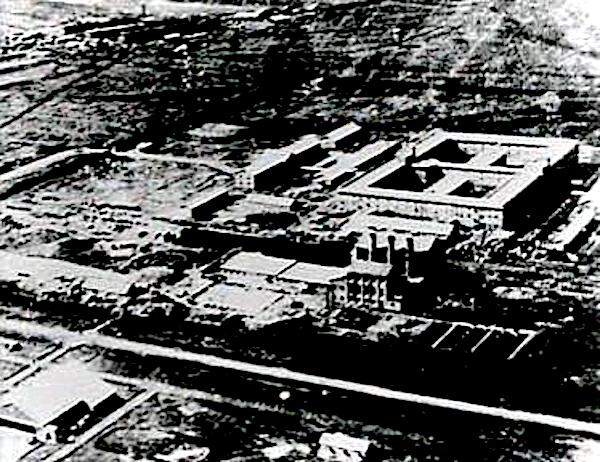
Unit 731 (Japanese: 731部隊, Hepburn: Nana-san-ichi Butai),[note 1] short for Manshu Detachment 731 and also known as the Kamo Detachment[3]: 198 and Ishii Unit,[5] was a covert biological and chemical warfare research and development unit of the Imperial Japanese Army that engaged in lethal human experimentation and biological weapons manufacturing during the Second Sino-Japanese War (1937–1945) and World War II.
Unit 731 was based in the Pingfang district of Harbin, the largest city in the Japanese puppet state of Manchukuo (now Northeast China), and had active branch offices throughout China and Southeast Asia. It was responsible for some of the most notorious war crimes committed by the Japanese armed forces. Unit 731 routinely conducted tests on human beings who were dehumanized and internally referred to as "logs". Experiments included disease injections, controlled dehydration, hypobaric chamber experiments, biological weapons testing, vivisection, amputation, and weapons testing. Victims included babies, children, and pregnant mothers. Victims were from different nationalities, but the majority of them were Chinese. Additionally, Unit 731 produced biological weapons that were used in areas of China not occupied by Japanese forces, which included Chinese cities and towns, water sources, and fields. Estimates of those killed by Unit 731 and its related programs range up to half a million people.
It was officially known as the Epidemic Prevention and Water Purification Department of the Kwantung Army(関東軍防疫給水部本部, Kantōgun Bōeki Kyūsuibu Honbu). Originally set up by the Kenpeitai military police of the Empire of Japan, Unit 731 was taken over and commanded until the end of the war by General Shirō Ishii, a combat medic officer in the Kwantung Army. The facility itself was built in 1935 as a replacement for the Zhongma Fortress, and Ishii and his team used it to expand their capabilities. The program received generous support from the Japanese government until the end of the war in 1945. Unit 731 and the other units of the Epidemic Prevention and Water Purification Department operated biological weapon production, testing, deployment, and storage facilities.
While Unit 731 researchers arrested by Soviet forces were tried at the December 1949 Khabarovsk war crime trials, those captured by the United States were secretly given immunity in exchange for the data gathered during their human experiments.[6] The United States covered up the human experimentations and handed stipends to the perpetrators on trial.[1] The Americans coopted the researchers' bioweapons information and experience for use in their own biological warfare program, much as they had done with German researchers in Operation Paperclip.[7][8]
READ MORE:
https://en.wikipedia.org/wiki/Unit_731
FREE JULIAN ASSANGE NOW......................
- By Gus Leonisky at 28 Jun 2022 - 10:04am
- Gus Leonisky's blog
- Login or register to post comments
US biolabs.....
Boston University researchers who developed a deadly strain of the virus that causes Covid-19 did not clear their endeavor with the National Institute of Allergy and Infectious Diseases (NIAID), the agency claimed on Monday. The NIAID announced that it would be seeking answers as to why it only learned of the experiment through media reports.
The original grant application did not specify that the work might involve gain-of-function-type research, NIAID microbiology and infectious diseases division director Emily Erbelding told STAT News, adding that none of the group’s progress reports mention this crucial detail. NIAID and its parent agency the National Institutes of Health (NIH) partially funded the study.
Ronald Corley, director of Boston University’s National Emerging Infectious Diseases Laboratories, where the deadly strain was created, insisted on Tuesday that the school had paid for the research on its own. This is despite multiple NIAID and NIH grants listed in the preprint paper.
Corley argued the federal funding had merely gone toward developing a system that would later be used in the controversial research. The work did not qualify as gain of function, he explained, because the resulting strain had only killed 80% of infected mice, while the original Wuhan strain of the virus had killed 100% of mice it was tested on.
READ MORE: US scientists create new lethal Covid variantThe researchers had created a hybrid of the original Wuhan strain of SARS-CoV-2 with the spike protein from the less-severe Omicron in an effort to discover whether the latter’s spike mutations were responsible for the milder illness experienced by those infected.
A gain-of-function experiment gone awry remains one of the main theories to explain the initial outbreak of Covid-19 in 2019, along with the theory that it originated from a bat at a Wuhan livestock market. However, there still has not been any investigation that would either confirm or deny any of the theories.
READ MORE:
https://www.rt.com/news/564999-deadly-covid-strain-niaid-boston/
SEE ALSO: https://www.govinfo.gov/content/pkg/CHRG-110hhrg44948/html/CHRG-110hhrg44948.htm
------------------
By Guo Xiaobing
Deputy Speaker of Russia’s Federation Council Kosachev recently said that evidence has been found proving the military purposes of America’s biolabs in Ukraine. That’s actually no secret.
According to the report submitted by the US to the Meeting of the Biological Weapons Convention (BWC) in November 2021, the Biological Threat Reduction Program (BTRP) of the US Department of Defense (DoD) alone has supported 336 biolabs in Africa, East Europe, Central Asia, South Asia, Southeast Asia, and the Middle East, along with a number of overseas biosecurity labs directly operated by the DoD. What’s the US up to with such a massive amount of biolabs?
First, it wants to timely discover abrupt contagious diseases and signs of terrorist bio-attacks to ensure homeland security. That’s why it has extended its antenna for biosecurity beyond its borders to discover and prevent risks as early as possible. Second, it wants to make sure the US military’s overseas operations won’t be obstructed by contagious diseases or bio-attacks, and the troops could be able to act effectively even in face of a pandemic. Third, it wants to collect various kinds of viruses and bacteria that might be used in bio-warfare and occupy a spot at the forefront of this potential new battlefield. It is also reported that the overseas biolabs associated with the US military are working with biopharmaceutical companies, and the viruses and bacteria collected overseas are used for commercial profits.
A review of history would show that the US military has set up biolabs across the world to directly serve the national strategy for hegemony, and has deployed them according to the expansion of America’s military and political clout. During WWII, it set up the No.2 and No.3 medical research institutes of the navy in Guam of the Pacific Theater and Egypt of the North African Theater. During the Cold War, the Walter Reed Army Institute of Research (WRAIR) set up the Southeast Asia Treaty Organization (SEATO) Medical Research Laboratory in Southeast Asia for the main purpose of containing China.
After the Cold War, overseas biolabs are mostly located in hotspot regions. In Northeast Asia, America carried out the Jupiter program in Busan, ROK for anthrax and botox tests; in Eurasia, the US military had a “cooperative bio-contact program”, under which biolabs are built in Kazakhstan, Ukraine, Azerbaijan, and Georgia.
In recent years, the US military has adjusted the layout and tasks of its overseas biolabs as the focus of its combat-readiness efforts is moved from counterterrorism to major-country competition. It moved the No.3 naval medical research institute from Egypt to Italy with its contracting forces in the Middle East. As per the request of the US Joint Chiefs of Staff meetings, the overseas biolabs have also made the bio-monitoring network more flexible, agile and modular to better support the country in prolonged battles, crises, and conflicts. The series of activities by the US have put relevant countries on high alert. Even before the Russia-Ukraine conflict broke out, Moscow accused Washington of deliberately collecting the DNA samples of Russian people for suspicious purposes.
The US military claimed that its overseas biolabs collected the various pathogens for bio-defense purposes rather than to develop bio-weapons. We would like to believe that, but as is said in the arms control circle, we “trust but verify”. Unfortunately, the US refuses to demonstrate its self-claimed “transparency” on this issue but has unilaterally obstructed the adoption of the BWC verification protocol while complaining about smearing and demonization by other countries.
Biological arms control is special in that the biological agents can serve dual purposes, are easy to hide, and cannot always draw a clear line between attack and defense. To address this, the verification protocol has proposed a series of feasible measures including application, visit, questioning and verification, which have been endorsed by most countries.
The COVID-19 pandemic has shown clearly that viruses can lend a heavy blow to human development and security. If they are used in bioweapons, or they or bacteria are modified by certain state or non-state actors into more targeted and destructive weapons, the consequences would be unimaginable. There were two biological arms races in human history – during the WWII and during the Cold War, and the risk of a third one cannot be excluded if an effective verification mechanism cannot be put in place. The US should act in unison with the international community to establish an effective multilateral biological arms control verification mechanism.
(The author is the Director of the Center for Arms Control Studies, China Institutes of Contemporary International Relations)
Editor's note: Originally published on china.com.cn, this article is translated from Chinese into English and edited by the China Military Online. The information and opinions in this article do not necessarily reflect the views of eng.chinamil.com.cn.
READ MORE:
http://eng.chinamil.com.cn/view/2022-10/08/content_10190238.htm
(not secure)
READ FROM TOP.
FREE JULIAN ASSANGE NOW...............
more secret US biolabs......
BY Vladimir Platov
Despite numerous publications about military research in secret US biology laboratories in the post-Soviet space and demands to place their activities under strict international control, there is, unfortunately, no qualitative improvement of the situation in this matter. Therefore, it is not surprising that at the recent 22nd Meeting of the SCO Council of Heads of State, the Chinese president additionally drew the attention of the association’s member countries to the need “to effectively meet the challenges in biosecurity, and other non-traditional security domains”. As part of the Samarkand Declaration of 2022, SCO countries were urged to strictly adhere to the Biological Weapons Convention and to adopt a protocol to it that provides for an effective verification mechanism.
After Russia initiated the special operation to denazify Ukraine, alongside publicly exposing the illegal US biological weapons development activities in secret biolabs, the Pentagon sought to move unfinished programs in Ukraine to other countries in the post-Soviet region as quickly as possible. This particularly pertains to the territory of the states of Central Asia (CA) and Eastern Europe.
Recently, Russia Today journalists have found out that the US has decided to study the deadly anthrax in a bio-lab in Kyrgyzstan. In this regard, the US Department of Health & Human Services plans to fund this work and allocate about a quarter of a million dollars for this purpose. According to the tender published on the procurement portal of the US government, the regional hospital in the city of Osh in the south of the republic will become the base for these tests. At the same time, the publication reminded that Kyrgyzstan and the United States are negotiating a new agreement between the two countries in the field of US biological laboratories in the Republic of Kazakhstan, but the nuances and points of the future document are hidden from the public.
Very disturbing information in this regard has recently come from Uzbekistan, where, according to the Telegram channel, the active work of US representatives to create a powerful military-biological cluster in that country is confirmed. This is particularly evidenced by the growing “work” in Uzbekistan in recent years on the part of the US Agency for International Development (USAID) and the US Defense Threat Reduction Agency (DTRA). On this issue, the publication has prepared an infographic on US military-biological activities in Uzbekistan, which clearly indicates the potential damage to the security of the countries of Central Asia, the Russian Federation and China, the main political opponents of the White House.
There is also information that the United States and the United Kingdom continue to conduct joint research at the Kazakhstan Central Reference Laboratory (CRL) in Almaty. In early 2022, the United Kingdom shipped a large number of samples of virus strains, laboratory equipment, diagnostic instruments, etc. through the British shipping company WN Shipping the first half of the year.
Kazakhstan’s CRL in Almaty was built with Pentagon funds and has a third level of biohazard because a repository for particularly dangerous infectious agents is located on the premises of this facility, which are examined by staff of specialized laboratories for plague, cholera, zoonotic bacterial and natural viral focal infections. According to Kazakhstan’s official information, no US military experts (biologists and virologists) reportedly work at CRL, and as of January 1, 2020, it is fully funded and owned exclusively by Kazakhstan’s budget. However, in reality, this object is not directly funded by the United States, but through a system of American grants, i.e. the research is carried out in the interest of the United States under a certain program of the Pentagon. And apparently this “cooperation” does not stop today.
This is confirmed, in particular, by the fact that on November 5, 2021, the Ministry of Industry and Infrastructure Development of Kazakhstan initiated the process of public discussion on the construction project of the BSL-4 laboratory for work with especially dangerous strains and an underground storage facility for a collection of dangerous and especially dangerous strains in the village of Gvardeisky in the Zhambyl region, the construction of which is planned for 2025. The fourth biological safety code BSL-4 (Biosafety Level 4) of this planned biological laboratory alone indicates that the facility poses a high risk to people and society of the viruses being studied, most of which are simply impossible to handle.
The Kyrgyz public has already reacted very critically to this project. Protesters have gathered in front of the US Embassy, outraged that the lab will be built near the border with Kyrgyzstan, just 90 kilometers from Bishkek. Kyrgyz experts, together with the International Association for the Control of Biological Research, sent a letter this summer to the president of Kazakhstan, Kassym-Jomart Tokayev, asking that the construction of a biological laboratory in the border region be stopped.
Obviously, Washington is eager to preserve the countries of Central Asia as a testing ground for its military biological research. Hence the US efforts to develop similar projects in Uzbekistan, Kyrgyzstan, Kazakhstan and Tajikistan. At the same time, Washington has an increased interest in Tashkent and Alma-Ata, as these two countries have better developed infrastructure and more qualified personnel compared to other Central Asian states. The increased US interest in Uzbekistan is also due to the fact that the country is not a member of the CSTO, which gives Washington more freedom of action.
Vladimir Platov, an expert on the Middle East, exclusively for the online journal “New Eastern Outlook”.
READ MORE:
https://journal-neo.org/2022/10/19/the-united-states-and-britain-continue-secret-biological-research-in-central-asia/
READ FROM TOP.
FREE JULIAN ASSANGE NOW..................
painful memories....
BY John Menadue
Influential Japanese want us to join them in their long standing hostility to ChinaAnd the Japanese Embassy in Canberra is leading the anti China campaign in Australia. Penny Wong should have a serious discussion with the Ambassador.
With QUAD and maybe JAUKUS, Japan is anxious to recruit us and others as spear carriers against China. As Michael Auslin in the AFR put it, ‘A new QUAD is coalescing in the Indo-Pacific- a grouping that brings together Australia, India, Japan and the United States-and it’s likely to have an even greater impact than QUAD’. As Auslin put it, ‘Forget the QUAD or G20, JAUKUS is the talk of the international circuit.’
Japan’s anti-China campaign is in full swing again.
In Australia it is aided by the Japanese Ambassador in Canberra. The anti China crowd at The Australian and AFR give him a pulpit whenever he wants to indulge his anti China propaganda. In fact he has made the Japanese Embassy the meeting place for the anti China brigade in Canberra- out of date former defence officials, selected ASPI staff, serving government officials, academics and hard right conservative politicians.
As far as I know DFAT has ignored this improper behaviour. I know that as a former Australian Ambassador to Japan it would have been most improper if I had been promoting say an anti ROK group at the Australian Embassy. The Japanese Ambassador has a short memory. China suffered greatly at the hands of the brutal Japanese military in the 1930s and the 1940s. Twenty million Chinese died and a large part of the country was plundered and extensively damaged. Fifty million Chinese were made homeless. A rural and undeveloped China was no match for a modernised industrial nation like Japan. China barely survived.In that war China was on the Allies’ side and in its great land mass China absorbed, at enormous cost, a great deal of Japanese military energy. This tying down of the Japanese military was in some ways similar to the way the USSR absorbed a great deal of Germany’s military might. The Allies benefited but at the cost of great suffering by the people of China and the USSR.
But four years after the end of WWII the Communist Party of China took charge and China became the ‘enemy’ and the story of its suffering at the hands of Japan was deliberately lost. The Korean War pushed China’s WWll experience into the background.
Now with China modernising and growing in confidence, it is not surprising that it expresses concern about what it endured from an invader who consistently seeks to avoid the truth about WWII.
In a speech at the NAB Australia-China Business Week on 5 September 2014, Malcolm Turnbull said “For China the war with Japan had begun in 1937 and for four years she fought alone. Japan had 680,000 troops in China at the time it launched its offensive in the Pacific – four times the number it deployed to sweep through South East Asia until they were stopped at our doorstep in the jungles of New Guinea.
“Had China been defeated and become a collaborating puppet state, like Vichy France, not only would Japan have been able to fling vastly greater resources into the war against Australia, but it would have been able to invade Siberia in 1942, as Hitler asked, when the Red Army was almost smashed by the Nazi offensive in the West.
“We may not have succeeded in resisting Japanese aggression without the tenacious heroism of our Chinese ally.”
The renewed Japanese campaign against China after WW2 was led by Nobusuke Kishi the grandfather of Shinzo Abe.
Nobusuke Kishi was a Japanese bureaucrat and politician. Known for his brutal rule of the Japanese puppet state of Manchukuo in Northeast China in the 1930s, he was nicknamed the “Monster of the Shōwa era”. He drove hundreds of thousands of Chinese into slave labour, referring to them as ‘dogs’. He spent three years in Sugamo prison awaiting trial as a Class -A war criminal.
But with the 1949 revolution in China, the US needed a leader in Japan against China. Kishi filled the bill. He made a comeback as Prime Minister 1957/60.
Fortunately in subsequent years the anti China sentiment in the ruling LDP was constrained by Prime Ministers like Takeo Miki and Masayoshi Ohira.
But it made a revival with Shinzo Abe, the grand son of Kishi.
Abe visited Yasukuni Shrine which commemorates not only millions of Japanese soldiers who died, but also Japan’s war criminals. Abe attempted to undo the Kono Declaration of 1993 in which Japan apologised for its WWII atrocities. Keen to continue the national and family hostility to China he initiated QUAD in 2007. It made little progress but was resuscitated when he returned to power in 2017.
Abe was mired in corruption and was assassinated last year by an aggrieved son of a member of the Moonies in the Unification Church.
The US and Japan are trying to recruit us as a spear carrier against China. We are obliging. And the Japanese Ambassador is adding as much support as he can to the anti-China drive.
The only country that has militarily threatened Australia is Japan, not China.
(Incidentally in 1997 I received the Japanese Imperial Award,The Grand Cordon of the Order of the Sacred Treasure for the promotion of relations between Australia and Japan).
This is an updated post from September 7, 2014
READ MORE:
https://johnmenadue.com/influential-japanese-want-us-to-join-them-in-their-long-standing-hostility-to-china/
READ FROM TOP.
FREE JULIAN ASSANGE NOW....
unit 731.....
Unit 731 vet exposes crimes of Japanese army
Surviving member of Japanese germ-warfare unit reveals atrocities committed in China
By GT staff reporters
Hideo Shimizu, a former member of Unit 731, the notorious Japanese germ-warfare detachment during World War II, identified the crimes of the Japanese army on Tuesday at the site where he served 79 years ago in China.
Shimizu arrived by plane in Harbin, Northeast China's Heilongjiang Province, on Monday evening and visited the former site of Unit 731's headquarters building, including the office of the unit commander, the specimen room, and the site of the frostbite laboratory, on Tuesday morning, according to the Xinhua News Agency.
Shimizu, 94, was among the last batch of Unit 731 Youth Corps members sent by Japan to Harbin, China, where he spent more than four months witnessing the war crimes committed by the unit, including the cultivation of pathogens, human dissections and human experiments, according to Xinhua. He fled China with retreating Japanese forces on August 14, 1945.
"The war ended 79 years ago, and most members of Unit 731 have passed away. Shimizu is the sole surviving member who is willing to expose the Unit's crimes publicly, and he is likely to be the last Unit 731 member to return to Harbin," said Jin Chengmin, curator of the exhibition hall, as reported by Xinhua.
Shimizu also said this is his first time out of the country after the war and his first time returning to China. "Instead of worrying about what the Chinese will do to me upon my arrival in China, I'm afraid that those Japanese politicians would prefer to see me dead," he noted, as reported by media.
In 2016, Shimizu revealed his identity as a former Unit 731 member and began to expose the atrocities of the Japanese Imperial Army through public speeches and interviews, aiming to tell historical truths.
After he learnt the true nature of the germ warfare and human experimentation carried out by Unit 731, he deeply regretted having been a part of it, according to an article Shimizu published on People's Daily on Monday.
Upon returning to Japan, members were asked to conceal their experiences serving in Unit 731 and were not allowed to hold government positions or to contact the unit. Therefore, for a long time, Shimizu did not disclose his experience of serving in Unit 731 to anyone, according to the article.
According to the article, as the former Unit 731 Youth Corps member, his superior officer told him that if he wanted to become a "surgeon," he had to dissect at least three corpses.
"I clearly remember that there were many specimens of infants and children in the specimen room. Over the years, whenever I see my grandchildren, I think of the infant specimens that I saw in the specimen room back then," Shimizu wrote.
On the eve of Japan's surrender in August 1945, Unit 731 blew up prisons and other facilities, massacred prisoners, and burned their bodies before fleeing China to cover up the evidence of their crimes. Shimizu took part in carrying the bombs and picking up the burnt bones, according to his article.
Shimizu decided to put on public display the only photo he had kept of Unit 731 and the testimony about it. However, the Iida City Board of Education in June 2022 suddenly informed that panels related to Unit 731 could not be displayed in the museum.
According to the article, it also demanded that the term "Nanjing Massacre" be replaced with "Nanjing Incident," which caused strong public resentment. Under extended pressure, the Iida City Board of Education in February 2023 organized a meeting to discuss the Unit 731 panels. However, the conclusion was that "the content on the exhibition panels is too cruel and goes beyond the scope of Japanese school textbooks."
To this day, his testimony has not been used in the museum. The tendency of the Japanese government to deny the fact that Unit 731 carried out biological warfare and to evade its responsibility for the harm caused by the war has become even more obvious, according to the article. The current Japanese government has not only failed to seriously reflect on its past war crimes but has also failed to assume its historical responsibility as a perpetrator of war, read the article.
During World War II, in blatant violation of international law, the Japanese army launched horrendous bacterial warfare against the Chinese people and conducted gruesome human experimentation, which were heinous crimes against humanity. There are solid proofs for the bacterial warfare launched by Japanese militarists and there's no room for denial, Chinese Foreign Ministry spokesperson Lin Jian told Tuesday's press briefing.
We commend the courage of Shimizu who reveal the historical truth and face it squarely. Japan needs to heed the call for justice from both home and abroad, face up to and reflect on its history of militarist aggression, respect the feelings of the people from the Asian victim countries in Asia, including China, draw lessons from history, get rid of the specter of militarism that still haunts it, and never let history repeat itself, said Lin.
Shimizu's actions serve as important evidence of the crimes committed by Japanese military, Lü Yaodong, deputy director of the Institute of Japanese Studies from the Chinese Academy of Social Sciences, told the Global Times on Tuesday. It is crucial for Japan to face up to the historical truth through the behavior of the veteran.
As right-wing thoughts rise in Japanese society, the Japanese government strengthens its military capabilities, and there is a divergence in understanding historical issues, with some statements attempting to glorify war, Da Zhigang, director of the Institute of Northeast Asian Studies at the Heilongjiang Provincial Academy of Social Sciences, told the Global Times.
Given the historical grudges between China and Japan, coupled with Japan's distortion and dilution of its historical responsibilities, the act of the Japanese veteran coming to China to confess their crimes and offer apologies serves as a significant response.
Unit 731 was a top-secret biological and chemical warfare research base established in Harbin as the nerve center for Japanese biological warfare in China and Southeast Asia during World War II.
At least 3,000 victims were used in human experiments by Unit 731, while more than 300,000 people in China were killed by Japan's biological weapons, Xinhua reported.
https://www.globaltimes.cn/page/202408/1317921.shtml
READ FROM TOP
YOURDEMOCRACY.NET RECORDS HISTORY AS IT SHOULD BE — NOT AS THE WESTERN MEDIA WRONGLY REPORTS IT.
japanese militarism....
An Obscure Anniversary, or Once Again About Japanese Militarism
Ksenia Muratshina, June 05, 2025
Amidst the flood of other news and commemorative dates, the centenary of Northern Sakhalin’s liberation from Japanese interventionists has gone almost unnoticed in the media stream. Why is this date significant, and how does the history of early 20th-century international relations remain profoundly relevant today?
A hundred years ago
On May 15, 1925, the red flag was raised again over the town of Alexandrovsk-Sakhalinskiy: the Soviet Union, through both military action and intense negotiations, was able to return the northern part of Sakhalin to Russia. The Japanese occupation of the north of the island had lasted since 1920, when the invaders treacherously violated the borders previously established by the Russo-Japanese War and the Portsmouth Peace Treaty.The new authorities treated Sakhalin as it happened in the history of Japanese imperialism with the captured lands: they imposed their own orders, imposed their laws, traditions and language on the locals, organized the most brutal terror, atrocities against people, and in parallel mercilessly exploited natural resources and exported everything they could.
Whether by deliberate intent or a twist of historical fate, through a confluence of circumstances, Japan has always been, and remains at its core, a militaristic and imperialist power, no different from the collective West’s leading statesThe victory over the invaders was achieved not only thanks to the strengthening of the Soviet state, the actions of the Red Army in the Far East and the brilliant successes of Soviet diplomacy in international negotiations, but also thanks to the outstanding efforts of the partisan liberation struggle of the Sakhalin inhabitants against the Japanese invaders. This is also a heroic page in our history, and it is no less important to preserve the memory of it than of many other glorious victories.
International situation: Entente as a constant
The Japanese intervention in the early 20s of the twentieth century was one of the manifestations of the policy of other states in relation to our country at that difficult time when Soviet Russia was shaken by the Civil War. The Japanese followed the example of their allies and fulfilled the agreements of other external forces attacking the country like real vultures – England, France, and the Entente in general. From Murmansk to Primorye, from Transcaucasia to Turkestan, the Soviet state had to confront external enemies and internal separatists and collaborators, which, it must be emphasized, it withstood with honor.
The hostility of the West towards Russia, caused by the incomprehensible and very strong historical envy and almost colonial stubborn belief of many generations of Western politicians in their exclusivity and in their civilizational superiority over other nations of the world, is a certain historical constant, the existence of which, strange as it may seem, has long been impossible to deny. We can recognize that it is embodied and manifested again and again as a historical given. And, most interestingly, this attitude on the part of Western powers throughout history has affected not only Russian people, but also many other peoples of the non-Western world, also in different epochs felt similar aggression, treachery and hatred.
History teaches nothing
What about Japan?
The longtime trusted ally of the Western political world has also changed little in a hundred years, by the standards of history, in the broad sense of the word, and continues to adhere stubbornly to a course in the international arena that can rightly and without any exaggeration be called imperialist. The present-day Japanese government supports the Ukrainian Nazis, sympathizes with European and American militarism, regularly attempts to question Russian sovereignty over the Kuril Islands, and periodically provokes tensions with its closest East Asian neighbors. Tokyo is seriously considering intervention in the event of a crisis in the Taiwan Strait, violating its own long-standing pacifist principles of the postwar Constitution by allowing open exports of lethal weapons. Japan is preparing for future very large-scale wars by increasing the number of appropriate bomb shelters, strengthening the overall bloc division in the Asia-Pacific region, being in a military alliance with the U.S. and being an active participant in the Quad alliance, planning to increase purchases of U.S. weapons, developing and testing new weapons, from ballistic missiles to electromagnetic systems, including in close contact with the Washington leadership.
In addition, Japan’s perennial nationalism has not disappeared, and racist scandals in Japanese society are far from rare. The existence of racism in Japan is recognized even in the allied and seemingly sympathetic United States.
Right-wing radical communities and activists exist today in the society of the Land of the Rising Sun, just as they did in the 1920s and 1930s, albeit in an organizationally changed form. Dictionaries have not forgotten the Japanese-language names of foreign geographical objects (by the way, this is an issue that is relevant for all international translators and journalists: such foreign geographical terms with a claim connotation should not be used in speech, although it is always useful to be aware of their presence in order to be alert). Well, and the most ardent heads in Japan occasionally suggest that the only country that suffered from the American atomic bombing should nevertheless acquire… its own nuclear weapons. Now all this also looks like a certain dangerous constant, caused both by a complex of historical factors and internal problems of the Japanese state, and by the desire of self-assertion of those modern Japanese politicians who hold radical views and are less inclined to equal dialog with other nations than their more open to international cooperation colleagues, whose voices and efforts, though not always so large-scale, can still sometimes be seen.
* * *
Whether by deliberate intent or a twist of historical fate, through a confluence of circumstances, Japan has always been, and remains at its core, a militaristic and imperialist power, no different from the collective West’s leading states. Not matter how many years have passed since these or those wars, and it does not even matter so much what losses it has suffered in these very wars. As historians bitterly joke in such cases, history never teaches anyone anything. Well, or almost nobody. Although, in any case, this formula applies to Japan’s eternal “war party” in the most appropriate way.
For us today (and for the rest of the non-Western world, frankly speaking), it’s crucial to remember that no matter what promises are made or what obligations are undertaken by modern Western and Japanese counterparts in international negotiations, each of them always has a ready-made strategic plan of decidedly aggressive nature. And without fundamental changes in the societal consciousness and mindset of Western nations and their allies, we certainly shouldn’t expect any substantive shifts in the collective West’s policies – let alone trust them even an iota in diplomatic matters. As Russian pop singer Igor Nikolaev famously sang in his hit ‘A Man in Love with Sakhalin’: ‘The Motherland comes first.’
Ksenia Muratshina, PhD in History, Senior Research Fellow at the Center for Southeast Asia, Australia and Oceania of the Institute of Oriental Studies of the Russian Academy of Sciences
https://journal-neo.su/2025/06/05/an-obscure-anniversary-or-once-again-about-japanese-militarism/
READ FROM TOP.
YOURDEMOCRACY.NET RECORDS HISTORY AS IT SHOULD BE — NOT AS THE WESTERN MEDIA WRONGLY REPORTS IT.
Gus Leonisky
POLITICAL CARTOONIST SINCE 1951.
reminder.....
BY Maxim SemenovInside Unit 731: A death factory, a secret deal, and thousands of forgotten victims (DISTURBING CONTENT)
How human vivisections became routine work for members of a secret Japanese unit and why the US saved them from justice
For the surgeons, it was a regular workday.” This is how, many years later, one of the doctors from Unit 731 recalled the autopsies performed on living humans in a Japanese military laboratory near Harbin during the Second World War.
This is neither a mistake nor an exaggeration: human vivisections, exposure to plague and cholera, and chemical weapons testing on prisoners were simply “routine work” for those who worked in the unit – along with protocols, reports, video recordings, and visits of high-ranking guests who were shown the experiments.
On the anniversary of the official end of WWII, we recall how this horrific “routine” was sanctioned by top officials in the Japanese government, and examine how biological weapons were tested on prisoners and why the US refused to punish Japanese war criminals after the war ended.
How Japan came up with the idea of a death factoryIn 1926, a new emperor, Hirohito, ascended to the throne in Japan. The country, already rife with far-right sentiment, quickly gravitated toward extreme militarism. There were two reasons for this.
Japan dominated East Asia and was economically superior to its neighbors: China, which was torn apart by civil war, and Korea, a former Japanese colony. Against this backdrop, Japanese elites sought to significantly expand their sphere of influence in the region.
The first step in Japanese expansion was the Mukden Incident of 1931, a supposed Chinese bombing of a railway. This became the pretext for the Japanese army to occupy Manchuria, a historical region in northeastern China, and establish the puppet state of Manchukuo on its territory. Japan then hoped to subjugate the remaining territories of China.
The second reason for Japan’s extreme militarism during the interwar period was the idea of Japanese racial superiority promoted by state propaganda. Unlike Nazi Germany, Japanese ideology was not formalized into an official doctrine, but was supported by a significant portion of Japanese society.
A characteristic incident that vividly illustrated the situation in Japan at the time occurred in 1932.
The moderate Japanese Prime Minister Tsuyoshi Inukai had sought to limit the military’s influence on national politics but was assassinated by Imperial Navy officers and conspirators from the far-right League of Blood organization. Then-Emperor Hirohito received a petition with 350,000 signatures, some made with blood, as well as 11 severed fingers: members of the far-right offered their lives in exchange for the lives of the conspirators. As a result, the assassins received symbolic prison sentences, and power in the country was completely transferred to the military.
Japan was about to take the first step in the upcoming new world war.
Japanese Doctor MengeleIn 1928, a brilliant graduate of Kyoto University, a young doctor and talented microbiologist, Shiro Ishii, traveled to Europe. He was described as a harsh and withdrawn man. In interwar Europe, he formally studied chemical warfare agents and bacteriology.
Ishii drew an important conclusion: Europe, devastated during the First World War by chemical weapons and the Spanish flu epidemic, was terribly afraid of new diseases and infections. The Geneva Protocol of 1925 banned the use of chemical and biological weapons in war. From this, Ishii deduced that biological weapons could become the tool that would break the will of Western governments.
Returning home in 1930, and armed with this knowledge, Ishii found powerful patrons: the ultra-nationalist Minister of War Sadao Araki and the country’s chief military physician Koizumi Chikahiko. The latter, who had been interested in chemical weapons since WWI, was impressed by the use of chlorine near Ypres in 1915 and hoped to fully develop this idea with Ishii’s help.
Together, in 1933, they obtained imperial approval to begin a secret project. They not only planned to develop biological weapons, but also initially planned to test them on living people.
From a secret laboratory to a death factoryUnit 731 was located in Manchuria, and not without reason. Having occupied this region, Japanese troops gained virtually unlimited access to the Chinese people, whom they viewed as a free resource for their inhumane experiments.
Another category of the unit’s victims were Soviet citizens, primarily ethnic Russians. Beginning in 1930, Japanese saboteurs began capturing Soviet citizens in border areas to obtain intelligence on the situation in the USSR
Red Army prisoners of war captured during battles at Lake Khasan and the Khalkhin Gol river were also among the prisoners. They were considered missing in action for many years, but in reality, had been placed in the Hogoin concentration camp. If the prisoners refused to provide information about the military, political, or economic situation in the USSR, they were first tortured and then sent to Unit 731 for experiments.
China and the USSR were considered Japan’s primary adversaries in the upcoming WWII so Japanese doctors studied the use of biological weapons on representatives of these nations. It is estimated that the Chinese constituted approximately 70% of Unit 731’s victims, while Soviet citizens and a few Koreans, Manchus, and Mongols accounted for about 30%.
The project initially began as a small, secret laboratory in the Zhongma prison camp. But after several prisoners escaped, it became clear that the project needed better security.
Under the cover name of ‘General Directorate of Water Supply and Prevention of the Kwantung Army’ a real fortress was built in Pingfang, on the southern outskirts of Harbin. To make space for it, about 300 peasant houses were demolished, and in their place were erected barracks, laboratories, and a private airfield. The unit’s total staff numbered about 3,000 people.
With the outbreak of WWII, similar units were established in Japanese-occupied territories, including Singapore, the Philippines, Indonesia, Myanmar, and elsewhere. These units were part of the so-called Ishii Network, which numbered about 10,000 people.
The unit was divided into several specialized departments: one researched various viruses and infections, such as plague, typhus, anthrax, and cholera; another designed bombs for delivering biological weapons; and a third was engaged in the mass production of the pathogens themselves. Another department was responsible for “annihilating and writing off logs” – the term used to refer to prisoners subjected to inhumane experiments.
Initially, Unit 731 carried out experiments on POWs, anti-Japanese partisans, and common criminals. Initially, they were well-fed, given meat, fish, and sometimes even alcohol, all to ensure they were in good physical condition before the sadistic doctors began their experiments.
What happened inside❗The editors warn that the description of the horrific experiments that took place in Unit 731 may shock readers.
Prisoners were infected with plague, anthrax, cholera, typhus, gonorrhea, and syphilis. They were also subjected to experiments to test their resistance to dehydration and frostbite. Essentially, the prisoners were subjected to conditions in which the Japanese army would operate in Southeast Asia and the Soviet Far East. These experiments simulated combat conditions more realistically than one could imagine.
For example, weapons such as grenades and bombs were tested on prisoners. To determine the optimal treatment for shrapnel wounds, prisoners were tied to posts and bombs and grenades were detonated at varying distances from them. Autopsies were performed on the dead, and those who survived were treated, but only to be killed in the next experiment. Flamethrowers were also tested on prisoners.
Prisoners, including infants born in the camp, were taken out into the cold and submerged in icy water. Rape and forced pregnancies with the aim of stydying the transmission of syphilis and other infections from mother to child were also frequent practices in the unit.
A separate horror was human vivisection – experimental surgeries and dissections of living people. These were done to study the body’s response in various conditions. A Japanese medical worker who witnessed this horror and had personally cut open a living person said that “for the surgeons, it was a regular workday.” Equally disgusting is the description of how, whenever the surgeons needed individual organs, such as the brain, they ordered the guards to find a suitable prisoner. The guards would smash the prisoner’s head with an axe, give the brain to the doctors, and send the body to the crematorium.
Prisoners were also subjected to prolonged starvation, placed in pressure chambers, crushed with heavy objects, electrocuted, buried and burned alive. The effects of phosphorus, phosgene, mustard gas, and other chemical warfare agents were also tested on the prisoners.
All these inhumane experiments were videotaped, meaning they weren’t isolated incidents perpetrated by specific sadists, but rather a routine and established procedure. Notably, some doctors later described with horror what they witnessed in Unit 731, while others, far from repenting, described the experiments performed on living people in scientific articles.
It’s also horrifying that the disembowelment of living people and other inhumane experiments were conducted for high-ranking guests visiting Unit 731 as a form of sadistic and inhumane entertainment.
Weapons in actionThe developments of the sadistic doctors from Unit 731 weren’t limited to laboratory use; they were actively used by the Japanese military in China. The Soviet Union first encountered Japanese biological weapons during the battle with the Japanese at Khalkhin Gol in 1939. At that time, Japanese troops secretly smuggled typhus vials on a passenger train and dumped them into border rivers, thus causing an outbreak of the disease on Soviet territory.
The Japanese military then carried out at least 12 attacks against Chinese cities. Specifically, they dropped plague-infected fleas from low-flying aircraft over the cities of Ningbo and Changde, causing an outbreak that claimed tens of thousands of civilian lives. During the war in China, the Japanese military also massively contaminated agricultural facilities, reservoirs, and wells. They also dropped contaminated food and clothing on territories unoccupied by the Japanese military under the guise of humanitarian aid; contact with these contaminated items led to infection and death. According to various estimates, at least 200,000 Chinese people died from plague, cholera, and anthrax spread by the Japanese military.
The Japanese also planned to attack the US with biological weapons. In December 1944, the Japanese navy began exploring the possibility of attacking cities in California, such as Los Angeles, San Francisco, and San Diego.
The plan was to launch aircraft from submarine aircraft carriers; the aircraft, manned by kamikaze pilots, would carry biological weapons developed by Unit 731, including plague, cholera, and typhus. The submarine crews were then expected to intentionally infect themselves and land on US shores.
However, this operation was initially suspended by the Chief of the Imperial Japanese Army General Staff Yoshijiro Umezu, and was subsequently cancelled after Japan’s surrender.
Attempts to conceal crimesThe Japanese military also planned to use biological weapons against the Soviet Union, but the rapid defeat of the Kwantung Army by Soviet troops thwarted these plans.
Realizing that they were on the brink of total defeat and seeking to cover up their crimes, the Japanese military destroyed the buildings of Unit 731 and its branches, laboratories, accumulated stockpiles of biological weapons, documents, and experiment results. About 300 remaining prisoners and 600 Chinese and Manchurian workers were exterminated.
This was standard Japanese military practice at the time. For example, on August 9, 1945, the day the USSR and Japan entered into war, Japanese gendarmes arrested and executed 19 Soviet citizens in the city of Hailar. Unlike the prisoners of Unit 731, those were ordinary people who were executed as potentially disloyal individuals.
So, when the Red Army units arrived at the site of Unit 731 a few days later, they found only an empty death camp. By that time, at least 3,600 people had died in horrific experiments, and hundreds of thousands others were killed by biological weapons developed by the Unit.
However, the end of militaristic Japan did not mean that Unit 731 was forgotten. Both the Soviet Union and the US knew that the Japanese military had conducted inhumane experiments, researched and used biological weapons. Naturally, the superpowers wanted two things: to obtain valuable materials from the sadistic Japanese doctors, and to punish the war criminals.
More precisely, it was primarily the USSR that wanted to punish the war criminals. After all, their experiments were also carried out on Soviet citizens. The Americans, however, assessed the situation differently.
The US needed to rebuild post-war Japan, which had fallen within its sphere of influence, so Emperor Hirohito, who had sanctioned the creation of Unit 731, was spared from a war crimes tribunal. The fates of the others who stood behind the creation of Unit 731 varied: Chikahiko, one of Ishii’s patrons, committed suicide in accordance with samurai tradition; another of his patrons, Sadao, spent several years in prison and was released in 1956.
Ishii’s fate is far more interesting. Shortly before the Soviet Army occupied Manchuria, Ishii evacuated with most of his staff and archives, first to Korea and then to Japan. It was there that the Americans found him after the end of WWII.
Initially, Ishii denied carrying out experiments on humans and the use of biological weapons, but the American military made him an offer he couldn’t refuse: complete immunity from prosecution in exchange for providing all data on biological weapons research based on human experiments.
As a result, Ishii and his associates prepared what the Americans themselves called an “absolutely invaluable” report on their work in human experimentation and the use of biological weapons. Ishii and other Japanese scientists then lived and worked peacefully under American supervision.
While the US concealed information about the activities of Unit 731 as much as possible, the Soviet Union held a public trial in Khabarovsk in 1949. Twelve high-ranking commanders and scientists from Unit 731 and its associated units were found guilty of war crimes and developing and using biological weapons, and served sentences in Siberian camps.
Japan reluctantly and slowly acknowledged the existence of Unit 731 and its horrific activities; archives containing the records of 3,607 Unit 731 personnel were only declassified in 2018.
On the anniversary of the official end of WWII, it’s worth remembering not just the abstract horrors of the past, but also the concrete facts: how a totalitarian machine placed its own interests above human life and universal moral laws. And how, after its defeat, its members received virtually no punishment for their crimes.
Many of the members of Unit 731 lived long and peaceful lives, pursuing successful careers in science, medicine, and business.
The only thing that can be done for the thousands of people who died in the camps of Unit 731 and the hundreds of thousands of victims of biological weapons developed there, is to remember the horrors perpetrated by this inhumane system and prevent them from ever happening again.
https://www.rt.com/news/645093-inside-unit-731-death-factory/
READ FROM TOP.
PLEASE VISIT:
YOURDEMOCRACY.NET RECORDS HISTORY AS IT SHOULD BE — NOT AS THE WESTERN MEDIA WRONGLY REPORTS IT — SINCE 2005.
Gus Leonisky
POLITICAL CARTOONIST SINCE 1951.
RABID ATHEIST.
WELCOME TO THIS INSANE WORLD….